


Key Takeaways
Essential Tools & Prerequisites:
- A clear understanding of your loved one’s current physical and mental health needs.
- A copy of your health insurance policy details or access to your online portal.
- A notebook or spreadsheet to track facility costs, features, and contact information.
Main Steps to Navigate Costs:
- Identify the Treatment Level Needed
- Decode Your Insurance Coverage
- Evaluate Long-Term Value Over Price
By following these steps, you will confidently navigate financial options and secure a trusted, medically supervised recovery pathway that leads to lasting healing for your loved one.
Why the Cost of Alcohol Rehab Varies So Dramatically
Treatment Level Determines Base Price
The first thing to know about the cost of alcohol rehab is that the type of treatment sets the stage for what you’ll pay. Every path to recovery is different, and the level of care your loved one needs will play a huge part in the expense. For example, a stay in a supervised medical detox program is usually the most intensive—and also the most expensive—piece of the journey.
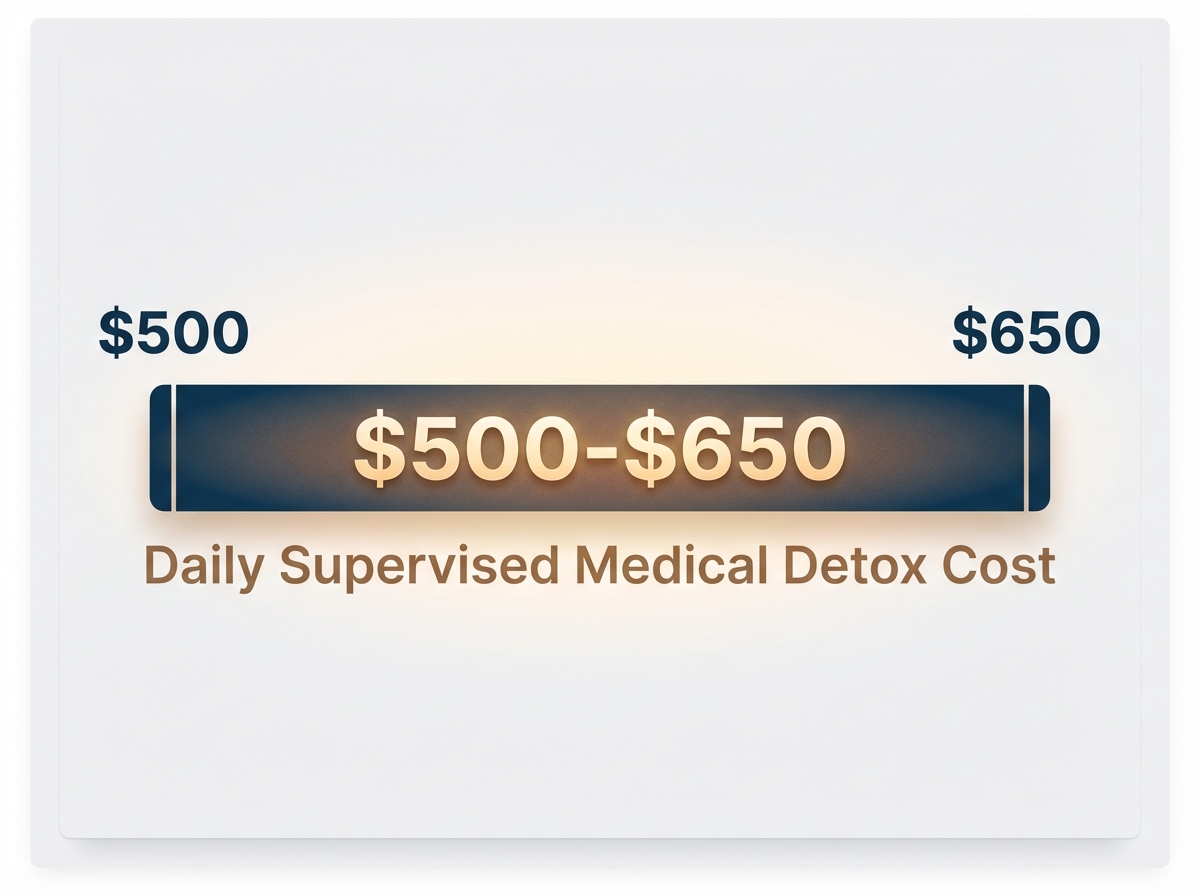
These programs involve round-the-clock medical monitoring, often because alcohol withdrawal can be dangerous. The typical daily cost for supervised medical detox at a private facility ranges from $500 to $650, and the process usually lasts about 7 to 10 days1. At Pacific Crest Trail Detox, we specialize in this critical first step, providing a home-like residential environment rather than a clinical hospital setting, ensuring your loved one feels safe and supported.
After detox, treatment may move to inpatient or residential rehab, where people stay at the facility for weeks or months, receiving therapy, support, and sometimes medication. This level of care is more costly than outpatient options, but it offers a highly structured, safe environment. On the other hand, outpatient programs allow clients to live at home and attend treatment sessions during the day or evening.
Outpatient care is less expensive, but it may not provide enough support for those with severe addiction or complex health needs. The cost difference between these options is significant, and understanding the right fit is key to balancing safety, comfort, and financial impact1. In the end, what matters most is matching the treatment level to your loved one’s needs. That’s how you set the foundation for lasting progress—every step forward counts! Next, we’ll look at how location and facility type influence the overall cost.
Geographic Location and Facility Type
Where your loved one seeks treatment and the kind of environment they enter can dramatically shape the cost of alcohol rehab. Urban areas, especially on the East and West Coasts, tend to have higher prices than rural regions. This difference comes from increased overhead costs, staffing expenses, and demand in metropolitan centers.
Sometimes, families travel out of state to find a better fit or lower price, but that can add travel and lodging costs to the overall expense. Facility type is just as important. At one end, standard programs offer a safe, supportive space with all the basics needed for recovery. At the other, luxury or executive rehabs include amenities like private rooms, gourmet meals, and holistic therapies.
These extras can push the monthly cost far above what you’d pay at a standard facility. For example, luxury programs can exceed $80,000 for a 30-day stay, while state-funded centers or nonprofit organizations may offer free or low-cost care to those who qualify1.
The table below outlines how geographic location and facility type impact pricing:
| Location/Facility Type | Typical Cost Influence |
|---|---|
| Urban, coastal city | Highest |
| Suburban area | Moderate |
| Rural region | Lowest |
| Standard facility | Affordable/basic support |
| Luxury/executive facility | Highest/amenities & extras |
| State-funded/nonprofit | Low-cost/free (for qualifying patients) |
Yes, this is challenging, and that’s okay—your effort to find the right setting means a safer and more comfortable path to healing. Next, you’ll learn how to match these options to the treatment level your loved one needs.
Step 1: Identify the Treatment Level Needed
Medical Detox as the Foundation
Medical detox is often the first—and sometimes the most vital—step in alcohol rehab. When your loved one is physically dependent on alcohol, trying to quit suddenly can be life-threatening. This is why supervised detox, with 24/7 medical support, is the standard for safety and comfort.
It’s a space where withdrawal symptoms can be managed with medications and professional care, reducing health risks and setting a stable foundation for further treatment. For families and professionals supporting adult addicts, recognizing when detox is necessary can make all the difference. While the cost of alcohol rehab starts with this phase, it’s important to remember that medical detox is usually short-term—generally lasting 7 to 10 days.
The typical daily cost ranges from $500 to $650 at private facilities, reflecting the intensive medical oversight required1. Though this initial outlay might feel daunting, it’s a critical investment in safety and long-term recovery. Evidence-based programs always emphasize a medically supervised start, particularly for high-risk detox cases.
It is vital to know that detox without follow-up care has only an 8% success rate. Every step you guide your loved one through, especially this first one, gives them a stronger foothold for the journey ahead. Next, we’ll explore how the duration and type of ongoing care further shape the total cost of alcohol rehab.
Continuing Care Options and Duration
After detox, the real work of recovery begins—and this is where continuing care options and how long they last play a big role in the overall cost of alcohol rehab. The care pathway can include inpatient rehab, intensive outpatient programs (IOP), standard outpatient care, and aftercare services.
Each option comes with its own demands on time and resources, but the right combination helps set your loved one up for lasting change. At Pacific Crest Trail Detox, we provide a full continuum of care, ensuring that your loved one transitions smoothly from sub-acute detox into partial hospitalization programs (PHP) or outpatient services without losing momentum.
Longer stays often mean higher costs, but research shows the payoff is real. Individuals who stay in treatment for over 90 days have a one-year recovery rate of 46.8%, nearly double the 24.1% rate for those in programs lasting just 7–20 days6. This means that while shorter programs may seem more affordable up front, investing in extended care can actually improve long-term outcomes and reduce the risk of relapse.
Continuing care can also include services like alumni support, sober living, or ongoing therapy, all of which contribute to better results but add to the total expense. Yes, managing the duration and variety of care is tough work, but every added day of support is a step toward stability and hope. Next, you’ll see how to decode insurance coverage and figure out what portion of these costs you may be responsible for.
Step 2: Decode Your Insurance Coverage
Understanding ACA Essential Benefits
Understanding what the Affordable Care Act (ACA) means for families supporting adult addicts can help you plan for the true cost of alcohol rehab. Thanks to the ACA, substance use disorder treatment is considered an essential health benefit.
That means every marketplace health insurance plan must cover services like detox, inpatient and outpatient rehab, therapy, and even medication-assisted treatment (MAT) for alcohol addiction. These protections extend to both mental health and substance use care, ensuring consistent coverage alongside other major medical needs2.
The ACA also prohibits insurance plans from setting yearly or lifetime dollar limits on covered substance use disorder treatment. This is a huge win for families—no one has to worry that their loved one will “run out” of coverage just when more support is needed. Parity rules further guarantee that coverage for addiction care must be equal to that for other health conditions.
So, copays, deductibles, and treatment caps can’t be harsher than what you’d face for physical illnesses2. This system doesn’t erase all costs, but it gives you a safety net when navigating the financial side of treatment. Knowing these protections exist can help you feel more confident and supported as you advocate for effective, evidence-based care. Next, we’ll look at how to calculate the out-of-pocket maximum you might face during a rehab journey.
Calculate Your Out-of-Pocket Maximum
Calculating your out-of-pocket maximum is a key step in understanding the cost of alcohol rehab, especially when you’re helping someone navigate care decisions. The out-of-pocket maximum is the highest amount you’ll pay in a year for covered services—after you reach it, your insurance covers 100% of additional approved costs.

This limit includes deductibles, copays, and coinsurance, but not premiums or out-of-network charges. When reviewing your policy online, you can often use Ctrl + F (or Cmd + F on a Mac) to quickly search your documents for terms like out-of-pocket maximum or substance use disorder.
For 2025, the Affordable Care Act sets the out-of-pocket maximum at $9,200 for individuals and $18,400 for families on marketplace health insurance plans15. Knowing these hard limits gives you a clear ceiling, so even if your loved one needs extended detox, inpatient rehab, or ongoing therapy, your financial risk is capped for covered expenses.
These protections help families plan and offer some relief during what is often an emotionally and financially stressful time. Here’s a simple table to clarify what counts toward the out-of-pocket maximum:
| Included in Maximum? | Deductibles | Copays | Coinsurance | Premiums | Out-of-Network Costs |
|---|---|---|---|---|---|
| Yes |
Yes, this process can feel overwhelming, and that’s okay—knowing your upper limit is one more way to create stability and peace of mind. Up next, you’ll learn how to weigh the long-term value of treatment, not just the price tag.
Step 3: Evaluate the Long-Term Value Over the Cost of Alcohol Rehab
Treatment Duration Impacts Success Rates
When thinking about the cost of alcohol rehab, it’s easy to focus just on the price tag. But the length of treatment has a direct, proven impact on whether your loved one will stay sober for good.
“Longer treatment stays, especially those lasting more than 90 days, have been shown to double the one-year recovery rate compared to short-term programs of only 7 to 20 days—46.8% versus 24.1%.”6
That’s a dramatic difference, and it means every extra week in care can be a real investment in your loved one’s future. Shorter programs might look less expensive upfront, but they often lead to higher relapse rates and the need for repeated treatment.
So, while a longer stay may mean a higher initial cost, it can actually lower the total financial and emotional toll over time. The numbers tell a clear story: lasting recovery takes time, structure, and support. At Pacific Crest Trail Detox, we use specialized ERPHealth software to track statistically significant treatment results, ensuring that the time spent in our care translates to measurable, real-world progress.
Your dedication to helping someone complete a more in-depth program is an act of hope—and it gives them their best shot at long-term stability. This is tough work, and your commitment matters. Next, we’ll explore the broader economic benefits that effective treatment brings for families and communities.
Economic Benefits of Effective Treatment
Looking past the numbers on a bill, the economic benefits of effective alcohol rehab treatment ripple far beyond each individual case. When your loved one receives care that truly works, the advantages reach your family, your workplace, and even your wider community.
Research shows that for every person who completes substance use disorder treatment, there is an average economic benefit of $14,615 in just the first year after treatment—mainly through reduced healthcare costs and lower involvement with the criminal justice system7. That’s a real return, not just for families, but for society as a whole.
Curious about how these savings break down?
These savings come from fewer emergency room visits, shorter hospital stays, and less strain on public safety resources. Effective treatment helps restore people to their roles as parents, employees, and neighbors, creating a positive cycle of stability and productivity.
This doesn’t erase the emotional work involved, but it does mean that investing in quality treatment pays off in ways that go well beyond the initial cost of alcohol rehab. Celebrating progress, even small steps, is part of this journey.
Each person who finds stability in recovery brings hope and tangible benefits to those around them. Now, let’s look at how you can identify care that truly delivers these real-world results.
Frequently Asked Questions
What happens if my loved one needs dual diagnosis treatment for co-occurring mental health conditions?
If your loved one struggles with both alcohol addiction and a mental health condition, they’ll need what’s called dual diagnosis care. About half of all people with a substance use disorder also live with a co-occurring mental health issue, so this is far from rare 14. Dual diagnosis treatment brings together medical, psychiatric, and therapeutic support in one plan—addressing both challenges at the same time. This integrated approach often means more specialists are involved and the process may take longer, which can affect the total cost of alcohol rehab. Still, giving your loved one the right care for all their needs increases their chances for real, lasting progress. Every step you take to honor their whole story matters.
Can I use FMLA to take time off work to support my loved one during treatment?
Yes, you can use the Family and Medical Leave Act (FMLA) to take job-protected time off work in order to support a loved one during their alcohol rehab journey. FMLA allows eligible employees up to 12 weeks of unpaid leave per year for serious health conditions, which includes caring for a family member receiving medical treatment for substance use disorder. Your job and benefits are protected during this period, so you won’t have to worry about losing employment while you help your loved one through treatment. This protection can make a huge difference as your family navigates the cost of alcohol rehab and the stress of recovery. Remember, taking this step is an act of care, and every supportive action counts 13.
What if the facility has hidden fees not covered by insurance?
Hidden fees at rehab facilities are a real concern and can make the true cost of alcohol rehab difficult to predict. These charges might include admission fees, pharmacy markups, special therapies, or even charges for routine supplies—costs your insurance may not cover. It’s frustrating, but you’re not alone in facing this challenge. Many families have discovered unexpected bills after treatment ends, which can add stress to an already tough process. The best step you can take is to request a detailed, written breakdown of all possible fees before admission and to clarify what insurance will or won’t pay for. Open communication and careful documentation help prevent surprises and keep you focused on your loved one’s recovery, not unexpected expenses 1.
How do I find low-cost or state-funded treatment options if insurance isn’t available?
Finding low-cost or state-funded options can feel overwhelming, especially when insurance isn’t available. Start by contacting the SAMHSA National Helpline at 1-800-662-HELP, which connects families with free and confidential referrals to local resources, including state-funded and sliding-scale programs 3. Many states offer public treatment centers with reduced fees for those who qualify based on income. Nonprofit organizations and faith-based programs sometimes provide free or very affordable care as well. Waiting lists may be a reality, so encourage your loved one to get on as many as possible and to ask about interim support services while they wait. Even when the path isn’t straightforward, every call and application is a step toward hope.
Is medication-assisted treatment covered by most insurance plans?
Yes, medication-assisted treatment (MAT) is covered by most insurance plans, especially those offered through the Affordable Care Act. The ACA requires that all marketplace health insurance policies include substance use disorder treatment as an essential health benefit, and this specifically includes MAT for alcohol use disorder 2. This means that medications like buprenorphine or naltrexone, when prescribed as part of a treatment plan, are usually covered if you meet plan requirements. Coverage may vary depending on your specific insurance, so it’s wise to check for any prior authorization or copay obligations. Remember, getting clear on these details early helps you better anticipate the true cost of alcohol rehab and keeps your focus on your loved one’s progress.
What if my loved one relapses after completing treatment?
Relapse can feel heartbreaking, but it is a common part of the recovery journey—not a sign of failure. Many people need more than one round of treatment to achieve lasting sobriety, and every return to care is another chance for progress. The real value in alcohol rehab comes from building a long-term plan that includes ongoing support, aftercare, and honest conversations about setbacks. Research shows that longer and repeated engagement with treatment improves the odds of recovery over time 6. If your loved one relapses, encourage them to reconnect with their care team and revisit what worked or didn’t in their last program. Your steady support makes a difference, even on the tough days.
How can I verify that a facility actually delivers the outcomes they promise?
To verify that a facility truly delivers the outcomes they promise, start by asking for objective, measurable data on recovery rates—ideally broken down by treatment length and follow-up period. Facilities that track and share their results, such as one-year sobriety rates or reductions in relapse, show a commitment to transparency and evidence-based care. Independent research has found that the most effective programs can nearly double one-year recovery rates with longer stays—46.8% for those in treatment over 90 days compared to 24.1% for short-term programs 6. Request written documentation or third-party-verified results and compare these with national benchmarks. Yes, this process can feel overwhelming, but every question you ask helps ensure your loved one receives care that’s proven to work.
Finding Care That Delivers Real Results
You’ve spent countless hours researching treatment options, making phone calls, and trying to find a program that will truly help your loved one recover. The exhaustion you feel right now? It’s real, and it makes sense. You’re not just looking for any treatment center—you’re looking for a place that will give your family member the best possible chance at lasting recovery.

That dedication you’re showing right now is exactly what your loved one needs. At Pacific Crest Trail Detox in Milwaukie, Oregon, we believe real results come from combining medical care with a warm, supportive environment. Instead of a clinical hospital setting, we offer a home-like space where your loved one can feel safe while receiving expert medical supervision.
We track actual outcomes using specialized software called ERPHealth—this means you can see measurable progress, not just hear hopeful stories. When we say “evidence-based treatment,” we’re talking about proven approaches like medication-assisted treatment when it’s needed, therapy that addresses both addiction and mental health challenges (like anxiety or depression that often come alongside substance use), and personalized plans that change as your loved one progresses.
Here’s something important: detox alone has only an 8% success rate. That’s why we don’t stop at detox. Pacific Crest Trail Detox provides a complete continuum of care—from medical detox through our partial hospitalization program, intensive outpatient services, and ongoing aftercare support.
This connected approach means your loved one doesn’t fall through the cracks between treatment phases. Every step is designed to build on the last, creating a pathway to long-term recovery. You deserve to see exactly what you’re getting and know that it works.
Your instinct to seek transparency and proven results? That’s spot-on. By choosing comprehensive care that tracks outcomes and provides continuous support, you’re giving your loved one something truly powerful: a real chance at lasting change.
References
- Drug Abuse Statistics – Average Cost of Drug Rehab [2026]. https://drugabusestatistics.org/cost-of-rehab/
- HealthCare.gov – Mental Health & Substance Abuse Coverage. https://www.healthcare.gov/coverage/mental-health-substance-abuse-coverage/
- SAMHSA – National Helpline. https://www.samhsa.gov/find-help/national-helpline
- Medicare.gov – Inpatient Rehabilitation Care Coverage. https://www.medicare.gov/coverage/inpatient-rehabilitation-care
- GoodRx – Buprenorphine 2026 Prices. https://www.goodrx.com/buprenorphine
- PMC NIH – Impact of Continuing Care on Recovery From Substance Use Disorder. https://www.ncbi.nlm.nih.gov/pmc/articles/PMC4154249/
- PMC NIH – Economic Benefits of Substance Use Disorder Treatment. https://www.ncbi.nlm.nih.gov/pmc/articles/PMC4959648/
- PMC NIH – Meta-analysis of Naltrexone and Acamprosate. https://www.ncbi.nlm.nih.gov/pmc/articles/PMC3918349/
- PMC NIH – Patient-Treatment Matching. https://www.ncbi.nlm.nih.gov/pmc/articles/PMC3594443/
- NCBI – Family Counseling Approaches. https://www.ncbi.nlm.nih.gov/books/NBK64269/
- PMC NIH – Barriers and Facilitators to Substance Use Disorder Treatment. https://www.ncbi.nlm.nih.gov/pmc/articles/PMC6886429/
- Vista Research Group – Length of Stay Correlation with Recovery Rates. https://www.vistaresearchgroup.com/blog/does-longer-treatment-result-better-outcomes
- Legal Aid at Work – Disabilities in Workplace & Drug/Alcohol Treatment. https://legalaidatwork.org/fact_sheet/disabilities-in-the-workplace-your-rights-regarding-drug-and-alcohol-testing-and-treatment/
- Cleveland Clinic – Dual Diagnosis (Co-Occurring Disorders). https://my.clevelandclinic.org/health/diseases/22773-dual-diagnosis
- HAP Michigan – Out-of-Pocket Limit. https://www.hap.org/employer/products-and-services/small-group/2025/out-of-pocket-limit