


Key Takeaways
- Adderall withdrawal typically unfolds in three phases: a three-day crash, low-energy days four through ten, and gradual mood and sleep improvements across weeks two to four 9.
- Contingency management stands as the current standard of care for stimulant use disorder, with CBT, community reinforcement, and motivational interviewing rounding out the evidence-based options 13, 3.
- No FDA-approved medication treats Adderall addiction directly, so any program relying solely on pharmacology is a red flag; medications should only support behavioral therapy 8, 11.
- Setting choice hinges on home stability, substance access, and co-use patterns, while a genuine ADHD diagnosis does not automatically mean stimulants are off the table forever 16, 14.
What the first two weeks off Adderall actually feel like
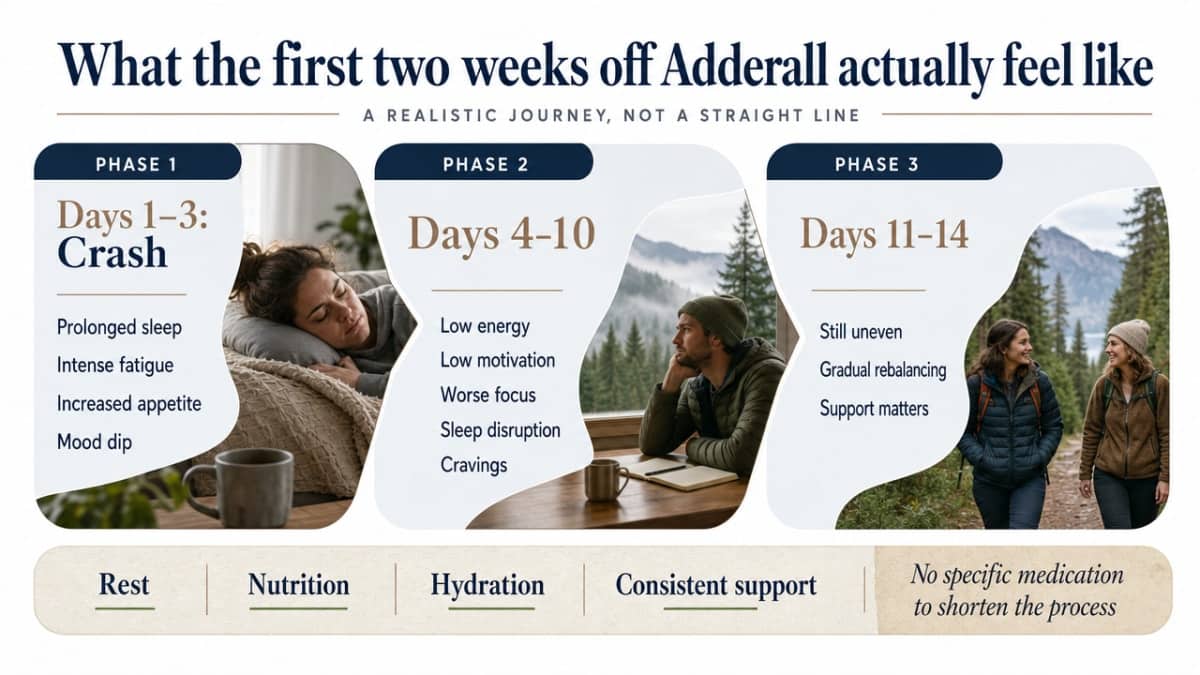
The initial period after stopping Adderall is characterized by the body seeking the rest it has been denied. This can be disorienting, as the stimulant has artificially boosted energy. Clinical guidance emphasizes monitoring and supportive care for stimulant withdrawal, as there is no specific medication to shorten the process 9. This means focusing on rest, nutrition, hydration, and consistent support.
The first three days, often called the “crash,” typically involve prolonged sleep, intense fatigue, increased appetite, and a significant dip in mood. This is a natural response as the brain rebalances after prolonged stimulation.
From day four to day ten, energy levels remain low, motivation is diminished, and focus can be worse than before. Sleep patterns may be disrupted, and cravings often emerge, particularly at times when Adderall was typically taken.
Weeks two through four see a gradual improvement in sleep regulation and mood, though progress can be uneven. Supportive care during this phase, including a calm environment, regular meals, light physical activity, and consistent check-ins, is crucial for recovery 9.
How people end up needing help with Adderall
The path to Adderall misuse is varied. Some individuals receive a legitimate prescription for ADHD in their youth and gradually increase their dosage to cope with academic or professional demands. Others may begin using it non-medically, often introduced by peers during high-pressure periods like college exams. The National Institute on Drug Abuse (NIDA) identifies prescription stimulants, particularly those for ADHD, as frequently misused drug classes 12.
On college campuses, nonmedical stimulant use is prevalent, with studies indicating up to 20% of students misuse prescription stimulants, primarily using pills not prescribed to them 15. This misuse is often driven by academic pressure and the desire to maintain high performance.
In professional settings, Adderall misuse can escalate during demanding projects, career advancements, or significant life changes. As a Schedule II medication, Adderall carries ongoing risks of misuse, addiction, overdose, and diversion, even with a legitimate prescription, as tracked by the FDA 2. This highlights that developing a dependence is often a consequence of prolonged use of a powerful substance, rather than a personal failing.
Do you need medical detox, or can you taper at home?
The honest case for supervised withdrawal
While stimulant withdrawal is generally not life-threatening like withdrawal from alcohol or benzodiazepines, and care primarily involves monitoring and support 9, supervised withdrawal offers significant benefits. The primary concern is the severe mood crash that can occur when a stimulant is removed after prolonged use. This can lead to disrupted sleep, unpredictable appetite, and intense feelings of sadness or hopelessness. A clinical team can provide crucial oversight for these emotional and psychological challenges that are difficult to manage alone.
Supervised care is particularly important if Adderall has been used in higher doses than prescribed, mixed with other substances like alcohol, benzodiazepines, or opioids, or if the home environment is not conducive to rest and recovery. The FDA’s classification of Adderall as a Schedule II drug underscores the real risks associated with misuse and mixed substance use 2. In such cases, a structured detox provides a safe and stable environment, allowing for a smoother transition into longer-term recovery efforts.
Tapering safely: what a prescriber will monitor
For individuals with a legitimate prescription, no co-occurring substance use, and a stable home environment, a gradual taper under medical supervision is a viable option. The key is a slow reduction in dosage, allowing the body and mind to adjust without a severe crash. Rapid dose reduction can intensify withdrawal symptoms.
A responsible prescriber will do more than just lower the dose; they will monitor physiological responses throughout the tapering process. The National Institutes of Health (NIH) recommends recording baseline heart rate and blood pressure before any changes, rechecking these at each visit, and considering medication reduction or cessation if readings consistently exceed the 95th percentile for the patient’s age 14.
A comprehensive monitoring checklist based on this guidance includes 14:
- Documenting baseline heart rate and blood pressure before starting the taper.
- Taking repeat readings at each dose reduction, not just at the end.
- Adjusting or stopping the medication if repeated readings surpass the 95th percentile for the patient’s age.
- Providing a clear, written taper schedule.
- Regularly assessing sleep, mood, and cravings at every appointment to address the human experience alongside the physiological data.
Engaging with a prescriber who is open to discussing these points ensures a safer and more supportive tapering process.
The therapies that actually move the needle
Contingency management: the current standard of care
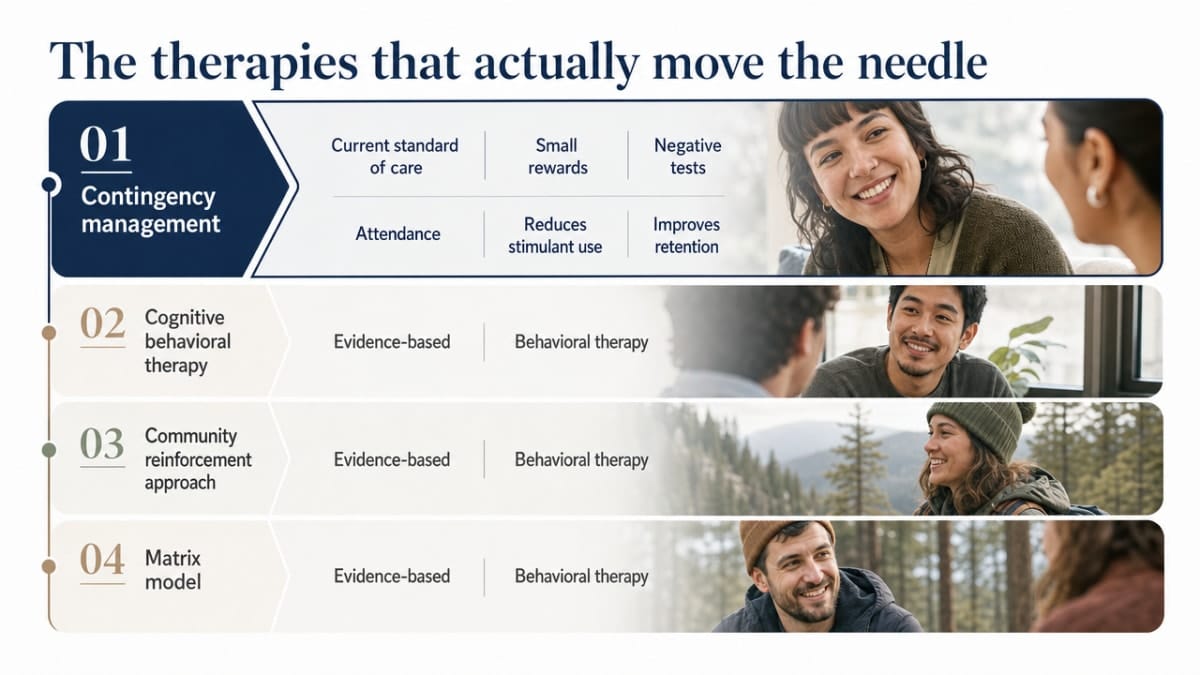
Contingency management (CM) is a highly effective, evidence-based treatment for stimulant use disorder, though it is often overlooked in general discussions. It involves providing small, tangible rewards, such as gift cards or vouchers, for achieving specific recovery goals, typically negative drug tests or consistent session attendance. This approach has demonstrated superior outcomes compared to many other interventions.
The ASAM/AAAP clinical practice guideline recognizes CM as the standard of care for stimulant use disorder, supported by numerous randomized trials and meta-analyses 13. California has even integrated CM into its Medicaid benefits, citing its robust effectiveness in reducing stimulant use and increasing treatment retention 10.
CM works by re-establishing a reward system. Adderall provides immediate gratification, and when use stops, the brain’s natural reward pathways can become sluggish. CM offers alternative, consistent positive reinforcement, helping the brain adapt to new, healthier behaviors. These small rewards act as scaffolding, supporting recovery while the brain’s natural reward system gradually recovers.
CBT, community reinforcement, and motivational interviewing
While contingency management is a cornerstone, it is part of a broader set of effective behavioral therapies. The Agency for Healthcare Research and Quality (AHRQ), SAMHSA, and the CDC identify four key behavioral therapies with strong evidence for stimulant use disorders: contingency management, cognitive behavioral therapy (CBT), the community reinforcement approach (CRA), and motivational interviewing (MI) 3, 8, 11. Programs that incorporate these methods align with national best practices.
Each therapy serves a distinct purpose:
- Contingency management
- Provides external rewards for positive behaviors, reinforcing abstinence and treatment engagement.
- Cognitive behavioral therapy (CBT)
- Helps individuals identify and change thought patterns and behaviors that contribute to Adderall use, teaching coping skills for high-risk situations.
- Community reinforcement approach (CRA)
- Focuses on building a fulfilling life that competes with substance use, addressing areas like employment, relationships, and healthy leisure activities.
- Motivational interviewing (MI)
- A client-centered counseling style that helps individuals explore and resolve their ambivalence about change, strengthening their motivation for recovery.
Effective programs often integrate these therapies. For example, an individual might receive one-on-one CBT, experience MI woven into all sessions, benefit from CM rewards, and work on CRA elements like improving sleep and social connections. These combined approaches form the core engine of recovery.
Where medication fits (and where it doesn’t)
Currently, there is no FDA-approved medication specifically for stimulant use disorder, including Adderall misuse 8, 11. This means that medication alone is not a primary treatment for stimulant addiction.
However, medication can play a supportive role in managing specific symptoms that arise during early recovery, such as sleep disturbances, persistent low mood, or anxiety. These “off-label” uses are targeted to make behavioral therapies more accessible and effective, rather than replacing them. For instance, a prescriber might prescribe bupropion to address cognitive fog, a non-habit-forming sleep aid for initial insomnia, or an antidepressant if underlying depression is present.
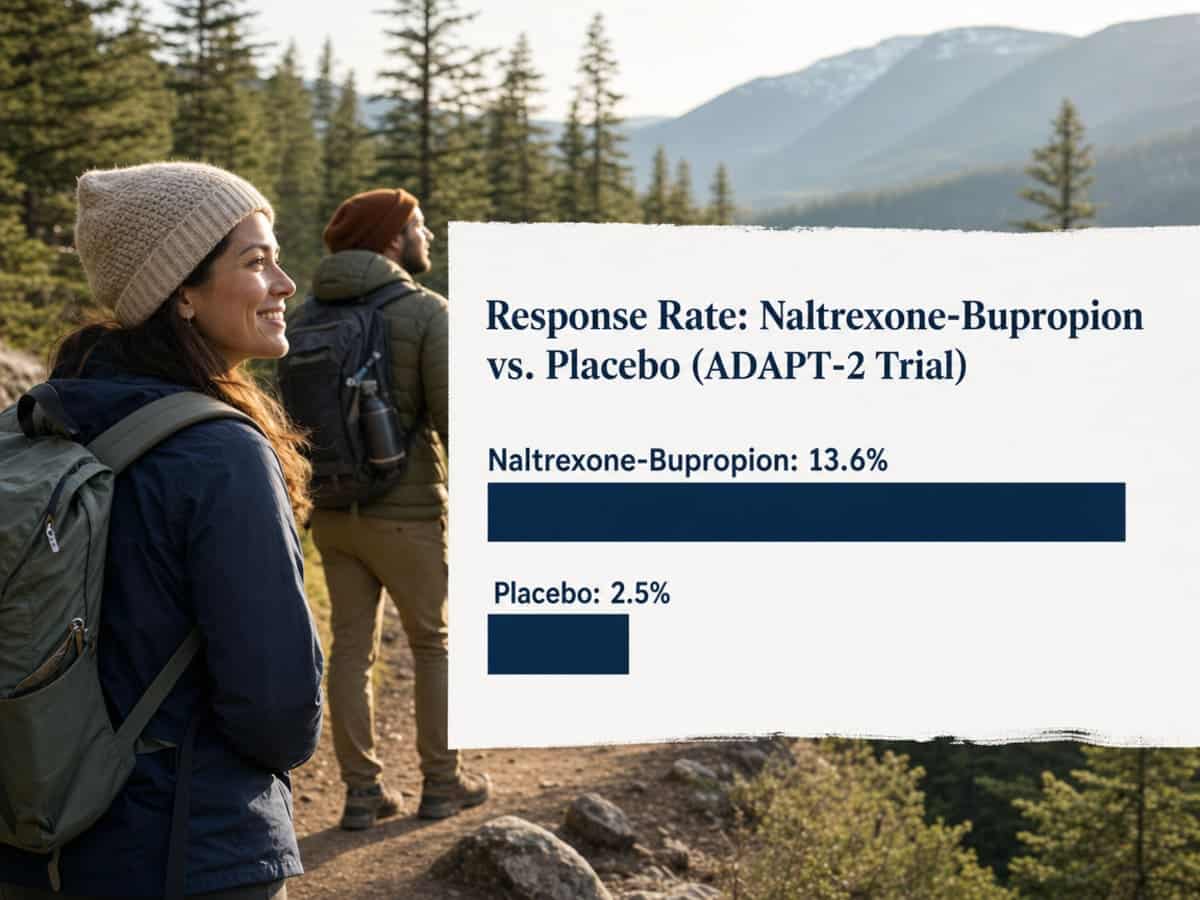
Research, such as the ADAPT-2 trial, has explored medication combinations. This study investigated injectable naltrexone combined with oral bupropion for methamphetamine use disorder, showing a modest but statistically significant response rate compared to placebo 6. A follow-up analysis further indicated that continued treatment led to additional reductions in use over time 7. While these findings are promising for stimulant use disorder as a category, it’s crucial to remember that ADAPT-2 focused on methamphetamine, not Adderall, and even in the treated group, only a fraction met the response criteria.
Choosing the setting: inpatient, residential, or outpatient
The appropriate treatment setting depends on the level of support an individual needs. Outpatient care is suitable if one has a safe home environment, supportive relationships, and flexibility in their work or school schedule. This allows individuals to attend therapy sessions and practice new skills while living at home.
Residential care often serves as a middle ground and can be particularly effective for Adderall withdrawal. This setting provides a structured, supportive environment with clinicians on-site, away from triggers and daily stressors. Given that Adderall withdrawal primarily involves sleep disturbances, mood fluctuations, and cravings, a calm and consistent environment, as emphasized in Massachusetts guidance for stimulant withdrawal care 9, can significantly aid recovery. This includes regular meals, emotional support, and a structured schedule that doesn’t rely on fluctuating motivation.
Inpatient hospital care is reserved for more complex situations, such as severe co-occurring substance use (e.g., heavy mixing with alcohol, benzodiazepines, or opioids), acute psychiatric crises, or medical conditions that require intensive monitoring. The FDA’s Schedule II classification for Adderall underscores the serious medical risks associated with misuse and polysubstance use 2. In these cases, inpatient care provides the highest level of medical supervision and intervention.
To determine the best fit, consider factors like your living situation, who you live with, the accessibility of substances, and your ability to be honest with those around you. If these factors present significant challenges, residential care for a few weeks can provide a crucial foundation. If your support system is strong, outpatient care combined with robust therapy can be highly effective.
If you have a real ADHD diagnosis, treatment isn’t the same as never again
Many individuals with a genuine ADHD diagnosis worry that seeking treatment for Adderall misuse means permanently abandoning stimulant medication. However, this is not necessarily the case. A review of long-term stimulant therapy for adult ADHD indicates that, when properly managed, stimulant treatment can have beneficial long-term effects and is generally well-tolerated 16. The issue often lies in the dosage, usage patterns, or external pressures, rather than the fundamental need for ADHD support.
After stabilizing from Adderall misuse, a thoughtful prescriber can re-evaluate ADHD treatment options. This might involve exploring non-stimulant medications, or, in some cases, reintroducing a stimulant at a carefully monitored dose with regular cardiovascular checks, as previously discussed 14. Alternatively, a longer break might be recommended to allow behavioral skills to develop. The key is an open and informed discussion with a healthcare provider, rather than an automatic lifetime ban. Recovery provides the clarity needed to make these decisions from a more stable and empowered position.
Your first three phone calls and what to say
Initiating the process of seeking help can be daunting. Here is a practical guide for making the first few crucial phone calls:
Call one: SAMHSA’s National Helpline, 1-800-662-4357. This free, confidential helpline is available 24/7 in English and Spanish 4. You do not need insurance information or a clear idea of the type of care you need. Simply state: “I’ve been misusing Adderall and I want to know what treatment options are near me.” They will ask a few questions and provide referrals to local programs without any obligation.
Call two: Your prescriber (if applicable). If your Adderall was prescribed, be honest with your doctor about your actual usage, including any dose increases or mixing with other substances. This transparency is vital for them to provide appropriate guidance, such as a monitored taper or a referral to a specialized program. If you do not have a prescriber, proceed to the next step.
Call three: A program from your referral list. Choose a program that is conveniently located. When you call, ask three key questions: “Do you use contingency management and CBT?”, “What does the first week of treatment look like?”, and “Do you accept my insurance?” If the responses are reassuring and specific, schedule an assessment. Making this call is a significant step forward.
What good aftercare looks like once detox ends
Detoxification is merely the initial step in recovery. Effective aftercare involves a gradual transition from intensive support to increasing independence. This often includes moving from daily structured programs to partial hospitalization, then to intensive outpatient programs a few evenings a week, followed by standard outpatient care, and finally, alumni check-ins that maintain connection without dominating one’s schedule.
Within this continuum, the core components should remain the evidence-based therapies: contingency management, cognitive behavioral therapy (CBT) with a compatible counselor, and community reinforcement activities focused on rebuilding a stable life—addressing sleep, nutrition, relationships, and purpose 3, 8. It is crucial to inquire about a program’s handoff procedures between different levels of care, as transitions are often points where individuals may disengage from treatment.
Continuity of care is especially important in stimulant recovery because, unlike opioid recovery, there is no equivalent medication-assisted treatment safety net 11. For example, opioid care in states like Oregon often combines medication with counseling and case management 17. In Adderall recovery, case management and counseling form the primary support structure. Therefore, a comprehensive and continuous support system, such as the personalized approach offered by Pacific Crest Trail Detox, is essential for sustained recovery.
Check Your Coverage for Adderall Detox Support
See if your insurance covers Adderall detox and treatment so you can take the next step with confidence.
Frequently Asked Questions
Is Adderall withdrawal dangerous, or can I just stop on my own?
Stimulant withdrawal is rarely life-threatening, unlike withdrawal from alcohol or benzodiazepines. Clinical guidance emphasizes monitoring and supportive treatment rather than emergency intervention 9. The main risk is a severe mood crash, characterized by intense lows, disrupted sleep, and negative thoughts. Supervised care is recommended if you are using heavily, mixing with other substances, or lack a supportive environment for rest.
Is there a medication that treats Adderall addiction?
No, there is currently no FDA-approved medication specifically for stimulant use disorder, which includes Adderall misuse 8, 11. While some programs use off-label medications to manage specific symptoms like sleep disturbances or depression, and research is ongoing into combinations like naltrexone plus bupropion (though studied in methamphetamine use) 6, the core of effective treatment remains behavioral therapies such as contingency management, CBT, and consistent support.
How long does it take to feel normal again after quitting Adderall?
The recovery process typically follows a three-phase pattern. Days one to three involve a “crash” with heavy sleep, low mood, and increased appetite. Days four through ten are characterized by low energy and fluctuating cravings. Weeks two through four see a gradual, though uneven, return to more regulated sleep and improved mood 9. Most individuals feel significantly more stable by week four, but full restoration of focus and motivation can take several months. Patience with yourself is key during this period.
What if I actually have ADHD? Do I have to stop stimulants forever?
Not necessarily. A review of long-term stimulant therapy for adult ADHD found that, in appropriately treated patients, stimulants can have beneficial effects and are generally well-tolerated 16. After stabilizing from misuse, a qualified prescriber can re-evaluate your ADHD treatment. This might involve non-stimulant medications or, in some cases, a carefully monitored stimulant dose with regular cardiovascular checks 14. Misuse and proper medical treatment are distinct. Recovery provides the clarity to engage in this discussion from a more stable perspective.
Do I need inpatient treatment, or is outpatient enough?
The best treatment setting depends on your individual circumstances, including your home environment, support system, and any co-occurring issues. Outpatient care is suitable if you have a safe home, supportive people, and can adjust your schedule. Residential care is often appropriate when triggers are prevalent or the mood crash requires a more contained and supportive environment. Inpatient hospital care is recommended for severe cases involving heavy mixing with alcohol, benzodiazepines, or opioids, or if there’s a psychiatric or medical crisis 2.
What is contingency management, and why do experts recommend it?
Contingency management (CM) is a treatment approach where individuals receive small, tangible rewards, such as gift cards or vouchers, for achieving specific recovery goals like negative drug tests or consistent attendance at sessions. Experts recommend it because it is the single treatment with the strongest evidence for stimulant use disorder. The ASAM/AAAP clinical practice guideline identifies CM as the current standard of care 13, and California has incorporated it into its Medicaid benefits due to its proven effectiveness in reducing stimulant use 10.
References
- Stimulants | Overdose Prevention. https://www.cdc.gov/overdose-prevention/about/stimulant-overdose.html
- Prescription Stimulant Medications. https://www.fda.gov/drugs/postmarket-drug-safety-information-patients-and-providers/prescription-stimulant-medications
- Stimulant Use Disorders and Behavioral Health Integration. https://integrationacademy.ahrq.gov/products/topic-briefs/stimulant-use-disorders-and-behavioral-health-integration
- National Helpline for Mental Health, Drug, Alcohol Issues. https://www.samhsa.gov/find-help/helplines/national-helpline
- Combination treatment for methamphetamine use disorder shows promise in NIH study. https://www.nih.gov/news-events/news-releases/combination-treatment-methamphetamine-use-disorder-shows-promise-nih-study
- Bupropion and Naltrexone in Methamphetamine Use Disorder. https://pubmed.ncbi.nlm.nih.gov/33497547/
- Extended observation of reduced methamphetamine use with combined naltrexone plus bupropion in the ADAPT-2 trial. https://pubmed.ncbi.nlm.nih.gov/38856086/
- Treatment of Stimulant Use Disorders. https://www.samhsa.gov/resource/ebp/treatment-stimulant-use-disorders
- Stimulant Use Disorder Treatment Guidance. https://www.mass.gov/doc/stimulant-use-disorder-treatment-guidance-doc/download
- Recovery Incentives Program: California’s Contingency Management Benefit. https://www.dhcs.ca.gov/recovery-incentives-program-californias-contingency-management-benefit/
- Stimulant Guide. https://www.cdc.gov/overdose-prevention/media/pdfs/2024/03/CDC-Stimulant-Guide.pdf
- Misuse of Prescription Drugs Research Report Overview. https://www.nida.nih.gov/publications/research-reports/misuse-prescription-drugs/overview
- The ASAM/AAAP Clinical Practice Guideline on the Management of Stimulant Use Disorder. https://pmc.ncbi.nlm.nih.gov/articles/PMC11105801/
- Adderall and cardiovascular risk: A therapeutic dilemma. https://pmc.ncbi.nlm.nih.gov/articles/PMC2690554/
- Raising Awareness About Prescription and Stimulant Abuse in College Students. https://pmc.ncbi.nlm.nih.gov/articles/PMC6312145/
- Long-term efficacy and safety of treatment with stimulants in adult ADHD. https://pubmed.ncbi.nlm.nih.gov/22917983/
- Oregon Health Authority: Medication-Assisted Treatment for Opioid Use Disorder. https://www.oregon.gov/oha/hsd/amh/pages/mat.aspx