


Key Takeaways
- Calling an addiction helpline is a free, confidential conversation with a trained specialist—no commitment, insurance, or certainty about treatment is required before you dial 1.
- Match the number to the situation: 911 for medical emergencies, 988 for suicidal thoughts or mental health crises, and 1-800-662-HELP for addiction treatment referrals 1, 4.
- Helplines matter most when withdrawal turns dangerous, connecting you to medical detox or medication-assisted treatment before symptoms or relapse become fatal 2, 3.
- Alcohol and benzodiazepine withdrawal can kill without medical supervision, while opioid withdrawal is brutal but rarely directly fatal—know the difference before you call.
- The first 12 minutes of a SAMHSA call follow a predictable arc: greeting, basic questions, safety assessment, and exploring local options at your pace 1.
- Specialists ask about substance, timing, symptoms, and zip code—never your legal name, social security number, or immigration status, so you can stay anonymous 1.
- Ask about accreditation, medication-assisted treatment, medical versus social detox, insurance options, and aftercare to make sure the referral actually protects you 1, 2, 9.
- Describe your situation in plain, factual language—substance, amount, and time since last use matter more than clinical vocabulary or self-criticism 5.
Before You Dial: What Actually Happens on the Other End
If you’re holding a phone, feeling anxious, or watching a loved one struggle, take a moment. Calling an addiction helpline is not a commitment. It’s a free, confidential conversation with a trained professional whose goal is to help you find safety. For instance, SAMHSA’s National Helpline operates 24/7, 365 days a year, offering treatment referrals and information in English and Spanish at no cost 1. You don’t need insurance details or a clear plan. You don’t even have to be certain about seeking treatment.
When you call, someone answers. They’ll ask about your situation in simple terms and listen. If withdrawal symptoms sound dangerous, they’ll guide you to the next safe step, which might involve connecting you with a local medical detox facility or a treatment locator 1. There’s no pressure, no judgment, and no law enforcement involvement.
This guide will walk you through the call process, identify withdrawals that require medical supervision, and provide questions to ask to ensure your safety and well-being.
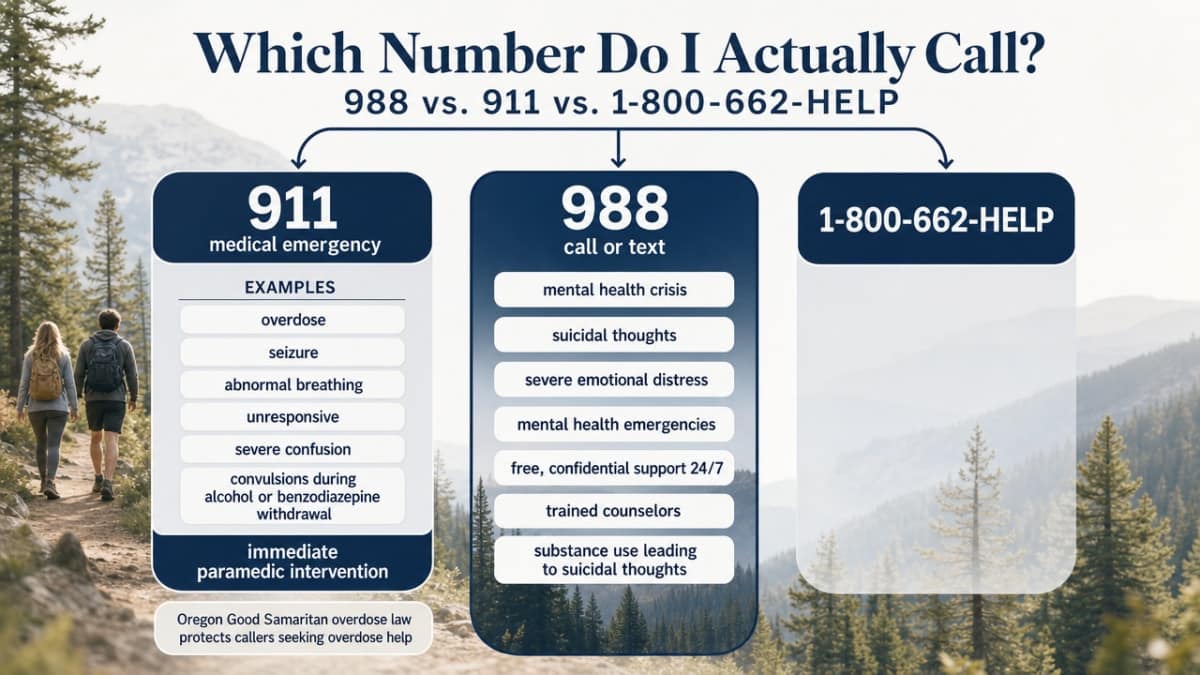
Which Number Do I Actually Call? 988 vs. 911 vs. 1-800-662-HELP
Understanding which helpline to call is crucial, especially in urgent situations. Here’s a quick guide to differentiate them:
Call 911 for a medical emergency. This includes situations like overdose, seizures, abnormal breathing, unresponsiveness, or severe confusion and convulsions during alcohol or benzodiazepine withdrawal. These are moments for immediate paramedic intervention. For example, Oregon has a Good Samaritan overdose law, protecting callers from legal repercussions when seeking help for an overdose.
Call or text 988 for mental health crises or suicidal thoughts. The 988 Suicide and Crisis Lifeline offers free, confidential support 24/7 4. Trained counselors assist with suicidal ideation, severe emotional distress, and mental health emergencies. They can also help if substance use has led to thoughts of self-harm. Use 988 when the danger is primarily psychological, not yet physical.
Call 1-800-662-HELP (4357) for addiction treatment, detox referrals, or to explore options. This is SAMHSA’s National Helpline, a free, confidential service available 24/7, 365 days a year, in English and Spanish, for individuals and families dealing with substance use or mental health concerns 1. The CDC recommends this number as a starting point for opioid use disorder and other substance issues 2. This line is appropriate when immediate danger has passed or hasn’t begun, and you need information on medical detox, medication-assisted treatment, or counseling.
A simple guideline: if someone is struggling to breathe, call 911. If they are expressing suicidal thoughts, call or text 988. If they are experiencing withdrawal and need guidance on next steps, call 1-800-662-HELP.
You can also start with any of these numbers and be redirected. A 988 counselor can guide you to addiction resources, and a SAMHSA specialist can advise you to call 911 if your description indicates a medical emergency. There’s no penalty for choosing the “wrong” number; the important thing is to make the call.
Why This Call Matters When Withdrawal Turns Dangerous
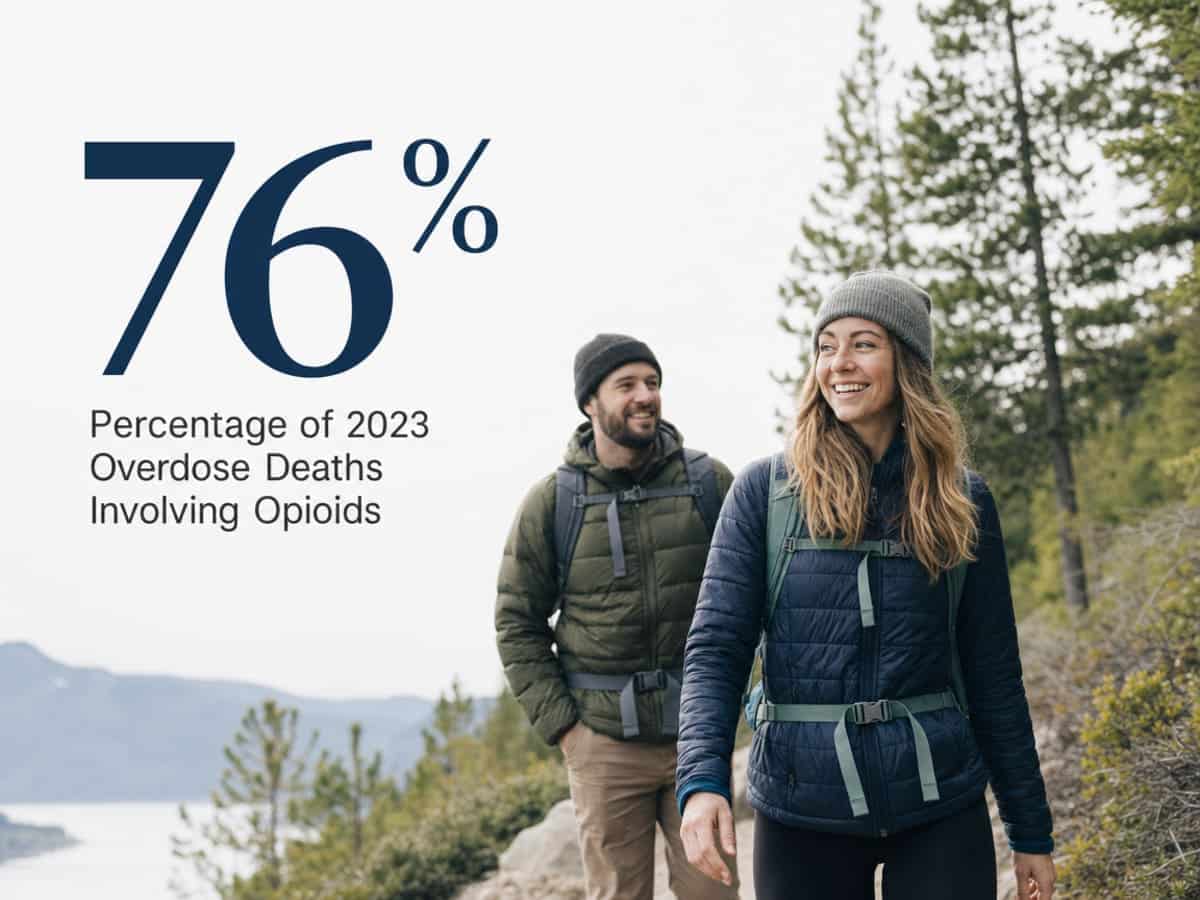
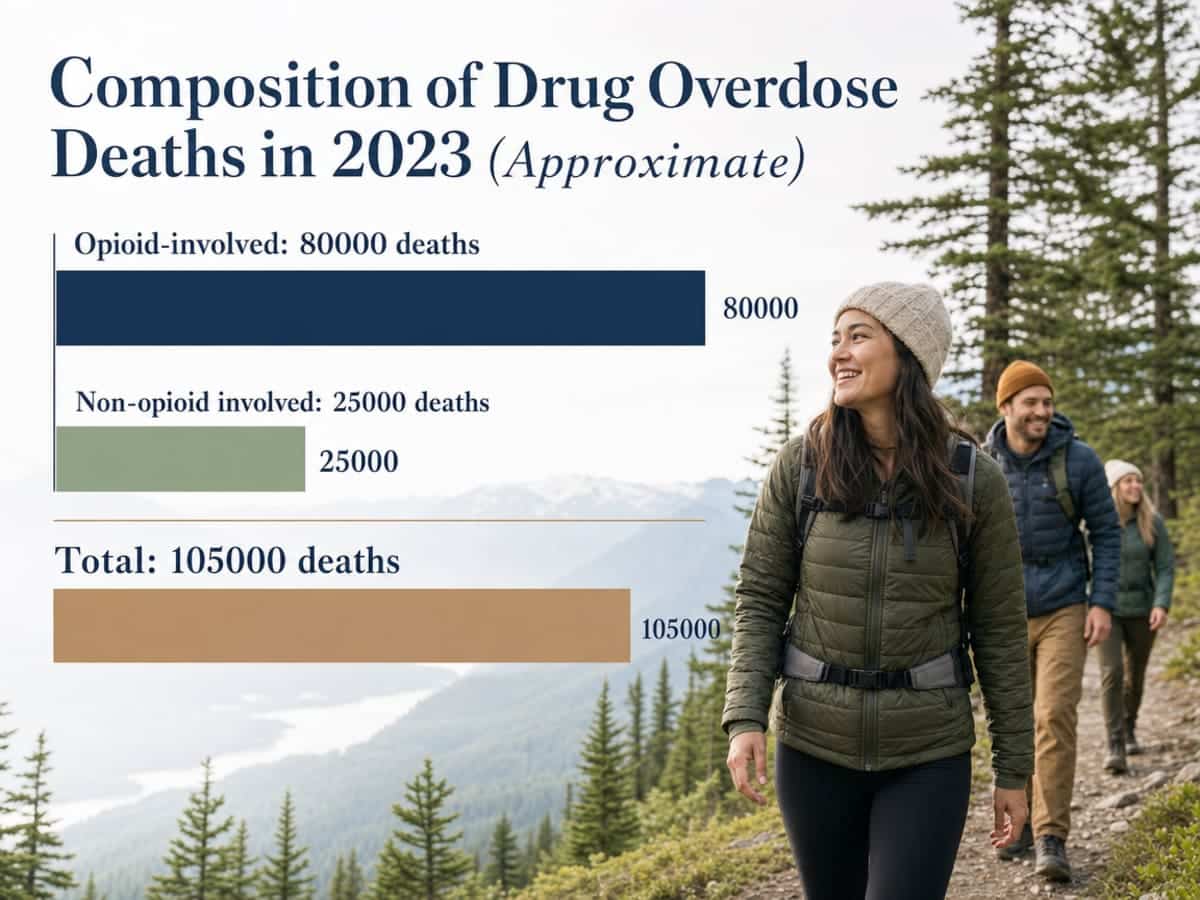
It’s important to acknowledge that withdrawal from certain substances can be life-threatening. Attempting to detox alone at home can be extremely risky. The severity of the situation is underscored by public health data. In 2023, approximately 105,000 people in the United States died from drug overdose, with nearly 80,000 of these deaths involving opioids 3. This highlights the critical need for professional support during withdrawal.
A helpline call can bridge the gap between a dangerous situation and medical intervention. When you contact SAMHSA at 1-800-662-HELP, the specialist can assess your safety and direct you to appropriate resources such as medical detox, medication-assisted treatment, or counseling, based on your needs 1. The CDC specifically recommends this number as an initial step for opioid use disorder, as attempting to quit without medical support often leads to relapse and overdose 2.
Which Withdrawals Are Life-Threatening and Which Are Just Brutal
Understanding the risks associated with different types of withdrawal is crucial for knowing how urgently to seek help and what information to provide. Some withdrawals can be fatal, while others are intensely uncomfortable but not directly life-threatening.
Alcohol withdrawal can be fatal. For individuals with prolonged heavy drinking, abruptly stopping can lead to seizures, dangerous fluctuations in heart rate and blood pressure, and delirium tremens (DTs), which carries a significant mortality risk without medical care. Symptoms like shaking hands, sweating, rapid pulse, vomiting, hallucinations, or confusion within 24 to 72 hours of the last drink indicate a need for medical supervision.
Benzodiazepine withdrawal can also be fatal. This includes medications like Xanax, Klonopin, Ativan, and Valium. Similar to alcohol, benzodiazepines affect the brain’s GABA system, and sudden cessation can cause seizures and other life-threatening complications. Individuals who have used these substances long-term or in high doses should never stop abruptly on their own. A helpline specialist can quickly identify this risk and refer you to a facility that provides medically supervised benzodiazepine tapers 1.
Opioid withdrawal is extremely uncomfortable but rarely directly fatal. Substances such as heroin, fentanyl, oxycodone, hydrocodone, and methadone cause severe symptoms including muscle pain, vomiting, diarrhea, chills, insomnia, and intense anxiety. The primary danger with opioid withdrawal lies in the period after detox: tolerance decreases rapidly, making a relapse at a previous dose highly likely to result in a fatal overdose. This is why the CDC recommends contacting 1-800-662-HELP for medication-assisted treatment with buprenorphine or methadone, which can ease withdrawal symptoms and reduce overdose risk 2.
Stimulant withdrawal from substances like cocaine, meth, and amphetamines is primarily characterized by severe emotional distress, such as profound depression, exhaustion, and intense cravings, but it is generally not medically dangerous on its own.
When you call, clearly state the substance used, the quantity, and the duration of use. This information helps the specialist direct you to the appropriate level of care efficiently.
The First 60 Seconds: What the Call Actually Sounds Like
When you dial, a trained specialist will answer. This is a human interaction, not an automated system. They are experienced and have heard every situation imaginable.
Here’s a general idea of how the initial minutes of a call to SAMHSA’s National Helpline, which is free, confidential, and available 24/7 in English and Spanish, typically unfold 1:
Minute 0 — The greeting. The specialist will offer a brief, human greeting, such as, “Thanks for calling. How can I help you today?” You don’t need a prepared statement. A simple “I’ve been drinking daily and I’m afraid to stop” is sufficient. If you need a few seconds to compose yourself, they will wait.
Minutes 1 to 3 — Gathering basic information. They will ask about your situation, the substance involved, and your current physical state. They may also ask for your zip code to locate nearby resources 1. They will not ask for your full name, social security number, or immigration status, allowing you to remain anonymous.
Minutes 3 to 6 — Safety assessment and emotional support. If your symptoms sound life-threatening—like seizures, severe confusion, or chest pain—they will advise you to call 911. If you are stable but unwell, they will continue the conversation. This part is not rushed; their training focuses on listening and support, not on sales.
Minutes 6 to 12 — Exploring options. Based on your description, they will present available services in your area, including medical detox facilities, counseling, medication-assisted treatment, and support groups 1. You are encouraged to ask questions and are free to decline any suggestions.
The handoff. If you are ready, they will provide direct contact information for facilities or, in some cases, connect you directly while you are still on the line. If you are not ready, that is perfectly acceptable. The call concludes when you decide it’s over.
The Questions They’ll Ask (and the Ones They Won’t)
Many people fear what questions will be asked during a helpline call. Helpline specialists are trained to be non-judgmental and supportive. Here’s what a SAMHSA specialist typically asks, based on the National Helpline’s design 1:
- What substance are you using, and how much? This includes alcohol, opioids, benzodiazepines, or stimulants, along with the amount and frequency. This helps them assess the potential danger of withdrawal.
- When was your last use? The timing of withdrawal is important. Alcohol withdrawal symptoms at 12 hours differ from opioid withdrawal at 36 hours.
- How are you feeling physically right now? They will ask about symptoms like shaking, vomiting, chest pain, confusion, or seizures, as these indicate a potential medical emergency.
- What’s your zip code? This is used solely to find local treatment options such as medical detox, medication-assisted treatment, or counseling 1.
- Do you have insurance? This is optional. They can search for options with or without insurance. “I don’t know” is a valid response.
- Is anyone with you? Are you safe? This is a quick safety check, not an interrogation.
What to Ask the Helpline to Protect Yourself
A helpline call is a two-way street. While they ask questions to help you, you should also ask questions to ensure you receive the best possible care. This is an important decision, and it’s wise to be informed, even when you’re feeling unwell.
Here are some questions to consider asking:
- “Is the facility you’re referring me to accredited?” Inquire about Joint Commission or CARF accreditation, which are indicators of quality. A helpline specialist can confirm this or filter for accredited facilities.
- “Do they offer medication-assisted treatment?” If opioids are involved, buprenorphine or methadone during and after detox significantly reduces overdose risk 2. If alcohol or benzodiazepines are a concern, ask if the program uses medications for safe withdrawal management.
- “Is this medically supervised detox, or is it social detox?” There’s a crucial distinction. Alcohol and benzodiazepine withdrawal require on-site medical staff to manage potential seizures or blood pressure spikes.
- “Do they accept my insurance? What if I don’t have any?” SAMHSA can search for options based on your insurance or for sliding-scale or state-funded programs 1. Providing your plan name or stating “none” will help the search.
- “What kind of setting is it—hospital, clinic, or residential?” Residential, home-like detox programs can be a better fit for those who need 24/7 supervision but not an ICU level of care.
- “Is there aftercare?” Detox alone has limited long-term effectiveness. Ask if the referral includes connections to counseling, outpatient care, or ongoing support 9.
If possible, write down the answers. If not, ask the specialist to text or email you the referral details. You have the right to advocate for your own care.
How to Describe Your Situation Without Shame-Loaded Words
You don’t need to use specific vocabulary when you call. Helpline specialists are trained to meet you where you are, without judgment. NIDA guidelines emphasize using person-first, neutral language to reduce stigma and improve care. For example, “person with a substance use disorder” instead of “addict,” “return to use” instead of “relapse,” and “positive or negative test” instead of “clean” or “dirty” 5. You’ll notice specialists using this language, which helps separate your identity from your condition.
You don’t have to adopt this language yourself. Express your situation however feels natural. “I drink a fifth a day and I can’t stop” or “My son is dopesick and I don’t know what to do” are perfectly acceptable. The most helpful information is concrete details about the substance, amount, and time since last use. Focus on providing facts rather than self-criticism. “I’ve been drinking heavily for three years” is more informative than “I’m a mess.” You are providing information for your safety, not confessing.
From the Call to Medical Detox: What Comes Next
After your call, you’ve provided your zip code and described your substance use, and the specialist has offered some local options. What happens between ending the call and reaching a safe environment?
Typically, it involves one or two more phone calls. The helpline will connect you with a detox facility’s admissions line, or in some cases, transfer you directly 1. The facility will ask clinical questions—about the substance, amount, last use, medical history, and current symptoms—to determine if you need medically supervised detox, an emergency department visit, or a lower level of care. If you are withdrawing from alcohol or benzodiazepines, they will likely prioritize getting you in quickly.
Admission to a medical detox program is a supportive process. Your vital signs will be taken. A nurse or doctor will review your substance use history and create a plan to manage withdrawal safely. For opioid withdrawal, this often includes medication-assisted treatment with buprenorphine or methadone. For alcohol or benzodiazepine withdrawal, it usually involves a monitored medication taper 2, 6. You will be provided with a bed, food, and round-the-clock supervision.
The first 72 hours are often the most challenging. After this initial period, most programs transition to planning for ongoing care, such as counseling, behavioral therapy, outpatient care, or intensive outpatient treatment. NIDA emphasizes that detox alone is often insufficient for lasting recovery; effective care typically combines medication, counseling, and continuous support 9. A good program will communicate this upfront and integrate follow-up care into your stay. You are taking the next safe step, and then the one after that.
Common Fears, Answered Directly
It’s natural to have concerns before making a helpline call. Let’s address some common fears directly:
- “Will they send the police to my house?”
- No. SAMHSA’s National Helpline is a referral and information service, not a law enforcement agency. You can remain anonymous throughout the call 1. Emergency services are only involved if you describe a life-threatening medical emergency, and even then, the specialist will instruct you to call 911 yourself.
- “Will my employer find out?”
- Not from the helpline. The call is confidential 1. Treatment information is protected by federal privacy rules that are stricter than standard medical privacy. If you have concerns about time off work, you can discuss FMLA and short-term disability options with the detox program’s intake staff.
- “Will they force me into rehab?”
- No one can force you into treatment through a phone call. You are in control of the next steps. You can end the call, decline any options offered, or call back another time.
- “What if I’ve tried before and it didn’t stick?”
- This is a common experience and does not disqualify you from seeking help again. NIDA defines addiction as a chronic, treatable condition where effective care often involves a combination of medication, counseling, and ongoing support over time 9. A return to use is an opportunity for learning, not a sign of failure.
- “What if I can’t afford it?”
- Be open about this during the call. The specialist can filter for sliding-scale, state-funded, and insurance-covered options 1.
If You’re in the Portland Metro Area
If you are calling from Milwaukie, Portland, Gresham, Beaverton, or anywhere in the Pacific Northwest, the national number remains effective. SAMHSA’s 1-800-662-HELP will search for local options by zip code and can filter for medical detox, medication-assisted treatment, and insurance coverage 1. If you are facing alcohol or benzodiazepine withdrawal, specifically ask for programs with on-site medical staff.
Alternatively, you can contact a local medical detox program directly. Pacific Crest Trail Detox in Milwaukie offers medically supervised detox with medication-assisted treatment in a residential, home-like setting. They also provide step-down care to ensure a smooth transition after the initial detox period. Most insurance plans are accepted, with OHP being an exception.
Regardless of which number you choose to dial first, make the call tonight, not later.
Check Your Coverage for Immediate Detox Support
See if your insurance covers safe, medically supported detox care right now.
Frequently Asked Questions
Is calling an addiction helpline really free and confidential?
Yes, SAMHSA’s National Helpline at 1-800-662-HELP is a free, confidential service available 24/7, 365 days a year, offering treatment referrals and information in English and Spanish 1. You will not receive a bill, and you can remain anonymous—no full name, social security number, or immigration status is required. The specialist’s role is to listen and help you find the next safe step, not to report your information.
Will the helpline send the police or force me into treatment?
No. SAMHSA is a referral and information service, not a law enforcement agency, and no one can compel you into treatment through a phone call 1. You maintain control over what happens next—you can hang up, decline any options, or call back later. Emergency services only become involved if you describe a life-threatening medical situation, and even then, the specialist will instruct you to dial 911 yourself.
What if I don’t have insurance or can’t afford detox?
It’s important to mention this during the call. The helpline can filter for sliding-scale, state-funded, and low-cost programs, and searches can be conducted with or without insurance 1. Stating “I don’t have coverage” is a complete answer and will not end the conversation. Many medical detox programs also accept most private insurance plans, and their intake staff can guide you through payment options once you are connected.
Should I call 988, 911, or 1-800-662-HELP?
Dial 911 if someone is experiencing an overdose, seizure, is unresponsive, or is in any other medical emergency. Call or text 988 for suicidal thoughts or acute mental health distress; it’s a free, confidential, 24/7 service 4. Call 1-800-662-HELP for addiction treatment referrals, detox options, or guidance on next steps 1. If you choose the wrong number, they will redirect you to the appropriate service.
Is my situation ‘bad enough’ to call a helpline?
Yes. You don’t need to reach a specific “rock bottom” or meet certain criteria. If you are concerned enough to look for a helpline number, that is sufficient reason to call. The CDC encourages early outreach, even if you are unsure about the severity of your situation 8. Helpline specialists assist individuals at all stages, from initial concern to full crisis, and no one is turned away for calling too soon.
Can I call on behalf of a family member who is in withdrawal?
Absolutely. SAMHSA’s National Helpline is designed to support both individuals and families 1. You can describe what you are observing—such as shaking, vomiting, or the time since their last drink or dose—and the specialist will help you determine if it’s a 911 situation or if a medical detox referral is needed. Have your zip code and any insurance information ready. Your loved one does not need to be on the call with you.
References
- National Helpline for Mental Health, Drug, Alcohol Issues – SAMHSA. https://www.samhsa.gov/find-help/helplines/national-helpline
- Treatment of Opioid Use Disorder | Overdose Prevention – CDC. https://www.cdc.gov/overdose-prevention/treatment/opioid-use-disorder.html
- Understanding the Opioid Overdose Epidemic – CDC. https://www.cdc.gov/overdose-prevention/about/understanding-the-opioid-overdose-epidemic.html
- Mental Health Resources – CDC. https://www.cdc.gov/mental-health/caring/index.html
- Words Matter – Terms to Use and Avoid When Talking About Addiction. https://nida.nih.gov/nidamed-medical-health-professionals/health-professions-education/words-matter-terms-to-use-avoid-when-talking-about-addiction
- Opioids: Help and Resources – HHS.gov. https://www.hhs.gov/opioids/index.html
- Overdose Prevention – CDC. https://www.cdc.gov/overdose-prevention/index.html
- Mental Health – CDC. https://www.cdc.gov/mental-health/index.html
- Treatment Approaches for Drug Addiction DrugFacts – NIDA. https://nida.nih.gov/publications/drugfacts/treatment-approaches-drug-addiction
- Overdose Death Rates – NIDA. https://nida.nih.gov/publications/drugfacts/overdose-death-rates