


Key Takeaways
- Partial hospitalization offers Portland families a middle path between detox and residential care, providing roughly 20-plus hours of weekly clinical treatment while the person sleeps at home.3
- Oregon certifies PHP programs under ASAM Level 2.5 through OAR 309-019-0184, so families can verify state certification, person-centered planning, and care coordination before committing.4
- PHP fits best when acute withdrawal has passed, home is safe, and co-occurring depression, anxiety, PTSD, or opioid use disorder need integrated therapy and medication support.11
- Before choosing a Portland program, compare clinical hours, on-site prescribers, family session frequency, commute realities, insurance verification, and how the step-down to IOP is structured.6
When detox isn’t enough and residential feels like too much
You’ve watched the cycle long enough to know that a week of detox, by itself, isn’t going to hold. The shakes pass, the color comes back into your partner’s face, and then they walk out the door of a withdrawal program with a follow-up appointment three weeks away and a long, empty afternoon. That gap is where so many families lose ground.
At the same time, the idea of sending your partner away to a residential center for 30 or 60 days can feel impossible. There are kids to pick up. A mortgage. A job that won’t hold forever. A bed that has been half-empty too many nights already, and you’d like them in it.
Partial hospitalization, often shortened to PHP, is the option many Portland families don’t know exists. It’s a full-day treatment program where your partner gets intensive therapy and medical support during the day, then comes home to you at night. Think of it as the middle path: serious enough to handle real substance use and the depression or anxiety that often rides alongside it, gentle enough to keep your family under one roof. You don’t have to choose between safety and staying together.2
What partial hospitalization actually looks like in a Portland week
A typical PHP day, hour by hour
Your partner’s alarm goes off around 7:00 a.m., same as it used to. There’s coffee, a shower, maybe a ride from you or a quick drive across town. By 9:00 a.m., they’re checking in at the treatment center.
From there, the day has shape. ASAM Level 2.5 partial hospitalization programs generally provide 20 or more hours of clinically intensive programming per week, with direct access to medical and psychiatric services on site. In practice, that often looks like five days a week, roughly six hours a day, with a real lunch break in the middle.3
Mornings usually open with a brief check-in: how did last night go, any cravings, any sleep trouble, any wins. Then a process group runs for about 90 minutes, where your partner and a small circle of peers work through what’s driving the use. After a short break, there’s often a skills class, the kind that teaches grounding techniques, relapse warning signs, or how to handle a Friday night without a drink in your hand.
Lunch is a real pause. Afternoons might include an individual therapy session, a medication check with a nurse or prescriber, a family or couples session once or twice a week, and a closing group that helps your partner land before driving home. By around 3:00 or 3:30 p.m., they’re done. Pickup line, dinner, bedtime stories, all still possible.
The four therapy pillars your partner will encounter
It helps to know what kinds of work happen inside those clinical hours, because “therapy” can sound like a single thing when it’s really four braided together.2
- The first is individual therapy. One counselor, your partner, a closed door, and time to talk about the stuff that doesn’t come up in a group, the shame, the family history, the trauma underneath the drinking or the pills. This is where the slow, careful work lives.
- The second is group therapy. Five to ten people in similar shoes, led by a clinician. It sounds intimidating from the outside. Most people end up calling it the part that surprised them most, because hearing someone else describe your exact 3:00 a.m. thought has a way of softening the isolation.
- The third is family or couples therapy. This is your seat at the table. You’ll likely be invited in for sessions that focus on rebuilding trust, setting clearer agreements at home, and learning how to talk about hard things without it turning into the same fight you’ve had for years.
- The fourth is medication support. A prescriber on the team can manage withdrawal-related symptoms, treat depression or anxiety, and continue medications for opioid or alcohol use disorder when those are part of the plan. It’s medical care, not willpower-shaming.
Coming home at night: what evenings look like for the two of you
This is the part most articles skip, and it’s probably the part you most want to ask about. What happens when your partner walks back through the door at 4:00 p.m.?
Early on, evenings tend to be quieter than you’d expect. Day treatment is emotionally tiring. Your partner may want a nap before dinner, or a walk around the block to decompress. The intensity that used to go into hiding a habit is now going into facing it, and that takes real energy.
You’ll probably notice small, ordinary things returning. Helping with homework. Loading the dishwasher without being asked. A real conversation about the kids’ week instead of a deflection. None of this is dramatic. All of it matters.
There will also be hard nights. A craving that shows up around 9:00 p.m. A frustrating group session that left them raw. The honest answer is that PHP doesn’t erase those moments, it gives your partner tools and a team to bring to them, and gives you a phone number to call if something feels off. You’re not the sole safety net anymore, which is its own kind of relief.
PHP, IOP, residential, detox: where each one fits
The continuum from detox through alumni support
Treatment for substance use isn’t one thing. It’s a ladder, and each rung does a specific job. Knowing which rung your partner is on, and which one comes next, takes a lot of the panic out of the search.
At the top sits medical detox. This is short, usually a few days to a week, with 24-hour nursing care to handle withdrawal safely, especially from alcohol, opioids, or benzodiazepines. Detox stabilizes the body. It doesn’t, on its own, change the patterns that led to use.
Below detox sits residential or inpatient treatment, where people live on-site full-time, often for 30 days or longer. Then comes partial hospitalization. PHP at ASAM Level 2.5 generally runs 20 or more hours per week of clinically intensive programming, with direct access to medical and psychiatric staff on site, and your partner sleeps at home each night. After PHP, intensive outpatient (IOP) drops the clinical hours down to about 9 to 12 a week, usually three evenings or mornings. Standard outpatient is lighter still, maybe one session a week.3
Alumni and aftercare wrap around all of it, the long tail of check-ins, peer groups, and recovery community that runs for months or years after the formal program ends.6
Why PHP is often the right middle path for a working family
Here’s the part that surprises a lot of spouses: day-treatment-style care isn’t a compromise or a budget option. It’s become a mainstream level of care, with solid evidence behind it.
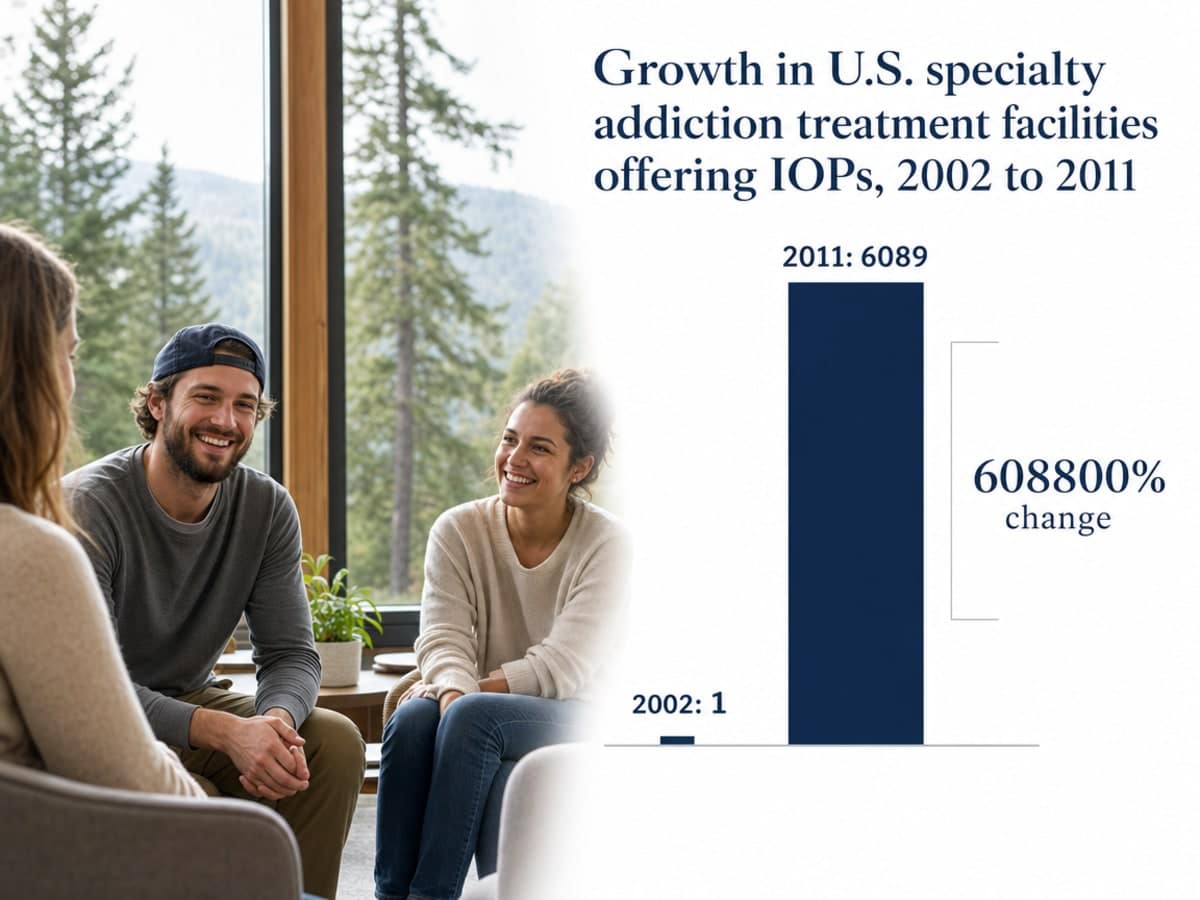
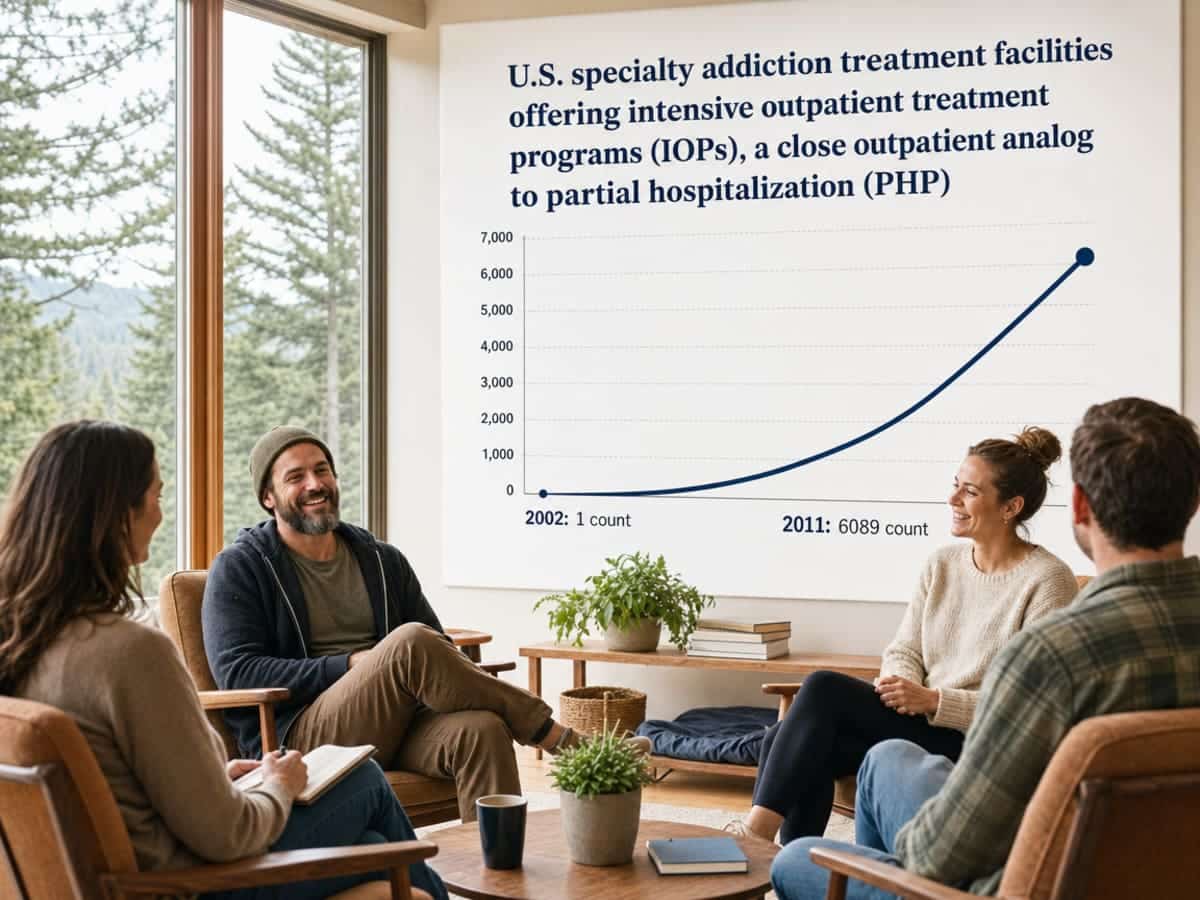
One review of the field counted the growth in U.S. specialty addiction treatment facilities offering intensive outpatient programs, a close cousin to PHP, from a small handful of programs in 2002 to roughly 6,089 facilities by 2011. That same review concluded that intensive outpatient care can be as effective as inpatient treatment for most individuals when the level of care is matched well to the person. Translation: your partner sleeping at home isn’t a clinical downgrade. For many people, it’s exactly what works.1
For a working family, that matters in concrete ways. Your partner can keep paying into health insurance through their employer. The kids see a parent at breakfast and bedtime. You’re not the lone witness to every craving, because there’s a full team checking in five days a week. And when the day comes that your partner is steady enough to go back to work part-time, the program steps down to IOP rather than dropping them off a cliff.
How Oregon regulates PHP, and what each rule means for your family
Regulation sounds dry until you realize it’s the thing that tells you whether the program down the road is actually safe to send your partner to. Oregon has put real guardrails around partial hospitalization for substance abuse Portland families rely on, and each one translates into something concrete for your week.
Oregon Administrative Rule 309-019-0184 governs partial hospitalization substance use disorder services at ASAM Level 2.5. Programs must be certified by the state Division in accordance with OAR 309 Division 008 to deliver this level of care, with certificates effective for up to three years. In plain terms: when you call a Portland program, you can ask whether they’re certified for Level 2.5 SUD services. If the answer is yes, the state has already inspected the basics so you don’t have to.4
The Oregon Health Authority’s Chapter 309 standards spell out what “certified” actually requires: a real clinical assessment, person-centered treatment planning, coordination with other providers, and proper documentation. For you, that means your partner gets a plan written for them, not a one-size-fits-all schedule, and that plan can be shared with a primary care doctor or therapist they already trust.5
The rules also place PHP inside Oregon’s broader outpatient continuum, alongside IOP and standard outpatient care, so the step-down from one level to the next is built into the system rather than improvised. One honest note: Oregon’s behavioral health system has struggled with capacity, which is why intake calls sometimes feel slow. That isn’t a reflection on your family. It’s the landscape, and a good program will tell you the truth about timing.6,8
When PHP is the right call for your partner
Signs PHP fits better than residential or IOP
There’s a sweet spot where partial hospitalization is the honest answer, and you can usually feel it before a clinician confirms it. Your partner is past acute withdrawal, or close to it, but the idea of three evening groups a week through an intensive outpatient program doesn’t feel like enough structure yet. The cravings are still loud. The triggers at home are real. A few hours of treatment won’t fill the day.
At the same time, the case for residential isn’t airtight. Your partner isn’t a danger to themselves. They have a safe place to sleep, which is you and your home. They want to keep their job, see the kids, and stay in their own bed. National guidance describes PHP as the right fit for people who need more than standard outpatient but don’t require 24-hour care.2
If that sounds like the family at your kitchen table, you’re not settling for less. You’re matching the level of care to the life you actually have.
Co-occurring depression, anxiety, PTSD, or bipolar
You may already suspect what the substance use has been covering up. Maybe the drinking got heavier after a layoff and a stretch of dark months. Maybe the pills started after a car accident and the panic attacks that followed. Maybe there’s a bipolar diagnosis from years ago that never got steady care.
This is where PHP earns its place. Many people with substance use disorders also live with depression, anxiety, PTSD, or bipolar disorder, and treating both at the same time, in the same program, leads to better outcomes than chasing them separately. Level 2.5 programs are built for this kind of work, with direct access to psychiatric and medical services woven into the schedule.3,11
For your partner, that means the therapist in the morning group and the prescriber adjusting their antidepressant are on the same team, talking about the same person. For you, it means fewer separate appointments to coordinate and fewer chances for one provider to miss what another one knows.
Opioid use and medication support inside PHP
If your partner is in recovery from opioid use, including heroin, fentanyl, or prescription pain pills, medication is often part of what makes the rest of treatment possible. Buprenorphine, methadone, or naltrexone can quiet the constant pull of cravings so therapy actually has room to land.
National clinical guidance is direct on this point: medications for opioid use disorder work best when paired with concurrent psychosocial care, and the level of care should be matched to what the person needs 10. PHP is one of the strongest settings for that pairing. Your partner sees a prescriber regularly, attends groups that address the emotional side of opioid recovery, and gets help building the daily routines that protect a dose.
Choosing a Portland program without losing your mind at midnight
Questions to ask on the intake call
The intake call is shorter than you’d think, and you can run it. You don’t need clinical training to ask the right questions. You need a notebook and about fifteen minutes.4,10
Start with the basics:
- Is the program certified by the state for ASAM Level 2.5 partial hospitalization substance use services?
- How many clinical hours per week, and what does a typical day look like?
- Who’s on the team, and is there a prescriber on site who can manage medication for opioid or alcohol use disorder?
Then get personal:11
- Can my partner be assessed this week, or what’s the wait?
- Do you treat co-occurring depression, anxiety, PTSD, or bipolar in the same program?
- How often are family or couples sessions, and how do you involve me?
- What does the step-down to intensive outpatient look like, and is it the same team?
Last, ask the question that tells you the most: what happens if my partner has a hard night or a slip during the program? A good answer is specific and steady. A vague answer is your signal to keep calling.
Insurance, time off work, and the money conversation
Money is the part that keeps you awake, and it’s fair to put it on the table early. Most commercial insurance plans cover partial hospitalization when it’s medically necessary, but coverage details vary, and Oregon’s behavioral health system has real capacity strain that can affect how quickly an in-network bed opens. Ask the program’s billing team to verify benefits before your partner’s first day and to give you a written estimate of your out-of-pocket cost.8
For work, your partner has more protection than you might think. The Family and Medical Leave Act and Oregon’s own leave laws can cover medically necessary treatment, and many employers’ short-term disability policies do too. A program’s intake coordinator can write the documentation HR will ask for.
If income is going to dip during treatment, name it now, together. Build a four- to six-week budget for the PHP phase, then a lighter one for the IOP step-down when your partner can work part-time. Knowing the shape of the next two months is its own kind of relief.
Commute, location, and the home-like vs hospital feel
Where the program sits on a map matters more than it sounds. Five days a week of driving adds up fast, and a 45-minute slog through I-5 traffic at 8:30 a.m. is a relapse risk on its own. Look at the route from your house at the actual hours your partner will travel. Milwaukie, Southeast Portland, Beaverton, and the east side each have different traffic personalities. Pick the one your partner can do tired.
The setting itself shapes recovery too. Some programs feel like a hospital corridor, fluorescent and clinical. Others feel more like a house, with couches, a kitchen, and natural light. Neither is wrong, but for many spouses, a home-like environment is easier to hand a partner off to each morning. It says: this is a place to heal, not a place to be sick.
Tour if you can, even briefly. Trust what your gut says when you walk in. You’ve been carrying enough; the room should feel like it’s ready to carry some of it with you.
Planning the step-down to IOP and life after PHP
Most spouses think the big question is how PHP starts. The bigger question, honestly, is how it ends. The step-down to intensive outpatient is where your partner’s regular life starts to come back, and the way it’s planned makes a real difference in whether the early wins hold.
A good PHP team starts talking about the next level of care weeks before it happens, not the day before discharge. The transition usually looks like this: clinical hours drop from around 20-plus per week to roughly 9 to 12 in IOP, scheduled in the morning or evening so your partner can return to part-time work, school pickup, or both. The therapist often stays the same. The peer group sometimes does too. That continuity matters more than you’d guess.6
You’ll feel the change at home. Dinner happens earlier. Weekends open up a little. The recovery work doesn’t stop, it just gets woven into a fuller week. From IOP, your partner typically steps down again to standard outpatient, maybe one session a week, and then into alumni and aftercare for the long stretch. None of this is a finish line. It’s the slow, steady part where a life gets built back, one ordinary Tuesday at a time.1

Taking the next step together
You’ve been carrying a lot, and most of it quietly. Reading this far is already part of the work. Whatever you decide next, you don’t have to decide it alone, and you don’t have to have the perfect words when you bring it up at the kitchen table tonight.
A reasonable next step is small. Call one Portland-area program tomorrow and ask for an assessment. Verify they’re certified for ASAM Level 2.5 services, ask about the step-down to intensive outpatient, and listen for whether the person on the phone treats you like a partner in the plan. Compassionate, evidence-based care in a home-like setting, with a clear path from detox through aftercare, is what programs like Pacific Crest Trail Detox are built around. Your family is worth that kind of steady, honest help.
Check Your Coverage for Partial Hospitalization Care
Find out if your insurance covers flexible substance abuse treatment in Portland.
Frequently Asked Questions
Can my partner keep their job while doing partial hospitalization in Portland?
Usually not full-time during the PHP phase, since the program runs roughly six hours a day, five days a week. Many people use FMLA, Oregon family leave, or short-term disability to cover this stretch. Once they step down to intensive outpatient, part-time work often becomes possible again because clinical hours drop to evenings or mornings.6
How is PHP different from intensive outpatient (IOP) and residential treatment?
Residential means sleeping on-site, 24-hour care, no work or home life during the stay. PHP is daytime-only, with 20 or more hours a week of clinical programming and access to medical and psychiatric staff, and your partner sleeps at home. IOP is lighter still, about 9 to 12 hours a week, scheduled around work or family.3,6
Will my partner sleep at home during PHP, or do they stay overnight?
They sleep at home. That’s the whole point of partial hospitalization. The program provides intensive daytime treatment, and evenings and weekends are spent with you and the family. If overnight medical supervision becomes necessary, the clinical team would recommend a higher level of care, like residential or detox.
Does PHP treat depression, anxiety, or PTSD alongside substance use?
Yes, and this is one of PHP’s real strengths. Treating substance use and mental health conditions together leads to better outcomes than handling them in separate places. Level 2.5 programs are designed for integrated care, with prescribers and therapists on the same team coordinating medication and counseling for both issues at once.3,11
Can my partner stay on medication for opioid use disorder while in PHP?
Yes. Buprenorphine, methadone, and naltrexone can continue throughout PHP, and federal clinical guidance is clear that these medications work best when paired with concurrent psychosocial care like the groups and individual therapy PHP provides. Ask the program directly whether they have a prescriber on the team who manages these medications.10
How do we know when it’s time to step down from PHP to IOP?
The clinical team decides with your partner, usually based on stable participation, fewer cravings, a workable home routine, and progress on treatment goals. The conversation should start weeks before discharge, not the day of. A solid step-down keeps the same therapist when possible and drops hours from 20-plus per week down to roughly 9 to 12 in IOP.6
References
- Substance Abuse Intensive Outpatient Programs: Assessing the Evidence. https://pmc.ncbi.nlm.nih.gov/articles/PMC4152944/
- Treatment Types for Mental Health, Drugs and Alcohol. https://www.samhsa.gov/find-support/learn-about-treatment/types-of-treatment
- Level 2.5 Partial Hospitalization Services by Service Characteristics Self Assessment Checklist. https://www.pa.gov/content/dam/copapwp-pagov/en/ddap/documents/documents/asam/level%202.5%20self%20assessment.pdf
- Or. Admin. Code § 309-019-0184 – Partial Hospitalization Substance Use Disorder Services ASAM Level 2.5. https://www.law.cornell.edu/regulations/oregon/Or-Admin-Code-SS-309-019-0184
- Behavioral Health Services – Chapter 309 (Highlighted Rules Excerpt). https://www.oregon.gov/oha/HSD/Medicaid-Policy/SUDWaiver/309-019-Highlighted-040723.pdf
- Behavioral Health Outpatient Treatment Programs. https://www.oregon.gov/oha/hsd/amh-lc/pages/op.aspx
- Substance Use and Mental Disorders in the Portland-Vancouver-Hillsboro MSA. https://www.samhsa.gov/data/sites/default/files/NSDUHMetroBriefReports/NSDUHMetroBriefReports/NSDUH-Metro-Portland.pdf
- Oregon | State Residential Treatment for Behavioral Health Conditions. https://aspe.hhs.gov/sites/default/files/2021-08/StateBHCond-Oregon.pdf
- Age trends in rates of substance use disorders across ages 18–90. https://pmc.ncbi.nlm.nih.gov/articles/PMC5757874/
- Medications for Opioid Use Disorder (TIP 63). https://www.ncbi.nlm.nih.gov/books/NBK424859/
- Substance Use and Co-Occurring Mental Disorders. https://www.nimh.nih.gov/health/topics/substance-use-and-mental-health