
Key Takeaways
- Oregon Administrative Rule 309-019-0135 requires licensed behavioral health providers to consider individuals for care without discrimination based on religion, creed, or use of prescribed opioid use disorder medications 12.
- About 20.8% of Oregonians aged 12 and older had a past-year substance use disorder in 2023–2024, well above the national rate, spanning many belief backgrounds 13.
- When comparing programs, weigh whether religious content is required, whether 12-step attendance is optional, and whether MAT like buprenorphine or methadone will be continued.
- Secular aftercare paths such as SMART Recovery, LifeRing, and Women for Sobriety meet across the Portland metro area and perform comparably to 12-step groups 8, 17.
Your Beliefs Are Not Part of the Treatment Plan
If you are looking at detox in Oregon and are concerned about being pressured into specific spiritual or religious practices, rest assured. Your personal beliefs are respected and are not something a medical detox program needs to alter. At Pacific Crest Trail Detox in Milwaukie, the focus of your treatment plan is on your physical safety and well-being during withdrawal, not on your worldview.
You might identify as spiritual but not religious, agnostic, atheist, or come from a faith tradition different from those often encountered in recovery programs. All these perspectives are valid. None of them make you a more difficult patient, nor should they prevent you from receiving safe, medically supervised help for alcohol, benzodiazepine, or opioid withdrawal.
Clinical guidelines emphasize person-centered care that avoids imposing religious beliefs or secular worldviews on individuals seeking treatment 1. This is the standard at Pacific Crest Trail Detox: medical detox, medication-assisted treatment when appropriate, and a supportive residential setting where staff treat you as an individual. We believe in warm, encouraging care that respects your journey.
This guide will explore the legal framework, evidence-based practices, and aftercare options available in Oregon. Our approach is neutral; discussions about religion are only included if you choose to bring them up.
Religion, Spirituality, and the ‘Higher Power’ Problem
Distinguishing Key Concepts
Many people feel anxious about detox programs due to a common confusion between three distinct concepts. Understanding these differences can alleviate concerns.
- Religion
- Refers to organized systems of belief, traditions, texts, and community practices. Examples include Christianity, Judaism, Islam, and Buddhism. Religion is typically external and observable.
- Spirituality
- A more personal and subjective experience. It can involve a sense of connection to something greater than oneself, a search for meaning, personal values, or feelings of awe and inner peace. Spirituality can be cultivated within or outside of organized religion. Research indicates that personal spirituality, rather than formal religiousness, is more consistently linked to aiding recovery 6. This suggests that personal meaning-making is valuable, regardless of religious affiliation.
- The 12-step ‘Higher Power’
- Originates from Alcoholics Anonymous and similar fellowships, asking individuals to acknowledge a power greater than themselves, however they define it. While this framework is effective for some, others, particularly those who have had negative experiences with religious language, may perceive it as a form of religion.
Medical detox does not require adherence to any of these concepts. Clinical guidelines for substance use care advocate for a person-centered approach that does not impose religious or secular beliefs 1. Your primary focus during withdrawal is your safety and well-being.
Addressing Past Negative Experiences with Faith-Based Programs
If you have previously participated in a program that emphasized prayer, surrender, or a specific religious framework and found it unhelpful or even detrimental, your reluctance to repeat that experience is valid. It indicates you are attuned to what works for you.
This concern is recognized in clinical literature. While faith-based programs can be effective for individuals whose beliefs align with their framework 7, they may not be suitable for non-religious individuals or those who have experienced harm within religious communities 7. The compatibility between a program’s approach and an individual’s beliefs significantly impacts engagement and outcomes.
This does not diminish the value of faith, but rather highlights that it is not a universal solution. Detox is not a setting for pressure to adopt someone else’s spiritual answers. If you have a history of moving away from a religious upbringing or being told your addiction was a moral failing, that history is respected here. At Pacific Crest Trail Detox, the staff focuses on your safe withdrawal and medical care, allowing your personal identity and beliefs to remain your own.
Evidence on Spirituality and Recovery
Research offers an objective view on the role of spirituality in recovery.
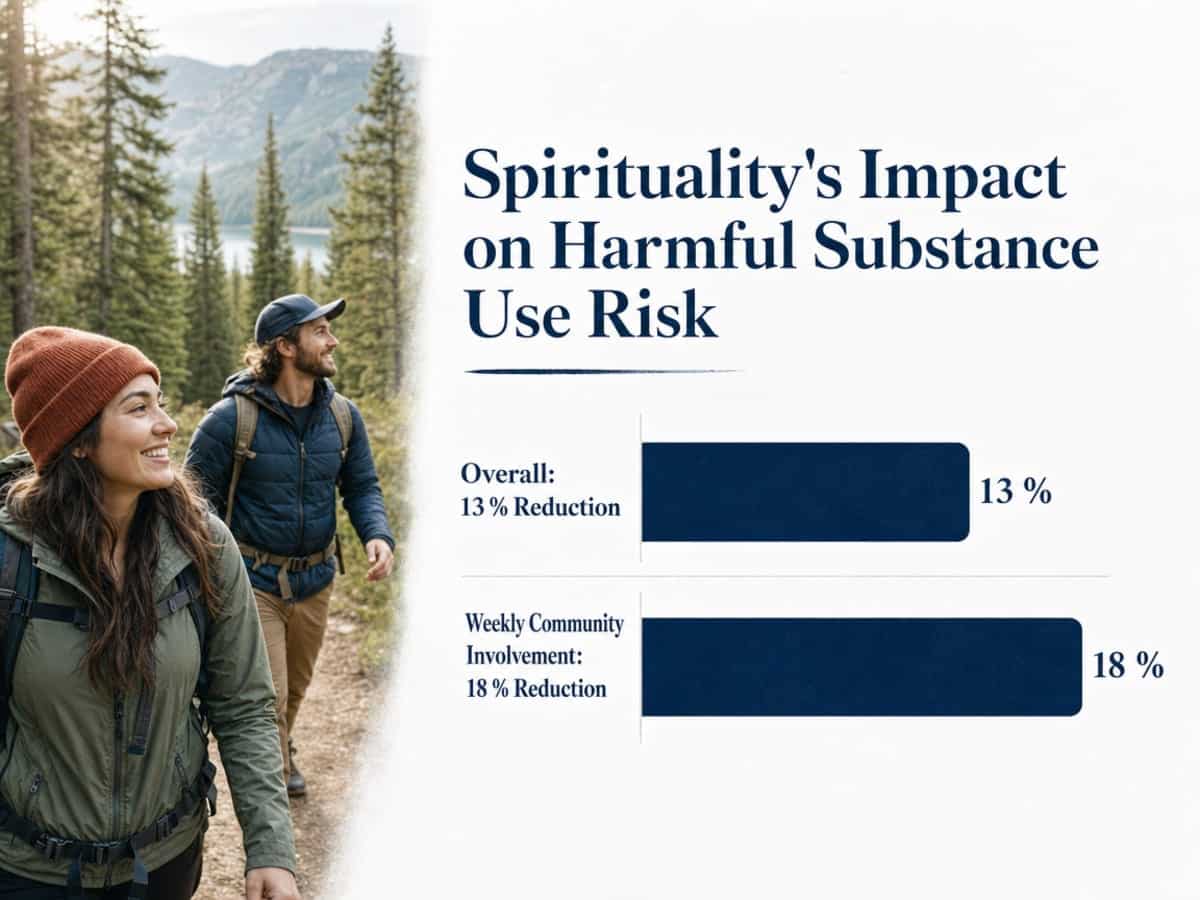
A 2026 meta-analysis of 55 studies involving over 540,000 participants found that spirituality was associated with a 13% reduction in the risk of harmful alcohol and drug outcomes. For those with weekly involvement in a spiritual or religious community, this reduction increased to approximately 18% 3. These findings are modest but real, and they do not require adherence to specific beliefs, as the studies measured self-defined spirituality across diverse traditions and non-traditions.
Another narrative review of 70 studies published between 1999 and 2021 supports this, identifying various pathways—both religious and non-religious—through which a personal sense of meaning, connection, or values can support abstinence and coping 2. The authors acknowledge that spirituality is measured inconsistently across studies, cautioning against overstating any single numerical finding.
When researchers differentiate between formal religiousness and personal spirituality, the personal aspect consistently emerges as beneficial. A study of adults with prior treatment and 12-step histories found that personal spirituality, rather than institutional religion, was more consistently associated with aiding recovery 6. This is particularly relevant for individuals who have disengaged from organized religion.
The Oregon Context: Need and Legal Framework
Substance Use Disorder in Oregon
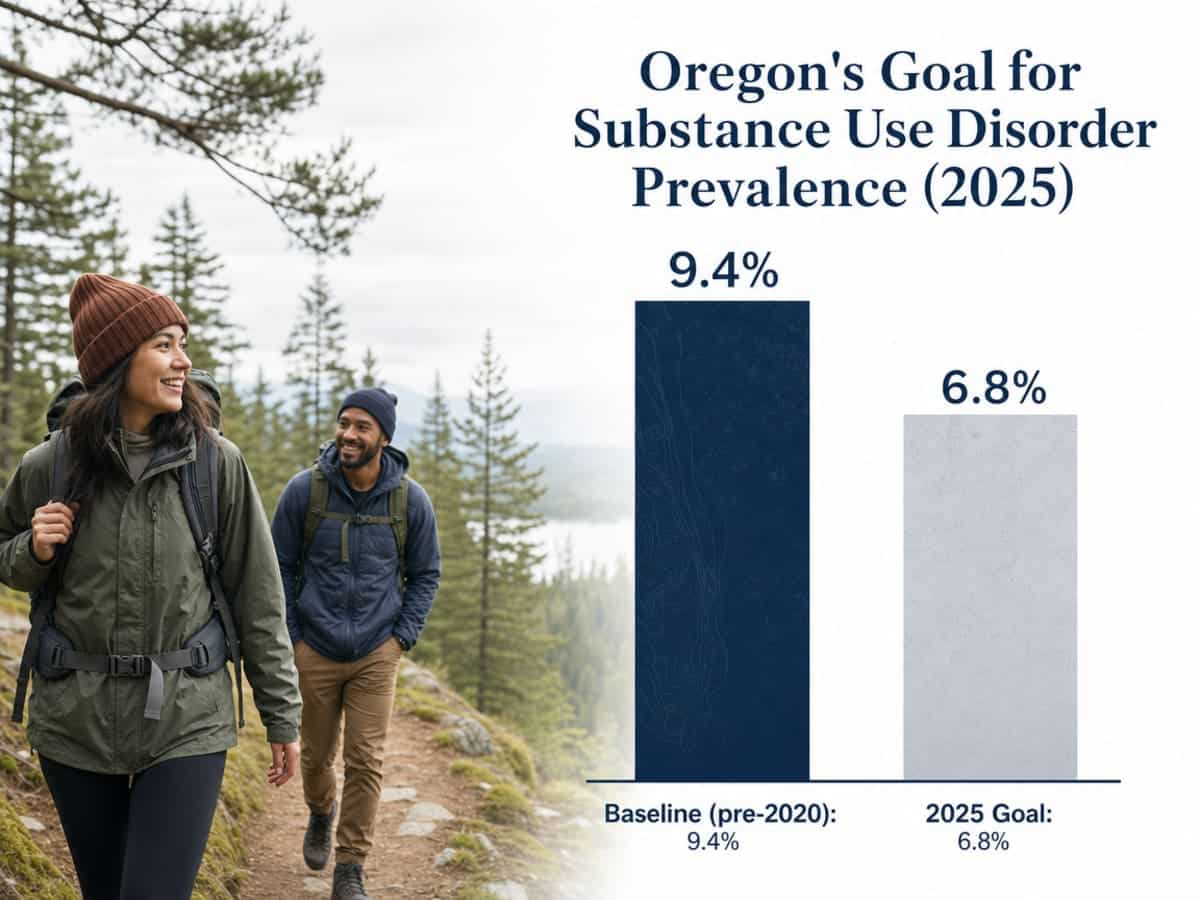
You are not alone in seeking help. In 2023–2024, approximately 20.8% of Oregonians aged 12 and older experienced a past-year substance use disorder, compared to the national average of about 16.9% 13. This means more than one in five people in Oregon are affected. The state’s need is significantly higher than the national average, and the healthcare system is actively working to address this gap.
Such a large population comprises individuals with diverse backgrounds and beliefs. This includes people from various religious traditions, secular individuals, and those who have disengaged from their childhood faiths. A detox system that caters only to one group would fail the majority. The extensive unmet need further underscores this point. Alcohol use disorders alone affect over 450,000 Oregonians, with approximately 354,380 needing but not receiving specialized services 16. Given this significant gap, concerns about religious pressure should not be a barrier to accessing safe withdrawal care. Programs that accommodate a wide range of beliefs, including no belief, are crucial for addressing this widespread need. You are part of the diverse population Oregon aims to serve effectively.
Oregon Law and Detox Providers
In Oregon, respecting your beliefs is not merely an option for facilities; it is a legal requirement for behavioral health providers.
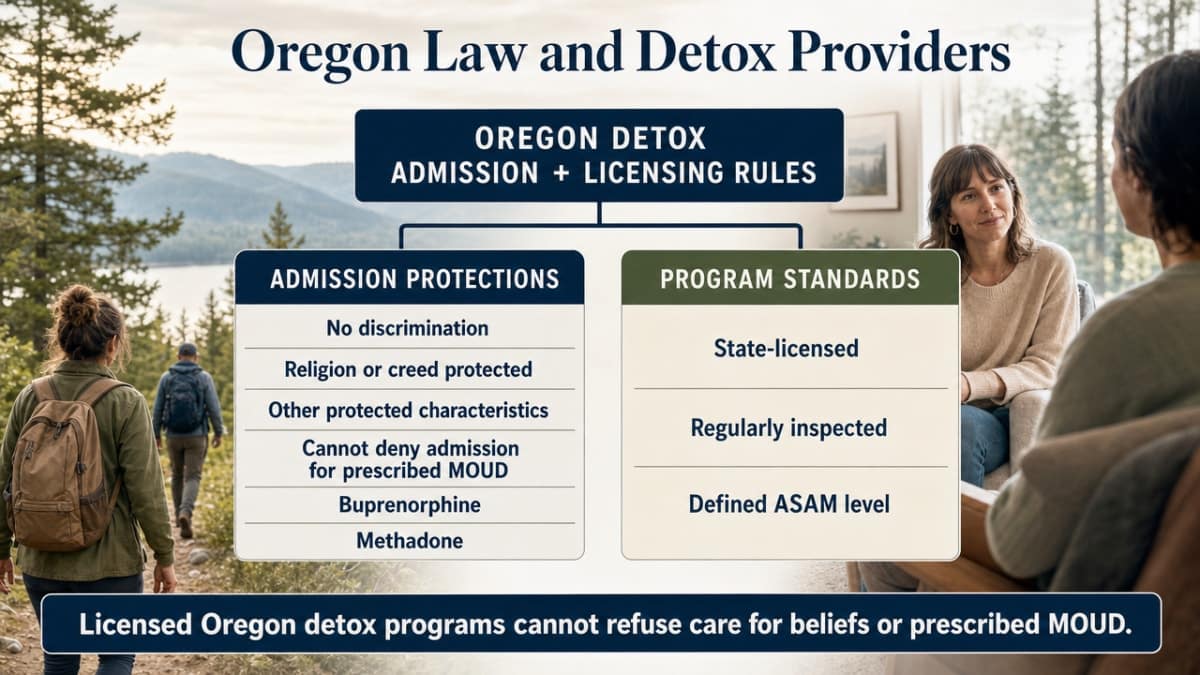
Oregon Administrative Rule 309-019-0135 mandates that individuals must be considered for substance use and mental health services without discrimination based on religion, creed, or other protected characteristics 12. This rule also prohibits providers from denying admission to individuals who continue prescribed medications for opioid use disorder 12. This means a licensed Oregon detox program cannot refuse you care because you are an atheist, belong to a non-Christian faith, have left a religious community, or are taking buprenorphine or methadone.
Clinical standards are also regulated. Under OAR 415-050, withdrawal management programs must be state-licensed, regularly inspected, and operate at a defined ASAM level of care as of April 1, 2024. This includes clinically managed residential and medically monitored levels used by non-hospital detox facilities like Pacific Crest Trail Detox 11. This ensures that your withdrawal environment meets rigorous safety standards, regardless of whether it is a hospital setting.
Medical Detox Without Religious Pressure
The Clinical Approach: Withdrawal, MAT, and Monitoring
Withdrawal from alcohol, benzodiazepines, or opioids is a physiological process affecting your nervous system. Alcohol and benzodiazepine withdrawal can be life-threatening, with risks such as seizures, dangerous blood pressure fluctuations, and delirium if attempted without medical supervision. Opioid withdrawal, while rarely fatal, is intensely uncomfortable, often leading individuals to relapse to alleviate symptoms. These are biological realities, not character flaws.
Medical detox aims to make this biological process safe and manageable. In a non-hospital residential program, this involves 24/7 nursing care, medical director oversight, regular vital sign monitoring, and medications to alleviate withdrawal symptoms and prevent complications. For alcohol withdrawal, this often includes a tapered benzodiazepine protocol. For opioid withdrawal, medication-assisted treatment (MAT), such as buprenorphine or methadone, is typically initiated during detox and can be continued afterward if appropriate.
Oregon directly regulates this level of care. OAR 415-050 requires all withdrawal management programs to be licensed, inspected, and operate at a defined ASAM level, including the clinically managed residential and medically monitored levels utilized by non-hospital detox facilities 11. Furthermore, you cannot be denied admission for taking prescribed medications for opioid use disorder 12. If MAT is part of your treatment plan, it will continue. The clinical decisions—medication tapering, MAT, monitoring—are based on your physical health, history, and the substance you are withdrawing from, not your beliefs.
Pacific Crest Trail Detox’s Approach to Beliefs
At Pacific Crest Trail Detox, we operate on the principle that your beliefs are personal and remain yours throughout your stay. Our staff’s role is to provide medical care, not to influence your worldview. You will not be asked to pray, name a Higher Power, or participate in any religious services. There are no required step programs or expectations regarding your spiritual or religious identity.
Our facility in Milwaukie offers a home-like residential environment, distinct from a hospital or retreat center. We provide a comfortable bed, nourishing meals, a peaceful atmosphere, and a clinical team that engages with you personally. Individual and group therapy sessions focus on immediate concerns—withdrawal management, understanding your substance use patterns, and planning for life after detox—using evidence-based approaches that do not rely on any specific belief system.
If you have a personal spiritual practice that supports you, you are encouraged to continue it—whether through meditation, journaling, spending time outdoors, or connecting with someone from your tradition. Clinical guidelines clearly state that good care neither imposes religious beliefs nor a secular worldview 1, and Pacific Crest Trail Detox adheres to this. Our team can discuss aftercare options that include both secular and faith-friendly paths, allowing you to choose what best suits you.
After Detox: Effective Secular and Spiritual Options
Detox addresses the initial phase of withdrawal. The subsequent months are crucial for sustained recovery, and you have diverse options that do not require adopting beliefs you do not hold.
Secular mutual-help groups have demonstrated effectiveness comparable to Alcoholics Anonymous. A longitudinal study comparing Women for Sobriety, LifeRing, SMART Recovery, and 12-step groups found that secular options are generally as effective as 12-step groups for individuals with alcohol use disorder 8. Another 2023 comparison of SMART Recovery, AA, and individuals using both reported similar levels of recovery capital, self-efficacy, and quality of life across groups. The primary difference was that daily spiritual experiences were more common among AA participants, as expected 9. This indicates that choosing a secular group is not a weaker path, but rather one that aligns with your personal preferences.
In the Portland metro area, secular aftercare options include:
- SMART Recovery offers in-person and online meetings throughout the week, utilizing cognitive-behavioral tools without religious requirements 17.
- LifeRing adopts a similar secular stance, focusing on building a sober self.
- Women for Sobriety is a peer-led program centered on self-worth and coping strategies.
- AA and NA are also widely available if they suit your needs.
Pacific Crest Trail Detox integrates clinical care with your chosen aftercare path. This includes partial hospitalization and intensive outpatient programming post-residential detox, continued medication-assisted treatment as needed, individual and group therapy, and an alumni community. If you desire a faith-based aftercare group, our team can provide referrals. Conversely, if you prefer to avoid religious settings, that preference is fully respected. Your recovery plan is tailored to you.
Guidance for Family Members
If you are researching programs for a loved one, your dedication is commendable. Here are some important considerations before contacting facilities.
The question of beliefs is often more significant for your loved one than it may appear. If they express a preference against religious programs, take this seriously, even if faith has been helpful in your own life. Alignment with personal beliefs is critical for sustained engagement in care, a finding consistently supported by research comparing faith-based and secular treatments 7. Imposing a framework that does not resonate with them can jeopardize their fragile decision to seek help.
When contacting a detox program, ask direct questions:
- Is religious or spiritual content required?
- Are 12-step meetings mandatory or optional?
- Will my family member be accepted if they are taking buprenorphine or methadone?
In Oregon, the answer to the last question must be yes, as providers cannot deny entry based on prescribed opioid use disorder medications 12. Reputable programs will answer these questions clearly and directly.
Your current priority is to help your loved one access a safe environment for withdrawal.
Find Out If Your Detox Is Covered Today
Check your insurance to see if you can access safe, spiritual-but-not-religious detox support in Oregon.
Frequently Asked Questions
Do I have to work the 12 steps or accept a Higher Power to detox at Pacific Crest Trail Detox?
No. Medical detox at Pacific Crest Trail Detox focuses on safely managing withdrawal through vital-sign monitoring, medication, nursing care, and rest. There are no required step programs, no ‘Higher Power’ language on intake forms, and no expectation for you to adopt a spiritual framework. Clinical care is designed to avoid imposing religious beliefs or secular worldviews 1. If 12-step groups appeal to you later, they are available; if not, that is also perfectly acceptable.
What if I’m an atheist, agnostic, or have been hurt by a religious community in the past?
You are fully welcome here, and your personal history or beliefs are not considered a barrier to treatment. The compatibility between a program and an individual’s beliefs is crucial for engagement, which is why faith-framed programs may not be suitable for non-religious individuals or those with negative religious experiences 7. At Pacific Crest Trail Detox, your worldview remains yours. The clinical team prioritizes your medical stabilization without requiring you to explain, defend, or alter your beliefs.
Are there non-12-step support options in Oregon after I finish medical detox?
Yes, several options exist. SMART Recovery, LifeRing, and Women for Sobriety all hold meetings in the Portland metro area, both in-person and online, without any belief requirements. Longitudinal research suggests these secular groups are as effective as 12-step groups for individuals with alcohol use disorder 8. Pacific Crest Trail Detox’s aftercare services—including partial hospitalization, intensive outpatient programs, continued MAT, therapy, and alumni support—can connect you with any mutual-help path that fits your needs, secular or otherwise.
Can I still use medications for alcohol, benzo, or opioid withdrawal if I’m not religious?
Absolutely. Medications such as buprenorphine, methadone, and tapered benzodiazepine protocols are clinical decisions based on your physical health and substance use history, not your beliefs. Oregon regulations specifically prohibit providers from denying admission based on your decision to continue prescribed medications for opioid use disorder 12. If MAT is part of your treatment plan, it will continue regardless of your worldview.
What if I am religious or spiritual and want that respected during detox?
Your religious or spiritual practices are equally respected. If prayer, meditation, scripture, or contact with someone from your tradition helps you, you are encouraged to continue these practices. Our staff will neither promote nor discourage them. Good clinical care respects personal beliefs without imposing any specific worldview 1. If you desire faith-based aftercare alongside your medical treatment, our team can provide appropriate referrals. Your plan will align with your beliefs.
How can I tell if an Oregon detox program will actually respect my beliefs before I admit?
When you call, ask directly: Is any religious or spiritual content required? Are 12-step meetings mandatory or optional? Will I be admitted if I am taking MAT? In Oregon, licensed providers must consider individuals without regard to religion and cannot deny entry based on prescribed opioid use disorder medications 12. A transparent program will answer these questions clearly. If responses are vague or the conversation shifts back to beliefs, consider that information when making your decision.
References
- Guidelines for integrating spirituality into the prevention and treatment of alcohol and substance use disorders. https://pmc.ncbi.nlm.nih.gov/articles/PMC10288482/
- Spirituality in Addiction Recovery: A Narrative Review. https://pubmed.ncbi.nlm.nih.gov/37486580/
- Spirituality and Harmful or Hazardous Alcohol and Other Drug Use Outcomes: A Meta‑Analysis. https://pubmed.ncbi.nlm.nih.gov/41706493/
- Spirituality and behavioural addictions: narrative review. https://pmc.ncbi.nlm.nih.gov/articles/PMC12022886/
- Neurobiology and Spirituality in Addiction Recovery. https://pmc.ncbi.nlm.nih.gov/articles/PMC8793770/
- The Role of Spirituality and Religiousness in Substance Use Recovery. https://pmc.ncbi.nlm.nih.gov/articles/PMC7989793/
- Faith‑based intervention, change of religiosity, and abstinence among people with substance use disorders. https://pmc.ncbi.nlm.nih.gov/articles/PMC8827378/
- A longitudinal study of the comparative efficacy of Women for Sobriety, LifeRing, SMART Recovery, and 12‑step groups for those with alcohol use disorder. https://pubmed.ncbi.nlm.nih.gov/29606223/
- Who affiliates with SMART Recovery? A comparison of mutual‑help groups for alcohol use disorder. https://pmc.ncbi.nlm.nih.gov/articles/PMC10605873/
- Alcohol and Drug Policy Commission 2020–2025 Strategic Plan Outcome and Intermediate Measurements. https://www.oregon.gov/adpc/MeetingDocuments/ADPC%202020-2025%20Strategic%20Plan%20Outcome%20and%20Intermediate%20Measurements%202020%20Final.pdf
- Standards for Alcohol Detoxification Centers (OAR 415-050). https://www.oregon.gov/oha/HSD/HSDRules/415-050-01202023.pdf
- Or. Admin. Code § 309-019-0135 – Entry and Assessment. https://www.law.cornell.edu/regulations/oregon/Or-Admin-Code-SS-309-019-0135
- Alcohol and Drug Policy Commission – 2026 Biannual Legislative Report. https://www.oregon.gov/adpc/SiteAssets/Pages/reports/ADPC%202026%20Biannual%20Legislative%20Report%207.1.2026.pdf
- Alcohol and Drug Policy Commission – July 2024 Progress Report. https://www.oregon.gov/adpc/Documents/July%202024%20ADPC%20Progress%20Report.pdf
- 2025 – Opioids and the Ongoing Drug Overdose Crisis in Oregon. https://www.oregon.gov/oha/PH/PREVENTIONWELLNESS/SUBSTANCEUSE/OPIOIDS/SiteAssets/Lists/feature/EditForm/2025%20Oregon%20Opioid%20Overdose%20Report.pdf
- Oregon Substance Use Disorder Services Inventory and Gap Analysis. https://www.oregon.gov/oha/HSD/AMH/DataReports/SUD-Gap-Analysis-Inventory-Report.pdf
- Belief, Behavior, and Belonging: How Faith is Indispensable in Preventing and Recovering from Substance Abuse. https://pmc.ncbi.nlm.nih.gov/articles/PMC6759672/