


Key Takeaways
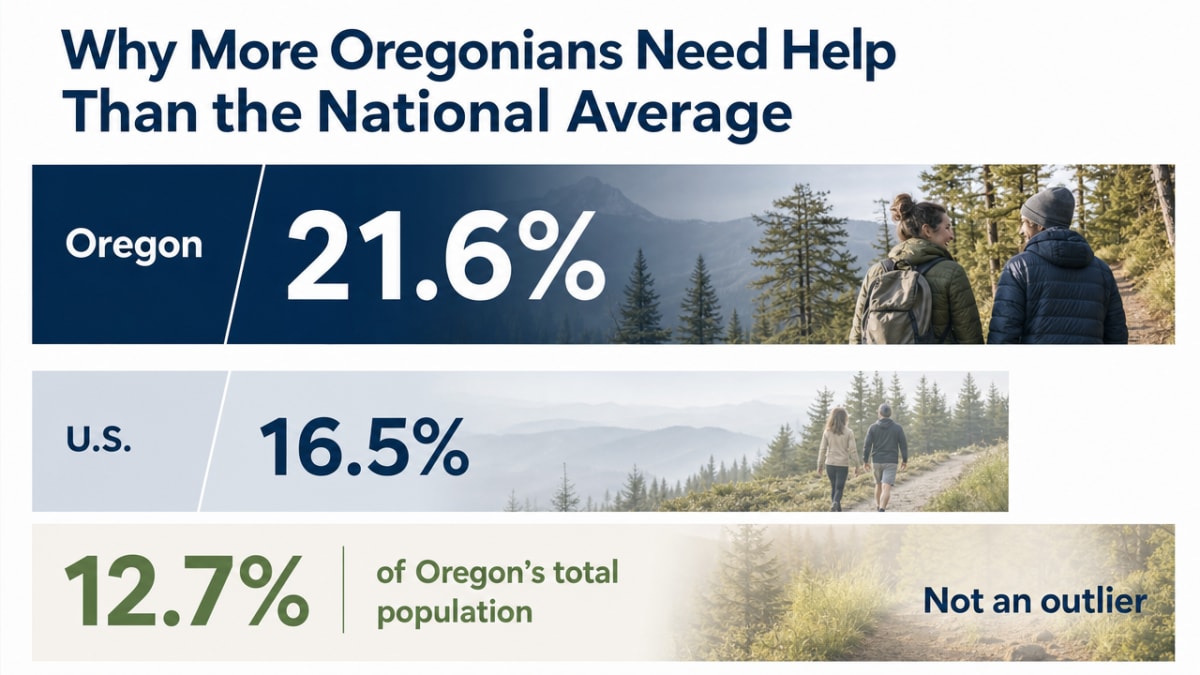
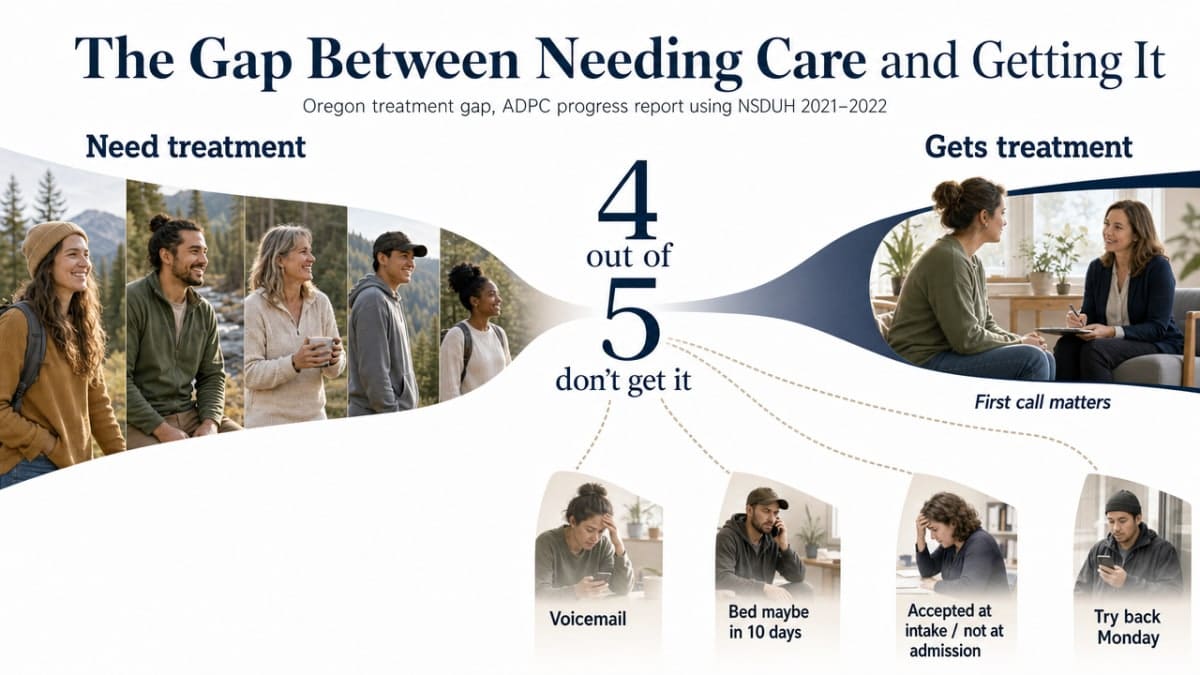
- Oregon carries a heavier substance use burden than most states, with 21.6% of residents meeting SUD criteria versus 16.5% nationally, and four out of five who need treatment never receive it 2, 9.
- Family-owned detox centers keep decisions local: the owner is often on-site, hiring the overnight nurse, answering the intake phone, and adjusting length of stay based on clinical need rather than corporate targets.
- Because 69% of Oregonians in substance use treatment also have a mental health disorder 7, detox programs need integrated counseling and a clear step-down path rather than a discharge pamphlet.
- When calling, share who needs help, the substance, how long use has continued, and the last dose, then ask what happens in the first 24 hours and on day six.
The 2 A.M. Phone Call: Who Actually Picks Up
You’re standing in the kitchen with the phone in your hand. Maybe it’s for you. Maybe it’s for your partner, your kid, your brother. The shaking started hours ago, or the drinking never stopped, or the last pill ran out and something in your chest is telling you this is the night.
Calling is the hardest part. That’s normal. Nobody dials a detox center for fun, and nobody rehearses what to say. So here’s the thing worth knowing before you pick a number off a search result: at a family-owned detox in Oregon, the person who answers isn’t a call center in another time zone reading from a script. It’s someone who works in the building. Sometimes it’s someone whose family name is on the paperwork.
That matters more than it sounds. When the owner lives twenty minutes away and their reputation is tied to what happens in that house tonight, the answer to “can you take him” isn’t routed through a regional intake queue. It’s a person deciding, in real time, what you and your loved one actually need.
Oregon needs that kind of answer more than most states do. Here’s why.
Oregon’s Detox Landscape, in Plain Numbers
Why More Oregonians Need Help Than the National Average
Oregon carries more of this weight than most of the country. According to the Oregon Health Authority’s Substance Use Disorder Integration Report, 21.6% of Oregonians meet the criteria for a substance use disorder, compared to 16.5% nationally, and 12.7% of the total state population — kids and adults included — has an SUD 9. That’s not a small gap. That’s roughly one in five people you pass at the grocery store, at your kid’s soccer game, at the DMV.
What does that mean when you’re the one making the call? It means you’re not an outlier. It means the person answering the phone at a detox in Milwaukie or Portland has almost certainly talked to someone like you this week. Possibly this shift. The shame you’re carrying — the story that you should have handled this on your own — doesn’t match the numbers on the ground.
This 21.6% figure is based on the National Survey on Drug Use and Health, which asks people age 12 and up about their alcohol and drug use in the past year. It’s self-reported and includes both alcohol and drug use disorders 9. This measured gap indicates a significant portion of the state quietly struggling, highlighting the critical need for accessible and responsive care.
The Gap Between Needing Care and Getting It
Think about what that gap actually looks like from the inside. It looks like a mom who called three places and got voicemail. A veteran told there’s a bed “maybe in ten days.” A young adult whose insurance was accepted at intake but not at admission. A brother who worked up the nerve on Tuesday and was told to try back Monday, and by Monday the nerve was gone.
This is why the warmth of the first phone call isn’t a soft skill. In a state where four out of five people who need help never reach it, the intake conversation is a public health event. Whether the voice on the other end sounds rushed, scripted, or genuinely present is often the deciding factor between a person walking through the door and a person staying home to drink themselves through another weekend.
Family-owned operators tend to feel that weight differently. When the owner’s own name is on the license and the reputation is local, a missed call isn’t a KPI on a dashboard three states away — it’s a neighbor who didn’t get help. That’s a different kind of accountability, and in Oregon right now, it’s the kind that closes the gap one call at a time.
What ‘Family Owned’ Actually Changes About Your Care
Who Signs the Checks Walks the Halls
In a corporate detox chain, the person making the hard decisions about your care is usually someone you’ll never meet. A regional vice president in Nashville. A medical director who oversees twelve facilities and visits yours quarterly. A quality-assurance team that reads your chart as a data point on a spreadsheet three time zones away.
In a family-owned detox, that gap collapses. The owner is often the person who walks through the common room in the morning to see who’s shaking and who slept. They know the nurse’s kid is sick this week. They know which client from last month called to say six months clean. That closeness changes what the staff feels safe telling you and what they feel safe telling each other.
It also changes hiring. When a family owner is picking the overnight nurse, they’re picking someone who will be alone in the house with your loved one at 3 a.m. That’s not a headcount decision on a spreadsheet — it’s a decision about who they want in their own building, sometimes near their own family. The bar tends to be higher because the consequences are personal.
None of this shows up in a brochure. It shows up in how the phone gets answered, and who’s still in the building at 8 p.m. when a client needs to talk.
Length of Stay Decided by People, Not Regional Policy
One of the quietest ways corporate-run detox can fail people is length of stay. When a chain sets a target average — say, five to seven days for alcohol detox — the pressure to hit that number rolls downhill. Staff feel it. Discharge planners feel it. And clients feel it, even when nobody says it out loud, in that vague sense of being nudged toward the door before they’re steady on their feet.
A family-owned operator has more room to say the thing that actually matters: you’re not ready to leave yet. Withdrawal doesn’t run on a schedule. Alcohol shakes can linger. Benzodiazepine tapers take longer than most people expect. A person who came in during a crisis on Sunday might need until Friday, not Wednesday, before the sleep comes back and the appetite returns.
When the owner is on-site and the decision is clinical rather than corporate, an extra 48 hours doesn’t get flagged as a variance in a monthly report. It gets called what it is: the right call for this person, in this body, at this moment. That flexibility is one of the most concrete things “family owned” buys you, and it’s usually invisible from the outside until you’re the one it protects.
Lived Experience as Part of the Room, Not a Slogan
A lot of detox centers put “we understand” on the website. Fewer can back it up with people on staff — and at the ownership level — who’ve been through withdrawal themselves. That distinction matters more than it sounds.
Someone who has lived through the 3 a.m. fear knows what to say when a client wakes up convinced they’re dying. They know the difference between a person who needs medication and a person who needs someone to sit in the chair across from them until sunrise. They know shame, because they carried it out the door themselves once.
That kind of knowledge shapes small things. The lighting in the common area. Whether the coffee is always on. Whether a nurse says “you’ve got this” in a voice that means it. Whether the aftercare handoff is a phone number on a pamphlet or a warm introduction to a person you’ll actually see next Tuesday.
Owned by people who’ve lived it — that’s Pacific Crest Trail Detox. It’s the reason the room feels different when you walk in, and the reason the phone gets picked up when you call back.
What a Day Inside a Home-Like Detox Looks Like
Picture a house, not a hospital. A porch. A kitchen where somebody’s making coffee at 6 a.m. because the nurse knows you didn’t sleep. That’s the starting point at a home-like detox — the building itself is designed to feel like somewhere you might actually recover, not somewhere you’re being held.
Mornings usually start soft. Vitals get checked in your room or at the kitchen table, not under fluorescent lights in a hallway. A nurse asks how the night went. If withdrawal medication is part of your plan, you get it with breakfast, not from a rolling cart. Someone notices if you didn’t eat.
Mid-morning, there’s usually a group — small, six or eight people, sitting on couches. It’s not a lecture. It’s people talking about what got them here and what today feels like. A counselor is in the room, but so is somebody two days ahead of you in the same process, which is often the voice that actually lands.
Afternoons hold space for one-on-one time with a counselor, a nap if your body needs one, a walk in the yard, a call to your kids. If your family wants to be part of the plan, this is when those conversations get scheduled — not squeezed in.
Evenings wind down early. Another vitals check. Medication if you need it. A blanket, a mug, a book, a person in the next chair if 3 a.m. gets loud in your head. Someone is awake in the house all night. That’s the whole point of the setting — you’re never alone in it, and it never stops feeling like a home you were welcomed into.
Alcohol, Benzos, and Opioids: What Withdrawal Really Involves
Why Alcohol Detox Is the Most Common Front Door in Oregon
If you’re reading this because of alcohol, you’re in the biggest group by far. Roughly 22% of Oregonians age 12 and older reported binge drinking in the past month, and among young adults 18 to 25, that number climbs to about one in three 11. That’s not a fringe problem. That’s a Friday night in a lot of houses.
Binge drinking isn’t the same thing as alcohol use disorder, and not everyone who drinks heavily needs medical detox. But when the body has been getting alcohol every day for months or years, stopping cold can be genuinely dangerous. Shakes. Sweating. Racing heart. In serious cases, seizures or a condition called delirium tremens that can kill people who try to quit alone in a hotel room or a spare bedroom.
That’s why alcohol is the front door for so many detox admissions in Oregon. The person walking in isn’t weak. They’re smart enough to know that this particular kind of quitting needs a nurse in the next room and a doctor on call.
In a home-like detox, the first 72 hours of alcohol withdrawal look like frequent vitals checks, medication to soften the shakes and prevent seizures, fluids, quiet, and someone sitting with you when the anxiety spikes. It’s medical care, but it doesn’t feel like an ER. That difference matters when the thing you’re fighting is your own nervous system. And with a young-adult binge rate that high in Oregon 11, a good detox has to be staffed and paced for people in their twenties too, not just built around a stereotype of who “needs help.”
Benzodiazepine and Opioid Detox: Where Medical Supervision Matters Most
Benzodiazepines — Xanax, Klonopin, Ativan, Valium — belong in their own category. If you’ve been taking them daily, quitting suddenly can trigger seizures the same way heavy alcohol can. It’s one of the few withdrawals that can genuinely kill a person, which is why any honest detox will tell you: don’t try to taper this one alone at the kitchen table.
A benzo taper takes time. Weeks, sometimes, not days. A good medical detox slows the dose down carefully, watches for rebound anxiety and sleep problems, and doesn’t push you out the door because your calendar page says it’s time.
Opioids — heroin, fentanyl, oxycodone, hydrocodone, methadone — are a different animal. The withdrawal is miserable but usually not deadly in a medical sense. What it is, is unbearable. Chills, cramping, sleeplessness, a kind of skin-crawling restlessness that has sent countless people back to using inside of 24 hours. This is where medication-assisted treatment (medicines like buprenorphine that quiet the withdrawal so your brain can stop screaming) changes the story.
The common thread with benzos and opioids: the physical part is only half the fight. What keeps people through it is someone in the room who isn’t scared of the symptoms, and a plan for the day you walk out that’s already made before you get there.
Detox and Mental Health Belong in the Same Room
Here’s something that gets missed a lot: most people who show up for detox in Oregon aren’t just fighting a substance. They’re fighting a substance and something else — depression that never really lifted, anxiety that started long before the drinking, trauma that the pills were quieting, ADHD that nobody named until adulthood. In Oregon, 69% of people in substance use treatment also have a mental health disorder, compared to 59% nationally 7. That’s more than two out of every three people who walk in the door.
Read that number again. It means the picture of the “typical” detox client — someone with just an alcohol problem, or just an opioid problem, and nothing else going on — barely exists here. If a detox program in Oregon treats withdrawal and only withdrawal, it’s missing what most of its clients actually walked in carrying.
That’s why the good programs put mental health care in the same room as the medical piece from day one. A counselor sits down with you in the first day or two, not the last. If anxiety is what’s spiking your withdrawal, someone treats the anxiety, not just the shakes. If trauma is what wakes you at 3 a.m., a therapist knows about it before you’re discharged, not after.
This is also where stepping down matters. Detox is a few days. What comes next — a day program (called partial hospitalization), or a few sessions a week (intensive outpatient) — is where the mental health work actually deepens. A program that only does the medical detox and hands you a list of therapists on your way out is asking you to build a bridge you don’t have the wood for. A family-owned operator with its own therapy programming keeps the handoff inside the same relationship, so the person you trusted at 3 a.m. is connected to the person you’ll sit with next Tuesday afternoon.
Aftercare Is the Whole Point (Detox Alone Doesn’t Hold)
Here’s a hard truth that a lot of programs won’t put on the front page: detox by itself doesn’t hold. Five days of medical care can steady your body, but it can’t rewire a decade of habit, undo a hard week at work, or answer the phone the next time an old friend texts. What holds is what comes after.
That’s why the honest question to ask any Oregon detox on the first call isn’t “how fast can you get me in.” It’s “what happens on day six.” A good answer sounds specific. It sounds like: a day program in our same building, or a few therapy sessions a week you’ll drive to, or a warm handoff to a counselor you’ll meet before you leave here, plus a group of people who finished detox before you and still show up on Thursdays.
A family-owned operator has a natural advantage here, because the aftercare isn’t a referral out the door — it’s usually the same team, in the same building, with the same faces. The nurse who sat with you at 3 a.m. isn’t a stranger by the time you come back for your first outpatient session. The counselor who met you on day two is the one running the group on day thirty. That continuity is what keeps people from falling into the gap between “discharged” and “never came back.”
If you take one thing from this section: don’t pick a detox based on the detox. Pick it based on what’s waiting for you on the other side of it.
Paying for Care Without Guessing
Money is the thing nobody wants to bring up at 11 p.m., but it’s usually sitting right underneath the fear. Here’s the short version so you can stop guessing.
Most private insurance plans cover medical detox. That includes the big commercial carriers you probably already have through work or a spouse’s job. A family-owned operator can verify your benefits on the same call you make to ask about a bed — you give them the numbers off your insurance card, and someone tells you what the plan actually covers before you commit to anything.
How to Make the First Call
You don’t need a script. You don’t need to know what “medical detox” means. You don’t need to have decided anything yet. All you need is the phone.
Here’s what actually helps when you dial:
- Say who the call is about (you or someone you love).
- Say what the substance is.
- Say roughly how long the daily use has been going on.
- If you know when the last drink or last dose was, say that too — it helps the nurse on the other end think about timing. If you don’t know, say you don’t know. Nobody’s grading you.
Have your insurance card nearby if you can find it — a family-owned intake team can usually check your benefits on the same call, so you’re not making two decisions in one night. If the card is lost or the insurance is complicated, say that. They’ll work with what you have.
Ask two questions before you hang up: what happens in the first 24 hours, and what happens on day six. The answers should sound specific and unhurried.
Then breathe. You already did the hardest part. Owned by people who’ve lived it — that’s Pacific Crest Trail Detox.
See If Family-Owned Detox Care Is Covered
Quickly find out if your insurance supports a safe, supportive detox experience in Oregon.
Frequently Asked Questions
What does ‘family owned’ actually mean for a detox center in Oregon?
It means the person whose name is on the license is usually in the building, not a regional executive in another state. Decisions about your care — staffing, length of stay, aftercare — get made by people who live nearby and answer for what happens under their roof. That closeness tends to shape hiring, pacing, and how the phone gets picked up.
Is a non-hospital residential detox safe for alcohol or benzodiazepine withdrawal?
Yes, when the program has a medical team, 24/7 nursing, and a doctor on call. A licensed non-hospital detox handles alcohol and benzo withdrawal with the same medications a hospital would use — the difference is the setting feels like a home, not an ER. If a program can’t describe its medical coverage in plain words, keep calling.
How long will I stay in detox, and who decides when I’m ready to leave?
Most stays run five to seven days, but bodies don’t read calendars. Alcohol shakes can linger; benzo tapers often need longer. In a family-owned setting, the nurse, doctor, and counselor watching you decide together — based on sleep, vitals, appetite, and how you actually feel. If you need another 48 hours, a good program gives you the 48 hours.
What happens if I have depression, anxiety, or trauma along with substance use?
You’re in the majority, not the exception — most Oregon detox clients walk in with something else going on too. A good program pairs you with a counselor in the first day or two and connects you to ongoing therapy after detox, whether that’s a day program or a few sessions a week. Withdrawal care and mental health care belong in the same relationship.
Does insurance cover detox, and is Oregon Health Plan (OHP) accepted?
Most private insurance plans cover medical detox, and a good intake team will verify your benefits on the same call you make to ask about a bed. Pacific Crest Trail Detox accepts most commercial insurance but does not accept Oregon Health Plan (OHP). If OHP is your coverage, ask for a referral to an OHP-participating program — don’t hang up empty-handed.
What should I say when I make the first call?
Say who the call is about, what the substance is, and roughly how long the daily use has been going on. Mention the last drink or dose if you know it. Have your insurance card nearby if you can find it. Ask two things before hanging up: what happens in the first 24 hours, and what happens on day six.
References
- 2023 NSDUH State-Specific Tables: Oregon. https://www.samhsa.gov/data/sites/default/files/reports/rpt56188/2023-nsduh-sae-state-tables_0/2023-nsduh-sae-state-tabs-oregon.pdf
- Alcohol and Drug Policy Commission NSDUH and Progress Report (March 2024). https://www.oregon.gov/adpc/SiteAssets/Lists/MeetingEvents/EditForm/ADPC%20NSDUH%20and%20Progress%20Report%20-%20for%20website%2003.11.2024.pdf
- OREGON – 2022 NSDUH State-Specific Tables. https://www.samhsa.gov/data/sites/default/files/reports/rpt44486/2022-nsduh-sae-state-tables/NSDUHsaeOregon2022.pdf
- Youth and Young Adult Substance Use Prevention, Treatment, and Recovery Report. https://www.oregon.gov/oha/HSD/BH-Child-Family/Documents/Youth-Young-Adult-SUD-Treatment-Recovery-Report-EN.pdf
- 2022 National Survey on Drug Use and Health (NSDUH): Methodology and National Findings. https://www.samhsa.gov/data/data-we-collect/nsduh-national-survey-drug-use-and-health/national-releases/2022
- Results from the 2022 National Survey on Drug Use and Health: Detailed National Findings. https://www.samhsa.gov/data/sites/default/files/reports/rpt42731/2022-nsduh-nnr.pdf
- Oregon Inventory of Services for Co-Occurring Substance Use and Mental Health Disorders, 2022. https://www.oregon.gov/oha/HSD/AMH/DataReports/COD-Service-Inventory-2022.pdf
- West Region – NSDUH 2022 State-Specific Tables. https://www.samhsa.gov/data/sites/default/files/reports/rpt44486/2022-nsduh-sae-state-tables/NSDUHsaeWest2022.pdf
- Substance Use Disorder Integration Report (Oregon Health Authority). https://www.oregon.gov/oha/HSD/AMH/DataReports/SUD-Integration-Report.pdf
- 2022 NSDUH Detailed Tables. https://www.samhsa.gov/data/report/2022-nsduh-detailed-tables
- Oregon Substance Use Disorder Services Inventory and Gap Analysis. https://www.oregon.gov/oha/HSD/AMH/DataReports/SUD-Gap-Analysis-Inventory-Report.pdf