


Key Takeaways
- Alcohol does thin your blood short-term by making platelets less sticky and lowering fibrinogen, but the effect is unpredictable and unlike a dosed prescription anticoagulant.1,2
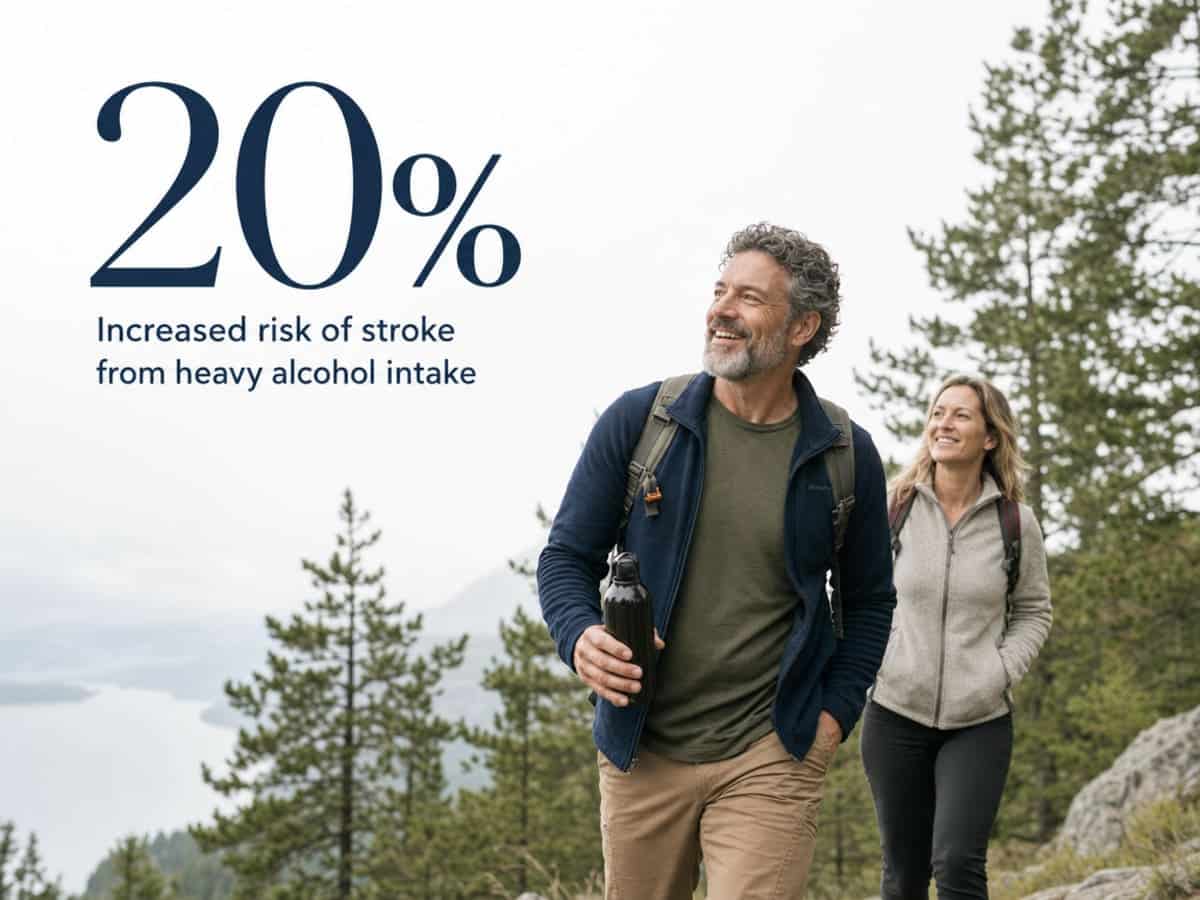
- The old ‘wine protects your heart’ story doesn’t hold up — heavy drinking is tied to roughly 20% higher stroke risk and can damage vessel walls in ways that raise clot risk.3,7
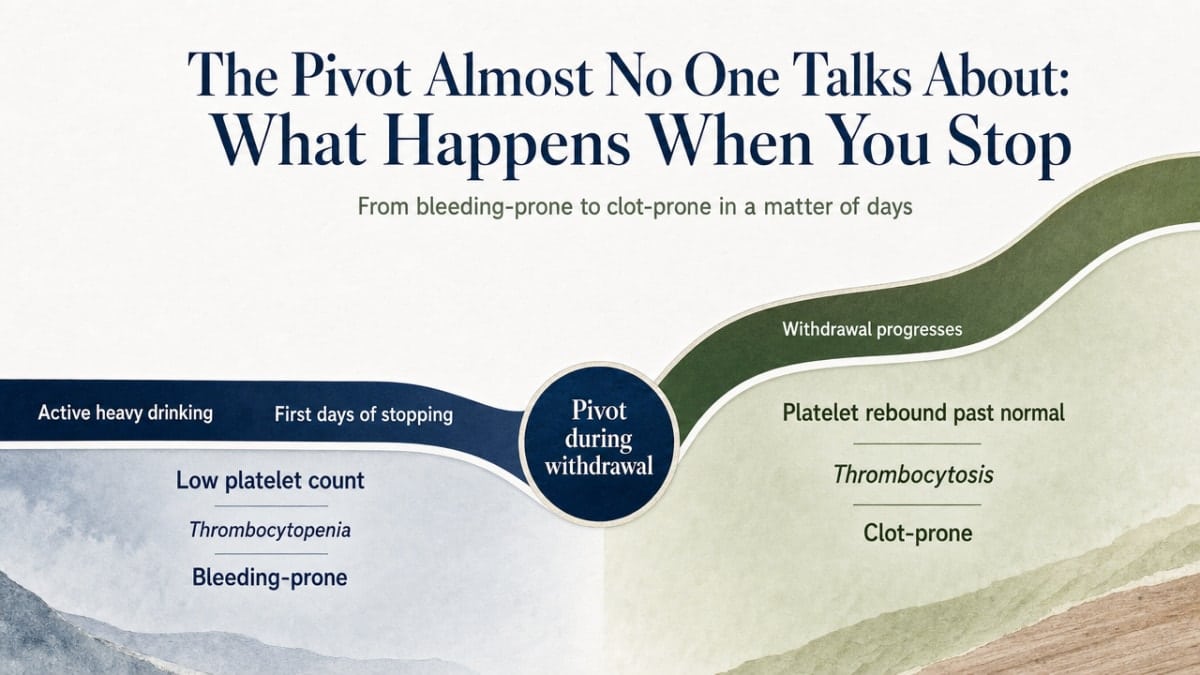
- Stopping heavy drinking can flip blood from bleeding-prone to clot-prone within 48 to 72 hours as platelets rebound from low counts into thrombocytosis.8
- That pivot, plus seizure risk, rising blood pressure, and irregular heart rhythm, is why quitting cold turkey at home is riskier than most people realize and deserves medical supervision.4,5
The Short Answer, and Why It’s Not the Whole Answer
Can alcohol thin your blood?- Yes — at least in the short term. When you drink, the tiny cells that help you stop bleeding (called platelets) become less sticky, so they don’t clump together as quickly to form clots. Alcohol also lowers a clotting protein called fibrinogen, which nudges your blood toward a slightly more “anti-clotting” state for a few hours after that glass of wine or beer 1,2,9
So if you noticed easier bruising on your shins, a pink tinge when you brush your teeth, or a small cut that took longer to stop, you’re not imagining it. That’s a real effect, and it’s okay to feel a little unsettled reading that.
Here’s the part most articles skip, and it’s the part that matters most if you’re drinking more than you’d like: alcohol is not a stable, predictable blood thinner the way a prescription medication is. Its effect shifts depending on how much you drink, how often, and — this is the big one — what happens when you stop. Heavy drinkers can flip from a bleeding-prone state during active drinking to a clot-prone state during early withdrawal, sometimes within days.8
That flip is why quitting cold turkey at home, especially after months or years of daily drinking, isn’t just uncomfortable — it can be genuinely dangerous. The rest of this article walks you through what’s actually happening in your bloodstream, and what a safer next step can look like.
What Alcohol Actually Does to Your Blood While You’re Drinking
The Platelet Effect: Cells That Stop Being Sticky
Think of platelets as tiny first responders. They’re the cells in your blood that rush to a cut, pile up, and stick together to plug the leak. When they’re working well, that scrape on your knuckle stops bleeding in a minute or two. When they’re less sticky, that same scrape keeps oozing longer than it should.
Alcohol makes your platelets less sticky, and it happens fast. Researchers have found that within about 10 to 20 minutes of a drink, platelets start clumping together less readily. They also release fewer of the chemical signals that normally call in reinforcements, so the whole clot-forming process slows down. This isn’t a subtle lab-only finding, either. A large 2023 population study confirmed that people who drink — especially wine and liquor drinkers — show measurably lower platelet reactivity across the board.1,9
In everyday life, that’s the reason you might notice a bruise blooming on your thigh after bumping the coffee table you’ve bumped a hundred times before. Or why a paper cut seems to bleed longer than it used to. Or why your gums pink up the sink when you brush after a couple of glasses of wine.
If you’ve been quietly wondering whether your drinking is showing up in small ways on your body, please know: you’re not being paranoid, and you’re not overreacting for looking it up. Noticing these things is your body sending you information. It’s worth listening to, even if what you do with that information takes a little time to figure out.
Fibrinogen and the Other Clotting Proteins
Platelets are only half the story. Your blood also carries a set of proteins that weave the actual mesh of a clot — the scaffolding that holds everything together once platelets have shown up. The main one is called fibrinogen, and it matters a lot here.
A controlled clinical trial found that alcohol intake causes a real drop in plasma fibrinogen, along with shifts in other clotting and fibrinolytic proteins. Translation: alcohol doesn’t just make the first responders less sticky. It also thins out the building material they’d normally use to seal the wound. Together, those two effects push your blood toward what researchers call an “anti-thrombotic” state — meaning it’s less inclined to form clots for a stretch of hours after you drink.2
On paper, that might sound like a good thing. Fewer clots, less risk of a heart attack, right? The researchers themselves flagged this exact thought and pushed back on it. Lower fibrinogen isn’t a free win — it comes bundled with higher bleeding risk, liver stress, and other effects that don’t cancel out just because one number moved in a direction that sounds protective. It’s a real change in your body chemistry, not a health perk.2
Why This Isn’t the Same as Being On a Prescription Blood Thinner
Here’s where language gets confusing, and it’s worth slowing down for a second. When your doctor prescribes a blood thinner like warfarin, Eliquis, or Xarelto, they’re giving you a specific dose of a specific medication that’s been tested to hit a predictable target in your bloodstream. Your labs get checked. The dose gets adjusted. There’s a plan.
Alcohol does none of that. The amount of “thinning” you get depends on how much you drank, when you drank it, what you ate, your liver function, your genetics, and whether you’re a light drinker or a heavy one. Two people can drink the same two glasses of wine and end up with meaningfully different platelet responses. There’s no dose. There’s no monitoring. There’s no off-switch that a nurse can flip if something goes sideways.1,9
So when you hear someone at a dinner party call alcohol “nature’s blood thinner,” they’re not entirely wrong about the mechanism — but they’re skipping the part where a real blood thinner is a controlled tool and alcohol is a moving target with a lot of collateral effects. Those are not the same thing, and treating them as if they are can lead to some risky assumptions we’ll unpack next.
The Myth That Alcohol Protects Your Heart
You’ve probably heard some version of this at a family dinner: a glass of red wine a night is good for you. Your uncle swears by it. A magazine article from 2004 said so. And honestly, given what we just covered about platelets and fibrinogen, the reasoning almost sounds plausible — if alcohol makes clots less likely, it should protect against heart attacks and strokes, right?
That story doesn’t hold up when researchers look closely. A large review of cardiovascular outcomes across decades of studies found that heavy alcohol intake is associated with roughly a 20% higher risk of stroke compared with non-drinkers or light drinkers. That’s not a small footnote — that’s the direction the evidence actually points once you account for the fact that many earlier “moderate drinkers are healthier” studies were comparing wine drinkers to former heavy drinkers who’d quit because they were already sick.3
The picture gets more complicated with binge drinking, which is any pattern that pushes your blood alcohol high in a short window. Researchers studying venous thromboembolism — clots that form in deep veins and can travel to the lungs — found that binge drinking can damage the delicate inner lining of your blood vessels (the endothelium), and that damage can actually increase clot formation, not prevent it. So the same night of drinking that makes your platelets less sticky can also injure the vessel walls in a way that raises clot risk. Those two effects don’t cancel out cleanly.7
And zoom out further: long-term heavy drinking weakens the heart muscle itself, contributes to irregular heartbeats, and raises blood pressure — all of which increase cardiovascular risk regardless of what your platelets are doing on any given evening. If you’ve been holding onto “but wine is heart-healthy” as a reason not to look at your drinking too closely, you’re not alone, and you’re not foolish for believing it. It was the mainstream message for a long time. It just isn’t where the evidence has landed.5
The Pivot Almost No One Talks About: What Happens When You Stop
From Bleeding-Prone to Clot-Prone in a Matter of Days
Here’s the finding that changed how researchers think about alcohol and blood, and it deserves your full attention if you’ve been drinking heavily for a while. When people with heavy alcohol use stop drinking, their platelet counts don’t just quietly return to normal. They swing.
A study tracking patients through alcohol withdrawal in the Indian Journal of Psychological Medicine documented a clear two-phase pattern. Early on — during active heavy drinking and the first days of stopping — many patients showed thrombocytopenia, meaning their platelet counts were low. That’s the bleeding-prone state your body has been living in. Then, as withdrawal progressed, those same patients often flipped in the other direction: their platelet counts rebounded past normal into thrombocytosis, meaning too many platelets. Too many sticky cells, all at once, in a body that’s also dealing with rising blood pressure, dehydration, and stress hormones.8
This is the piece that almost never shows up in casual conversations about drinking. People talk about shaky hands, sweats, and trouble sleeping during withdrawal — all real. Almost no one mentions that the same cells that were letting you bruise on Tuesday might be clumping too aggressively by Saturday. If you’ve been holding a private worry that stopping might somehow be as hard on your body as drinking, that worry isn’t irrational. There’s a real physiological reason things get bumpy in those first days, and it’s not something willpower can steer.8
None of this is meant to scare you out of stopping. It’s meant to explain why stopping deserves support. The pivot is real, and it’s exactly the kind of thing a nurse checking labs and vitals every few hours is watching for.
Why Quitting Cold Turkey at Home Is Riskier Than It Sounds
If you’ve been drinking daily for months or years, the phrase “I’ll just stop this weekend” carries more weight than most people realize. And if a friend or family member has told you to “just tough it out,” they mean well — but they’re probably picturing a bad hangover, not what actually happens.
The platelet swing is one layer. On top of that, your heart and blood pressure are also recalibrating. Long-term heavy drinking weakens the heart muscle, contributes to irregular heartbeats, and pushes blood pressure up, and those effects don’t disappear the moment you set down the last glass — they get louder for a stretch before they get quieter. Now layer in the seizure risk that heavy drinkers face in the first 24 to 72 hours without alcohol, and you have a body being asked to manage several dangerous shifts at once, unmonitored, usually alone on a couch.5
You didn’t drink your way here on purpose. Almost nobody does. If you’ve been trying to cut back and finding it harder than you expected, that’s not a character flaw — it’s your nervous system telling you it’s grown used to something and doesn’t know how to stop safely on its own. Naming that honestly is not weakness. It’s information.4
The safer version of stopping is one where someone is watching the numbers your body can’t tell you about — platelets, blood pressure, heart rhythm — and can give you medications to soften the withdrawal itself. That’s the whole point of a medically supervised detox: not to take control away from you, but to keep the pivot from becoming a crisis while you get to the other side.
If You’re Already on a Prescription Blood Thinner
If your doctor has you on warfarin, Eliquis, Xarelto, or a daily aspirin — please read this part slowly. Combining alcohol with a prescription anticoagulant is one of the situations where the vague word “thinning” turns into a real bleeding risk that catches people off guard.
Here’s the plain version of what happens. Your medication is already doing a precise job: keeping your blood from clotting too readily so you don’t have another stroke, another clot in your leg, or a problem with your artificial valve. Alcohol arrives on top of that and pushes in the same direction — making platelets less sticky and lowering fibrinogen, the protein that builds clot scaffolding. Two anti-clotting forces stacked on each other. Your INR (if you’re on warfarin) can drift out of range, and even on the newer drugs where labs aren’t routinely checked, the bleeding risk quietly climbs.1,2
The signs to take seriously: nosebleeds that won’t quit, gums that bleed when you floss like they didn’t before, dark or tarry stools, unusual headaches, or a bruise that keeps spreading. Those aren’t things to “wait and see” on when you’re anticoagulated and drinking. They’re reasons to call your prescriber that day.
And please don’t try to solve this by suddenly stopping alcohol on your own if you’ve been drinking heavily. The withdrawal shift — from bleeding-prone toward clot-prone — matters even more when you’re on a medication designed to prevent clots. Your prescriber needs to be in the loop, and a supervised setting can watch both sides of that seesaw at once.8
Signs Your Drinking Is Already Affecting Your Blood
Your body has been telling you things. Small things, easy to brush off in the moment, but worth pulling into the light now that you know what to look for.
The bruises are usually the first clue. Purple patches on your shins, your forearms, the back of your hand — showing up from bumps you don’t remember, taking longer to fade than they used to. Then there’s the bleeding that lingers a beat too long: a shaving nick that keeps beading up, gums that pink the sink when you floss, a nosebleed on a dry morning that takes twenty minutes to quit instead of two.1,9
Other signs are quieter. Broken capillaries fanning across your cheeks or nose. Small red dots on your ankles. Heavier or longer periods if you menstruate. Dark, tarry stools — that one deserves a same-day call to your doctor, not a wait-and-see.5
If any of this is landing uncomfortably close to home, take a breath. Noticing is not the same as failing. It’s your body handing you real information, and you’re doing something with it right now by reading this. That counts.
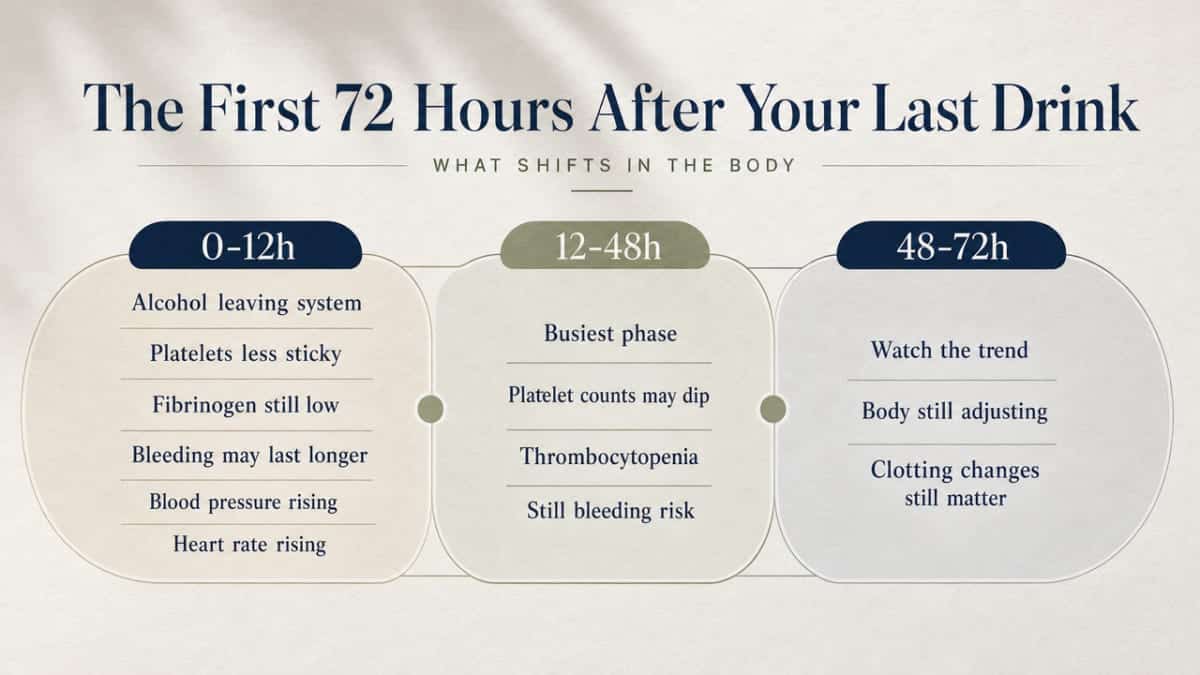
The First 72 Hours After Your Last Drink
If you’ve been drinking heavily for a while, the first three days after your last drink are the loudest ones your body will have in a long time. Knowing what’s actually shifting under the surface can make those hours feel less like chaos and more like something you’re moving through with a map.
Hours 0 to 12. Alcohol is still leaving your system, and your platelets are still on the less-sticky end of things. Fibrinogen — the clotting protein alcohol had been suppressing — is still lower than baseline. If you nick yourself shaving or bump a shin, it may still bleed longer than it should. Your blood pressure and heart rate often start climbing here as your nervous system notices the absence.2
Hours 12 to 48. This is where things get busiest. Platelet counts in many heavy drinkers dip into thrombocytopenia — low platelets, meaning you’re still bleeding-prone — while blood pressure keeps rising and your heart rhythm may become irregular. Fibrinogen begins climbing back toward normal, sometimes overshooting. Sleep gets thin. Tremor, sweats, and anxiety usually peak in this window.2,5,8
Hours 48 to 72. The pivot the earlier research warned about often lands here. Platelets rebound past normal into thrombocytosis — too many sticky cells at once — right as your cardiovascular system is still recalibrating. It’s a lot of change happening in a body that’s tired and dehydrated.8
None of this is meant to alarm you. It’s meant to show you what a nurse in a supervised detox is quietly tracking every few hours — the numbers you can’t feel — so this stretch stays a passage, not a crisis.
What a Safer Path Out Looks Like
If you’ve read this far, you already know the honest version: stopping matters, and how you stop matters almost as much. A safer path out isn’t about willpower or white-knuckling a weekend. It’s about having eyes on the things your body can’t tell you directly — the platelet swing, the blood pressure creep, the heart rhythm that starts skipping.5,8
In a medically supervised detox, that usually looks like 24/7 nursing, medications to soften the withdrawal itself so seizures and severe symptoms are less likely, and regular labs to catch the pivot before it becomes a problem. It doesn’t have to feel like a hospital. A home-like setting — a real bed, a kitchen, people who’ve been where you are — makes it easier to actually stay through the hard first days instead of leaving against advice at 2 a.m. Group support and one-on-one counseling get woven in as your head starts to clear.4
You don’t have to have it all figured out to make one phone call. The SAMHSA National Helpline (1-800-662-4357) is free, confidential, and open around the clock if you want a starting point that isn’t a sales pitch. If you’re in the Portland area and want a warmer, home-style option with medical supervision built in, Pacific Crest Trail Detox is one place that does this work.10
You looked this up. That’s already a step. Whatever you do next, you don’t have to do it alone.
Check Your Coverage for Safe Alcohol Detox
See if your insurance supports medically supervised detox tailored for alcohol withdrawal risks.
Frequently Asked Questions
Does alcohol thin your blood like aspirin or Eliquis does?
Not really. Alcohol does make platelets less sticky and lowers fibrinogen, so it acts in a similar direction. But aspirin and Eliquis are dosed, tested, and monitored. Alcohol’s effect swings with how much you drank, your liver, your genetics, and whether you’re a light or heavy drinker. Same rough mechanism, very different tool.1,2,9
How long does alcohol’s blood-thinning effect last after your last drink?
Platelet stickiness starts dropping within 10 to 20 minutes and lingers for hours after your last drink. Fibrinogen changes stretch longer and typically climb back toward normal over the following days. If you’ve been drinking heavily, platelet counts can actually swing past normal into the clot-prone range within 48 to 72 hours of stopping. It’s not a clean off-switch.1,2,8
Is it safe to drink alcohol while taking warfarin, Eliquis, or Xarelto?
Please talk to your prescriber before assuming yes. Alcohol pushes in the same anti-clotting direction as your medication, stacking two bleeding effects on top of each other. Warning signs are nosebleeds that won’t stop, gums bleeding when you floss, dark or tarry stools, unusual headaches, or bruises that keep spreading — call your doctor the day you notice them, not next week.1,2
Can I stop drinking cold turkey at home if I’ve been drinking heavily?
Honestly, no — not safely. Heavy drinkers face seizure risk in the first 24 to 72 hours, and platelet counts can flip from bleeding-prone to clot-prone in the same window. Blood pressure and heart rhythm also lurch around during that stretch. That’s a lot for one body to manage alone on a couch. A supervised setting keeps eyes on the numbers you can’t feel.5,8
Why am I bruising more easily since I started drinking regularly?
Your platelets — the cells that stop bleeding — are less sticky when alcohol is in your system, so small bumps leak more blood under the skin before clotting. Lower fibrinogen adds to it. If you’re also seeing gums bleed when you brush, cuts ooze longer, or dark stools, that’s worth mentioning to your doctor. Your body is telling you something real.1,2
Isn’t a glass of red wine a day actually good for my heart?
That story has softened a lot. Newer analyses suggest earlier “moderate drinkers are healthier” findings were partly confounded by who was being compared. Meanwhile, long-term heavy drinking weakens the heart muscle, raises blood pressure, and contributes to arrhythmias. If wine helps you relax at dinner, that’s one thing — but it isn’t the heart medicine your uncle promised. The evidence just doesn’t back that up.3,5
References
- Effects of alcohol on platelet functions. https://pubmed.ncbi.nlm.nih.gov/8814972/
- The effects of alcohol on coagulation and fibrinolytic factors: a controlled trial. https://pubmed.ncbi.nlm.nih.gov/9607117/
- Benefits and Risks of Moderate Alcohol Consumption on Cardiovascular Disease: A Review and Assessment of Risks. https://pmc.ncbi.nlm.nih.gov/articles/PMC7020057/
- Alcohol Use and Your Health. https://www.cdc.gov/alcohol/about-alcohol-use/index.html
- Alcohol’s Effects on the Body. https://www.niaaa.nih.gov/alcohols-effects-health/alcohols-effects-body
- Understanding Binge Drinking. https://www.niaaa.nih.gov/publications/brochures-and-fact-sheets/binge-drinking
- Effect of alcohol intoxication on the risk of venous thromboembolism. https://pmc.ncbi.nlm.nih.gov/articles/PMC5662358/
- A Study of Patterns of Platelet Counts in Alcohol Withdrawal. https://pmc.ncbi.nlm.nih.gov/articles/PMC5559991/
- Alcohol intake including wine drinking is associated with decreased platelet reactivity in a large population sample (full text). https://pmc.ncbi.nlm.nih.gov/articles/PMC10749750/
- National Helpline for Mental Health, Drug, Alcohol Issues (SAMHSA). https://www.samhsa.gov/find-help/helplines/national-helpline