


Key Takeaways
- Trauma and substance use in veterans are deeply linked, with 44.6% of those with lifetime PTSD also meeting criteria for a substance use disorder, making integrated treatment more effective than sequential care.2
- Integrated care combines medical detox, VA/DoD-endorsed medications like buprenorphine and naltrexone, trauma-focused therapies such as PE, CPT, and EMDR, plus peer and family support in one coordinated plan.10
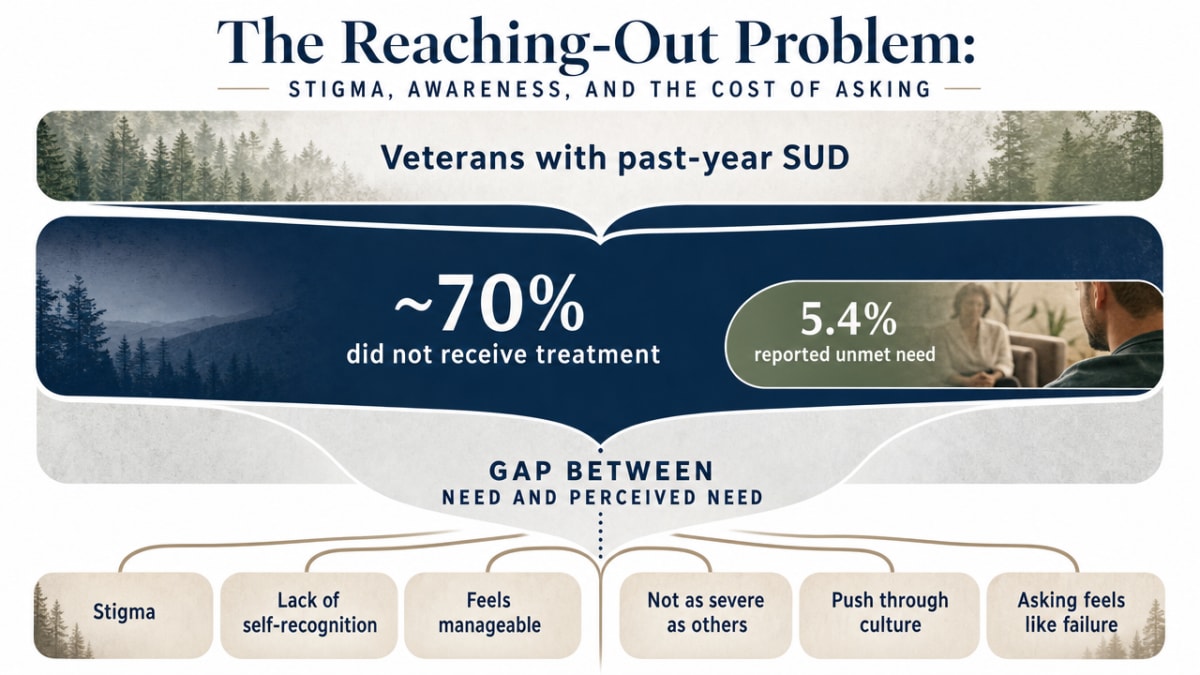
- Roughly 70% of veterans with a past-year substance use disorder went untreated, and only 5.4% recognized an unmet need, showing stigma and self-minimization drive the gap more than access.3
- Start with one accessible step: a VA referral, a Vet Center visit, the SAMHSA National Helpline, or 988 press 1, available regardless of discharge status or VA enrollment.13
When Trauma and Substance Use Show Up Together
The effects of past experiences don’t always stay in the past. For many veterans, the challenges of trauma and substance use are not separate issues but are deeply connected. A national study revealed that 44.6% of individuals with a lifetime diagnosis of PTSD also met the criteria for an alcohol or substance use disorder. Veterans in addiction treatment often describe a clear pattern: when PTSD symptoms intensify, substance use tends to increase; conversely, when trauma symptoms lessen, substance use often decreases.2,7
This strong link explains why addressing one issue without the other often proves ineffective. For example, alcohol might temporarily quiet nightmares, but its effectiveness diminishes over time, and the underlying problem persists. Similarly, pills might reduce hypervigilance, but their impact fades, leading to increased reliance and worsening issues.
The good news is that integrated care, which addresses both trauma and substance use simultaneously, is a proven and effective option, even for those who feel their situation is beyond help. This guide will explore what integrated care entails and how to begin the process.
How Common This Really Is Among Veterans
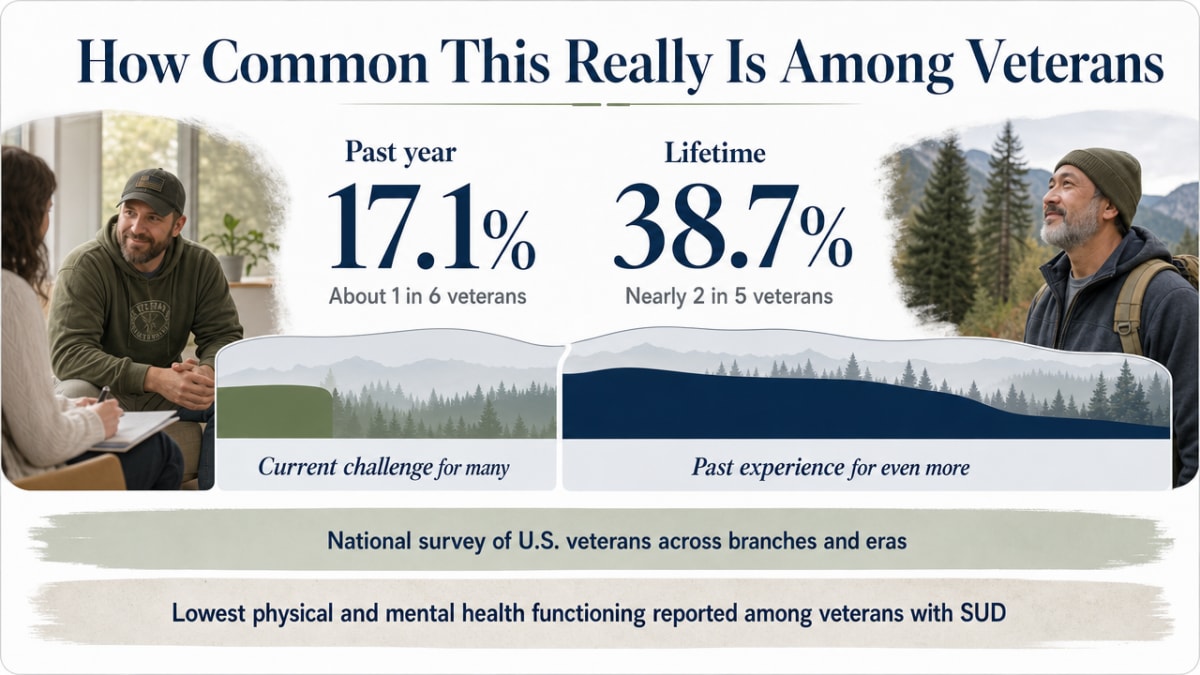
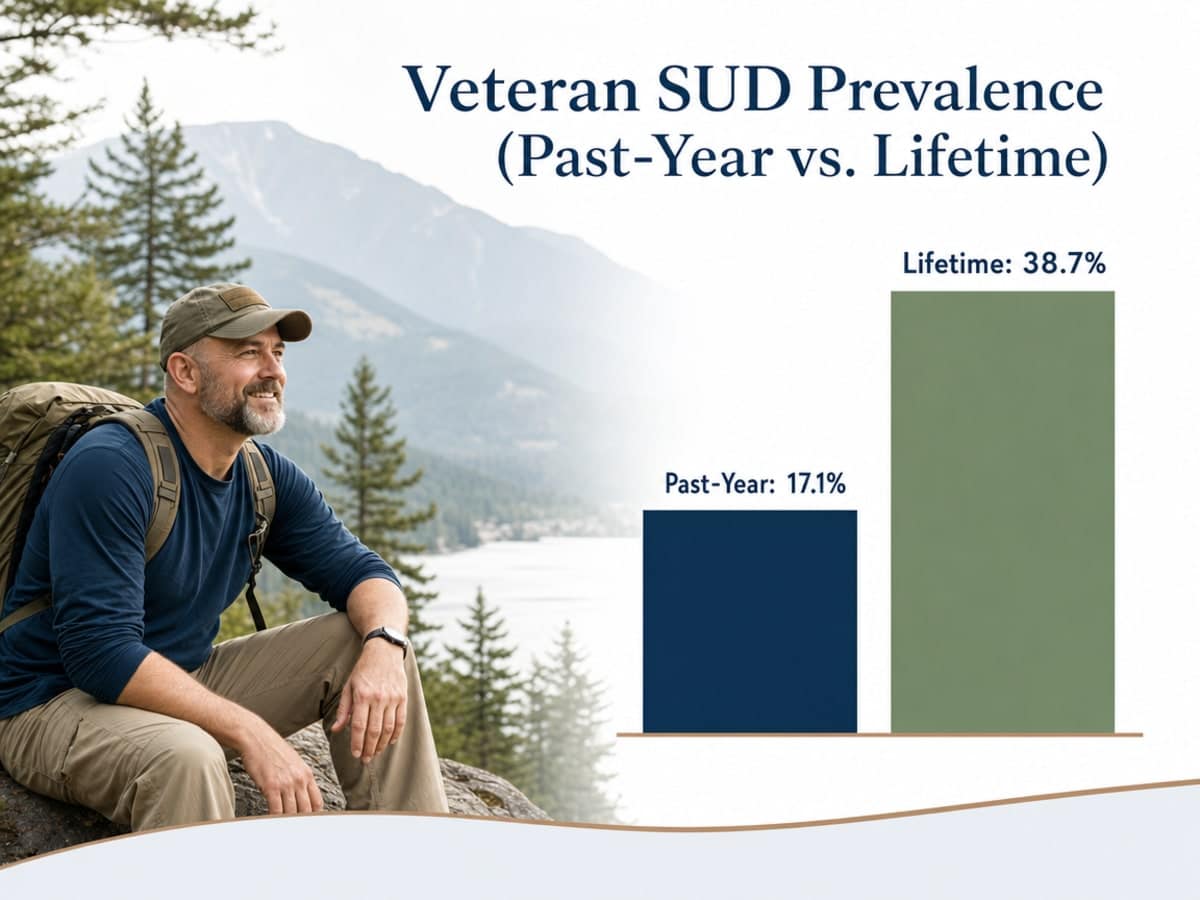
If you’ve been struggling in silence, believing you’re alone, the statistics suggest otherwise. A national study of U.S. veterans found that 17.1% met the criteria for a substance use disorder in the past year, and 38.7% had met that threshold at some point in their lifetime (excluding tobacco). This means roughly one in six veterans experiences a substance use disorder annually, and nearly two in five over their lifetime.3
These figures highlight that substance use is a current challenge for many and a past experience for even more. You are not isolated in this struggle. The study, based on national survey data, provides a broad overview of U.S. veterans across different branches and eras. It also indicated that veterans with a substance use disorder reported the lowest functioning across physical and mental health measures compared to those without one. This observation isn’t a judgment but a reflection of the toll prolonged, unsupported struggles take on both body and mind.3
Recent SAMHSA data from 2022-2024 continues to show significant rates of depression, PTSD symptoms, and substance use within the veteran population, with variations based on combat zone service. While specific numbers may shift with each survey, the fundamental reality remains: if you’re facing challenges with alcohol, pills, or other substances, you are part of a large community of individuals who understand your experience, even if they aren’t physically present.4
Why Trauma, Mood, and Substance Use Belong in One Treatment Plan
Historically, veterans’ health issues were often compartmentalized: PTSD was handled by mental health, addiction by substance abuse programs, and depression by another service. Traumatic brain injury received separate attention. This fragmented approach often proved unsustainable for individuals trying to manage multiple appointments while also navigating daily life, work, or family responsibilities.
Evidence strongly supports treating these conditions as interconnected. A study of veterans returning from Iraq and Afghanistan estimated PTSD prevalence at 19%, major depression at 20%, and traumatic brain injury at 21%. While these figures pertain to a specific cohort, the pattern of co-occurrence is widespread. Another analysis of the same group concluded that depressive and anxiety disorders, substance use disorders, and high-risk behaviors affect at least as many veterans as PTSD alone.8,9
This underscores a critical point: focusing solely on one condition can lead to overlooking others. For instance, screening only for PTSD might miss someone whose primary struggle is alcohol use driven by depression. Conversely, focusing only on alcohol use might ignore the underlying flashbacks fueling that use. Veterans themselves confirm this connection; one study found that 85.3% of veterans in substance use treatment reported increased substance use when their PTSD symptoms worsened. This isn’t a coincidence but a fundamental aspect of the problem.7
Current VA guidance reflects this understanding. The National Center for PTSD emphasizes that individuals with both PTSD and substance use disorders can benefit from trauma-focused therapy concurrently with addiction treatment, rather than waiting to complete one before starting the other. A 2025 systematic review on co-occurring PTSD and substance use treatment also noted that a veteran’s status might influence their response to different treatment approaches, highlighting the importance of veteran-sensitive programs.2,11
The key takeaway is that a comprehensive assessment should address all aspects: sleep, mood, memory, head injuries, substance use, and any distressing experiences. The goal is a single, coordinated treatment plan with one team, eliminating the need to navigate multiple services independently.
What Integrated Care Actually Looks Like, Day to Day
“Integrated care” means that a single team understands your entire story. The clinician managing your withdrawal medications communicates with your therapist addressing nightmares, who in turn collaborates with a peer specialist helping you rebuild your daily life. You share your story once, and the team coordinates the rest.
An integrated approach typically includes:
- Medical detox
- Medications to manage withdrawal and cravings
- Trauma-focused therapy
- Ongoing support from peers and specialists after the initial acute phase
These components are practical and achievable.
Medical Detox in a Home-Like Setting
The initial days of stopping substance use can be daunting due to the risks involved. Withdrawal from alcohol and benzodiazepines can be dangerous, potentially causing seizures and severe blood pressure fluctuations, necessitating medical supervision. While opioid withdrawal is rarely life-threatening, its intensity often leads individuals to relapse within 72 hours if attempted without support.
Medical detox involves clinicians monitoring vital signs, adjusting medications, and managing symptoms as they arise. The VA describes this as
“medically managed detoxification to stop substance use safely,”1
and the VA/DoD clinical guideline views withdrawal management as the crucial first step in long-term care, not an isolated event.10
The environment for detox is also significant. A hospital ward, with its noise, bright lights, and unfamiliar staff, can be overwhelming for someone already experiencing heightened anxiety. A non-hospital residential setting, designed to feel more like a home with shared living spaces and a yard, offers a calmer, more supportive atmosphere. For veterans whose nervous systems are sensitive to institutional environments, this difference is crucial for comfort and healing.
Medicines That Ease Withdrawal and Cravings
Some may mistakenly believe that medication-assisted treatment is merely substituting one drug for another. This misconception has unfortunately had severe consequences. The VA/DoD 2021 clinical practice guideline endorses buprenorphine/naloxone or methadone as primary maintenance treatments for opioid use disorder, and includes naltrexone for alcohol use disorder. These medications are not quick fixes but essential tools that help the body stabilize, allowing individuals to engage in further therapeutic work.10
In simple terms:
| Medication / Treatment | How It Helps |
|---|---|
| Buprenorphine | Alleviates opioid withdrawal symptoms and reduces cravings, enabling better sleep, appetite, and cognitive function. |
| Naltrexone | Available as a daily pill or monthly injection, diminishes the urge to use alcohol or opioids. |
| Acamprosate | Can help some individuals manage alcohol cravings. |
| Tapered protocols for alcohol or benzodiazepine withdrawal | A carefully tapered medication protocol prevents dangerous complications like seizures or delirium. |
The appropriate medication regimen is determined by your specific substance use, medical history, and long-term goals. This discussion should happen at the outset of treatment.
Trauma-Focused Therapy: PE, CPT, and EMDR
For a long time, veterans were often told to achieve sobriety before addressing trauma. However, current VA guidance now advises the opposite. The National Center for PTSD highlights evidence that individuals with co-occurring PTSD and substance use disorders can
“tolerate and benefit from evidence-based trauma-focused PTSD treatment”
concurrently with addiction care, not as a subsequent step.2
Three common and effective approaches are:
- Prolonged Exposure (PE), which gradually guides you through confronting avoided memories and situations to reduce their power
- Cognitive Processing Therapy (CPT), which focuses on challenging and reframing distorted thoughts related to traumatic events
- Eye Movement Desensitization and Reprocessing (EMDR), which uses guided eye movements or other bilateral stimulation to help process traumatic memories, often leading to quicker relief than traditional talk therapy
While these therapies can be challenging in the moment, they are typically time-limited, usually spanning 8 to 15 sessions, and are designed to provide lasting relief, not indefinite treatment.
Peer Support, Family, and the Long Arc of Recovery
While detox might last a week or two and trauma therapy a few months, recovery is a long-term journey that is best not undertaken alone.
Peer support is a cornerstone of trauma-informed care, alongside principles of safety, trustworthiness, collaboration, and choice. This means connecting with someone who has shared similar experiences, whether in group settings, casual conversations, or during difficult moments. The Oregon Department of Veterans’ Affairs encourages veterans to engage with peer-to-peer networks and “battle buddy” check-ins as an accessible first step.12,16
Family involvement is also crucial. The VA offers family therapy as part of its substance use services because family members are integral to the recovery process. When families understand the challenges—such as sleep difficulties, discomfort in crowds, or fluctuating moods—the entire support system becomes stronger. This comprehensive approach is what sustained recovery truly looks like.1
The Reaching-Out Problem: Stigma, Awareness, and the Cost of Asking
This isn’t due to a lack of available treatment programs. Instead, the gap is largely filled by stigma and a lack of self-recognition. Many veterans may believe their struggles are manageable or that their situation isn’t as severe as others’. The military culture often encourages pushing through difficulties, making asking for help feel like admitting failure. This perception can prevent individuals from seeking necessary support.
This data, derived from national surveys of U.S. veterans across various eras, indicates that a majority of struggling veterans do not yet identify their struggle as severe enough to warrant intervention. This is a crucial point to acknowledge. If you find yourself minimizing your challenges, you are not alone. Many individuals share this experience. However, the potential benefits of seeking help often far outweigh the perceived costs of asking.
Concrete Pathways to Start This Week
You don’t need a complete plan to begin. Sometimes, all it takes is one phone call, one conversation, or opening one door. The resources listed below are designed to be accessible, often without extensive paperwork, and can guide you to the next step without requiring you to repeat your story multiple times. Choose the option that feels most manageable today; other steps can follow.
VA Substance Use Services and Vet Centers
If you are already enrolled in VA health care, ask your primary care team for an immediate referral to substance use services. The VA offers a comprehensive range of services, including medically managed detox, medications for opioid and alcohol use disorder, counseling, family therapy, and relapse prevention. You don’t need to reach a crisis point to qualify. Concerns like sleep problems, increasing alcohol consumption, or reliance on pills for non-pain issues are all valid reasons to seek help.1
Vet Centers provide another valuable entry point. These community-based centers are primarily staffed by veterans and offer free, confidential counseling for combat veterans and their families. They often provide services with less waiting and paperwork than traditional VA medical facilities. If the main VA system feels overwhelming, a Vet Center can be a more accessible alternative.1
SAMHSA National Helpline and the Veterans Crisis Line
If you are not enrolled in VA care or prefer to speak with someone outside the VA system, the SAMHSA National Helpline is a free, confidential resource available 24/7, 365 days a year, in English and Spanish. They will not send anyone to your location but can help you find local treatment options, including detox, in your area.15
The Veterans Crisis Line is an essential resource for difficult times. You can reach them by dialing 988 and pressing 1, texting 838255, or using their online chat. SAMHSA explicitly states that this help is available
“no matter your discharge status, service history, or eligibility for or enrollment in VA health care.”13
Even an other-than-honorable discharge does not prevent you from accessing this support.
Oregon-Specific Supports for Pacific Northwest Veterans
For veterans in Oregon or the Pacific Northwest, the Oregon Department of Veterans’ Affairs (ODVA) maintains an updated list of behavioral health resources. This includes counseling services, peer networks, and links to local providers familiar with the region. It’s a good starting point if you prefer local support over a national call center.16
ODVA’s guidance also emphasizes informal support, such as talking to friends and family, connecting with a battle buddy, or joining a peer-to-peer network. While these are not substitutes for medical detox if needed, a conversation with someone who has similar experiences can be a powerful catalyst for seeking further help, especially if you’re still deciding whether your situation warrants professional intervention.16
Community and Non-VA Options If VA Care Isn’t the Fit
Some veterans may choose not to use VA services for various reasons, such as past negative experiences, discharge complications, a desire for privacy, or a preference for non-governmental settings. In such cases, community programs, non-hospital residential detox facilities, and outpatient counseling can provide effective alternatives. SAMHSA’s Service Members, Veterans, and their Families Technical Assistance Center supports states and communities in developing veteran-sensitive services outside the VA system, ensuring more programs are equipped to understand and address veterans’ unique needs. When contacting local programs, it’s helpful to ask two key questions:14
- “Do you accept my insurance?”
- “Do you treat trauma and substance use concurrently?”
The answers will provide valuable insight into their suitability.
What to Expect in the First Two Weeks
Understanding what happens during the initial two weeks can help alleviate apprehension.
Days one through three are typically the most physically challenging. If you’ve been heavily using alcohol or benzodiazepines, withdrawal symptoms like tremors, sweating, blood pressure fluctuations, and potential seizures are most intense during this period. Medical detox ensures that clinicians monitor your vital signs regularly and administer medications to prevent dangerous complications. Sleep will likely be disrupted, and appetite may be reduced, which is a normal part of the process.1
From days four through seven, the acute physical symptoms begin to subside, and emotional challenges often emerge. Anxiety, irritability, and previously suppressed memories may surface. This is where trauma-informed care becomes vital. Staff trained in this approach understand that environmental triggers, such as a slammed door or a locked hallway, can activate a veteran’s nervous system. They design the environment and daily activities to prioritize safety, choice, and peer support. You have the right to decline group activities or ask questions about your medication, ensuring you feel in control and supported.12
Week two shifts from stabilization to planning for the future. Discussions will begin about long-term medications, such as buprenorphine or naltrexone, tailored to your situation. Planning for post-detox care, including outpatient therapy and reintegration into your home environment, also starts. While you won’t feel completely “finished” by day fourteen, you should feel stable enough to continue your recovery journey, which is the primary goal of the initial two weeks.10
For the People Standing Beside a Veteran
If you are a spouse, parent, adult child, or battle buddy reading this on behalf of a veteran, you likely recognize the patterns: increased drinking, late-night disturbances, or resistance to help. You may have tried to intervene and been told to back off, only to find that it didn’t resolve the issue.
It’s important to know that you don’t have to wait for the veteran to be ready. You can proactively call the SAMHSA National Helpline yourself. It’s free, confidential, and available 24/7, allowing you to explore local options and gather information so you’re prepared when the veteran is open to discussion. For those in Oregon, the ODVA’s behavioral health page offers resources like peer networks and local counseling that don’t require the veteran’s initial participation.15,16
When you do communicate, keep your message concise and specific. Describe what you’ve observed rather than making assumptions about their character. Express your concern and fear, rather than stating they are “broken.” Ask about one small step that might help this week, such as making a phone call, offering a ride, or simply sitting with them while they reach out. Family therapy is a standard component of VA substance use services for a reason: family members are integral to the recovery process. Your consistent support and presence are often more impactful than any specific words.1
Finding a Program That Treats You Like a Person
When you or someone assisting you contacts treatment programs, many may sound similar initially. The true distinctions emerge in their actual practices once you begin treatment.
To cut through marketing, ask specific questions:2,10
- Do the same team members treat both trauma and substance use, or are you referred to separate clinics?
- What medications do they use for withdrawal and cravings, and do they align with the VA/DoD 2021 guidelines for options like buprenorphine, methadone, and naltrexone?
- What is the facility’s environment? A home-like residential setting, with a kitchen and yard, can have a different, more calming effect on a veteran’s nervous system than a clinical hospital ward.
While “trauma-informed care” is a common term, its essence is simpler: an environment built on safety, trustworthiness, peer support, collaboration, and choice. In practice, this means you can ask questions, decline group activities if uncomfortable, and understand the purpose of each medication offered. You shouldn’t feel pressured to share your entire life story with a stranger on your first day.12
Programs like Pacific Crest Trail Detox in Milwaukie, Oregon, exemplify this integrated approach: medical detox with medications to ease withdrawal, combined with trauma-focused therapy, all within a residential, home-like setting. Regardless of where you seek help, this combination of comprehensive care is worth prioritizing.
Check Your Coverage for Veteran Recovery Support
See if your insurance covers trauma-informed detox and care designed for veterans.
Frequently Asked Questions
Can I get trauma treatment and substance use treatment at the same time, or do I have to be sober first?
You can receive both treatments concurrently, and current VA guidance suggests this integrated approach is often more effective. The National Center for PTSD indicates that individuals with co-occurring conditions can tolerate and benefit from trauma-focused therapies like PE, CPT, and EMDR while also receiving addiction care, rather than waiting to complete one before starting the other.2
Do I need to be enrolled in VA health care to get help?
No, enrollment in VA health care is not a prerequisite for receiving help. SAMHSA explicitly states that support is available “no matter your discharge status, service history, or eligibility for or enrollment in VA health care.” You can contact the SAMHSA National Helpline at any time for free and confidential assistance in finding local treatment options.15 Additionally, community programs and non-VA detox centers are available.13
What medications are used to help with withdrawal and cravings?
The VA/DoD 2021 clinical guideline recommends buprenorphine/naloxone or methadone as first-line maintenance treatments for opioid use disorder, and includes naltrexone among the options for alcohol use disorder. For alcohol or benzodiazepine withdrawal, a supervised taper using longer-acting medications helps prevent dangerous complications like seizures. The most suitable medication depends on your individual history and needs.10
What does trauma-informed care actually mean in a detox setting?
SAMHSA defines trauma-informed care as a program designed around principles of safety, trustworthiness, peer support, collaboration, and choice, with a conscious effort to avoid re-traumatizing individuals. In a detox environment, this translates to staff explaining procedures before they occur, allowing you to decline group activities, and structuring the day to minimize triggers that might heighten a veteran’s nervous system response, such as loud noises or confined spaces.12
How can family members or a battle buddy help a veteran who won’t reach out?
You don’t have to wait for the veteran to initiate contact. You can call the SAMHSA National Helpline yourself to gather information about available resources in your area. In Oregon, the ODVA directs families to peer networks and local counseling services that do not require the veteran’s initial participation. Family therapy is also a standard offering within VA substance use services, underscoring the importance of family involvement in recovery.1,15,16
What should I do right now if I’m in crisis or thinking about suicide?
If you are in crisis or experiencing thoughts of suicide, please contact the Veterans Crisis Line immediately. You can dial 988 and press 1, text 838255, or use the online chat. SAMHSA confirms that this support is available regardless of your discharge status, service history, or VA enrollment. You do not need a plan, a diagnosis, or specific words; simply make the call, and someone will be there to help.13
References
- Substance Use Treatment For Veterans. https://www.va.gov/health-care/health-needs-conditions/substance-use-problems/
- Treatment of Co-Occurring PTSD and Substance Use Disorder in VA. https://www.ptsd.va.gov/professional/treat/cooccurring/tx_sud_va.asp
- Substance Use Disorders Among Veterans in a Nationally Representative Sample. https://pmc.ncbi.nlm.nih.gov/articles/PMC6308169/
- Mental Health and Substance Use among Veterans | CBHSQ Data. https://www.samhsa.gov/data/report/22-24-nsduh-mental-health-and-substance-use-among-veterans
- Substance use disorders in military veterans: prevalence and treatment challenges. https://pmc.ncbi.nlm.nih.gov/articles/PMC5587184/
- Posttraumatic Stress Disorder and Co-Occurring Substance Use Disorders in a Longitudinal Study of Veterans. https://pmc.ncbi.nlm.nih.gov/articles/PMC3811127/
- Substance Use Disorders and PTSD: An Exploratory Study of Veterans with SUD. https://pmc.ncbi.nlm.nih.gov/articles/PMC3855915/
- Substance Use and Other Mental Health Disorders Among Veterans Returning from Iraq and Afghanistan. https://pmc.ncbi.nlm.nih.gov/articles/PMC3794703/
- Co-Occurring Psychiatric and Medical Conditions and Psychosocial Problems Among Veterans Returning from Iraq and Afghanistan. https://www.ncbi.nlm.nih.gov/books/NBK201109/
- VA/DoD Clinical Practice Guideline for the Management of Substance Use Disorder (2021). https://www.healthquality.va.gov/guidelines/mh/sud/VA-DoD-SUD-CPG_Final_for-508_v3.pdf
- Treatment for Co-Occurring Posttraumatic Stress Disorder and Substance Use Disorder: A Systematic Review. https://pmc.ncbi.nlm.nih.gov/articles/PMC12614353/
- Trauma-Informed Approaches and Programs. https://www.samhsa.gov/mental-health/trauma-violence/trauma-informed-approaches-programs
- Mental Health, Drug and Alcohol: Support for Veterans. https://www.samhsa.gov/find-support/how-to-cope/veterans
- Service Members, Veterans, and their Families Technical Assistance Center. https://www.samhsa.gov/technical-assistance/smvf
- National Helpline for Mental Health, Drug, Alcohol Issues | SAMHSA. https://www.samhsa.gov/find-help/helplines/national-helpline
- Behavioral Health Resources and Information (Oregon Department of Veterans’ Affairs). https://www.oregon.gov/odva/resources/pages/behavioral-health.aspx