


Key Takeaways
- Portland faces a serious detox bed shortage, with Oregon projected to have roughly 365 residential withdrawal management beds against an estimated need of 571 by mid-2025 1.
- For most women, outcomes in well-run mixed-gender detox programs track closely with women-only care, though single-gender may fit better after recent trauma or past co-ed struggles 5.
- Oregon-licensed co-ed houses follow strict rules: same certification as gender-specific programs, at least one RN per five withdrawal patients, and clear room assignment protections 3, 4.
- Before choosing, compare medical severity, admission timing, staffing ratios, room and safety policies, insurance acceptance, and whether the program hands you into continuing care after detox ends 16.
What to Do Tonight If You or Someone You Love Needs to Detox
If you’re reading this at midnight, sitting on the edge of the bed, phone in hand — take a breath. You’ve already done the hardest part, which is admitting something has to change. That counts.
Here’s what actually matters in the next few hours. Alcohol and benzodiazepine (medicines like Xanax, Klonopin, or Ativan) withdrawal can be medically dangerous — seizures, dangerously high blood pressure, and worse. This isn’t a willpower problem. It’s a medical one, and it needs nurses and doctors, not a quiet room and a bottle of water 15. If the person withdrawing is shaking hard, hallucinating, confused, or has a history of seizures, call 911 or head to an emergency room now. You can move to a residential detox house after they’re stable.
If withdrawal hasn’t started yet — or it’s early and mild — you have a real choice. A small, home-like detox house in the Portland area can admit you or your loved one, often within a day, with medicine on hand and a nurse checking in around the clock 16. You don’t have to pick between a hospital ward and going it alone.
You also don’t have to go in alone in the other sense. If you and your partner, sibling, or best friend both need help, a co-ed house means you can walk in together. That’s the piece we’ll unpack next.
Co-ed Detox, Plainly Explained
Co-ed detox just means a residential detox house where men and women recover under the same roof, with their own bedrooms and shared common spaces — a living room, a kitchen, a dining table where everyone eats the same dinner. It’s not a dorm. It’s not a hospital ward. It’s a house with nurses on shift, a doctor overseeing your care, and medicine on hand for the hardest hours of withdrawal 15.
The medical part is the same as any other residential detox. You get assessed on arrival, started on the right medications to keep withdrawal safe (especially critical for alcohol and benzodiazepines like Xanax or Klonopin), and monitored around the clock. Oregon requires that kind of staffing whether the house is co-ed or gender-specific 3. What changes in a mixed-gender house is the social piece: the person eating oatmeal across from you at 7 a.m. might be a 55-year-old dad, a 28-year-old nurse, your partner, or a stranger who becomes a friend by day three.
People choose co-ed for a few honest reasons:
- You want to come in with your partner or sibling and not be separated.
- You’ve done single-gender treatment before and it didn’t feel like real life.
- You’d rather practice recovery around all kinds of people, because that’s who you’ll live and work with when you go home.
- Or the co-ed bed is simply the one available this week, and waiting isn’t safe.
Whatever brought you here, the design of the house — small, home-like, medically staffed — is what makes it work, not the gender mix 16.
Is Mixed-Gender Detox Actually as Safe and Effective as Women-Only or Men-Only Programs?
What the Research Says About Outcomes
Short answer: for most people, yes. The longer answer is worth your time, because it’s the question that keeps a lot of families up at night.
A review of the evidence on gender and substance use treatment found that gender-specific programs are not consistently more effective than mixed-gender ones, and that a large share of both men and women do well in co-ed settings 5. A randomized study comparing women-only and mixed-gender day treatment reached the same conclusion — no significant differences in most outcomes, meaning women were treated just as effectively alongside men as they were in women-only rooms 6. A national study in Chile, looking at thousands of women across a public system, found similar outcomes and similar readmission risk between the two formats 11. Different countries, different systems, similar bottom line.
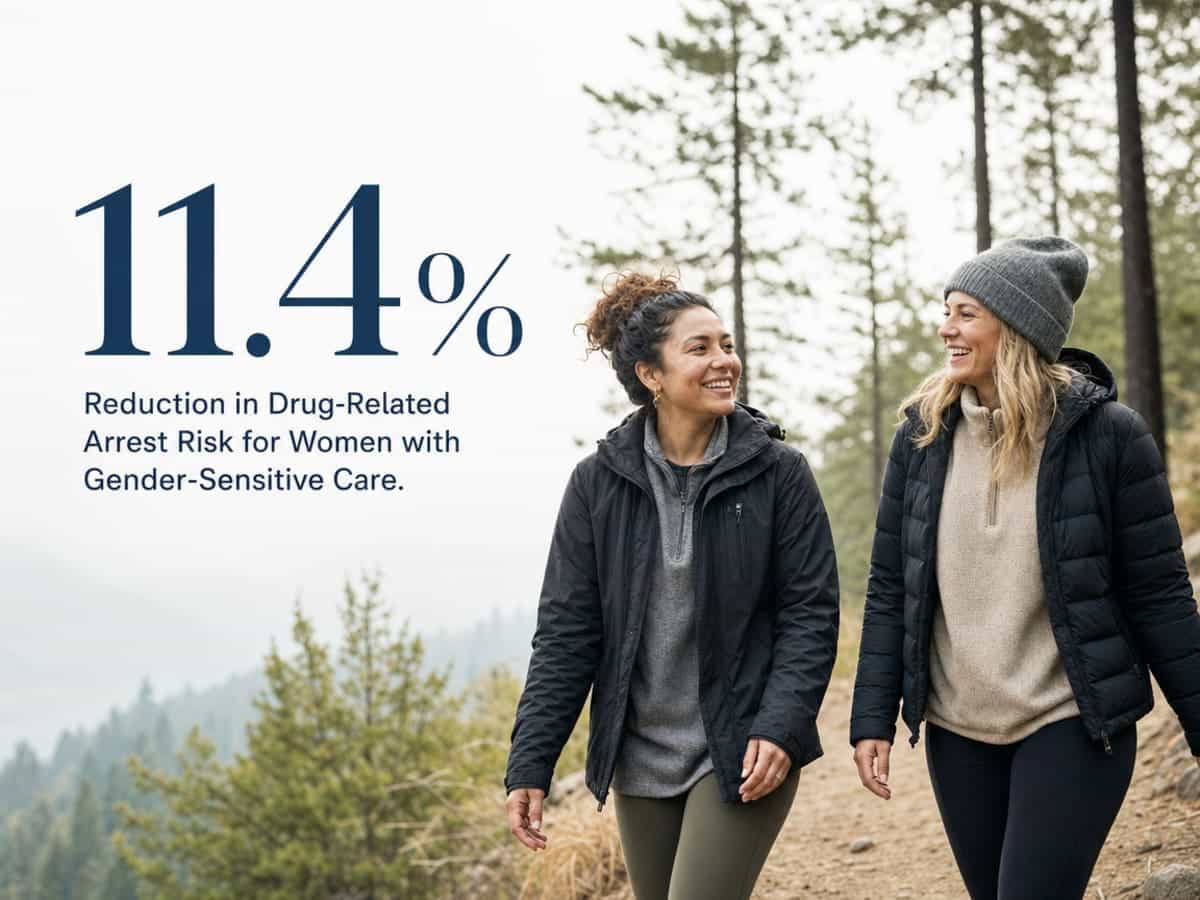
Here’s the piece that matters most for a house like the one you’re considering: when a mixed-gender program adds gender-sensitive care — meaning staff are trained in trauma, women’s groups happen inside the larger program, and safety is designed in — the outcomes get even better. One study of intensive inpatient programs found that women who completed treatment in the more gender-sensitive mixed-gender programs had an 11.4% lower risk of a drug-related arrest afterward, compared to women who completed less gender-sensitive versions of the same kind of program 10. That finding applies to treatment completers in intensive inpatient care, not to every setting, but it points to something real: what happens inside the house matters more than the label on the door.
When a Women-Only or Men-Only Program May Fit Better
We’re not going to oversell co-ed. Some of the honest research points the other way for certain people, and you deserve to hear it.
One study found that women in women-only programs used more treatment services and had better drug and legal outcomes at follow-up than women in mixed-gender programs 7. Another found that women in single-gender groups had a bigger drop in substance use from start to finish, and that women who came in with low confidence in their own ability to stay sober did especially well in women-only groups 9. A separate twelve-month follow-up reported that women in women-only treatment were roughly two and a third times less likely than women in mixed-gender programs to report any substance use in the month before follow-up 14.
So who might lean toward a single-gender program?
- If you’ve survived recent sexual trauma and can’t imagine sharing a couch with men right now.
- If you’ve tried co-ed before and kept getting pulled into old patterns.
- If you’re a mom whose recovery needs to be built around parenting.
- If your gut says you need the walls. Trust that.
A good co-ed house will tell you the same thing and help you find the right bed, even if it’s not theirs.
Why Access to Any Co-ed Bed in Portland Matters Right Now
Here’s the part nobody tells you when you’re calling around at 10 p.m.: Oregon doesn’t have enough detox beds. Not close. State analysts project the state will have about 365 residential withdrawal management beds by mid-2025, while the estimated need is roughly 571 beds — a gap of more than 200 1. Those are statewide numbers for medically supervised detox, the exact category of care you’re looking at for alcohol or benzodiazepine withdrawal.
What that gap looks like from your kitchen table: you call one place, they’re full. You call another, they can take you Thursday. It’s Monday. The person you love is already shaking. Every day of waiting is a day something can go wrong — a seizure, a relapse, a change of heart, an overdose.
Take the open bed. Get stable. You can always step into a different program later if the fit isn’t right. What you can’t do is undo a withdrawal that went sideways because you were holding out for a perfect match that wasn’t coming this week.

Inside a Small Residential Co-ed House: A Day in the Life
Morning starts quiet. A nurse knocks softly around 7, checks your blood pressure and pulse, asks how you slept and what the shakes feel like on a scale of one to ten. If you need medicine, you get it before you get out of bed. Coffee is already on in the kitchen. Someone — maybe a staff member, maybe another guest who’s a day ahead of you — is scrambling eggs.
Breakfast happens at a real table. A woman detoxing off wine sits next to a man coming off Klonopin. Nobody performs. Some mornings people talk. Some mornings people just eat. That’s allowed.
Mid-morning, you meet with the doctor or nurse practitioner overseeing your care. They adjust your medications based on how the night went. This is the medical spine of the day, and it’s the same in a co-ed house as in a gender-specific one — Oregon requires that a registered nurse be on staff at a ratio of at least one for every five people in withdrawal management, plus additional program staff 3. You’re being watched carefully, even when it feels casual.
Afternoons are lighter. A group session in the living room. A one-on-one with a counselor on the back porch. A nap, because withdrawal is exhausting and rest is medicine too. Family can usually call or visit, which matters — SAMHSA’s detox guidance is clear that family and social support strengthen the transition from detox into whatever comes next 16.
Evenings look like evenings anywhere people live together. Dinner at the table. A show on the couch. A nurse doing a final vitals check before lights out. Someone lending you a phone charger. It’s not a spa. It’s not a hospital. It’s a house where the hardest week of your life is happening around people who are having it too, with medicine and staff close by every hour.
Hospital Detox, Gender-Specific Residential, or Co-ed Home-Like Detox: Honest Tradeoffs
By the time you’re weighing options, you’re probably looking at three real doors. Let’s walk through them without the marketing gloss.
Hospital detox is what you want if the medical picture is scary right now. Long history of seizures. Serious heart or liver disease. A dangerous mix of substances. Late-stage alcohol withdrawal that’s already tipping into delirium. In a hospital, you’re in a ward, you’re in a gown, and you’re surrounded by IV poles and monitors. The care is excellent for stabilizing an acute crisis — SAMHSA describes detox as a set of interventions aimed at managing acute intoxication and withdrawal safely 16. What you don’t get is a therapy schedule, a dinner table, or a warm handoff into the rest of recovery. When the medical crisis passes, most hospitals discharge you and hope you find the next step on your own.
Gender-specific residential detox is a house or small facility that admits only men or only women. The medical care looks similar to a co-ed house — nurses, doctor oversight, withdrawal medications — and the social environment is intentionally single-gender. For some people that’s the right call, especially women with recent sexual trauma or a history of relationships that pulled them off track in mixed settings 7. The tradeoff is access. There are fewer gender-specific beds in Oregon, so you may wait longer or drive farther to find one.
Co-ed home-like residential detox is the middle path. Same medical spine as the other two — assessment, medications, around-the-clock nursing — but delivered in a real house with a shared kitchen and living room, men and women recovering under the same roof in their own bedrooms. The research is clear that for most women, outcomes in a well-run mixed-gender program track closely with women-only care 5, and the same is broadly true for men. What you gain is the feel of the place: home, not hospital. Meals with people, not trays in a room. Groups on a couch, not chairs in a fluorescent circle.
Here’s the honest way to sort it. If withdrawal is medically severe or complicated, start at a hospital and step down to residential once you’re stable. If you know in your gut you need single-gender walls, hold out for that bed if the wait is safe. Otherwise, a co-ed home-like house gives you the medical care of detox and the human environment of a place you might actually want to be at 8 p.m. on day three.

How Oregon Regulates Co-ed Detox Houses (And Why It Should Reassure You)
Licensing, Nurses, and Staffing Ratios
A residential detox house in Oregon isn’t a wellness retreat with good intentions. It’s a licensed medical program, and the state checks the paperwork. The Oregon Health Authority licenses and certifies residential programs for substance use disorder and withdrawal management as a specific category of care, separate from mental health residential and problem gambling programs 13. Any non-hospital detox house serving the Portland metro area has to hold that license to open its doors.
On top of licensing, every detox program must maintain a Substance Use Disorder Certification of Approval issued by the state — the same certification whether the house admits men, women, or both 12. Co-ed doesn’t mean less regulated. It means the same rulebook, applied to a house that happens to have a mixed group at the dinner table.
The staffing rules are where the reassurance gets concrete. Oregon requires at least one registered nurse for every five people in withdrawal management, plus one additional withdrawal management program staff member for every ten people admitted 3. In a small house with eight or ten guests, that means real nurses on shift, not a pager number for someone across town. When you wake up at 3 a.m. shaking, someone with a stethoscope is already awake in the next room.
Room Assignments, Gender, and Safety Rules
The question a lot of families ask, and don’t always say out loud: who sleeps where? In an Oregon-licensed co-ed house, bedrooms are private or shared by the same gender. Men and women don’t room together. The common areas — kitchen, living room, dining table, group rooms — are shared.
A 2025 permanent administrative order from the Oregon Health Authority spells out how facilities handle room assignments in a way that respects both safety and identity. The order allows facilities to decline a resident’s request to choose a specific roommate, and when rooms are assigned by gender, it sets rules for how transgender residents are placed in a way that aligns with nondiscrimination and safety standards 4. That means transgender guests aren’t turned away or forced into an unsafe placement — the state built protections into the rules.
Practically, this looks like a house where you know your bedroom is yours, the door closes, and staff have a clear framework — not a guess — for making everyone feel safe. Good houses go further with quiet hours, group ground rules, and staff trained to spot dynamics before they become problems.
What Pacific Crest Trail Detox in Milwaukie Actually Looks Like
Pacific Crest Trail Detox sits in Milwaukie, a quiet neighborhood just south of Portland proper. It’s a house, not a campus. You pull into a driveway. There’s a porch. Inside there’s a kitchen where someone is usually making something, a living room where guests and staff share the couch, and bedrooms upstairs where you actually sleep — men and women in their own rooms, common spaces shared 4.
The medical care is the reason the house exists. A doctor oversees your withdrawal plan. Nurses are on shift around the clock, meeting Oregon’s staffing standards for withdrawal management 3. If you’re coming off alcohol or benzodiazepines like Xanax or Klonopin — the withdrawals that can turn dangerous fast — you’re on medication from the first hours, with vitals checked while you rest. That’s the non-negotiable spine underneath everything else.
What surrounds the medicine is what makes it feel different from a hospital. Meals at a table. Group sessions on couches. One-on-one time with a counselor who knows your name by day two. Staff who have been through their own recovery and don’t flinch at anything you say. The house welcomes co-ed guests, LGBTQ+ guests, veterans, working professionals, and people managing anxiety, depression, or PTSD alongside the substance use — because those are the people who show up, and separating any of it doesn’t help anyone heal 16.
Insurance covers most admissions. The Oregon Health Plan is the one exception. If you’re weighing whether a co-ed house that feels like family is the right fit, a phone call is the way to find out.
After Detox: Why the First Week Is Only the Beginning
Here’s the truth nobody wants to hear on day one: getting through withdrawal is the opening scene, not the credits. SAMHSA’s clinical guidance is direct about it — detox alone is not sufficient treatment for a substance use disorder, and outcomes depend on what happens after the last dose of withdrawal medicine 16. The house gets you safe. The weeks after teach your body and brain how to live without the thing that was killing you.
That’s why a good detox program hands you off, not out. From the medical week in the house, most people step down into:
- A partial hospitalization program — five days a week of therapy and support, still with a lot of structure.
- From there, an intensive outpatient program a few evenings a week, so you can start rebuilding a normal schedule.
- Then standard outpatient counseling and an alumni community you can call at 9 p.m. on a Tuesday when it gets hard.
You don’t have to figure this out on your own on day seven. The point of walking into a house that offers the whole continuum is that the next door is already open when you’re ready to walk through it.
How to Ask About a Co-ed Bed Today
Making the call is the hard part. You already did the thinking. Here’s what to say when someone picks up.
Start simple:“I’m calling about a co-ed detox bed. When’s the soonest you could admit?”That one sentence gets you past the small talk. From there, have three things ready:
- What the person is withdrawing from (alcohol, benzodiazepines like Xanax or Klonopin, opioids, or a mix).
- When the last dose was.
- The name of your insurance card.
Pacific Crest Trail Detox accepts most insurance plans; the Oregon Health Plan is the one they don’t take.
Ask whether you and a partner or sibling can be admitted together. Ask what tonight looks like if withdrawal is already starting. Ask what happens after the first week, because a good house will already have the next step ready.
A co-ed house that feels like family — ask Pacific Crest Trail Detox about admission today. You don’t need the perfect words. You just need to dial.
Check Your Coverage for Co-ed Detox Care
Find out in minutes if your insurance covers a safe, supportive co-ed detox program near Portland.
Frequently Asked Questions
Is co-ed detox safe for women?
Yes, when the house is licensed, medically staffed, and trauma-informed. Peer-reviewed research shows women in mixed-gender programs achieve substance use outcomes comparable to women in women-only programs 5. Safety comes from staffing ratios, private bedrooms, and clear ground rules — not from segregation alone. If recent trauma makes co-ed feel unsafe, a women-only bed may fit better.
Can my partner and I go to detox together in Portland?
In a co-ed house, yes — you can be admitted at the same time and stay under the same roof, in your own bedrooms. You’ll share meals, common spaces, and some group sessions. Individual medical care and counseling stay separate, because your withdrawal and your recovery are your own. Call ahead so the house can plan two admissions on the same day.
How is a co-ed residential detox house different from hospital detox?
A hospital detox is a ward with gowns, monitors, and IV poles, built for acute medical crises. A residential co-ed house delivers the same core detox interventions — assessment, withdrawal medications, around-the-clock nursing 15 — inside a real home with a kitchen, living room, and shared meals. Hospitals stabilize and discharge. A residential house stabilizes you and hands you into the next step of care.
Are men and women in the same bedrooms at a co-ed detox?
No. Bedrooms are private or shared with the same gender. Common spaces — kitchen, living room, dining table, group rooms — are shared. Oregon’s 2025 rules give facilities a clear framework for room assignments and include specific protections for transgender residents so placements respect both safety and identity 4. Your bedroom door closes, and it’s yours.
How long does detox at a co-ed house usually take?
Most stays run five to ten days, depending on what you’re withdrawing from and how your body responds. Alcohol and benzodiazepine withdrawal (like Xanax or Klonopin) often need longer medical tapering than short-acting opioids. The medical team adjusts your plan each day based on your vitals and how you’re feeling. Nobody gets rushed out the door before it’s safe.
What happens after detox ends?
Detox is the first week, not the finish line. SAMHSA’s clinical guidance is clear that detox by itself isn’t enough treatment for a substance use disorder 16. Most people step down into a partial hospitalization program, then intensive outpatient a few evenings a week, then standard outpatient counseling and an alumni community. A good house lines up that next door before you walk out the front one.
References
- Oregon Behavioral Health Residential+ Facility Study – Final Report (June 2024). https://www.oregon.gov/oha/BH/Reports/Behavioral-Health-Residential-Facility-Study-June-2024.pdf
- Substance Use Disorder Financial Analysis Report (Oregon Alcohol and Drug Policy Commission, April 2024). https://www.oregon.gov/adpc/MeetingDocuments/SUD-Financial-Analysis-Report-0424.pdf
- Oregon Administrative Rules – Chapter 309-018: Residential Substance Use Disorders and Problem Gambling Treatment and Recovery Services. https://www.oregon.gov/oha/HSD/RAC/309-018.pdf
- PERMANENT ADMINISTRATIVE ORDER – Behavioral Health Residential Facilities (March 1, 2025). https://www.oregon.gov/oha/BH/Rulemaking/PERM-309-035-03012025.pdf
- Gender and Use of Substance Abuse Treatment Services. https://pmc.ncbi.nlm.nih.gov/articles/PMC6470905/
- Women’s programs versus mixed-gender day treatment. https://pubmed.ncbi.nlm.nih.gov/15598193/
- Women-only and mixed-gender drug abuse treatment programs: service needs, utilization and outcomes. https://pubmed.ncbi.nlm.nih.gov/16996232/
- Long-term Outcomes among Drug Dependent Mothers Treated in Women-only versus Mixed-gender Programs. https://pmc.ncbi.nlm.nih.gov/articles/PMC3131445/
- Self-efficacy and substance use outcomes for women in single gender versus mixed-gender group treatment. https://pmc.ncbi.nlm.nih.gov/articles/PMC3132800/
- Gender-Sensitive Substance Abuse Treatment and Arrest Outcomes for Women. https://pmc.ncbi.nlm.nih.gov/articles/PMC3947128/
- Treatment outcome and readmission risk among women in women-only versus mixed-gender drug treatment programs in Chile. https://pmc.ncbi.nlm.nih.gov/articles/PMC9052114/
- PERMANENT ADMINISTRATIVE ORDER DMAP 77-2023 (Chapter 410). https://www.oregon.gov/oha/HSD/OHP/Policies/172-0670-091923.pdf
- Oregon Health Authority: Licensing and Certification – Behavioral Health Residential and Withdrawal Management Programs. https://www.oregon.gov/oha/hsd/amh-lc/pages/index.aspx
- The Relative Effectiveness of Women-Only and Mixed-Gender Substance Abuse Treatment. https://pmc.ncbi.nlm.nih.gov/articles/PMC3081899/
- Quick Guide for Clinicians Based on TIP 45: Detoxification and Substance Abuse Treatment. https://nida.nih.gov/sites/default/files/samhsa_detoxification_and_substance_abuse_treatment.pdf
- Detoxification and Substance Abuse Treatment (Treatment Improvement Protocol). https://www.ncbi.nlm.nih.gov/books/NBK64115/
- Home-based detoxification for individuals with alcohol or drug use disorders: A systematic review. https://pmc.ncbi.nlm.nih.gov/articles/PMC11814356/