


Key Takeaways
- Oregon operates a regulated withdrawal care system with 301 licensed detox beds and 1,374 residential treatment beds, all inspected under state Chapter 415 rules 2.
- Overdose deaths in Oregon dropped 22% between December 2023 and December 2024, reflecting active investment in treatment access rather than a system in retreat 1.
- Distance from triggers, real privacy for professionals, and program fit (LGBTQ+, veterans, working professionals in a home-like setting) are common reasons travelers choose Oregon over local options.
- Start with one phone call: have your insurance card, medication list, and use history ready, and verify any facility against the Oregon Health Authority provider directory 11.
Reading This at 2 A.M.: What Traveling to Oregon for Detox Actually Looks Like
If you’re reading this at a hard hour, you’re already doing something brave. Maybe you’re the one who needs detox, and the shaking woke you up again. Maybe you’re a spouse, a parent, a friend, scrolling with a lump in your throat because someone you love finally said the word “help.” Either way: you’re in the right place, and you don’t have to figure this out alone tonight.
Here’s the honest version. Traveling to Oregon for medical detox is not a strange or extreme choice. Thousands of families do it every year. The state runs a regulated, licensed system for withdrawal care, and Oregon’s overdose deaths actually dropped 22% between December 2023 and December 2024 according to CDC provisional data, in part because of ongoing investment in treatment beds and services 1. That matters for you because it means the system you’re flying into is functioning and responsive, not falling apart.
This guide walks you through what a travel-in detox actually looks like from the first phone call to your first morning in a bed in Oregon. You’ll learn how insurance verification really works over the phone, how a receiving team decides whether it’s safe for you to fly, who books the ticket, who meets you at the airport, and what to put in a small suitcase. No jargon. No sales pitch. Just the plan.
You already did the hardest part by looking. Now let’s take the next small step together.

Is Traveling to Oregon Actually a Legitimate Option?
Oregon’s Licensed Detox Capacity, in Plain Numbers
Let’s get the biggest worry out of the way first: no, you are not flying into a corner of the country where detox is a fringe idea run out of someone’s basement. Oregon runs a real, licensed, counted system for withdrawal care, and the numbers back that up.
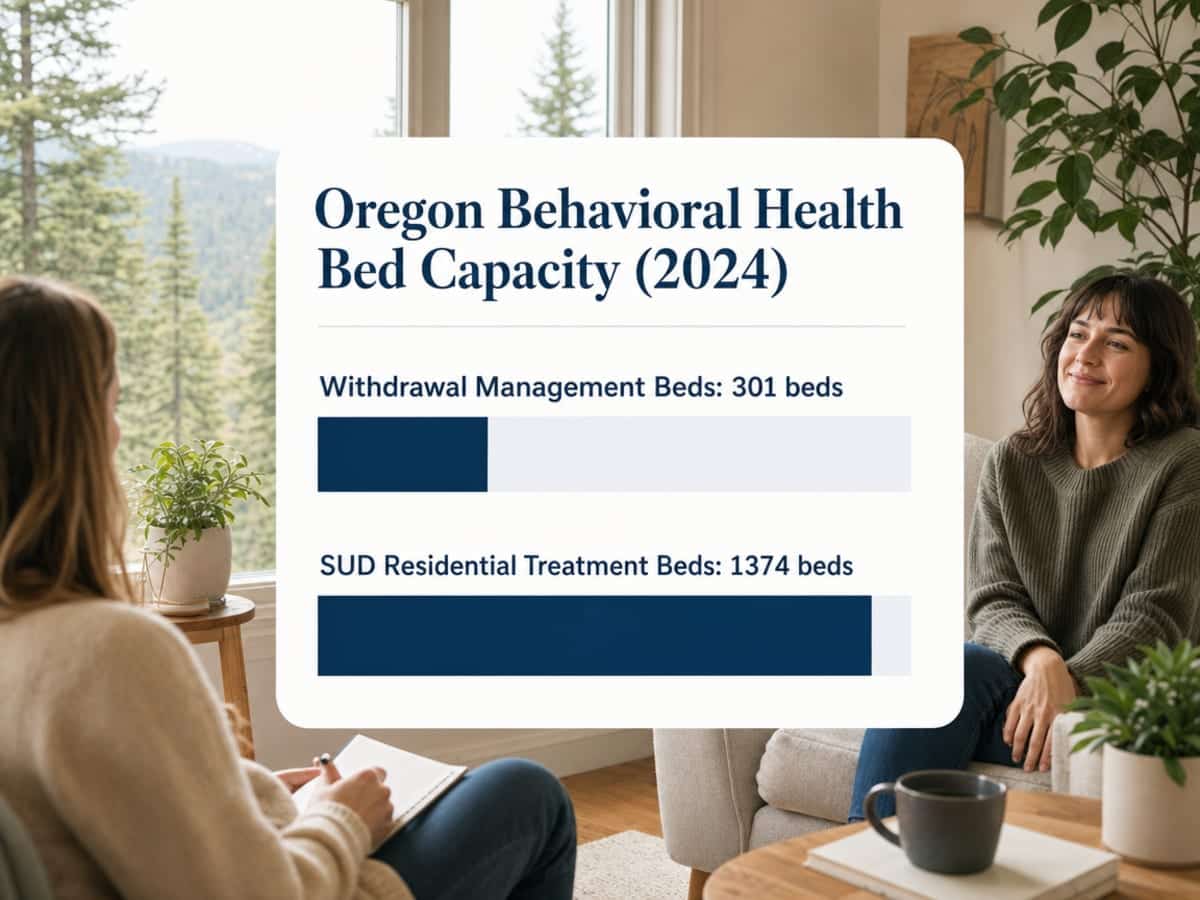
A 2024 statewide study commissioned by the Oregon Health Authority found that Oregon has 301 licensed withdrawal management beds and 1,374 substance use disorder residential treatment beds spread across the state 2. Those are two different things, and the difference matters to you.
Withdrawal management beds are the detox beds. They are the ones staffed and equipped to keep you medically safe while your body clears alcohol, opioids, benzos, or other substances. They exist for the first stretch, when things are physically hardest and someone needs to be watching your vitals, your comfort, and your safety around the clock.
The 1,374 residential treatment beds are the next chapter. They are where people go after detox to keep the work going, in a bed, with a team, before stepping down to outpatient life.
Here is why that split matters when you’re weighing a plane ticket. Every one of those 301 detox beds sits inside a program the state licenses and inspects. That means someone other than the facility itself is checking their work. When you land in Portland and walk through the door, you are walking into a system with rules, oversight, and standards, not a stranger’s promise on the internet.
That’s the floor you’re flying toward. Not exotic. Not risky. Regulated.
Why Oregon’s Treatment System Is Worth Traveling Into Right Now
There’s a fair question hiding behind everything you’re reading tonight: if Oregon has had such a rough overdose story in the news, why would you fly toward it instead of away from it?
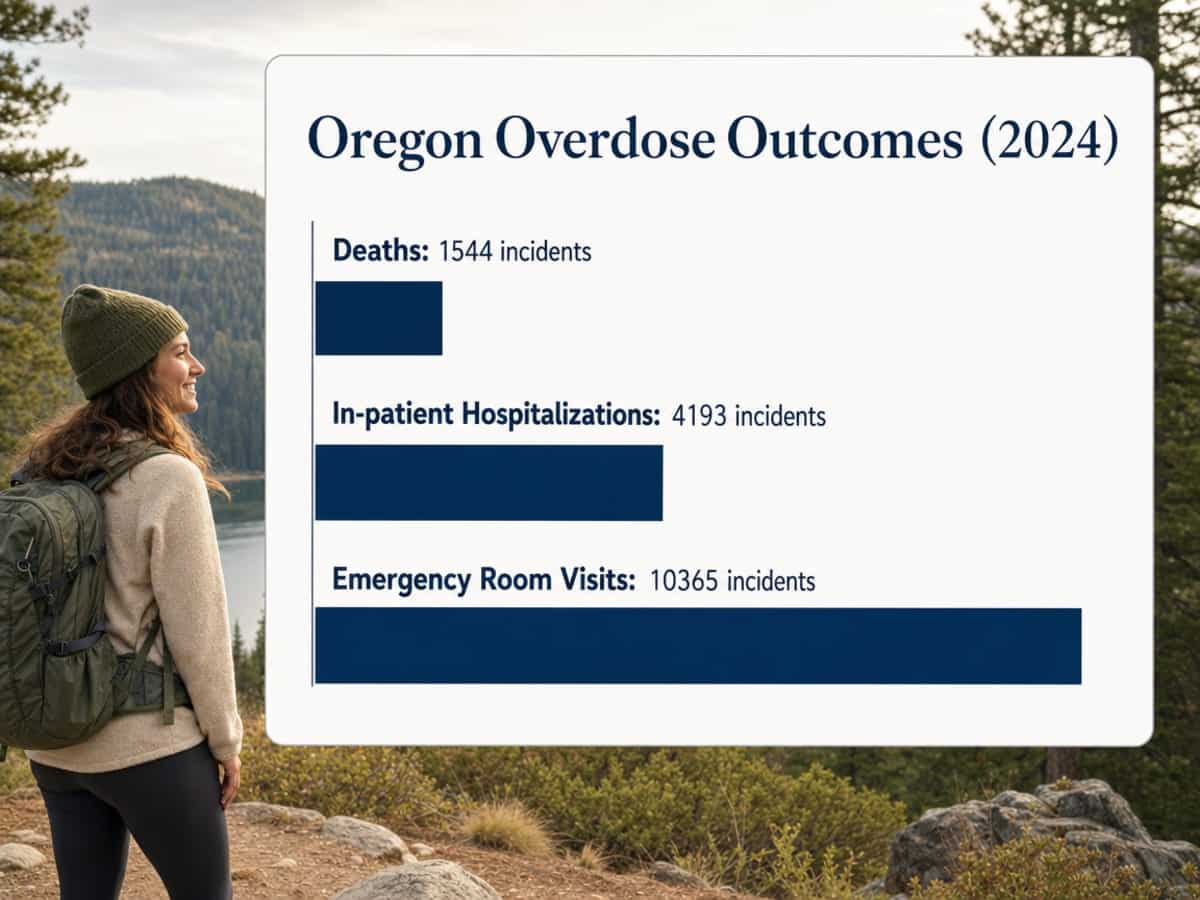
Here’s the honest answer. Oregon has been on the hard end of the national overdose crisis, and the state has been pouring money and policy into responding. That response is starting to show up in the data. Provisional CDC numbers reported by the Oregon Health Authority show overdose deaths in Oregon dropped 22% between December 2023 and December 2024 1. That’s not a small blip. That’s the first meaningful downturn the state has seen in years, and it reflects real investment in treatment beds, medication access, and withdrawal services.
What that means for you, as a person outside Oregon reading this at a strange hour, is that the system you’re considering isn’t drifting. It’s paying attention. New beds are opening. Existing programs are being watched more carefully. The state is measuring whether treatment is actually reaching people, and adjusting when it isn’t.
You don’t need to memorize any of that. You just need to know that when you get on a plane to Oregon for detox, you are flying into a system that is moving in the right direction, not one that’s giving up. That’s a fair thing to hold onto tonight.
One next small step: keep this tab open, and in the morning, make one phone call.
The Phone Call That Starts Everything
What Actually Happens When You Call an Oregon Detox
The phone call feels like the biggest hurdle. It isn’t. Here’s what actually happens when you pick up the phone.
Someone answers. Not a menu tree. Not a form. A person whose job is to talk to people in exactly the situation you’re in right now. Their first question is usually the simplest one: what’s going on? You don’t need a diagnosis, a plan, or the right words. You can say, “My husband has been drinking a fifth a day and he’s shaking,” or, “I’ve been taking Xanax for six years and I’m scared to stop on my own,” and they will take it from there.
The next few minutes are a gentle screening, not an interrogation. They’ll ask what substances, how much, how long, and when you last used. They’ll ask about seizures, heart conditions, past detoxes, and any mental health history. They ask because alcohol and benzodiazepine withdrawal can be life-threatening, and the answers help them decide how quickly you need a bed and what kind of medical support that bed needs to have.
They’ll ask where you’re calling from. If you’re in Ohio or Texas or Florida, that changes logistics, not access. You are not disqualified because you’re far away.
One small next step: if you can, write down your medications and how much you drink or use in a typical day before you dial. That’s it. The rest is their job.
The Insurance Verification Walkthrough (What to Have in Your Hand)
Insurance is the part that scares most people off the phone. It shouldn’t. Here’s what a real verification call looks like from your side of the line.
The admissions person will ask for your insurance card. Front and back. If you can text a photo, do that. If you don’t have the physical card, log into your insurance company’s app or open a recent Explanation of Benefits email and read them the member ID, group number, and the phone number on the back. That’s the whole document they need from you.
Then they hang up and call your insurance directly. This is called a verification of benefits. They ask your insurance three plain questions: does this plan cover medical detox and residential treatment, is our facility in-network or out-of-network, and what will the patient owe out of pocket. You don’t have to be on that call. Most facilities call you back within a few hours with a clear answer.
A quick word on “out-of-network,” because it sounds worse than it often is. Out-of-network doesn’t mean your insurance won’t pay. It usually means they pay a smaller share, and you may owe more toward your deductible. A good admissions team will tell you the number in dollars, not in jargon, before you commit to anything.
Have these things in reach when you call: your insurance card, a rough list of medications, and the name of your primary care doctor if you have one. Pacific Crest Trail Detox accepts most commercial insurance plans, though not the Oregon Health Plan, and the team will tell you honestly on that first callback whether your specific plan works before anyone talks about a flight.
Flying During Withdrawal: The Questions Nobody Wants to Ask Out Loud
Can You Fly Safely? How the Receiving Team Decides
Here’s the question people whisper into the phone: am I too sick to get on a plane? It’s a fair thing to ask, and a good detox team will answer it honestly instead of just booking you and hoping.
The screening you did on that first call wasn’t only about beds and insurance. It was also about flight safety. A nurse or clinician reviews what you shared: what you use, how much, when you last used, your history of seizures, any heart or blood pressure issues, and whether you’ve had a rough withdrawal before. Alcohol and benzodiazepine withdrawal are the two that get the closest look, because both can cause seizures if timed wrong.
From there, one of three things happens:
- If you’re stable enough to travel, they’ll green-light a flight in the next 24 to 48 hours and give you specific guidance on eating, hydrating, and, in some cases, taking a small measured dose of what you normally use so your body doesn’t crash mid-air.
- If you’re borderline, they may ask you to be seen locally first, stabilize for a day, then fly.
- If flying isn’t safe, they’ll say so plainly and help you find a bed closer to home.
Who Books the Ticket, Who Meets You, What Happens If the Flight Delays
Once you’re cleared to travel, the logistics stop being your problem. That’s the part most people don’t realize until they’re on the other side of the call.
The admissions team at Pacific Crest Trail Detox helps you find and book a flight into Portland International (PDX). Some families pay for the ticket directly; some programs can help coordinate travel through a third-party service. Either way, you’re not sitting alone at 3 a.m. comparing fare classes on Google Flights while your hands shake. Someone walks you through it.
When your flight lands at PDX, a staff member meets you. Not a rideshare driver you have to find on an app. A person from the facility, holding a sign or texting you their location, who drives you the roughly twenty minutes to Milwaukie. If a family member flew with you, they can ride along to intake.
Flight delays happen, and the team plans for them. Your admissions contact has your itinerary and watches it. If your plane sits on a tarmac in Denver for four hours, they know. If you get rerouted overnight, they rebook the pickup and stay in touch by text so you’re never wondering whether anyone still expects you.
One small next step: when you book, save the admissions number in your phone under a name you’ll recognize instantly. That way, if anything goes sideways at the gate, you know exactly who to call.
Your Travel-In Timeline: Call to First 72 Hours
You’re going to feel better if you can see the whole path at once instead of one dark step at a time. So here it is, start to finish, in the order it actually happens.
Hour 0: The Call. You dial. A person picks up. You describe what’s going on in your own words. They screen you for withdrawal risk and ask where you’re calling from. This usually takes fifteen to twenty minutes.
Hours 1–4: Insurance Verification. The admissions team calls your insurance directly with your member ID and asks the three questions that matter: is detox covered, in or out of network, and what will you owe. They call you back with a plain-English answer.
Hours 4–24: Bed Confirmed. A clinician reviews your screening and confirms a bed is available and appropriate for your situation. Oregon’s system has 301 licensed withdrawal management beds statewide, spread across programs the state inspects and regulates 2. Yours becomes one of them, held with your name on it.
Hours 12–48: Travel Booked. A flight into Portland International is arranged, timed around when you’re safe to fly. The team gives you specific guidance about eating, hydrating, and, when appropriate, what to take before you board so your body doesn’t destabilize in the air.
Landing Day: Airport Pickup. A staff member from the facility meets you at PDX and drives you the twenty minutes to Milwaukie. Not a stranger with an app. Someone expecting you by name.
Hours 0–4 On-Site: Intake. You sit down with a nurse and a clinician. Vitals, medications, history, comfort. You meet the people who will be watching over you tonight. You get a bed, a room, water, food if you can eat.
First 24 Hours: Stabilization. Medications begin. Vitals are checked often. Someone is nearby whenever you need them. This is the stretch that scared you most on the phone, and it’s the stretch the team is built for.
Hours 24–72: The Corner. For most substances, the sharpest edge of withdrawal starts to soften somewhere in this window. You sleep a little. You eat a little. You meet other people doing the same work. You start to remember what your own voice sounds like.
That’s the map. Seven steps between the call and the first morning you wake up on the other side. You don’t have to hold all of it in your head at once. The team holds the middle parts. You just take the next one.
What to Pack When You’re Flying to Detox
Packing for detox is not packing for vacation, and it’s not packing for a hospital either. Think of it more like a short stay at a friend’s cabin where someone will do your laundry and a nurse will check on you. The goal is comfort, not preparation for every possible scenario.
Clothes for four or five days. Soft, loose, layered. Sweatpants, t-shirts, a hoodie, socks you actually like. One warmer layer for the Oregon evenings. Slip-on shoes and a pair of slippers or grippy socks for walking around the house at night. You will do laundry on-site, so you don’t need two weeks of outfits.
Your ID and insurance card. A driver’s license or passport, and the insurance card the admissions team already verified. If you don’t have a physical ID, tell the admissions team on the phone. It’s a problem with a workaround, not a reason to cancel a flight.
Every medication you take, in the original bottle. This part is not optional. The nurses need to see what you’re on, what dose, and who prescribes it. Bag them up as-is. Do not repackage anything into a pill organizer for the trip.
One thing that smells like home. A pillowcase. A hoodie that belongs to your kid. A photo. Small, sentimental, allowed.
What to leave behind. Mouthwash and hand sanitizer with alcohol. Any medication not in its original bottle. Anything sharp. Anything valuable enough that losing it would hurt. Your work laptop, honestly, unless you’ve already talked it through with the team.
One small next step: pull out a small carry-on tonight and put the ID, insurance card, and medication bottles inside it. That’s enough for one evening. The clothes can wait until morning.
How to Tell If an Oregon Detox Is Actually Legitimate
You’re about to hand your body, or your loved one’s body, to strangers in a city you don’t live in. It’s fair to want proof they’re real before you get on a plane.
Here’s the good news: Oregon makes that verification easy, because the state does the checking for you. Non-hospital detox centers in Oregon operate under Chapter 415 of state regulations, which spells out licensing rules for substance use disorder residential treatment and recovery services (Division 12) and separate standards for alcohol detoxification centers (Division 50) 8. The Oregon Health Authority publishes and maintains those rules, and programs have to follow them to keep their doors open 9. That’s not a marketing badge. It’s a legal floor.
You can check any facility you’re considering against the state’s own list. The Oregon Health Authority runs a public provider directory for residential treatment programs, and it’s the cleanest way to confirm a place is who it says it is 11. If a facility isn’t on that list, that’s your answer.
One more piece worth knowing: when care crosses state lines, licensing questions come up. Oregon has written guidance about how out-of-state behavioral health work is handled, and a good receiving facility already knows those rules so you don’t have to learn them 7. Ask any program you call one question: “Are you licensed by the Oregon Health Authority under Chapter 415?” If the answer is anything but a clear yes, keep dialing.
One small next step: open the OHA provider directory tonight and search the name of any facility you’re weighing. Two minutes. Real peace of mind.
Why People Leave Their Home State on Purpose
Nobody flies across the country for detox because it sounds fun. They do it because staying home wasn’t working, and there are real reasons for that.
Distance from the triggers. The corner store where you buy the bottle. The friend who always has pills. The apartment where the last three attempts fell apart in week two. Sometimes the same walls that hold your life also hold the pattern. Getting on a plane puts twelve hundred miles between you and the exact cues your body has learned to answer.
Privacy that’s actually private. If you’re a physician, a pilot, a teacher, a small-town business owner, you already know how small your world is. A detox two states away doesn’t show up in a waiting room where your patients sit. Traveling isn’t hiding. It’s protecting the life you’re trying to come back to.
A program that fits who you are. Pacific Crest Trail Detox runs specific tracks for LGBTQ+ folks, veterans, and working professionals, in a home-like setting rather than a hospital ward. For a lot of travelers, that combination, affirming care in a house instead of a clinical wing, is the reason the plane ticket makes sense.
Leaving isn’t running away. It’s choosing better ground to stand on.
What Happens After Detox: Staying in Oregon or Going Home
Detox is the first chapter, not the whole book. Somewhere around day five or six, when your head is clearer than it’s been in a long time, a clinician will sit down with you and talk about what comes next. You have real choices here, and neither one is wrong.
Staying in Oregon for step-down care. Pacific Crest Trail Detox runs a partial hospitalization program (PHP) and an intensive outpatient program (IOP) that pick up where detox leaves off. A lot of travelers stay for a few more weeks because the same team already knows their story, and starting over with a new set of strangers back home feels harder than staying put. Housing near the facility can be arranged so you’re not living out of a suitcase.
Going home with a plan. If flying back makes more sense for your job, your kids, or your insurance, the team helps you line up an outpatient program in your own city before you board the plane. You don’t leave with a phone number scribbled on a napkin. You leave with an appointment on the calendar.
One next small step: whichever direction you’re leaning, say it out loud on the intake call. The team can start building either path from day one.
Check Your Coverage for Oregon Detox Admission
Find out if your insurance supports your out-of-state detox journey in Oregon.
Frequently Asked Questions
Can I fly safely if I’m already in withdrawal?
Sometimes yes, sometimes not yet. A nurse or clinician reviews what you use, how much, when you last used, and any seizure or heart history before green-lighting a flight. Alcohol and benzodiazepine withdrawal get the closest look because both can cause seizures. If flying isn’t safe today, a good team will say so and help you stabilize locally first, then fly in a day or two.
Will my out-of-state insurance actually work at an Oregon detox?
Most commercial plans travel with you. The admissions team calls your insurance directly using your member ID and asks whether detox is covered, whether the facility is in or out of network, and what you’ll owe. Out-of-network doesn’t mean unpaid, it usually means a smaller share. Pacific Crest Trail Detox accepts most commercial plans, though not the Oregon Health Plan, and will tell you in dollars before you commit.
Who books the flight and picks me up at the Portland airport?
The admissions team walks you through booking a flight into Portland International (PDX) once you’re cleared to travel. Some families pay for the ticket directly, and some programs help coordinate travel through a third-party service. When you land, a staff member from the facility meets you at PDX and drives you the roughly twenty minutes to Milwaukie. Not a rideshare app. A person expecting you by name.
Can a family member travel with me to Oregon?
Yes, and for a lot of travelers that makes the whole thing possible. A spouse, parent, or adult child can fly with you, ride from the airport to the facility, and sit through intake. They’ll need to arrange their own lodging in the Portland area, and the admissions team can point you toward nearby options. Ask on the first call so pickup and intake are planned for two people.
How do I know an Oregon detox facility is legitimate before I get on a plane?
Ask one question: are you licensed by the Oregon Health Authority under Chapter 415? Non-hospital detox programs in Oregon operate under Division 12 and Division 50 of those rules 8. You can also verify any facility yourself on the OHA residential treatment provider directory 11. If a place isn’t on the state’s list, or dodges the licensing question, keep dialing. The state does the checking for you.
What happens after detox—do I have to stay in Oregon or can I go home?
Either works. Around day five or six, a clinician sits down with you and talks through step-down care. You can stay in Oregon for partial hospitalization (PHP) or intensive outpatient (IOP) with the same team, with housing arranged near the facility. Or you can fly home with an outpatient appointment already on your calendar in your own city. Say which way you’re leaning on the intake call.
References
- Oregon overdose deaths are down, CDC data shows. https://www.oregon.gov/oha/erd/pages/oregon-overdose-deaths-are-down-cdc-data-shows.aspx
- Oregon Behavioral Health Residential+ Facility Study – Final Report. https://www.oregon.gov/oha/BH/Reports/Behavioral-Health-Residential-Facility-Study-June-2024.pdf
- Oregon overdose deaths declined in 2024, 2025. https://www.oregon.gov/oha/erd/pages/oregon-overdose-deaths-declined-in-2024-2025-05.13.2026.aspx
- Oregon SUD System Assessments and Analyses 2020-25. https://www.oregon.gov/adpc/Committee%20Resources/Summary%20of%20Assessments%20and%20Gaps%20Analyses%202020-25.pdf
- Substance Use Disorder Integration Report. https://www.oregon.gov/oha/HSD/AMH/DataReports/SUD-Integration-Report.pdf
- Oregon Health Plan SUD Section 1115 Waiver Performance Assessment. https://www.oregon.gov/oha/HSD/Medicaid-Policy/SUDWaiver/MPA-Report-0524.pdf
- CCO Requirements for Out-of-State Behavioral Health Providers. https://www.oregon.gov/oha/HSD/AMH-LC/Documents/Out%20of%20State%20BH%20Provider%20Requirements.pdf
- Chapter 415 – State Regulations (Licensure and Detox Standards). https://www.law.cornell.edu/regulations/oregon/chapter-415
- Addiction Services (Chapter 415) Rules : Health Systems. https://www.oregon.gov/oha/hsd/pages/addiction-services-rules.aspx
- Current Addictions and Mental Health Rules and Statutes. https://www.oregon.gov/oha/hsd/amh/pages/active-rules.aspx
- Oregon Health Authority : Residential Treatment Facilities. https://www.oregon.gov/oha/hsd/amh-lc/pages/rt.aspx