


Key Takeaways
- Overnight hours carry the highest withdrawal risk, and thin staffing means blood pressure spikes, seizures, and crises get caught late instead of the moment they start.
- Vital signs and early warning signs get missed when staff are stretched, and AHRQ links lower staffing to more missed care and worse outcomes 5.
- Emotional moments during detox get rushed when ratios are high, yet a strong therapeutic relationship was the single most powerful predictor of treatment completion in one review 9.
- Medication decisions get delayed or flattened into one-size-fits-all dosing when prescribers and nurses are spread too thin, which is especially risky for alcohol and benzodiazepine withdrawal.
- The handoff from detox to continuing care falls apart without staff time to coordinate it, and detox alone is not recommended for opioid use disorder because it raises overdose risk 10.
The One Number That Cuts Through Detox Marketing
If you’re reading this at 2 a.m., scrolling through facility websites while someone you love is sick in the next room, start here. You’ve probably noticed that every detox center sounds the same. “Personalized care.” “Compassionate team.” “Experienced staff.” The pages blur together, and none of them actually tell you what you need to know: how many people will be watching your person during the hardest hours.
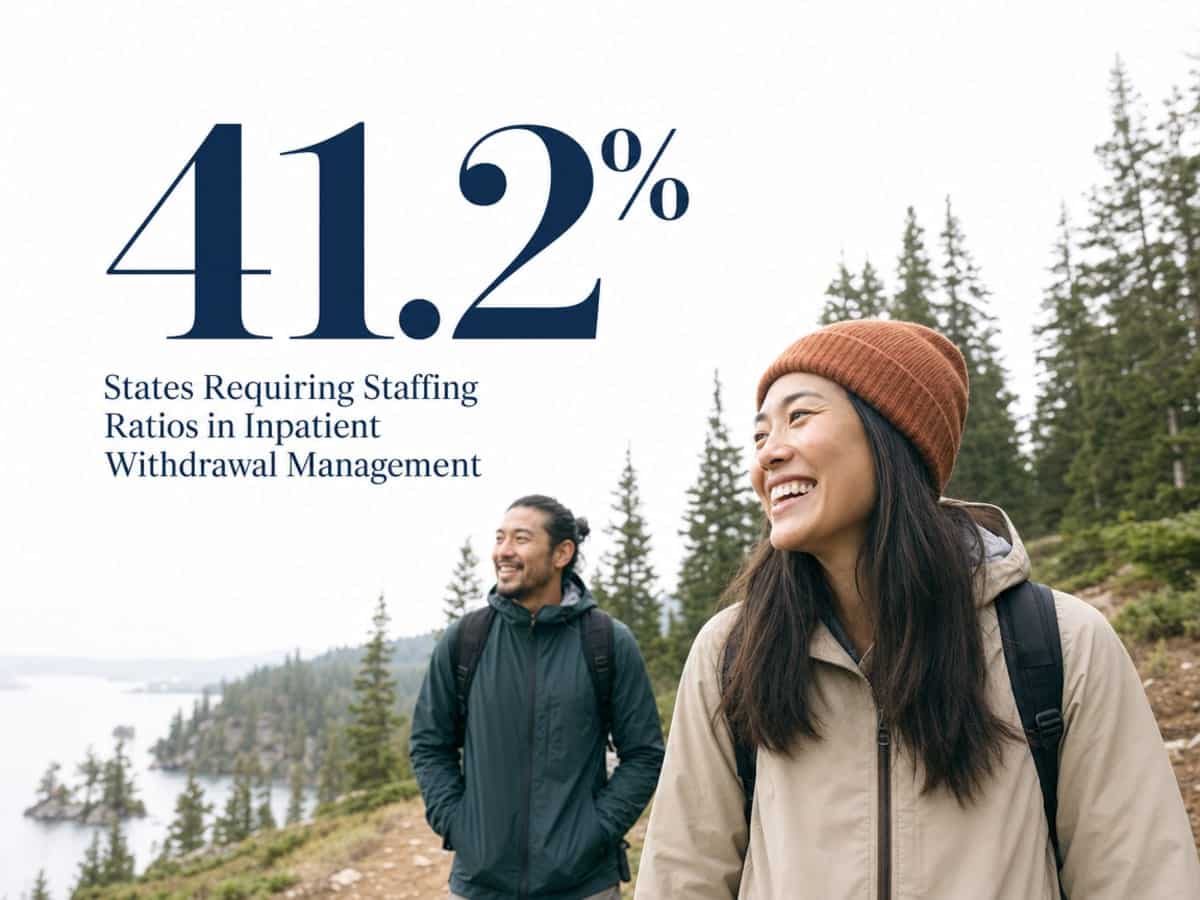
There is one number that cuts through all of it: the staff-to-client ratio. It’s the count of trained people on duty for every person going through withdrawal, and it’s one of the few things you can ask about and actually compare across facilities. Yet most places won’t say it out loud. A recent review of state licensing rules found that fewer than half of inpatient withdrawal-management programs are even required to meet a minimum staffing ratio, which means many facilities have never had to put a number on the table 4.
At Pacific Crest Trail Detox in Milwaukie, Oregon, the ratio is four clients to one staff member. We’ll explain what that means in plain terms, how it compares to Oregon’s rules, and five specific things that can go wrong when a detox facility is spread too thin. By the end, you’ll have a short list of questions to ask any facility, including ours. Asking is not rude. It’s one of the most loving things you can do right now.
What a Staff-to-Client Ratio Actually Measures (and What Oregon Requires)
A staff-to-client ratio is a simple count: for every person going through withdrawal, how many trained people are on duty to watch, assess, and respond? When a facility says “4:1,” that means four clients for every one staff member on shift. The lower the number of clients per staff, the more eyes, hands, and attention each person gets during the hours when their body is in revolt.
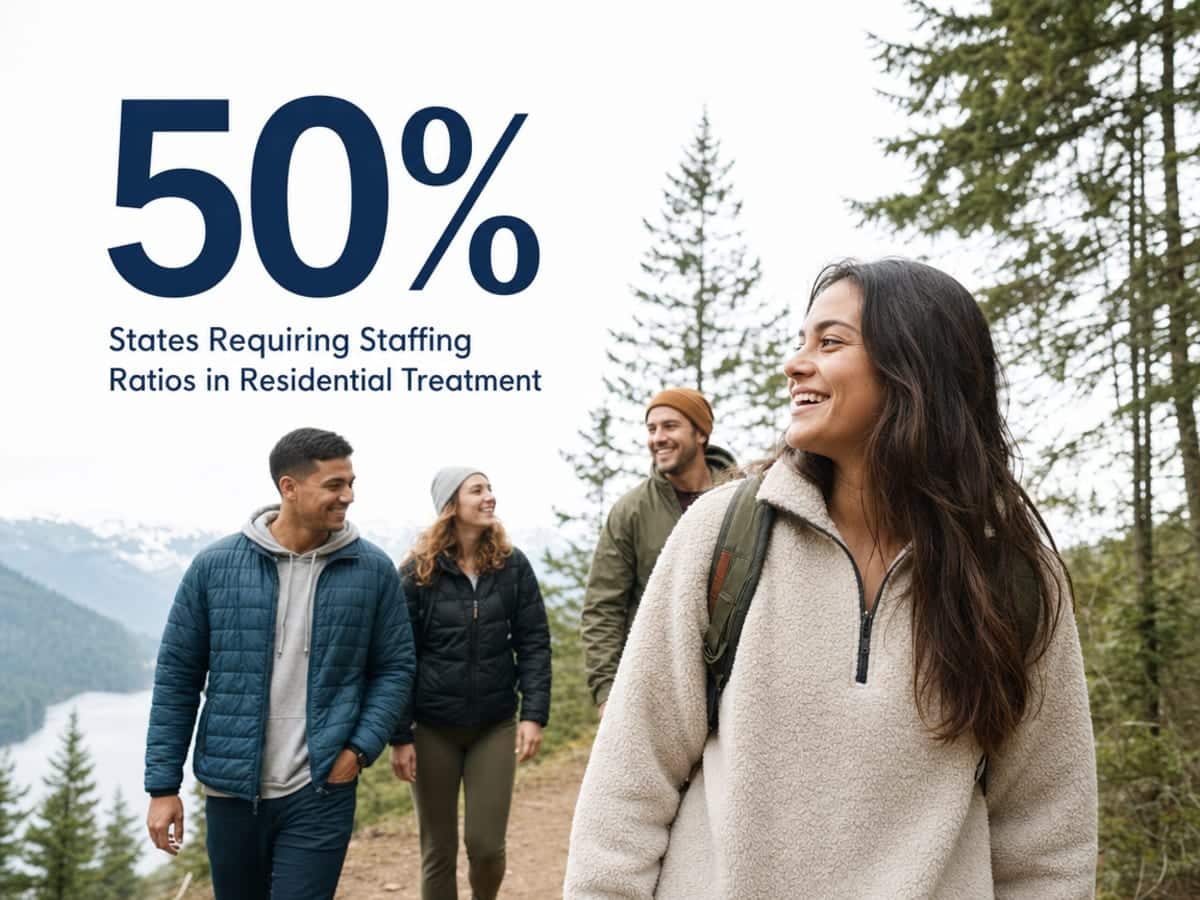
You’d think this would be standard across the country. It isn’t. A recent study of state licensing rules found that minimum staffing ratios are required in only 53.8% of inpatient substance-use settings, 50% of short- and long-term residential settings, and just 41.2% of inpatient withdrawal-management programs 4. In other words, more than half of states don’t require withdrawal-management facilities to meet any minimum staffing number at all. That’s part of why so many facility websites sound confident about “experienced staff” without ever telling you how many of them will actually be in the building at 3 a.m.
Oregon is more specific than most. State rules for withdrawal-management programs require at least one licensed nurse for every five admitted individuals, one withdrawal-management staff member for every 10 admitted individuals, and a registered nurse on duty at the site at all times 1. For higher-acuity medically monitored withdrawal, Oregon also sets different on-site staffing arrangements depending on whether a program has 1–12 patients, 13–24 patients, or 25 or more 2. Programs are also required to keep a written staffing plan that explains how they add coverage during high-acuity and emergency situations 3.
Five Things That Go Wrong When Detox Is Understaffed
Reason 1: The Overnight Hours Nobody Watches Closely Enough
The worst hours of withdrawal rarely happen between 9 and 5. They happen at 2 a.m., 3 a.m., 4 a.m., when the building is quiet and the person you love is sweating through sheets, shaking, or waking up disoriented. If a facility is thin on overnight staff, that’s when the gaps show up. A blood pressure spike goes uncaught for an hour. A seizure risk gets flagged in the morning instead of the moment it starts.
Oregon’s rules name this directly. For withdrawal management, there must be at least one licensed nurse for every five admitted individuals, one withdrawal-management staff member for every 10 admitted individuals, and a registered nurse on duty at the site at all times — not just on call, not just during business hours, but physically there 1. That’s the floor. A separate national study of specialty addiction treatment facilities found an average staff-to-client ratio of 0.52 across responding programs, which is roughly one staff member for every two clients across all shifts combined 7. Averages hide what happens overnight, and that’s exactly where the risk lives.
At four clients to one staff member on shift, Pacific Crest Trail Detox is working well above the Oregon minimum, and that posture is designed with the overnight hours in mind. The practical difference you want to hear about on a tour isn’t a wellness lounge or a chef-prepared menu. It’s how many people are awake and walking the halls at 3 a.m., and whether a nurse is one of them.
When you call any facility, ask it plainly: “How many staff are on overnight, and is a nurse physically in the building through the night?” If the person on the phone pauses, or redirects you to how comfortable the rooms are, keep asking.
Reason 2: Vital Signs and Early Warning Signs Get Missed
Withdrawal from alcohol and benzodiazepines can kill people. That’s not a scare tactic; it’s the reason medical detox exists in the first place. Blood pressure, heart rate, temperature, tremor, confusion — these are the signals a trained nurse is watching for, often every few hours in the first days. When a staff member is responsible for too many clients at once, those checks slip. Not because anyone is lazy. Because there are only so many hours in a shift.
The Agency for Healthcare Research and Quality has been clear that lower staffing is associated with more missed care, delayed observation, and higher mortality 5. An AHRQ analysis of detailed hospital data found that shifts running substantially below targeted staffing levels, along with high turnover, correlated with worse outcomes 6. That evidence comes from hospitals rather than detox centers specifically, but the mechanism is the same: when the people doing the watching are stretched too thin, things get missed.
In a well-staffed detox, the pattern looks different. Vitals are checked on schedule. A nurse notices that someone’s tremor has gotten worse since the last round, or that a client who was chatty yesterday is suddenly withdrawn and sweating. That kind of early catch is what prevents a withdrawal seizure from becoming a hospital transfer.
Ask any facility this: “How often are vital signs checked in the first 72 hours, and who does the checking?” A specific answer — every two hours by a nurse, for example — tells you more about safety than any brochure.
Reason 3: The Emotional Hours Get Treated as a Scheduling Problem
Detox is not only a medical event. It is one of the most emotionally raw stretches of a person’s life. Shame, grief, panic, old memories, the fear of what comes next — all of it tends to surface when the drugs or alcohol are no longer there to hold it down. If staff are rushing from room to room, those moments get managed on the clock instead of met with real attention.
A scoping review of residential substance-use treatment pointed to something families don’t always hear in facility pitches: a strong therapeutic relationship was the single most powerful predictor of treatment completion in one of the included studies 9. That relationship doesn’t form in a 10-minute check-in sandwiched between 15 other check-ins. It forms when a staff member can actually sit with someone who is crying at 11 p.m. and not have to leave after four minutes.
This is where a lower client-to-staff ratio stops being an abstract number and starts feeling like something you can picture. Four clients per staff member means the person on shift has time to notice that your husband hasn’t eaten since breakfast, or that your daughter is pacing because she’s thinking about leaving. It means someone can walk with her, talk with her, and help her stay one more night.
When you ask about staffing, also ask: “When someone is having a hard emotional moment at night, who sits with them, and for how long?” The answer will tell you whether emotional care is baked into the schedule or treated as something nobody has time for.
Reason 4: Medication Decisions Get Delayed or Flattened
Medical detox isn’t just observation. It’s active treatment, often with medication to ease withdrawal symptoms, prevent seizures, manage blood pressure, or begin treatment for opioid use disorder. Those decisions require a trained prescriber or nurse to assess the person, make a call, and sometimes adjust the plan hour by hour as symptoms shift.
A Veterans Affairs study of staffing in addiction treatment programs found that the mix of professionals — medical, nursing, counseling, behavioral health — was associated with treatment intensity, length of stay, and outcomes, with recommended staffing mixes estimated to improve net benefits by $1,472 to $17,743 per patient compared with prior arrangements 8. The study is specific to VA settings, so it isn’t a universal formula, but the underlying point travels: who is on the team shapes what medication decisions actually get made.
When a facility is understaffed, two things tend to happen with medication. First, decisions get delayed — a client has to wait for the one on-call prescriber to respond, which can mean hours of unnecessary suffering. Second, protocols get flattened into one-size-fits-all dosing because there isn’t time to tailor the plan to each person’s history, other medications, or co-occurring conditions like anxiety or depression. That’s a particular risk for benzodiazepine and alcohol withdrawal, where the stakes of under-dosing or over-dosing are real.
Pacific Crest Trail Detox pairs its staffing posture with a full medical and clinical team, including medications to help with withdrawal and cravings when appropriate. When you’re comparing facilities, ask: “Who makes medication decisions overnight, how quickly can doses be adjusted, and is a prescriber available 24 hours a day?” Vague answers here are a flag.
Reason 5: The Handoff to What Comes After Detox Falls Apart
Here’s where staffing comes back in. The handoff from detox to the next level of care — medication started and continued, a counselor assigned, a bed held in a partial hospitalization or outpatient program, a family meeting scheduled — doesn’t happen on its own. Someone has to make the calls, coordinate the paperwork, warm up the transition, and sit with the client while they decide what’s next. When staff are stretched too thin, discharge becomes a logistical task instead of a clinical one. People leave with a phone number and a prayer.
Pacific Crest Trail Detox was built as a continuum, not a standalone stop. Medical detox connects into partial hospitalization, intensive outpatient, standard outpatient, and alumni support, so the staff who got to know your person during withdrawal can help hand them to the next team instead of handing them a discharge folder at the curb.
When you call any facility, this is the question competitors often fumble: “What happens on day 8? Who makes sure medication continues, and who schedules the first outpatient appointment before my person walks out the door?” Listen for a specific plan, not a promise.

Why a Ratio Alone Doesn’t Prove Quality
Here’s the honest part most facility websites won’t tell you: a good ratio is necessary, but it isn’t the whole story. You can have four clients per staff member on paper and still get thin care if the wrong things are true behind the scenes.
The Agency for Healthcare Research and Quality has made this point directly. Lower staffing is linked to more missed care and worse outcomes, but staffing adequacy depends on workload, staff mix, and expertise — not a single number pulled from a brochure 5. An AHRQ analysis of hospital data found that frequent shifts below targeted staffing and high turnover both tracked with worse patient outcomes, which is a reminder that an average ratio can hide a lot of bad nights 6. And a Veterans Affairs study of addiction treatment programs found that the professional mix on the team — medical, nursing, counseling, behavioral health — shaped treatment intensity and outcomes, not just the headcount 8.
So the ratio is a starting point, not a verdict. You still want to know who those staff are: licensed nurses or aides, prescribers or on-call only, counselors with addiction training or generalists. You want to know how often the facility actually hits its stated ratio, and what happens when someone calls in sick. You want to know how long people stay in the job, because turnover tells you something a glossy photo can’t.
Think of the number as the first door. It gets you into the conversation that actually matters.
The Questions to Ask Any Facility Before You Say Yes
You don’t need to be a clinician to vet a detox facility. You need a short list of specific questions and the willingness to keep asking until the answers are specific too. Keep this list by the phone. Use the same questions with every place you call, including Pacific Crest Trail Detox. The comparison itself will tell you a lot.
- 1. What is your staff-to-client ratio on day, evening, and overnight shifts? An average across the whole week can hide thin coverage at 3 a.m. You want three numbers, not one. A vague answer here usually means the overnight is where the gaps are.
- 2. Is a licensed nurse physically on site 24 hours a day? Oregon’s withdrawal-management rules require a registered nurse on duty at the site at all times, not on call from home 1. If a facility hedges, ask where they’re licensed and under what level of care.
- 3. Can I see your written staffing plan for high-acuity periods? Oregon requires programs to keep a written staffing plan that explains how coverage expands during high-acuity and emergency situations 3. A facility operating in good faith can describe this in plain language.
- 4. Who is on the team, not just how many? Ask whether the staff includes licensed nurses, a prescriber, counselors with addiction training, and peer support. A Veterans Affairs study found that the professional mix of a team shaped treatment intensity and outcomes, not headcount alone 8. The right people in the room matter as much as the number of people.
- 5. What is your staff turnover, and how often do you fall short of your stated staffing? AHRQ analysis of hospital data found that shifts running below targeted staffing and high turnover both tracked with worse outcomes 6. A facility that answers honestly here is a facility worth considering.
If you ask these five questions and get specific answers from one place and marketing language from another, you have your comparison. That’s advocacy. That’s love in action at 2 a.m.
Where Pacific Crest Trail Detox Fits
Pacific Crest Trail Detox has been operating in Milwaukie, Oregon since 2017, in a home-like residential setting rather than a hospital wing. The staffing posture is four clients to one staff member on shift — a number we’ll say out loud, and a number you can hold up next to any other facility you call. That ratio sits well above Oregon’s regulatory floor of one licensed nurse per five admitted individuals and one withdrawal-management staff per 10, with a registered nurse on duty around the clock 1.
What the ratio buys, in plain terms: medical detox for alcohol, opioids, and benzodiazepines, with medication to ease withdrawal and cravings when it’s the right call; a team that includes nurses, prescribers, and counselors; and a built-in handoff into partial hospitalization, intensive outpatient, standard outpatient, and alumni support, so the day-eight question has an answer before anyone packs a bag.
Call us. Ask the five questions. Then call anywhere else on your list and ask the same ones. The comparison is yours to make.
See if your insurance covers high-ratio detox
Check your insurance and know if you qualify for safe, attentive detox care right now.
Frequently Asked Questions
What is a good staff-to-client ratio for medical detox?
There isn’t one national standard, which is part of why families get such confusing answers. A ratio of four clients to one staff member on shift sits well above Oregon’s withdrawal-management floor of one licensed nurse per five admitted individuals and one withdrawal-management staff per 10 1. The number you want is one a facility will say out loud and break down by day, evening, and overnight shifts.
What does Oregon require for staffing in withdrawal management programs?
Oregon’s withdrawal-management rules require at least one licensed nurse for every five admitted individuals, one withdrawal-management staff member for every 10 admitted individuals, and a registered nurse on duty at the site at all times 1. Programs must also keep a written staffing plan that explains how coverage expands during high-acuity and emergency situations 3. You can ask any Oregon facility to walk you through both.
Why does staffing matter most during overnight hours in detox?
The hardest hours of withdrawal often hit between 2 and 4 a.m., when blood pressure spikes, seizure risk, confusion, and emotional crises are most likely to surface. If a facility is thin overnight, those signals get caught late or not at all. AHRQ analysis found that shifts running substantially below targeted staffing correlated with worse outcomes 6. Ask specifically whether a nurse is physically in the building through the night.
What questions should I ask a detox facility about their staffing?
Ask five things. One, the staff-to-client ratio on day, evening, and overnight shifts. Two, whether a licensed nurse is physically on site 24 hours a day, which Oregon requires for withdrawal management 1. Three, the written staffing plan for high-acuity periods 3. Four, the staff mix — nurses, a prescriber, counselors, peer support — since professional mix shapes outcomes beyond headcount alone 8. Five, turnover and how often they fall short of their stated staffing.
Does a good staff-to-client ratio alone guarantee quality care?
No, and any facility that says otherwise is overselling. AHRQ has stated plainly that staffing adequacy depends on workload, staff mix, and expertise, not a single number 5. A ratio is a starting point that opens the conversation about who those staff are, how long they’ve been there, and whether the facility consistently meets its own staffing targets. Treat the number as the first door, not the final answer.
How does staffing affect what happens after detox ends?
Discharge planning takes real staff time — coordinating medication, scheduling the first outpatient visit, warming up the handoff to a counselor. When staff are stretched, people leave with a phone number instead of a plan. That matters because detox alone isn’t recommended for opioid use disorder; medication treatment combined with ongoing support is what lowers overdose and death risk 10. Ask what happens on day eight before anyone packs a bag.
References
- Behavioral Health Services – Chapter 309. https://www.oregon.gov/oha/HSD/RAC/309-018.pdf
- OFFICE OF THE SECRETARY OF STATE. https://www.oregon.gov/oha/HSD/HSDRules/415-050-02222023.pdf
- Health Systems Division: Addiction Services – Chapter 415. https://www.oregon.gov/oha/HSD/Medicaid-Policy/SUDWaiver/415-050-Highlighted-040723.pdf
- Single state agency licensure requirements for substance use disorder treatment programs in the United States. https://pmc.ncbi.nlm.nih.gov/articles/PMC13169689/
- Patient Safety Amid Nursing Workforce Challenges. https://psnet.ahrq.gov/perspective/patient-safety-amid-nursing-workforce-challenges
- Analyzing Nurses’ Impact on Outcomes Using Detailed Data. https://www.ahrq.gov/sites/default/files/2024-09/harris-report.pdf
- Association of facility characteristics and substance use disorder treatment quality: Results from a national study. https://pmc.ncbi.nlm.nih.gov/articles/PMC8940653/
- Toward cost-effective staffing mixes for Veterans Affairs substance use disorder treatment programs. https://pmc.ncbi.nlm.nih.gov/articles/PMC4656190/
- Residential and inpatient treatment of substance use disorders in sub-Saharan Africa: a scoping review. https://pmc.ncbi.nlm.nih.gov/articles/PMC10782522/
- Opioid Use Disorder: Treating. https://www.cdc.gov/overdose-prevention/hcp/clinical-care/opioid-use-disorder-treating.html
- Management of opioid use disorder: 2024 update to the national clinical practice guideline. https://pmc.ncbi.nlm.nih.gov/articles/PMC11573384/