


Key Takeaways
- Ativan and alcohol both depress the central nervous system through overlapping pathways, and combining them can cause severe drowsiness, slowed breathing, coma, or death even at prescribed doses.1
- Risk shows up in three distinct scenarios: a prescribed patient having a drink, someone using leftover Ativan to quiet hangover or withdrawal symptoms, and recreational co-use for a stronger high.
- Emergency signs include unresponsiveness, slow or gasping breathing, blue or gray lips, seizures, or vomiting while unconscious; call 911, roll the person on their side, and name what was taken.1
- Quitting alcohol or benzodiazepines suddenly at home can trigger serious withdrawal, so a medically supervised taper with around-the-clock nursing is the safer exit; at Pacific Crest Trail Detox, stays for this combination typically run eight to ten days.
Two Brakes on the Same System
If you’re taking Ativan and alcohol, or if you found both in someone you love’s cabinet, here’s the short answer: these two substances press the same brake pedal in the brain and lungs. Together they can slow breathing to a stop, cause blackouts, or send someone into a coma. The FDA’s lorazepam medication guide warns that this combination can lead to severe drowsiness, respiratory depression, coma, and death, even at prescribed doses.1
Ativan (the brand name for lorazepam) and alcohol are both central nervous system depressants. On their own, each one slows your brain’s signaling. Taken together, the effect isn’t just doubled, it’s amplified in ways your body isn’t built to handle.2
This article walks through what’s actually happening inside you, which warning signs mean call 911, and what safer options exist if stopping either substance on your own feels impossible.
What Ativan Actually Does in Your Body
Ativan is the brand name for lorazepam. It belongs to a class of medications called benzodiazepines, and doctors prescribe it for things like short-term anxiety, panic, seizures, and sedation before medical procedures. If you’ve been taking it, there’s a good chance it’s helped you breathe easier through some rough stretches.
Here’s what’s happening under the hood. Your brain has a built-in calming chemical called GABA. Think of GABA as the volume knob that turns down nervous system activity. Lorazepam makes that knob more sensitive, so your brain quiets down faster and stays quieter longer. That’s why Ativan eases racing thoughts, loosens tight muscles, and helps you sleep.2
The same mechanism that calms you also slows other things: your reaction time, your coordination, your short-term memory, and, at higher doses, your breathing.1 The FDA’s medication guide for lorazepam specifically warns about severe drowsiness, slowed breathing, and in some cases coma or death, especially when the drug is combined with other substances that depress the central nervous system.1
None of this means Ativan is bad medicine. Taken as prescribed, it does what it’s supposed to do. The problem starts when a second depressant enters the picture.
Why Alcohol Multiplies the Risk Instead of Adding to It
How the Two Depressants Stack
Picture GABA, that calming chemical in your brain, as a dimmer switch on nervous system activity. Lorazepam makes the switch more sensitive. Alcohol also depresses central nervous system activity, so you now have two substances slowing the same system through overlapping pathways at the same time.
The National Institute on Alcohol Abuse and Alcoholism describes this as additive and possibly synergistic depression of central nervous system function.2 In plain terms: the sedation you feel isn’t one drink plus one dose of Ativan. It’s a combined effect your body registers as something larger, and sometimes much larger, than either substance alone.
What you can actually feel: deeper drowsiness than you expected, slurred speech, shaky coordination, blank spots in your memory of the evening. What you can’t always feel, and this is the part that matters most, is how slowly you’re breathing. Respiratory drive is quiet. It doesn’t send you a warning before it drops too low. The FDA’s lorazepam medication guide names respiratory depression, coma, and death as outcomes of this specific combination.1
Risk at Prescribed Doses, Not Just Misuse
Here’s the part that surprises people. The danger isn’t reserved for someone crushing pills or drinking a bottle of liquor. It shows up at ordinary, prescribed doses too. The FDA’s Ativan prescribing label is specific that serious outcomes, including overdose and death, can occur when the medication is combined with alcohol, even for patients taking it as directed.4
A SAMHSA Drug Abuse Warning Network analysis put a number on it: benzodiazepine combinations with alcohol or opioid pain relievers were associated with a 24% to 55% higher predicted risk of a more serious emergency department outcome compared with benzodiazepines alone.8 That’s the gap you’re taking on by adding a glass of wine to a prescribed dose. It’s not a theoretical risk from a rare interaction. It’s a measured jump in how badly things go when something goes wrong.
If you’ve been drinking occasionally on your prescription and feeling fine, that doesn’t mean the risk isn’t there. It means the dose, the amount of alcohol, your sleep, your food, and your tolerance happened to line up on a safer night. Those variables shift. The fact that nothing has happened yet is not the same as nothing being able to happen. Talk to your prescriber honestly, without editing, about how much you drink.3
Three Scenarios Most Articles Blur
You Were Prescribed Ativan and Had a Drink
This is the quietest version of the story, and the one most people don’t bring up at their next appointment. Your prescriber gave you lorazepam for panic, insomnia, or a rough patch after a loss. You still go to dinner. You still have a glass of wine at your sister’s wedding. Nothing has gone wrong, so you’ve stopped asking whether it could.
The FDA’s lorazepam label is clear that serious outcomes, including severe drowsiness, slowed breathing, coma, and death, can happen when the medication is combined with alcohol at prescribed doses, not only in misuse.1 MedlinePlus puts it in plainer language: alcohol can make the side effects of lorazepam worse, and the safe use of alcohol while on this medication is a conversation to have with your doctor.3
You don’t need to confess or quit on the spot. You do need an honest conversation with the person who wrote the prescription, including how often you drink and how much. That’s the step that changes the odds.
Using Ativan to Take the Edge Off a Hangover or Withdrawal
This one deserves its own paragraph because it’s where people get hurt the fastest. Maybe you were prescribed Ativan for anxiety years ago and you still have a bottle. The morning after a heavy night, your hands are shaking, your heart is pounding, and you remember the pill calms all of that down. So you take one. Sometimes two. It works, in the sense that the shaking stops.
What’s actually happening is that your body may be in early alcohol withdrawal. The tremors, the racing heart, the nausea, the sense of dread, those are nervous system signals of a brain that’s been chemically pushed in one direction and is now rebounding. Lorazepam quiets that rebound by pressing on the same calming system alcohol was pressing. It feels like relief because it is relief, but it’s masking a withdrawal process that can escalate in people with heavier or longer-term use.
Self-medicating withdrawal with a leftover benzodiazepine is a path into a cycle, not out of one. You end up needing the pill to feel normal between drinks, then needing the drink to feel normal between pills. Medication choice for alcohol withdrawal is a clinical decision made with monitoring, labs, and a plan, not something to work out alone at the kitchen counter.9 If this paragraph describes your mornings, that’s the signal to call someone.
Recreational Co-Use
The third scenario is the one most people picture when they hear the words Ativan and alcohol: using them together on purpose for the feeling. Maybe it started with a friend offering a pill at a party. Maybe it’s a way to stretch a buzz or come down from stimulants. Whatever the entry point, this is where the overdose numbers get ugly.
A SAMHSA analysis of emergency department data found that nonmedical use of benzodiazepines frequently involves other substances, and the combinations with alcohol or opioid pain relievers were linked to markedly worse outcomes than benzodiazepines alone.8 The FDA’s Ativan label specifically warns that abuse and misuse of the drug, especially alongside alcohol or illicit substances, can lead to overdose and death through respiratory depression and coma.4
How Often This Combination Actually Hurts People
It helps to put real numbers next to the warning. These aren’t scare statistics; they’re what showed up in emergency rooms and death records when researchers went looking.
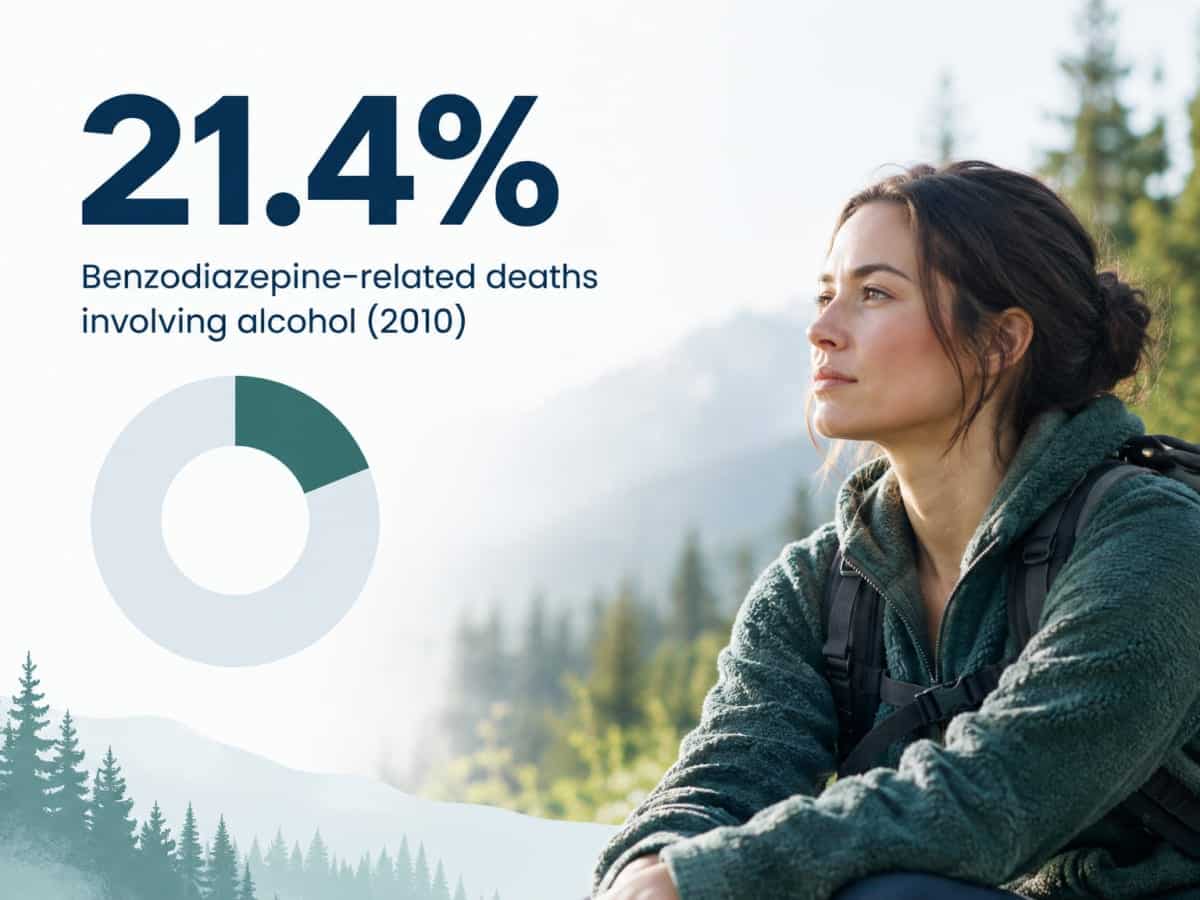
The clearest government snapshot comes from a CDC analysis of 2010 surveillance data. In that year, alcohol was involved in an estimated 27.2% of benzodiazepine drug-abuse-related emergency department visits and 21.4% of benzodiazepine drug-related deaths.5 Roughly one in four of the worst outcomes tied to this class of medication had alcohol in the mix. That’s class-wide, historical data from 2010, not lorazepam alone, so treat it as a scale marker rather than a precise prediction for any one person.
The pattern hasn’t gone away. A more recent CDC analysis of 2016 and 2017 emergency department data estimated 212,770 annual visits involving benzodiazepine adverse events, and found that 82.7% of nonmedical-use visits involved another substance at the same time. In that same group, 24.2% involved cardiorespiratory arrest or unresponsiveness, the clinical language for stopped breathing or someone who couldn’t be woken.6 A 2025 analysis of overdose deaths, which looked at drug classes rather than Ativan specifically, found alcohol present in roughly 18% to 24% of deaths involving opioids and benzodiazepines, and identified benzodiazepines as the drug class most often paired with alcohol in that sample.10
The through-line across fifteen years of data is simple: when benzodiazepines kill or send people to the hospital, alcohol is often sitting next to them.
Warning Signs That Mean Call 911 Right Now
If you’re reading this because something is happening in the next room, skip ahead. Call 911 first. You can read the rest later.
These are the signs that mean emergency, not sleep it off. The FDA’s lorazepam medication guide names severe drowsiness, respiratory depression, coma, and death as the serious outcomes when benzodiazepines are combined with alcohol or other central nervous system depressants.1 Translated into what you can actually see from across a room:
- You can’t wake them. Not groggy and mumbling, but no response to their name, a shoulder shake, or a knuckle rubbed firmly on their breastbone.
- Breathing is slow, shallow, or gasping. Long pauses between breaths, or a snoring, choking sound that doesn’t fit how they usually sleep.
- Lips, fingertips, or the skin around the mouth look blue, gray, or ashen. On darker skin, check the inside of the lips, the gums, or the nail beds.
- They had a seizure, or their body went rigid and then limp.
- They’re choking or vomiting while unresponsive.
You will not get anyone in trouble by calling. You might save their life.
If You Found the Bottles: A Note for Family and Partners
If you’re the one who opened a nightstand drawer and found an Ativan bottle sitting next to an empty wine glass, this part is for you. You’re probably scared, probably angry, and probably wondering whether you’re overreacting. You’re not overreacting.
Start with what you can observe without a confrontation. Is your person sleeping harder than usual? Hard to rouse in the morning? Slurring at dinner after what looked like a normal amount of wine? Missing chunks of conversation they should remember? Falling, bumping into furniture, or waking up with bruises they can’t explain? Those are the ground-level signs that the two substances are stacking in ways their body can’t absorb safely. MedlinePlus puts the mechanism in plain terms: alcohol makes the side effects of lorazepam worse, which is exactly what you’re watching play out.3
Don’t flush the pills. Sudden removal of a benzodiazepine from someone who has been taking it, especially alongside regular drinking, can set off its own medical emergency. What you can do is name what you’ve noticed, once, without a speech.“I found the bottle. I’m scared. I want us to talk to someone together.”Then listen.
If your person is already slow to wake, breathing strangely, or looks gray around the mouth, that’s not a conversation; that’s a 911 call. Tell the dispatcher what medications and how much alcohol were involved, as best you know.1 Being the person who makes that call is often what gets someone into treatment alive. You don’t have to have the right words. You just have to pick up the phone.
Why Quitting Either One at Home Is Also Dangerous
If you’ve gotten this far and your next thought is, “Okay, I’ll just stop,” please slow down. Alcohol and benzodiazepine withdrawal are not just uncomfortable; they can be medically serious, which is why professional guidance consistently recommends against stopping them abruptly on your own.
Here’s why. Your brain has spent weeks or months adjusting to a system that’s been chemically turned down by lorazepam, alcohol, or both. It has compensated by turning its own signals up to keep you functional. Pull the depressant away suddenly, and that revved-up system has little holding it back. People can experience racing heart rate, high blood pressure, severe tremors, and other serious symptoms.
Doing both at once, trying to quit drinking and stop Ativan in the same week at home, stacks those risks on top of each other. This is exactly why clinicians treat alcohol withdrawal with careful medication selection and monitoring rather than willpower, and why choice of medication is an assessment made with labs and vital signs, not a guess.9 The FDA’s lorazepam label also warns against abruptly stopping the medication because of withdrawal risk.1
The honest frame is this: the combination is dangerous, and so is an unmanaged exit from it. That’s not a reason to keep using. It’s a reason to let someone trained handle the taper.
What Medically Supervised Detox Looks Like
If reading the last section made your stomach drop, here’s what the safer version of stopping actually looks like, so it isn’t just a scary word on a page.
Medically supervised detox for someone using both lorazepam and alcohol starts with an honest intake. A nurse and a provider ask what you’ve been taking, how much, how often, and for how long. They check vital signs, run labs, and look at your history for things that change the plan: seizure history, prior withdrawals, heart or liver issues, other medications. Nothing you say in that conversation is new to them. They’ve heard worse, and they’re not there to judge the numbers.
From there, the taper is handled with care. Instead of pulling both substances away at once, clinicians typically stabilize you on a longer-acting medication, then step the dose down on a schedule your body can tolerate.9 Vitals are checked around the clock. Nurses are on site day and night. If your blood pressure spikes, your heart rate climbs, or tremors get worse, someone adjusts the plan in real time instead of waiting until morning.
Day to day, it looks less like a hospital and more like staying in a quiet house with people who know what they’re doing. Meals you can keep down. A bed in a room with a door that closes. Groups when you’re ready for them, rest when you’re not. At Pacific Crest Trail Detox, stays for alcohol and benzodiazepine detox typically run about eight to ten days, because this combination needs a slower, more watchful taper than most other substances.
What makes this safer than the kitchen table isn’t just the medication. It’s that someone trained is watching for the signs you can’t feel in yourself, and acting on them before they turn into the emergency outlined earlier in this article.1
Taking the Next Step in the Pacific Northwest
If any part of this article hit close to home, that recognition is the hard part. The next move is smaller than it feels.
Medical detox for someone using both Ativan and alcohol exists in a non-hospital, home-like setting in Milwaukie, Oregon, about fifteen minutes from downtown Portland. That means around-the-clock nursing, a provider in the building seven days a week, a careful taper off both substances, home-cooked meals, and a bed in a room that doesn’t look or feel like a hospital. At Pacific Crest Trail Detox, stays for alcohol and benzodiazepine detox typically run eight to ten days, and detox connects directly into continuing care, partial hospitalization, intensive outpatient, standard outpatient, and alumni support, so day eleven isn’t a cliff.
Readers in Portland, Milwaukie, Gresham, Beaverton, Salem, and across SW Washington in Vancouver and nearby can get there in under an hour. Out-of-state clients are welcome too.
You can call Pacific Crest Trail Detox for a confidential assessment, or submit a short insurance verification form to see what your plan covers. Calls are HIPAA-protected and private. We want to be your last treatment experience, whether we’re your first detox or your fifth.
Check Coverage for Medically Supported Detox
Find out whether your plan may help cover supervised care for Ativan and alcohol withdrawal.
Frequently Asked Questions
Is it ever safe to drink alcohol while taking Ativan?
No amount is reliably safe. The FDA’s lorazepam medication guide warns that combining the drug with alcohol can cause severe drowsiness, slowed breathing, coma, and death, even at prescribed doses.1If drinking is part of your life, that’s a conversation to have honestly with the person who wrote your prescription, not a calculation to make on your own.3
How long after taking Ativan do I need to wait before drinking?
There’s no safe waiting number this article can give you, and anyone offering one is guessing. Lorazepam stays active in the body for many hours, and your dose, your body, and the drink all shift the math. MedlinePlus directs patients to ask their prescriber about alcohol use rather than estimate on their own, because alcohol worsens lorazepam’s side effects.3
What are the signs of an Ativan and alcohol overdose?
Call 911 if someone can’t be woken, is breathing slowly or shallowly, is gasping or making a snoring choke-sound, has blue or gray lips or fingertips, has a seizure, or is vomiting while unresponsive. The FDA’s lorazepam label names severe drowsiness, respiratory depression, coma, and death as the serious outcomes of this combination.1Roll them onto their side and stay with them until help arrives.4
Can I stop taking Ativan on my own if I’ve been drinking with it?
Please don’t. Abruptly stopping a benzodiazepine, especially alongside regular alcohol use, can trigger severe withdrawal that includes seizures. The FDA’s lorazepam label specifically warns against stopping the medication suddenly because of withdrawal risk.1Medication choices for alcohol withdrawal are made with labs and vital-sign monitoring, not willpower at home.9A medically supervised taper is the safer exit, and intake staff have heard every version of this story before.
What should I do if I think a family member is mixing Ativan and alcohol?
If they’re unresponsive, breathing strangely, or gray around the mouth, call 911 and tell the dispatcher what was taken.1If the situation isn’t an emergency yet, don’t flush the pills; sudden removal can trigger its own crisis. Name what you’ve noticed, once, without a speech, and offer to call a detox intake line together. MedlinePlus confirms that alcohol worsens lorazepam’s effects, which validates what you’re seeing.3
Does medically supervised detox treat both alcohol and benzodiazepine withdrawal at the same time?
Yes, and this is exactly the situation detox programs are built for. Clinicians stabilize you on a longer-acting medication, then step the dose down on a schedule your body can tolerate, with nursing and vital-sign checks around the clock.9At Pacific Crest Trail Detox, combined alcohol and benzodiazepine detox typically runs eight to ten days because this pairing needs a slower, more watchful taper than most other substances.
References
- LORAZEPAM tablet. https://dailymed.nlm.nih.gov/dailymed/drugInfo.cfm?setid=787240e9-67b5-4af3-b16d-7cf314e3f2e3
- Alcohol-Medication Interactions: Potentially Dangerous Mixes. https://www.niaaa.nih.gov/health-professionals-communities/core-resource-on-alcohol/alcohol-medication-interactions-potentially-dangerous-mixes
- Lorazepam: MedlinePlus Drug Information. https://medlineplus.gov/druginfo/meds/a682053.html
- 017794s049lbl.pdf. https://www.accessdata.fda.gov/drugsatfda_docs/label/2023/017794s049lbl.pdf
- Alcohol Involvement in Opioid Pain Reliever and Benzodiazepine Drug Abuse–Related Emergency Department Visits and Drug-Related Deaths — United States, 2010. https://www.cdc.gov/mmwr/preview/mmwrhtml/mm6340a1.htm
- Emergency Department Visits Attributed to Adverse Events Involving Benzodiazepines, 2016–2017. https://stacks.cdc.gov/view/cdc/162380
- Emergency Department Visits Attributed to Adverse Events Involving Benzodiazepines. https://pmc.ncbi.nlm.nih.gov/articles/PMC11380802/
- Benzodiazepines in Combination with Opioid Pain Relievers or Alcohol. https://www.samhsa.gov/data/sites/default/files/DAWN-SR192-BenzoCombos-2014/DAWN-SR192-BenzoCombos-2014.htm
- Prevalence and Predictors of Non-Benzodiazepine Use in Patients with Alcohol Withdrawal Syndrome in United States Emergency Departments – a cross-sectional study. https://pubmed.ncbi.nlm.nih.gov/39483510/
- Prevalence and Characteristics of Alcohol Use in Substance Overdose Deaths. https://pmc.ncbi.nlm.nih.gov/articles/PMC11822760/