


Key Takeaways
- Nausea from alcohol withdrawal starts within about 8 hours of the last drink and reflects a rebounding nervous system, not a simple hangover, especially for daily or heavy drinkers 2.
- The 24-to-48-hour window brings peak vomiting, tremor, and racing heart, and overlaps with the opening of seizure and delirium tremens risk in people with heavy drinking histories 3.
- Supervised medical detox addresses what crackers and sports drinks cannot: benzodiazepines to calm the nervous system, IV fluids and electrolytes, thiamine to protect the brain, and anti-nausea medication 2.
- Toughing it out carries real risks, including dehydration and missed liver or pancreas problems, so call for help before symptoms escalate.
Why Your Stomach Turns When You Stop Drinking
If you stopped drinking a few hours ago and your stomach is in knots, you’re reading the right page. Nausea from alcohol withdrawal usually shows up within about 8 hours of your last drink, often before the shakes or the sweats, and it’s your nervous system reacting to the sudden absence of alcohol it had come to expect 2. It feels like a bad hangover. It’s actually something your body is telling you to pay attention to.
Here’s what’s happening under the hood. Heavy, regular drinking quiets down parts of your brain and gut. When the alcohol leaves, those systems rebound hard. Your heart rate climbs, your hands tremble, and your stomach churns. For some people it stays mild. For others, especially anyone who drinks daily or in large amounts, it can get dangerous fast, with a risk of seizures, severe dehydration, or delirium in the days that follow 2.
You are not weak for feeling this sick, and you are not overreacting by wondering if you need help. The next sections walk you through the timeline, the red flags, and what safe, supervised care actually looks like, so you can make a clear decision about what to do tonight.
Is Nausea Really a Withdrawal Symptom, or Just a Bad Hangover?
Short answer: if you’ve been drinking heavily and your stomach turned sour within hours of your last drink, it’s probably withdrawal, not a hangover. A hangover follows a single rough night and fades as the day goes on. Withdrawal shows up when your body has gotten used to alcohol being around all the time, and then suddenly it isn’t. The nausea gets worse before it gets better, and it tends to arrive with company: sweating, a racing heart, jittery hands, maybe a wave of anxiety that feels out of proportion to what’s happening around you 2.
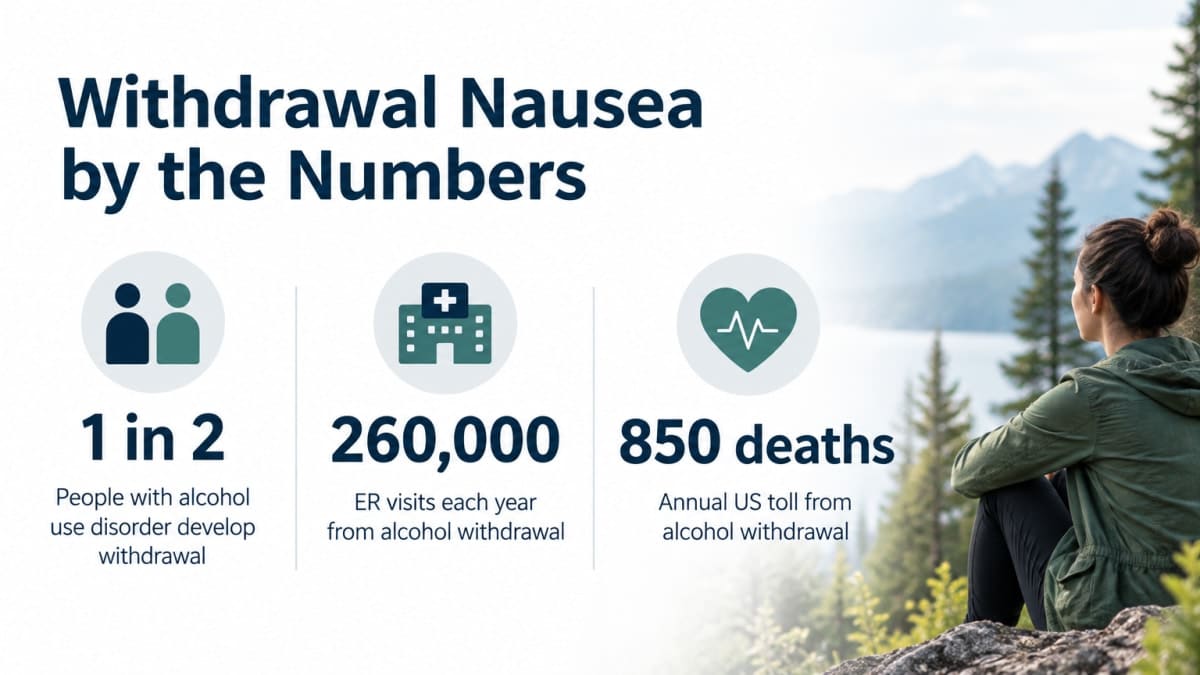
This is more common than most people think. According to NIAAA clinical guidance, up to half of people with alcohol use disorder develop withdrawal symptoms when they stop drinking, and alcohol withdrawal accounts for roughly 260,000 emergency-department visits and about 850 deaths each year 1. That’s not a scare stat. It’s the reason doctors take this symptom seriously when the drinking history behind it is heavy or daily.
Here’s a simple way to tell the difference at the kitchen table. A hangover usually tracks with one night of overdoing it, peaks in the morning, and quiets down after food, water, and sleep. Withdrawal shows up even when you didn’t drink that much the day before, often because your body expected more. It gets worse at the 24-to-48-hour mark instead of better. Water doesn’t fix it. Food doesn’t stay down. And the queasy feeling is braided together with symptoms a hangover doesn’t usually produce, like tremor you can see in your hands or a heart rate that won’t settle.
If any of that sounds like what you’re feeling right now, keep reading. The next section lays out exactly when nausea typically arrives, when it peaks, and when the danger window opens so you can decide what to do tonight.
The Hour-by-Hour Timeline: When Nausea Shows Up and When It Fades
Alcohol withdrawal runs on a fairly predictable clock, and knowing where you are on it helps you decide what to do next. The queasy, sweaty, shaky feeling has a start, a peak, and an ending, but the ending isn’t always quick, and the middle is where things can turn dangerous. Here’s what most people experience hour by hour, and what to watch for at each stage 2.
First 8 Hours: Early Queasiness, Sweating, and Anxiety
Symptoms usually begin within about 8 hours of your last drink, sometimes sooner if you’ve been drinking heavily for a long time 2. The first signs are easy to brush off as a rough morning: a sour stomach, light sweating on the back of your neck, a jittery feeling in your chest, and anxiety that doesn’t match what’s going on around you. Your hands may feel slightly unsteady when you reach for your phone. Food sounds unappealing. Sleep gets choppy.
This early window is when a lot of people decide to pour another drink to make it stop. That decision is why withdrawal often goes unnoticed until it’s severe.
24 to 48 Hours: Peak Nausea, Vomiting, and the Shakes
By the end of the first day, the volume turns up. Nausea and vomiting are autonomic symptoms that typically appear within hours of the last drink and peak within 24 to 48 hours, right alongside tremor, a racing heart, high blood pressure, and heavy sweating 3. This is the stretch where water comes right back up, where the shakes get visible enough that you can’t hold a cup of coffee steady, and where sleep basically disappears.

48 to 72 Hours and Beyond: Seizure Risk, DTs, and Lingering Symptoms
Between hours 48 and 72, the nausea may start to ease, but a different danger opens up. This is when seizures and delirium tremens (DTs) are most likely in people with heavy, long-term drinking histories, bringing confusion, hallucinations, and dangerous swings in heart rate and blood pressure 2. DTs are a medical emergency.
Even after the worst passes, symptoms can linger for up to two weeks: poor sleep, lingering anxiety, mood swings, and a stomach that still isn’t quite right 2. That tail end is part of why detox works better with support than alone.
Uncomfortable vs. Dangerous: Red Flags You Shouldn’t Ride Out
There’s a line between miserable and medical emergency, and knowing where it sits can save a life. Nausea by itself, even bad nausea, is usually in the miserable column. The problem is that alcohol withdrawal can slide from miserable into life-threatening territory faster than most families expect, with risks that include seizures, delirium, electrolyte problems, and death 2. The signs below are the ones that mean you stop reading and start making a call.
Put this list on the fridge if someone you love is going through this at home. If any one of these shows up, it’s time for medical help now, not in the morning:
- Can’t keep fluids down for more than a few hours. Repeated vomiting means dehydration and electrolyte loss are stacking up, and you can’t fix that with sips of water.
- Confusion or not making sense. If the person can’t tell you the day, where they are, or who you are, something has shifted in the brain.
- Seeing, hearing, or feeling things that aren’t there. Hallucinations are a signal that withdrawal has moved into severe territory 2.
- A seizure, or any shaking episode where they lose awareness. Call 911. Do not wait to see if it happens again.
- Fever. Pair it with sweating and a racing heart and you’re looking at a body under real strain.
- Chest pain, pounding heart, or trouble breathing. Withdrawal pushes blood pressure and heart rate up hard.
- Severe tremor. Hands shaking so badly they can’t hold a cup, or whole-body shaking, is past the normal jitters.
- Extreme agitation or paranoia. Pacing, panic, or fear that won’t settle is often an early warning for delirium tremens.
Here’s the honest part. You don’t have to wait for all of these to show up. One is enough. If the person has a history of heavy daily drinking, a past withdrawal seizure, or a prior episode of DTs, the bar for calling for help is even lower, because the risk of serious complications climbs steeply in that group 3.
Trust what you’re seeing. The people who get hurt in alcohol withdrawal are often the ones who talked themselves into waiting one more hour. If you’re on the fence, call a medical detox program or an emergency department and describe what’s happening. A trained voice on the phone can tell you in a few minutes whether this is a stay-home situation or a get-in-the-car situation.
Why Crackers, Gatorade, and Toughing It Out Fall Short
Home remedies help a hangover. They don’t fix withdrawal. If you’ve been drinking heavily and your body is in the first 48 hours of going without alcohol, a sleeve of saltines and a bottle of electrolyte drink can’t reach what’s actually happening inside you. The nausea you’re feeling is often the surface of three or four problems stacked on top of each other, and most of them need clinical eyes to spot.
Start with hydration. When you can’t keep water down for hours, you’re not just thirsty. You’re losing electrolytes, and electrolyte abnormalities are among the complications clinicians watch for during alcohol withdrawal 2. Sports drinks don’t come back up any slower than water, and they don’t replace what IV fluids and lab-guided electrolytes can.
Then there’s thiamine. Heavy drinkers are often low on this B vitamin, and in withdrawal that deficiency can tip into a brain injury called Wernicke’s that gets harder to reverse the longer it goes untreated. Standard medical detox protocols include thiamine for exactly this reason 2. A multivitamin from the drugstore isn’t the same dose or delivery.
The bigger problem is what you can’t see from the couch. Nausea and vomiting peak in the same 24-to-48-hour window where seizures and delirium tremens start showing up in people with significant alcohol dependence 3. By the time hallucinations or a seizure arrive, the people around you are scrambling, and the ride to the ER happens under worse conditions than it would have hours earlier.
You don’t have to earn help by suffering first. Picking up the phone now is the shorter path to feeling human again.
What Supervised Detox Actually Looks Like When You Can’t Keep Water Down
If you’ve pictured detox as a sterile hallway and a clipboard, let that image go. A good non-hospital medical detox feels more like a quiet house with nurses in it. You arrive, you get looked at by someone who knows what they’re seeing, and within a few hours the vomiting starts to settle because somebody finally gave your body what it needed. Here’s what the first day actually involves when you walk in dehydrated, pale, and sure you can’t keep anything down.
Assessment at Intake and How Clinicians Measure Severity
The first hour is mostly questions and vitals. A nurse checks your blood pressure, pulse, temperature, and how badly your hands are shaking, and asks about your drinking history, any past withdrawal episodes, seizures, or DTs, what medications you take, and when your last drink was. Oregon rules require withdrawal-management programs to complete this kind of entry assessment and build a stabilization plan before treatment moves forward 4. Clinicians often use a short, scored checklist to rate withdrawal severity so they can match medication to what your body is actually doing, not what it did last time someone like you walked in.
Medications, Fluids, and Comfort Care That Settle the Stomach
Once the picture is clear, treatment moves fast. Benzodiazepines are the standard medication for alcohol withdrawal because they calm the overactive nervous system that’s driving the nausea, tremor, and racing heart, and they lower the risk of seizures 2. Anti-nausea medication helps keep fluids down. IV fluids with electrolytes replace what you’ve been losing, and thiamine is given early to protect against the brain injury heavy drinkers are vulnerable to in withdrawal 2. On top of the medicine, there’s the quieter stuff that matters more than people expect: a dark room, a cool washcloth, broth when you can handle it, and someone checking on you every couple of hours through the night.
Hospital Inpatient vs. Non-Hospital Residential Detox
Not everyone needs a hospital. Oregon’s level-of-care framework describes hospital inpatient detoxification as 24-hour acute medical care for severe medical complications associated with withdrawal, and distinguishes it from other withdrawal-management levels like free-standing residential and ambulatory care 5. If you have a history of withdrawal seizures, DTs, or significant medical complications, a hospital may be the safer first stop 3. For many others, a home-like medical detox is the comfortable middle path.
When Nausea Isn’t Just Withdrawal: Liver, Pancreas, and Other Causes
Here’s something a lot of people miss. If you’ve been drinking heavily for years, nausea isn’t always a straight signal from withdrawal. It can also reflect liver, pancreatic, gastrointestinal, or metabolic illness rather than withdrawal alone, and the overlap is exactly why a trained set of eyes matters more than another sleeve of crackers 3.
Alcohol-associated liver disease, pancreatitis from heavy drinking, and GI problems are all common in people with long drinking histories, and any of them can show up as ongoing nausea or vomiting. Electrolyte abnormalities and other metabolic problems can also look like plain nausea at first 2.
The reason this matters for you tonight: toughing it out at home assumes you know what you’re treating. In a medical detox, bloodwork, a physical exam, and a drinking history sort withdrawal from the other things that may be happening in parallel, so nothing serious slips past while you focus on getting through the next 48 hours 3.
How to Help Someone You Love Who Can’t Stop Throwing Up
Watching someone you love dry-heave into a trash can at 3 a.m. is its own kind of awful. You’re scared, you’re tired, and part of you is doing math about whether to call someone or wait until morning. Here’s the short version: if they can’t keep fluids down and they’ve been drinking heavily, the clock is working against you, not with you.
Start with what you can see. Check if they can tell you the day, where they are, and your name. Look at their hands when they reach for a cup. Feel their forehead. Count how many times they’ve vomited in the last few hours and whether anything is staying down. Write it on your phone. A nurse on the other end of a call will ask these exact questions, and clear answers get your person helped faster.
Keep the room quiet and the lights low. Offer small sips of water or ice chips, not a full glass. Don’t push food. Don’t offer another drink to “take the edge off,” even if they ask. That buys an hour and costs you the next day.
Call for help sooner than feels polite. A medical detox program can tell you in a few minutes on the phone whether this is a come-in situation or a 911 situation. If you see a seizure, confusion, hallucinations, chest pain, or a fever, don’t wait, call 911 2. You are not overreacting. You are the person in the room paying attention, and that matters more tonight than anything else.
Detox Is Step One: What Comes After the Nausea Stops
Here’s the honest part most pamphlets skip. Getting through the shakes and the vomiting is a real accomplishment, and it’s also not the finish line. At Pacific Crest Trail Detox, detox typically lasts 8 to 10 days. By the end of that stretch, your body has had time to catch up. Your brain hasn’t. The cravings, the sleep problems, the 4 p.m. urge to pour something, the question of what to do with your evenings now, all of that is waiting on the other side of the nausea.
Detox without follow-up care is a short answer to a long question. Pairing medical stabilization with something structured next helps: a partial hospitalization program (PHP) with daily therapy and group work, an intensive outpatient program (IOP) a few days a week while you ease back into normal life, or standard outpatient and alumni support once you’ve got your footing. Many people step down through all three. The point isn’t to live in treatment. The point is to not be alone with the hardest part.
Good detox programs plan this hand-off before you leave, which is also what Oregon rules require of regulated withdrawal-management programs: a transition plan and care coordination into the next level of support 4. Ask what comes after detox before you walk in the door.
Talk to Someone Today: Confidential Help in Oregon and Southwest Washington
If your stomach has been in knots since you stopped drinking, or you’re watching someone you love throw up and shake at the kitchen table, you don’t have to figure this out alone tonight. A short, honest phone call can tell you whether what you’re describing needs an emergency room, a medical detox bed, or a plan for the morning. You won’t be lectured. You won’t be put on hold for an hour. Someone trained will listen, ask a few questions, and help you decide what makes sense next.
Pacific Crest Trail Detox in Milwaukie serves people across the Portland metro, including Gresham, Beaverton, and Salem, as well as Vancouver and the rest of Southwest Washington. Out-of-state callers are welcome too. Calls are confidential and HIPAA-protected, and the team can walk you through verifying your insurance benefits without you naming a carrier upfront. We want to be your last treatment experience, whether we’re your first detox or your fifth.
Get Support for Withdrawal Nausea
Check your coverage for medically supervised alcohol detox and take a clearer next step.
Frequently Asked Questions
How long does nausea from alcohol withdrawal usually last?
For most people, nausea starts within about 8 hours of the last drink, peaks between 24 and 48 hours, and begins to ease by day three or four 2. Some lingering queasiness, poor sleep, and a jumpy stomach can hang around for up to two weeks, especially after years of heavy drinking 2. Supervised care usually shortens the worst stretch.
Can I treat alcohol withdrawal nausea at home with crackers and fluids?
If you’ve been drinking heavily or daily, no. Alcohol withdrawal can turn life-threatening with seizures, delirium, or severe dehydration, and crackers and sports drinks don’t address the underlying nervous-system changes or electrolyte and thiamine losses that drive the sickness 2. If you can’t keep fluids down, or you have a history of heavy drinking, call a medical detox program or an emergency department before trying to ride it out.
When does nausea from alcohol withdrawal become a medical emergency?
Call 911 or go to the emergency department if you see a seizure, confusion, hallucinations, fever, chest pain, severe whole-body tremor, or vomiting that won’t stop for several hours 2. A past withdrawal seizure, prior DTs, or serious liver disease lowers the bar even further; these histories mean a medically monitored setting is the safer first stop, not home 3.
What medications help with vomiting and nausea during detox?
Benzodiazepines are the standard medication because they calm the overactive nervous system driving the nausea, tremor, and seizure risk 2. Clinicians typically add anti-nausea medication, IV fluids with electrolytes, and thiamine to protect against a serious brain injury heavy drinkers are vulnerable to during withdrawal 2. Dosing is matched to your symptoms using a scored checklist, so the plan fits what your body is actually doing.
What’s the difference between hospital detox and residential medical detox?
Hospital inpatient detox provides 24-hour acute medical care for severe medical complications of withdrawal 5. Non-hospital residential detox is a different withdrawal-management level that provides medical monitoring and medication for people who need supervision but aren’t in acute medical crisis 5. A clinical assessment at intake decides which is right for you.
Is detox covered by insurance, and how do I find out?
Coverage varies by plan. The simplest path is to call a detox program directly and ask them to verify your benefits. You don’t need to know your plan details or name a carrier upfront; the admissions team walks you through it. Calls are confidential and HIPAA-protected, so nothing is shared with your employer or family without your permission.
References
- Alcohol Use Disorder: From Risk to Diagnosis to Recovery. https://www.niaaa.nih.gov/health-professionals-communities/core-resource-on-alcohol/alcohol-use-disorder-risk-diagnosis-recovery
- Alcohol Withdrawal. https://pmc.ncbi.nlm.nih.gov/articles/PMC11801492/
- Management of alcohol withdrawal syndrome in patients with alcohol-associated liver disease. https://pmc.ncbi.nlm.nih.gov/articles/PMC10805424/
- Behavioral Health Services – Chapter 309. https://www.oregon.gov/oha/HSD/RAC/309-018.pdf
- Reference Manual: Behavioral Health + Addiction. https://www.oregon.gov/oha/HSD/COMPASS/resources/ROADS%20BH%20+%20Addiction%20Reference%20Manual_v1.1.pdf