
Key Takeaways
- Alcohol rehab works best as a connected continuum: medical detox, then residential or PHP, IOP, outpatient, and aftercare, matched to drinking history, health, and home life.
- Stopping heavy daily drinking suddenly can trigger seizures or delirium tremens, so supervised withdrawal with benzodiazepines and thiamine is safer than tapering alone at home.2025
- FDA-approved medications like naltrexone, acamprosate, and disulfiram improve drinking outcomes for many people, yet only 2.5% of people age 12 and older with past-year AUD received them in 2024.510
- Before admitting anywhere, ask about MAT availability, medical staffing during withdrawal, mental health coordination, OHA licensing and ASAM level, and what the step-down plan looks like after detox.
What Alcohol Rehab Actually Means in 2025
Alcohol rehab is not a single 30-day stay. It’s a connected sequence of care that usually starts with medically supervised withdrawal, then moves through therapy, FDA-approved medication when it helps, and ongoing support like counseling or mutual-support groups. The right mix depends on how heavy your drinking has been, your health, your home life, and what you want recovery to look like.1222
If you’ve been picturing rehab as one building you check into and leave fixed, let that go. Federal guidance from SAMHSA and NIAAA describes treatment as a continuum, with different levels of care matched to your needs at different points.122 Detox stabilizes your body. What comes after detox is what actually treats alcohol use disorder.
You’ll see acronyms in this guide: AUD (alcohol use disorder), MAT (medication-assisted treatment), PHP (partial hospitalization), IOP (intensive outpatient). Don’t let the alphabet soup scare you. We’ll walk through each one in plain language so you can make a decision that fits your life, not someone else’s protocol.
How to Tell If You or Someone You Love Needs Rehab
Signs Your Drinking Has Crossed a Line
You probably didn’t wake up one morning and decide to drink this much. It crept up. The two-drink night became a four-drink night, then a bottle, then the morning shakes you keep hidden from your partner. Here’s the honest check: alcohol use disorder is a medical condition that gets diagnosed by patterns, not willpower.223
Watch for these signals:
- You drink more or longer than you planned.
- You’ve tried to cut back and couldn’t stick with it.
- You spend a lot of your day drinking, getting alcohol, or recovering from it.
- Cravings pull at you between drinks.
- Work, parenting, or your relationships are starting to show the strain.
- You’ve kept drinking even when it made your anxiety, sleep, or health worse.
- You need more alcohol now to feel what two drinks used to do.23
One or two of these doesn’t mean rehab tomorrow. Several of them, happening together, mean it’s time for a real conversation with a professional, not a lecture to yourself at 2 a.m.
Why Withdrawal Risk Changes the Conversation
That’s why hospitals and detox programs use benzodiazepines as the first-line treatment during supervised withdrawal, along with thiamine and other vitamins to protect your brain and body.20 It’s also why no responsible clinician will give you a self-taper plan over email. The right medications, dosed by someone watching your blood pressure, pulse, and symptoms, keep withdrawal from turning dangerous.
So the conversation isn’t really “should I quit?” It’s “how do I quit safely?” If you drink heavily most days, or you’ve already felt sweating, tremors, nausea, or racing anxiety when you tried to stop, don’t white-knuckle it at home. Call a medical detox program and let them assess you. That one call is the safest first move you can make, whether you’re in Portland, Milwaukie, Gresham, Beaverton, Salem, or Vancouver, Washington.
The Continuum of Care, Step by Step
Medical Detox: Where Most People Have to Start
If you’ve been drinking heavily, medical detox is almost always the first stop. This is where a clinical team manages withdrawal with medications, fluids, and round-the-clock monitoring so your body can clear alcohol without the complications that make unsupervised quitting dangerous. Benzodiazepines are the first-line treatment for alcohol withdrawal, and thiamine, folic acid, and a multivitamin are standard support from day one.20
At Pacific Crest Trail Detox, our medical detox program typically runs about 8 to 10 days, depending on how much you’ve been drinking, your health history, and how your body responds. The goal is simple: get you stable, get you sleeping again, and get you ready for the real work that follows. Detox itself does not treat alcohol use disorder. It treats withdrawal. That distinction matters, because the research is consistent that treatment works best as a continuum, combining withdrawal management, counseling, FDA-approved medications when appropriate, and ongoing support like mutual-help groups.122
Think of it as the first rung on a ladder:
- Medical Detox
- Residential or PHP
- IOP
- Outpatient
- Aftercare and alumni support
Each step hands you off to the next with less structure and more freedom. The people who do best are the ones who climb the whole ladder, not the ones who leave after rung one.
What Detox Actually Feels Like in a Home-Like Program
Picture a house, not a hospital. Wood floors, a kitchen that smells like someone’s actually cooking in it, a living room where people play cards after group. That’s the model a lot of non-hospital medical detox programs in the Portland metro use, and it changes the experience in ways that are hard to explain until you’re in it.
You’ll have your own bed. Nurses are on site 24/7, checking your vitals, bringing you medication when withdrawal symptoms spike, sitting with you at 3 a.m. when the anxiety won’t let you sleep. Providers round through the house every day of the week. Meals are home-cooked. Daily groups give you a place to say out loud what you’ve been hiding for years.
The first 48 to 72 hours are usually the hardest: shaky hands, sweating, racing heart, broken sleep, waves of anxiety. By day four or five, most people start to feel human again. By day eight or nine, you’re sleeping, eating, and talking honestly about what comes next. That’s the point of detox done well: not just getting the alcohol out, but giving you enough stability to make a real decision about the next step.
Residential, PHP, IOP, and Outpatient: Picking the Right Level
Once withdrawal is behind you, the next question is how much structure you need to stay sober. There’s no universal answer, and treatment should be matched to your specific needs rather than a one-size schedule.222 Here’s how the levels actually differ.
- Residential treatment
- Keeps you living on-site, usually for a few weeks, with therapy, groups, and medical oversight built into every day. You probably need this if home isn’t safe or sober, if you’ve relapsed after lower levels of care, or if you need distance from the people and places that pull you back.
- Partial hospitalization (PHP)
- An intensive clinical day program, typically running most weekdays. You go home at night. This fits if you have a stable, sober place to sleep but still need intensive therapy and medical check-ins during the day.
- Intensive outpatient (IOP)
- Runs a lighter schedule of several hours on multiple days each week, often with evening tracks for people who work. You probably need this if you’re stable but still need regular group work, individual therapy, and accountability.
- Standard outpatient
- Weekly or biweekly therapy, often paired with medication management and a mutual-support group. It’s where many people land once they’ve got real traction.
Most people step down through these levels rather than picking one and stopping. The right call usually isn’t your preference, it’s what your clinical team recommends after a full assessment of your drinking history, home environment, mental health, and medical needs.
Aftercare and Alumni Support: Why Step Five Matters Most
Here’s what nobody tells you in week one: finishing a program isn’t the finish line. The months after formal treatment are when real life comes back, and that’s where most relapses happen. Aftercare is the structure that catches you.
It looks different for different people:
- Weekly check-ins with a counselor.
- A standing seat in a mutual-support group like AA, SMART Recovery, or a women’s or men’s circle.222
- Monthly medication reviews.
- An alumni community where you keep showing up for people who are a few weeks behind you.
- Remote and digital tools can also add real value when they supplement in-person care rather than replace it.11
Ask any program what their aftercare looks like before you admit. If the answer is vague, that’s your answer.
Medication for Alcohol Use Disorder: An Underused Tool
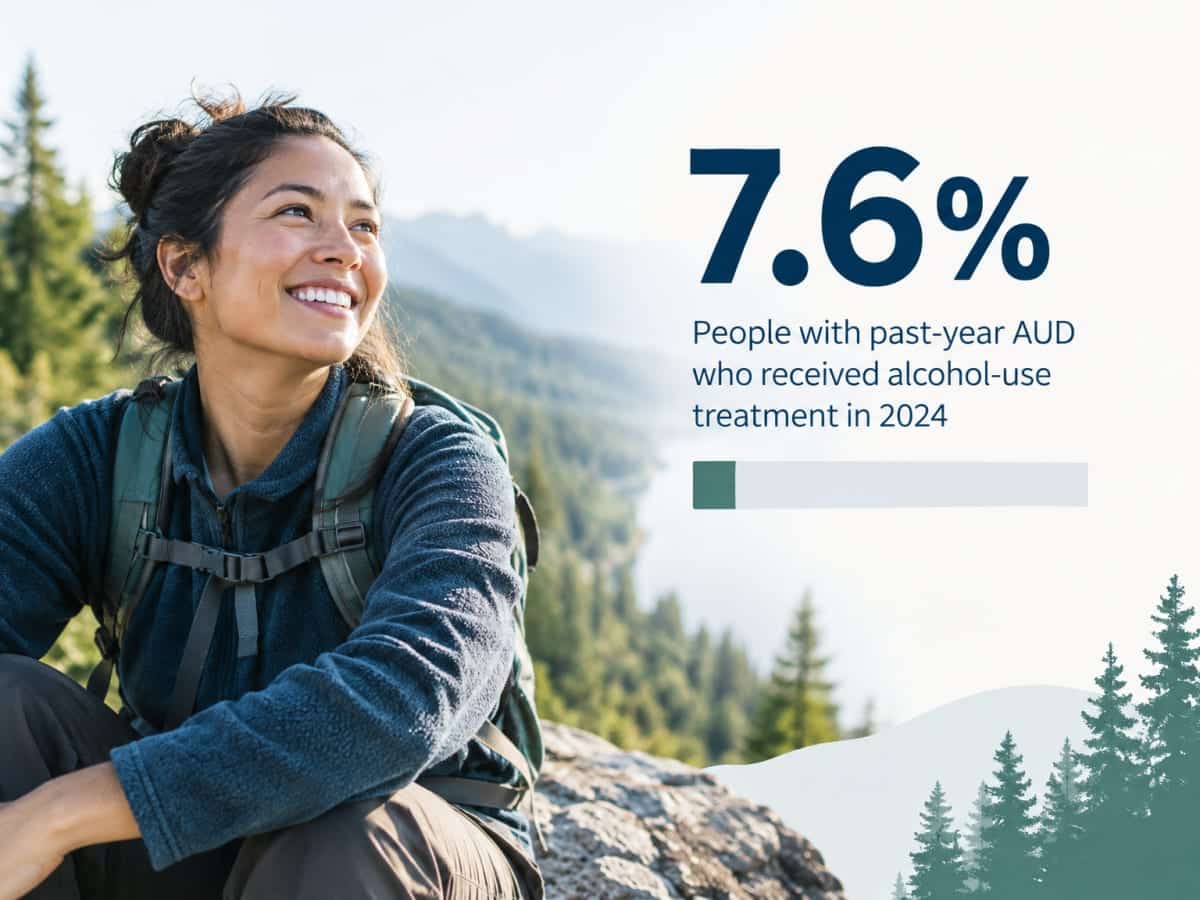
Here’s a fact worth sitting with. In 2024, only 7.6% of people age 12 and older with past-year alcohol use disorder received any alcohol-use treatment at all, and just 2.5% received medication for AUD.10 That’s not because the medications don’t work. It’s because most people, and a lot of prescribers, still think of AUD as a willpower problem instead of a medical condition with FDA-approved treatments.
Three medications are approved in the United States to help people stop drinking or avoid returning to heavy drinking: naltrexone, acamprosate, and disulfiram.422 Naltrexone comes as a daily pill or a monthly injection, which matters if remembering a pill every morning feels like one more thing you’ll fail at.3 Acamprosate helps the brain settle after you stop. Disulfiram makes you physically sick if you drink, which some people find helpful as a hard line. These are not addictive, and they can be used with or without counseling.22
A 2024 systematic review and meta-analysis of 79 randomized trials covering 11,737 participants found that AUD medications reduced alcohol-related outcomes compared with placebo, alongside some increased risk of adverse events.5 Translation: for the right person, these medications genuinely help. Clinical guidance also recognizes that gabapentin and topiramate may be considered as second-line options in some cases.2324
When you call a program, ask directly: do you offer medication for alcohol use disorder, and will a provider talk with me about whether it’s a fit? If the answer is no or vague, keep calling.
Therapy and Mutual Support: What Actually Helps People Stay Sober
Medication can quiet the cravings. Therapy teaches you what to do with the rest of your life. Both matter, and the strongest treatment plans use them together alongside some form of ongoing community.122
A few behavioral approaches have the most consistent track record:
- Cognitive behavioral therapy helps you spot the thoughts and situations that push you toward a drink, then rehearse what to do instead.
- Motivational enhancement works on the ambivalence most people feel in early recovery, the part of you that wants to quit sitting next to the part that doesn’t.
- Contingency management uses concrete rewards for staying sober.
- Family and couples therapy brings the people closest to you into the work, because your drinking affected them too.3
A 2024 review of integrated behavioral interventions found real reductions in drinking and heavy-drinking days, though the evidence that any single model clearly beats standard care is more limited than marketing copy suggests.78 Translation: the model matters less than showing up consistently with a clinician you trust.
Mutual-support groups are the other half of the equation. AA, SMART Recovery, Refuge Recovery, women’s and men’s circles, LGBTQ+ meetings in Portland and Vancouver, Washington, veterans’ groups in Salem and Beaverton. Try more than one. The right room is the one you’ll keep walking back into.222
Co-Occurring Mental Health Conditions and Integrated Care
If you drink to quiet depression, panic, PTSD flashbacks, or racing thoughts, you’re not alone and you’re not weak. Alcohol and mental health conditions travel together so often that federal guidance now treats integrated care as the preferred model: screen for both, assess both, plan treatment for both at the same time rather than making you fix one before anyone looks at the other.1821
In practice, that means a good program asks about your mental health history during intake, not after you’ve already detoxed. SAMHSA calls this a “no wrong door” approach, where anyone showing up for alcohol treatment gets screened for mental health conditions and anyone showing up for mental health care gets screened for substance use.21
Alcohol Rehab in Oregon: What the Rules Require
OHA Licensing and ASAM Withdrawal-Management Levels
Oregon doesn’t let just anyone run a residential detox. The Oregon Health Authority licenses residential substance-use programs under state administrative rules, inspects them for compliance, and these residential programs can provide housing and treatment for up to 16 individuals.16 That’s a baseline you can actually check before you hand someone your trust.
OHA also uses the American Society of Addiction Medicine (ASAM) framework to describe what a program is clinically equipped to do. For adult alcohol withdrawal, two labels matter most:
- ASAM Level 3.2-WM
- Clinically managed residential withdrawal management, meaning 24-hour support in a residential setting with medical oversight for people whose withdrawal is expected to be moderate.
- ASAM Level 3.7-WM
- Medically monitored inpatient withdrawal management, with a higher level of medical staffing for people at greater risk.15
A program’s level tells you what kind of withdrawal it’s authorized and staffed to handle.
If you’re calling programs in Milwaukie, Portland, Gresham, or across the river in Vancouver, Washington, ask two concrete questions: are you licensed by OHA, and what ASAM withdrawal-management level are you certified to provide? A clear answer in plain English is a good sign. A vague one is a reason to keep calling.
Questions to Ask Any Program Before You Admit
You’re not being picky by asking hard questions. You’re doing the job a good clinician would want you to do. Here’s a short list that cuts through brochure language fast.
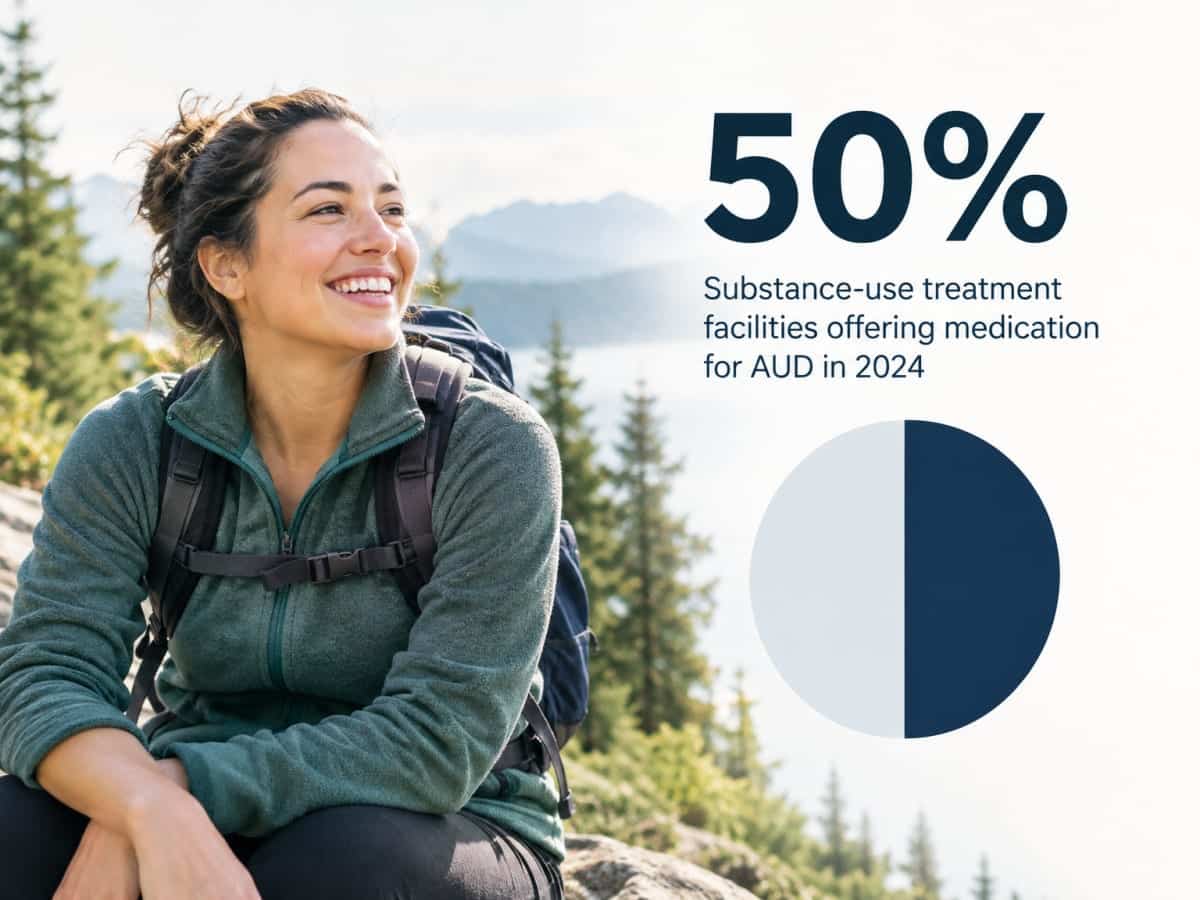
Do you offer medication for alcohol use disorder? This one matters more than most people realize. SAMHSA’s 2024 National Substance Use and Mental Health Services Survey counted 15,953 substance-use treatment facilities in the United States, and the companion report found that about half of substance-use treatment facilities offered medication for AUD.1314 If a program can’t prescribe naltrexone, acamprosate, or disulfiram, or coordinate with someone who can, keep looking.
What’s your medical staffing during withdrawal? Ask who’s on site at night, how often a provider rounds, and how they handle rising blood pressure or seizures.
How do you handle mental health conditions and current psychiatric medications? If you take a benzodiazepine for anxiety or sleep, say so upfront.19
What does the next step look like after detox? A real answer names residential, PHP, IOP, outpatient, and aftercare, and tells you how handoffs happen.122
Are you OHA-licensed, and what’s your ASAM level? You already know why to ask.15
How do you measure outcomes? Programs that track their results tend to improve them.
Insurance, Cost, and Time Off: The Logistics People Dread
The money and schedule questions are usually what keep people stuck. You’re worried about what a program costs, whether your plan covers it, how you’ll explain a two-week absence to your boss, and who picks up the kids. These are real problems, and they have real answers.
Many insurance plans cover medical detox and continuing care at some level, but what’s covered depends on your plan, your deductible, and whether the program is in-network. Call the program’s admissions line and ask them to verify your benefits for you. A good admissions team does this in a day or two and tells you plainly what you’d owe. In Oregon, the Oregon Health Plan includes comprehensive substance-use treatment coverage without requiring prior authorization or referrals, subject to applicable program and plan conditions, and network availability and clinical eligibility still apply.17
For time off, many workplaces have a confidential path through HR to request leave. You don’t have to tell your boss what you’re treating. You do have to make the call.
If You’re Reading This for Someone You Love
If you’re reading this for someone you love, this part is for you. You’re probably exhausted. You’ve tried the calm talk, the angry talk, the ultimatum, the silence. You’ve googled at 1 a.m. and closed the laptop before anyone saw. None of that makes you a bad spouse, parent, or adult child. It makes you someone who hasn’t been given a real playbook.
Start with the medical piece, not the moral one. If the person you love drinks heavily most days, stopping suddenly can trigger seizures or delirium tremens, and benzodiazepines plus vitamin support in a monitored setting are the standard of care.2025 That’s the honest reason to push for a professional assessment instead of a weekend of white-knuckling at home.
You don’t have to stage a dramatic intervention. You can make one call to a licensed program yourself, ask about admissions, insurance verification, and what a typical first day looks like, then bring your person a concrete option instead of a lecture. Set one limit you’ll actually keep. Loop in one other adult so you’re not carrying this alone. Caring hard is not the same as fixing it for them, and both can be true at once.
Making the First Call: What Happens Next
You don’t have to have your words figured out. A good admissions line is used to shaky voices, half-finished sentences, and the long pause before you say how much you’ve actually been drinking. Just pick up the phone.
Here’s what usually happens. Someone answers, asks what’s going on, and walks you through a brief clinical screening: how much you drink, how long, your health history, any past withdrawal, current medications, and what kind of support you have at home. If you want them to verify your insurance, they’ll ask for your card and come back with what’s covered, usually within a day. If medical detox is the right next step, they’ll talk through bed availability, what to pack, and how to get there, whether you’re in Milwaukie, Portland, Salem, or coming in from Vancouver, Washington or out of state.122 Calls are confidential and HIPAA-protected. You can hang up at any point. You can also take the next step the same day.
Check Coverage for Alcohol Rehab
See what your plan may cover for medically supported alcohol detox and the care that can follow.
Frequently Asked Questions
How long does alcohol rehab usually take?
There’s no fixed clock. At Pacific Crest Trail Detox, medical detox typically runs 8 to 10 days. Residential or PHP often lasts a few weeks, IOP runs several weeks to a few months, and outpatient and aftercare can continue for a year or longer. Federal guidance treats treatment as a continuum matched to your needs, not a set stay.122
Is it safe to detox from alcohol at home?
If you’ve been drinking heavily most days, no. Alcohol withdrawal can range from mild shakiness to seizures and delirium tremens, which can be fatal without monitoring.25 Benzodiazepines are the first-line treatment during supervised withdrawal, along with thiamine and vitamin support.20 Call a licensed program for an assessment instead of white-knuckling it alone.
What’s the difference between detox, PHP, IOP, and outpatient care?
Detox manages withdrawal with medical oversight; at Pacific Crest Trail Detox it typically lasts about 8 to 10 days. PHP is an intensive clinical day program most weekdays, with you sleeping at home. IOP is a lighter schedule of several hours on multiple days each week, often with evening tracks. Outpatient is weekly or biweekly therapy, usually paired with medication management and a mutual-support group.122
Do I have to take medication to treat alcohol use disorder?
No. Medication is one evidence-based option, not a requirement. Three FDA-approved medications—naltrexone, acamprosate, and disulfiram—can help you stop or reduce drinking, and they’re nonaddictive and may be used with or without counseling.422 Talk with a provider about whether one fits your health, goals, and other medications. The choice is yours.
How do I help a family member who won’t admit they need rehab?
Start with the medical reality. Heavy daily drinking makes sudden stops risky, and a professional assessment is safer than an argument.25 Call a licensed program yourself, ask about admissions, insurance verification, and what day one looks like, then bring your person one concrete option. Set a limit you’ll keep, and loop in one other adult so you aren’t carrying this alone.
Can I go to alcohol rehab in Oregon if I live out of state?
Yes. Oregon programs regularly admit clients from Washington, California, Idaho, and farther. Ask the admissions team to verify your out-of-network benefits, coordinate travel, and confirm the program is OHA-licensed at the ASAM withdrawal-management level you need.1516 Many families choose a Portland metro program specifically for the distance from old triggers.
References
- Treatment Options for Substance Use Disorder. https://www.samhsa.gov/substance-use/treatment/options
- Alcohol Use Disorder: Causes, Symptoms, Treatment & Help. https://www.samhsa.gov/substance-use/learn/alcohol
- Recommend Evidence-Based Treatment: Know the Options. https://www.niaaa.nih.gov/health-professionals-communities/core-resource-on-alcohol/recommend-evidence-based-treatment-know-options
- Understanding Alcohol Use Disorder. https://www.niaaa.nih.gov/publications/brochures-and-fact-sheets/understanding-alcohol-use-disorder
- Efficacy of medications for the treatment of alcohol use disorder (AUD): A systematic review and meta-analysis considering baseline AUD severity. https://pubmed.ncbi.nlm.nih.gov/39396764/
- Efficacy and safety of alcohol reduction pharmacotherapy according to treatment duration in patients with alcohol dependence or alcohol use disorder: A systematic review and network meta-analysis. https://pubmed.ncbi.nlm.nih.gov/38173342/
- Integrated behavioral interventions for adults with alcohol use disorder. https://pubmed.ncbi.nlm.nih.gov/39163680/
- Effectiveness of psychosocial interventions for alcohol use disorder: a systematic review and meta-analysis update. https://pubmed.ncbi.nlm.nih.gov/38904466/
- Integrating Substance Use Disorder Services into Primary and Other Healthcare Settings. https://www.samhsa.gov/substance-use/treatment/integrating-sud-services
- Alcohol Treatment in the United States. https://www.niaaa.nih.gov/alcohols-effects-health/alcohol-topics-z/alcohol-facts-and-statistics/alcohol-treatment-united-states
- How effective are remote and/or digital interventions as part of alcohol and drug treatment and recovery support? A systematic review and meta-analysis. https://pubmed.ncbi.nlm.nih.gov/40129216/
- Internet-based cognitive behavioral therapy for alcohol use disorder: a systematic review of evidence and future potential. https://pubmed.ncbi.nlm.nih.gov/39870355/
- National Substance Use and Mental Health Services Survey 2024. https://www.samhsa.gov/data/sites/default/files/reports/rpt56696/2024-nsumhss-annual-report.pdf
- 2024 N-SUMHSS Companion Report. https://www.samhsa.gov/data/sites/default/files/reports/rpt56695/2024-N-SUMHSS-Companion-Report.pdf
- Oregon Health Authority: Licensing and Certification: Providers. https://www.oregon.gov/oha/BH/Providers/Pages/Licensing-Certification.aspx
- Oregon Health Authority: Residential Treatment Facilities. https://www.oregon.gov/oha/HSD/AMH-LC/Pages/RT.aspx/1000
- Substance Use Disorder Integration Report. https://www.oregon.gov/oha/HSD/AMH/DataReports/SUD-Integration-Report.pdf
- Substance Use Disorder Treatment for People with Co-Occurring Disorders. https://library.samhsa.gov/sites/default/files/pep20-06-04-006.pdf
- Co-Occurring Disorders and Other Health Conditions. https://www.samhsa.gov/substance-use/treatment/co-occurring-disorders
- Alcohol Withdrawal in Hospitalized Patients. https://www.ncbi.nlm.nih.gov/books/NBK604324/
- Managing Life with Co-Occurring Disorders. https://www.samhsa.gov/mental-health/serious-mental-illness/co-occurring-disorders
- Treatment for Alcohol Problems: Finding and Getting Help. https://www.niaaa.nih.gov/publications/brochures-and-fact-sheets/treatment-alcohol-problems-finding-and-getting-help
- Alcohol Use Disorder: From Risk to Diagnosis to Recovery. https://www.niaaa.nih.gov/health-professionals-communities/core-resource-on-alcohol/alcohol-use-disorder-risk-diagnosis-recovery
- Mental Health Issues: Alcohol Use Disorder and Common Co-occurring Conditions. https://www.niaaa.nih.gov/health-professionals-communities/core-resource-on-alcohol/mental-health-issues-alcohol-use-disorder-and-common-co-occurring-conditions
- Alcohol Withdrawal Syndrome. https://www.ncbi.nlm.nih.gov/books/NBK441882/