
Key Takeaways
- Detox works best as a working room, not a waiting room—short daily groups during medically supervised withdrawal start recovery while the body steadies, instead of delaying it until discharge.
- Groups during detox pull from psychoeducation, skills-building, cognitive-behavioral problem-solving, and peer support, meeting people where they are rather than demanding certainty about lifelong sobriety on day one.
- Group therapy supports medication, it doesn’t replace it—for opioid-use disorder especially, detox without buprenorphine, methadone, or naltrexone raises overdose risk after tolerance drops 8.
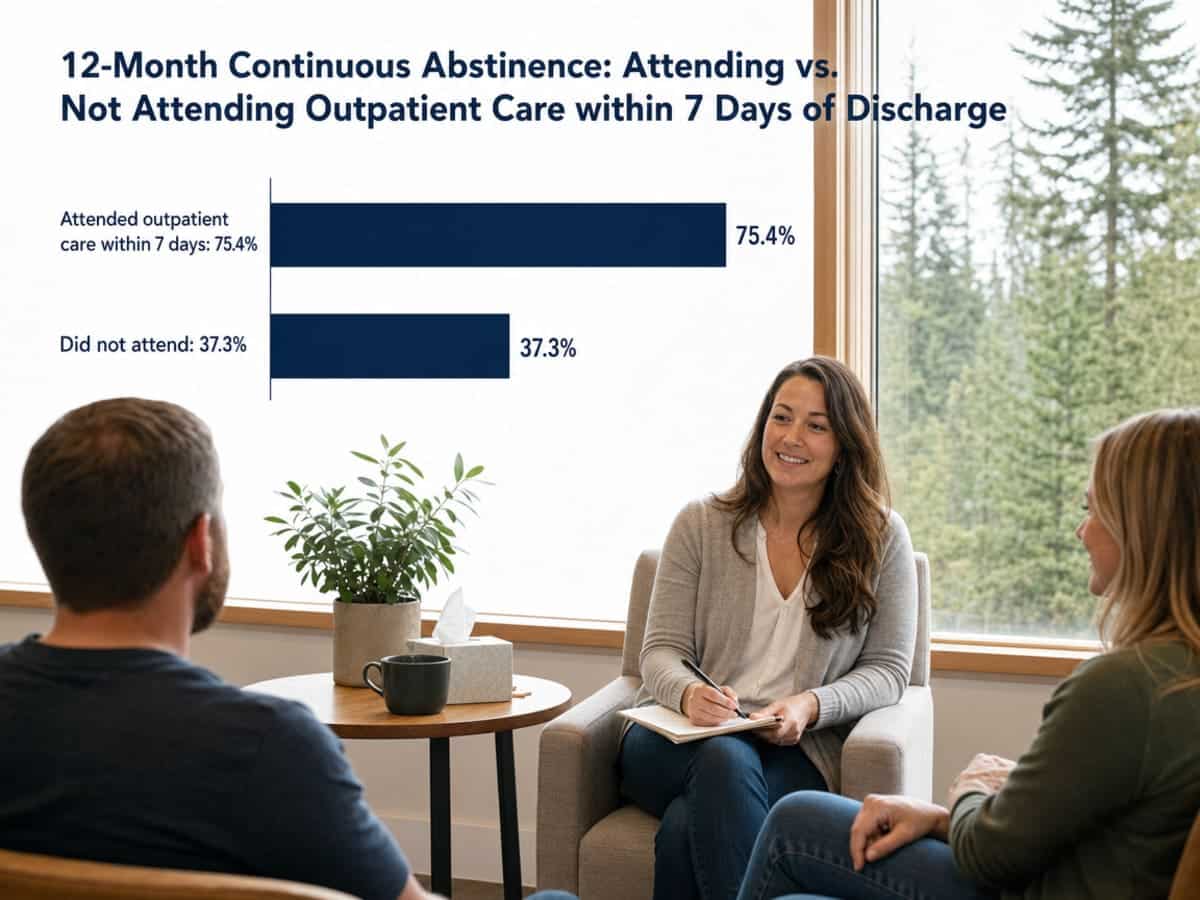
- The handoff matters most: attending an outpatient appointment within seven days of discharge was linked to a 75.4% versus 37.3% 12-month abstinence rate, making the next scheduled step the central discharge goal 12.
The Waiting Room vs. the Working Room
If you’re picturing detox as a week of lying in bed with the TV on, waiting for the shaking and sweating to pass, you’re not wrong about what a lot of programs look like. That version of detox treats withdrawal like a storm you ride out alone. The medical team watches your vitals, hands you medication, and then—nothing. You wait. You leave. And then you’re on your own, with the same cravings, the same triggers, and no new tools in your pocket.
There’s another way to run those same days. Instead of a waiting room, picture a working room: a small circle of chairs, a facilitator who’s done this a thousand times, maybe five or six other people in the same shaky shape you are. One or two short group sessions each day, built around what you can actually handle while medication keeps your withdrawal manageable. That’s the model Pacific Crest Trail Detox uses in Milwaukie, Oregon, and it’s the quiet reason day one of recovery doesn’t have to wait until after you’re discharged.
The cost of treating detox as an endpoint shows up in the data. In one population-level Massachusetts study of inpatient detoxification, 61% of admissions were followed by another detox admission without the person ever moving into further inpatient treatment 10. People cycled back through the same stabilization process again and again, never getting to the recovery work that follows. That’s a Massachusetts snapshot, not a universal number, but it tells you something important: when detox is where care stops, a lot of people come right back.
The working-room approach doesn’t promise a miracle. It just refuses to waste the days you’re already there. While your body steadies, your mind starts learning what to do with it.

What Actually Happens in a Day
A Realistic Look at the Schedule
Mornings are quiet on purpose. You wake up in a bedroom, not a hospital ward. A nurse checks your vitals, asks how you slept, and brings whatever withdrawal medication the doctor has ordered for you that day. Breakfast is simple food you can actually keep down. If your stomach is rough, nobody pushes.
Late morning or early afternoon is usually when the first group happens. It’s short—often 45 minutes to an hour—and small, maybe four to eight people in a circle. A counselor leads. You don’t have to talk if you’re not up to it. Sitting there, drinking water, listening to someone else describe the same shaky morning you just had, counts. That’s the whole bar on day two: show up, stay in the chair.
The middle of the day has rest built into it. Withdrawal is exhausting. You might nap, call family during approved hours, eat lunch, meet one-on-one with a counselor or the medical team. Nobody expects you to be productive.
A second group often lands in the late afternoon or early evening—again, short, again, small. This one tends to lean more practical: a skill, a conversation about tomorrow, something you can take with you. Dinner follows, then quiet time, then sleep.
At Pacific Crest Trail Detox, this one-to-two-groups-a-day rhythm is intentional. It’s enough to start building recovery muscle while your body is still steadying, and little enough that you’re not asked to perform wellness you don’t yet have. The schedule bends around the medical reality, not the other way around.
The Five Kinds of Groups You Might Sit In
“Group therapy” sounds like one thing. It isn’t. SAMHSA’s clinical guide for substance-use treatment lays out five different group formats, each doing a different job, and a good detox program pulls from all of them depending on where you are in the week 1. Here’s what they actually feel like when you’re the one in the chair.
- Psychoeducation groups
- Closer to a class than a therapy session. A counselor walks you through what’s happening in your brain and body right now—why your hands shake, why you can’t sleep, why cravings crash in like waves. Learning the “why” takes some of the shame out of it. You start to see withdrawal as a biological process you can get through, not a personal failure.
- Skills-development groups
- Teach you something concrete. How to ride out a craving without acting on it. How to breathe through a panic spike. How to answer the phone when a using friend calls. You practice. You fumble. You try again next session. These are the groups where you leave with something in your pocket.
- Cognitive-behavioral or problem-solving groups
- Look at the thoughts and situations that keep pulling you back. The group helps you walk through a specific hard moment—”I always drink after a fight with my mom”—and work out what else could happen next time. It’s less about talking about feelings and more about taking apart patterns.
- Support groups
- The warmer ones. People share what the day has been like. Someone cries. Someone laughs about something nobody else would understand. You find out you’re not the only one who thought you were the worst case in the building. That matters more than it sounds like it will.
- Interpersonal-process groups
- Go deeper, and they usually come later in treatment, not during the hardest days of withdrawal. These look at how you relate to other people—trust, conflict, closeness—because those patterns tend to show up in using patterns too.
During detox itself, you’ll probably see more of the first four. The deeper interpersonal work is often saved for the partial hospitalization or intensive outpatient stages that come after, when your head is clearer and you have the energy for it. That’s part of why Pacific Crest Trail Detox is built as a continuum—detox into PHP into IOP into standard outpatient and alumni support—so the right kind of group meets you at the right moment, instead of all of it getting crammed into one shaky week.
Meeting You Where You Are, Not Where You ‘Should’ Be
Here’s something a lot of people don’t realize until they walk in the door: you don’t have to be sure you’re quitting for good to belong in a detox group. You can be a mess of mixed feelings—part of you ready, part of you already planning the first drink after discharge, part of you just wanting the shaking to stop. That’s not a disqualifier. That’s where almost everyone starts.
SAMHSA’s guidance on motivational interviewing, the approach a lot of detox counselors are trained in, is built exactly for this. It’s a way of talking with people that doesn’t demand you feel ready on day one. Instead, the counselor helps you explore your own reasons, your own hopes, your own worries, without pushing you into a decision you haven’t made yet 4. If you’ve ever been lectured about your drinking or using and shut down afterward, you know why this matters.
Groups work the same way when they’re run well. A good facilitator doesn’t ask you to declare lifelong sobriety the first time you open your mouth. They ask what brought you in. They ask what you want to be different. Small answers count. “I want to sleep without a bottle” counts. “I want my kid to come home” counts.
Pacific Crest Trail Detox’s approach meets you at that honest starting line. Showing up uncertain, foggy, and half-convinced isn’t failing at recovery. It’s how recovery actually begins.
Why Starting Recovery on Day One Matters for Safety
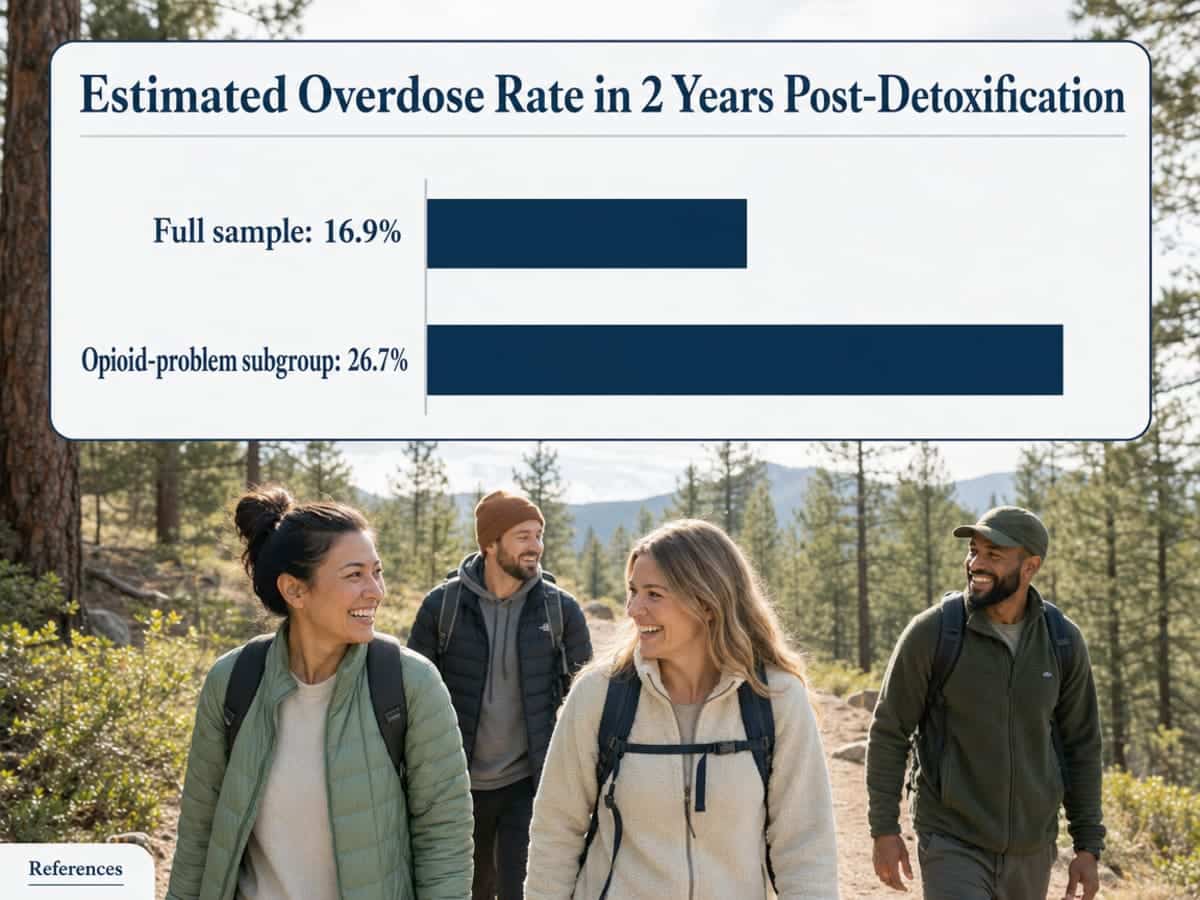
The numbers back up the warning. A prospective study that followed 470 adults after detox from heroin, cocaine, or alcohol found that an estimated 16.9% of the full sample experienced an overdose within two years of discharge. For the subgroup with opioid problems, that figure climbed to 26.7% 11. That’s one in four people, in a specific study of a specific population, walking out of detox and later overdosing within two years. Those odds are the reason “just get through withdrawal” isn’t a plan.
Daily groups don’t prevent overdose on their own. Nothing in the research says they do, and anyone who tells you otherwise is overselling. What groups during detox can do is attach you to the pieces that lower the risk:
- understanding what happens to your tolerance when you stop,
- learning what naloxone is and how to use it,
- naming your triggers out loud before you walk back into them,
- and leaving with a next appointment on your calendar instead of a vague “I’ll call someone next week.”
They also give you something harder to measure: a few people who know your name and your story by discharge day. When day one of recovery happens inside detox—education, a coping skill, a conversation with someone who gets it—you’re not starting from zero when the door opens. For opioid-use disorder specifically, SAMHSA’s TIP 63 is clear that medication like buprenorphine, methadone, or naltrexone belongs in that package too; groups support the medication, not substitute for it 7. At Pacific Crest Trail Detox, that pairing—medical supervision, medication when it fits, and short daily groups—is the whole point. Not because any one piece saves lives alone, but because the combination is what makes the days after discharge survivable.
The Handoff: Why the Next Appointment Starts in Detox
The most important piece of paper you leave detox with isn’t your discharge summary. It’s a calendar with a real appointment on it, scheduled within the next week, that you’ve already talked about out loud with someone who knows your situation. That’s the handoff, and it’s one of the quieter jobs daily groups do.
Here’s why it matters. In a study of adults discharged from residential substance-use treatment, people who attended an outpatient appointment within seven days of discharge had a 12-month continuous abstinence rate of 75.4%. People who didn’t attend that first appointment came in at 37.3% 12. That’s not a small gap. It’s the difference between a year of staying sober and a year of mostly not. The study is observational, so some of that difference reflects who was more stable and supported going in—but the pattern is consistent enough that “get to the first appointment” has become one of the clearest action items in recovery research.
Groups are where that first appointment stops being an idea and starts being a plan. A skills group might walk you through what to say when you call to confirm. A support group might surface the thing you’re actually worried about—child care, transportation, your boss, your partner’s reaction—so a counselor can help you problem-solve it before you leave. By the time you’re packing your bag, the appointment isn’t a note on a discharge sheet. It’s a Tuesday at 10:00 a.m. that you’ve already pictured getting to.
This is where the shape of Pacific Crest Trail Detox matters in practical terms. Because the program runs as a continuum—detox into partial hospitalization, then intensive outpatient, then standard outpatient and alumni support—the next appointment isn’t a cold referral to a stranger. It’s often the next step in the same building, with people who already know your name. That handoff, rehearsed in group and warm on both ends, is what turns day one of recovery into week two.
What Groups Can and Can’t Do (An Honest Reading)
You deserve a straight answer about what sitting in a circle for 45 minutes can actually do for you. The research on group therapy for substance-use disorders is encouraging, but it isn’t a thunderclap. A systematic review and meta-analysis of 33 studies found small effects on abstinence when group therapy was compared with no treatment, individual therapy, and other treatments, and moderate effects on mental state compared with no treatment 2. Small and moderate are honest words. They mean groups help—measurably—but not the way a miracle drug would.
The picture gets more interesting when groups are combined with the right medication. A peer-reviewed review of group treatments for drug-use disorders reports that group cognitive-behavioral therapy and contingency-management groups appear more effective than usual care for cocaine use, and that group therapy or group CBT added to medication may reduce opioid use more than medication alone in some studies 3. In other words: groups do their best work as part of a package, not as the whole package.
So here’s the honest version. Groups during detox can lower the shame of what you’re going through, teach you a coping skill you didn’t have on Monday, surface the specific thing you’re afraid of about discharge, and attach you to people who make the next appointment feel less like a cliff. They can’t replace the medication a doctor prescribes for your withdrawal, substitute for medical monitoring when your blood pressure spikes at 3 a.m., or guarantee you won’t use again. Anyone who tells you otherwise is selling something.
At Pacific Crest Trail Detox, groups are built around medical care, not instead of it. That ordering matters.
Peer Connection and the Pull of Lived Experience
There’s a specific moment that keeps showing up in detox stories. You’re sitting in the circle, hands maybe still shaking, and someone two chairs over says the exact thing you were sure nobody else had ever thought. The relief isn’t small. It’s the first time in a long time you don’t feel like the only one.
That moment has evidence behind it. A 2025 systematic review of peer recovery-support services pulled together 28 studies covering 12,601 people and found that the clearest, most consistent benefit of lived-experience support is improved engagement and retention—people showing up for care and sticking with it longer 5. The review was honest about the limits: evidence that peer support directly reduces substance use is still preliminary. But staying in treatment is the gateway to everything else, and that’s where peer connection pulls its weight. An earlier systematic review found similar patterns—better retention, better relationships with providers, greater treatment satisfaction 6.
In a daily group during detox, that pull happens on a human scale. The person who went through withdrawal three days before you tells you the second night is often the worst and the third morning is usually better. A counselor can tell you the same thing clinically. Hearing it from someone who just lived it lands differently.
Pacific Crest Trail Detox leans into this on purpose. Part of the staff and the broader recovery community around the program bring lived recovery experience into the room, so the people guiding you through aren’t only talking from a textbook. They’ve been in your chair. That’s not a cure. It’s a reason to come back tomorrow.
How a Home-Like Setting Changes the Group
Where you sit changes what you can say. A fluorescent-lit hospital ward with a clipboard at the foot of your bed sends one message: you are a patient, this is medical, keep your head down. A living room with a couch, a coffee table, and a window that actually opens sends another: you are a person, you are safe here, this is where recovery lives.
Pacific Crest Trail Detox is a non-hospital residential program in Milwaukie, Oregon, built to feel like a home instead of a hospital. The groups happen in that same home-like space. That matters more than it sounds like it should. When the room looks like somewhere you could actually live, the group starts to feel like something you could actually do—not a procedure being done to you, but a conversation you’re part of.
None of that replaces the medical side. Oregon’s residential withdrawal-management rules require written procedures for emergencies, controlled medication storage, and licensed oversight 14, 15. The clinical structure is there. It’s just wrapped in a space that lets you exhale while you use it.
What to Ask When You Call a Detox Program
Picking up the phone is one of the hardest parts. You don’t need a script. You just need a few questions that cut through the brochure language and tell you what the week will actually look like.
Ask whether groups happen every day, how many, and how long. “One or two short groups a day” is a very different program from “group therapy is available.” Ask what kinds of groups—education about what withdrawal is doing to your body, skills practice for cravings, support circles—so you know the schedule isn’t vague 1.
Ask how they handle medication. For alcohol, benzodiazepines, and opioids, the medical side has to come first. For opioid-use disorder specifically, the CDC is clear that detox without medication raises the risk of resumed use and overdose, so you want to hear buprenorphine, methadone, or naltrexone named as options when they fit 8.
Ask what happens on discharge day. Will you leave with a specific next appointment on the calendar, scheduled within the first week? Will someone help you get there? Is the next step inside the same program or a cold handoff to strangers?
Ask about the setting. A home-like residential space in Milwaukie feels different from a hospital ward, and that difference shapes whether you can actually use the groups. At Pacific Crest Trail Detox, the continuum from detox into partial hospitalization, intensive outpatient, and alumni support is built so day one of recovery keeps going after you walk out the door.
Check Your Coverage and Start Group Support
See if your insurance supports immediate entry into daily group therapy during detox.
Frequently Asked Questions
Will I really be well enough to sit in a group while I’m still in withdrawal?
Probably more than you think, but nobody expects you to be sharp. Groups during detox are short, usually 45 minutes to an hour, and small. You can sip water, stay quiet, or leave if you need to. The point isn’t performance—it’s being in the room while medication keeps your symptoms manageable. Showing up foggy and shaky still counts as showing up, and that’s the whole bar.
What does a daily group therapy detox program actually look like day-to-day?
Mornings start with vitals, medication, and food you can keep down. One short group usually happens late morning or early afternoon, with rest, meals, and one-on-one check-ins built in around it. A second group often lands later in the day, leaning more practical—a coping skill, a conversation about tomorrow. At Pacific Crest Trail Detox, this one-to-two-groups-a-day rhythm bends around the medical reality.
Is group therapy a replacement for medication during detox?
No, and anyone framing it that way is wrong. For opioid-use disorder, the CDC specifically warns against detox without medication because lowered tolerance raises overdose risk 8. SAMHSA’s TIP 63 names buprenorphine, methadone, and naltrexone as the medications that address withdrawal and cravings, with counseling and groups layered around them 7. Groups support medication. They don’t substitute for it, and they shouldn’t be used as a hurdle before you get it.
What happens after detox ends, and why does the handoff matter so much?
The next appointment is the whole ballgame. In one study of adults leaving residential treatment, those who attended an outpatient appointment within seven days of discharge had a 75.4% 12-month continuous abstinence rate, compared with 37.3% for those who didn’t 12. At Pacific Crest Trail Detox, the next step is often inside the same program—partial hospitalization, intensive outpatient, standard outpatient, alumni support—so you’re not being handed off to strangers.
What if I’m not ready to commit to quitting for good yet?
You still belong there. SAMHSA’s guidance on motivational interviewing, which many detox counselors are trained in, is built for exactly this—exploring mixed feelings without demanding a decision you haven’t made 4. Showing up uncertain is how most people start. “I want to sleep without a bottle” counts. “I want my kid to come home” counts. You don’t have to feel ready on day one. You just have to walk in.
What should I ask when I call a detox program for myself or a loved one?
Ask whether groups happen every day, how many, and what kinds—education, skills, support 1. Ask how they handle medication for alcohol, benzodiazepines, and opioids, and whether buprenorphine, methadone, or naltrexone are named as options when they fit 8. Ask what discharge day looks like: will you leave with a specific next appointment on the calendar? Ask about the setting—a home-like residential space feels different from a hospital ward, and that difference matters.
References
- TIP 41: Substance Abuse Treatment: Group Therapy. https://library.samhsa.gov/product/tip-41-substance-abuse-treatment-group-therapy/sma15-3991
- Group treatment for substance use disorder in adults. https://pubmed.ncbi.nlm.nih.gov/30797382/
- A review of research-supported group treatments for drug use disorders. https://pmc.ncbi.nlm.nih.gov/articles/PMC8215831/
- Using Motivational Interviewing in Substance Use Disorder Treatment. https://library.samhsa.gov/sites/default/files/SAMHSA_Digital_Download/PEP20-02-02-014.pdf
- Peer Recovery Support Services and Recovery Coaching for Substance Use Disorder: A Systematic Review. https://pubmed.ncbi.nlm.nih.gov/41551498/
- A Systematic Review of Peer Recovery Support Services for Individuals With Substance Use Disorders. https://pubmed.ncbi.nlm.nih.gov/31263434/
- TIP 63: Medications for Opioid Use Disorder. https://library.samhsa.gov/product/tip-63-medications-opioid-use-disorder/pep21-02-01-002
- Opioid Use Disorder: Treating. https://www.cdc.gov/overdose-prevention/hcp/clinical-care/opioid-use-disorder-treating.html
- CDC Clinical Practice Guideline for Prescribing Opioids for Pain — United States, 2022. https://www.cdc.gov/mmwr/volumes/71/rr/rr7103a1.htm
- Opioid overdose and inpatient care for substance use disorder care in Massachusetts. https://pubmed.ncbi.nlm.nih.gov/32199545/
- Overdose after detoxification: a prospective study. https://pubmed.ncbi.nlm.nih.gov/17280803/
- Importance of short-term continuing care plan adherence on long-term outcomes among patients discharged from residential substance use treatment. https://pubmed.ncbi.nlm.nih.gov/28557531/
- Testing a Standard Approach to Match Patients with Addiction to Treatment Intensity. https://pubmed.ncbi.nlm.nih.gov/39903828/
- Behavioral Health Services – Chapter 309. https://www.oregon.gov/oha/HSD/RAC/309-018.pdf
- Health Systems Division: Addiction Services – Chapter 415. https://www.oregon.gov/oha/HSD/Medicaid-Policy/SUDWaiver/415-050-Highlighted-040723.pdf