
Key Takeaways
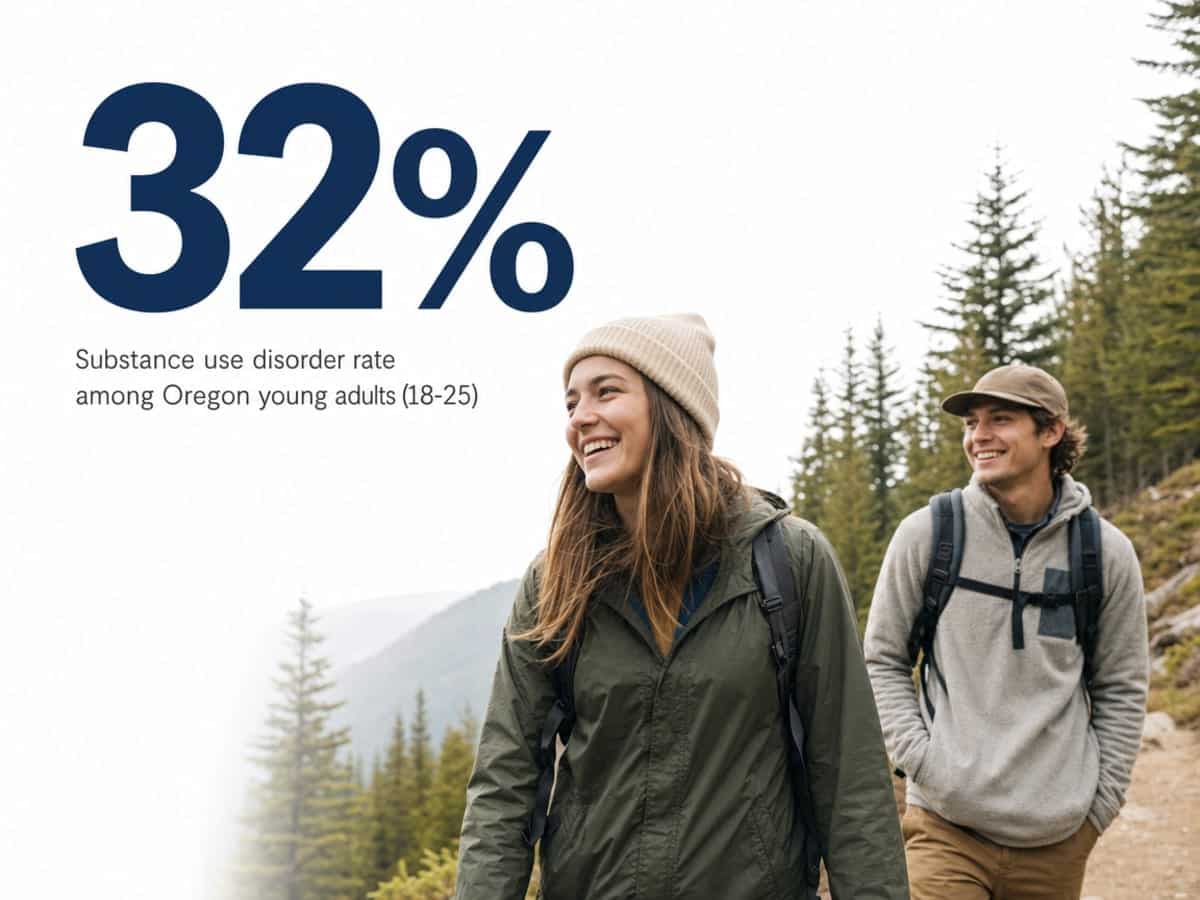
- Nearly one in three Oregon young adults ages 18–25 meet criteria for a substance use disorder, so needing detox at 22 in Portland is far from unusual 1.
- Alcohol and benzodiazepine withdrawal can be fatal without supervision, and Oregon’s 2024 overdose numbers show fentanyl and meth drive most deaths — making medical monitoring the deciding factor 4, 12.
- Before choosing a Portland-area program, compare setting (house vs. hospital), peer-age grouping, use of FDA-approved medications like buprenorphine, and how detox hands off to PHP, IOP, and aftercare 6, 8.
- Confirm coverage early: most commercial plans and parent policies apply, while OHP covers detox and MAT but not every facility accepts it — Pacific Crest Trail Detox in Milwaukie does not take OHP 10, 11.
If you’re 22 and reading this at 2 a.m.
You’re not researching this for a school paper. You’re on your phone in the dark, maybe shaking a little, maybe just tired of being tired. The word “rehab” feels like a label you’re not ready to wear. The word “addict” feels worse. And somewhere in your head there’s a voice saying you’re too young for this to be a real problem — which is exactly the voice that keeps a lot of people your age sick for another five years.
Here’s the honest part. In the most recent state survey, 32.0% of Oregon young adults ages 18–25 met the criteria for a substance use disorder — higher than the national rate for the same age group 1. That’s not a shame statistic. That’s a you are not the only one awake right now statistic. Nearly one in three people your age in this state is somewhere on the same map you’re on.
This page is written for you. If you’re a parent or a partner who got here first, there’s a section further down that’s just for you — read that one and come back.
What you’ll find in the rest of this article: what detox actually feels like day by day, what medications can do for your brain while it resets, how to protect your school and job, what insurance usually covers, and what happens after the first week. No scare tactics. No lectures. Just the information you were looking for when you opened this tab.
Getting sober young doesn’t mean doing it alone. Pacific Crest Trail Detox is a non-hospital medical detox in Milwaukie, right outside Portland — a house, not a hospital — and we’re here when you’re ready to make the call.
What detox actually is — and what it isn’t
Detox is the medical part. It’s your body clearing a substance it’s gotten used to, with people watching your vital signs so withdrawal doesn’t hurt you. That’s it. It’s not a 90-day lockup. It’s not a court sentence. It’s not a tattoo on your forehead that says “addict” for the rest of your life.
What detox isn’t: a cure. The National Institute on Drug Abuse is pretty direct about this — withdrawal management on its own doesn’t fix the brain patterns that pull you back toward using. It handles the first week so you can safely do the actual work afterward, usually some mix of counseling, medication when it fits, and support that keeps going after you leave 6. For opioids specifically, NIDA says medication should generally be the first-line treatment, paired with therapy 6.
Think of detox as the reset. A short window — usually about a week, sometimes a little more — where you’re not driving the car. Someone else holds the wheel while your nervous system calms down enough that you can think again. What you decide to do with that quieter brain comes next, and you get a say in it. That’s the part a lot of people your age don’t realize is on the table.
Why withdrawing alone is dangerous
What you’re actually withdrawing from in 2025
The street supply in Portland in 2025 isn’t the same thing people were quitting ten years ago. If you’ve been using opioids, there’s a high chance fentanyl is in there — sometimes in pills that look exactly like prescription ones, sometimes mixed with meth without anyone telling you. That matters for detox because your tolerance, your withdrawal timeline, and your overdose risk after you stop are all shaped by what you were actually putting in your body, which may not be what you thought.
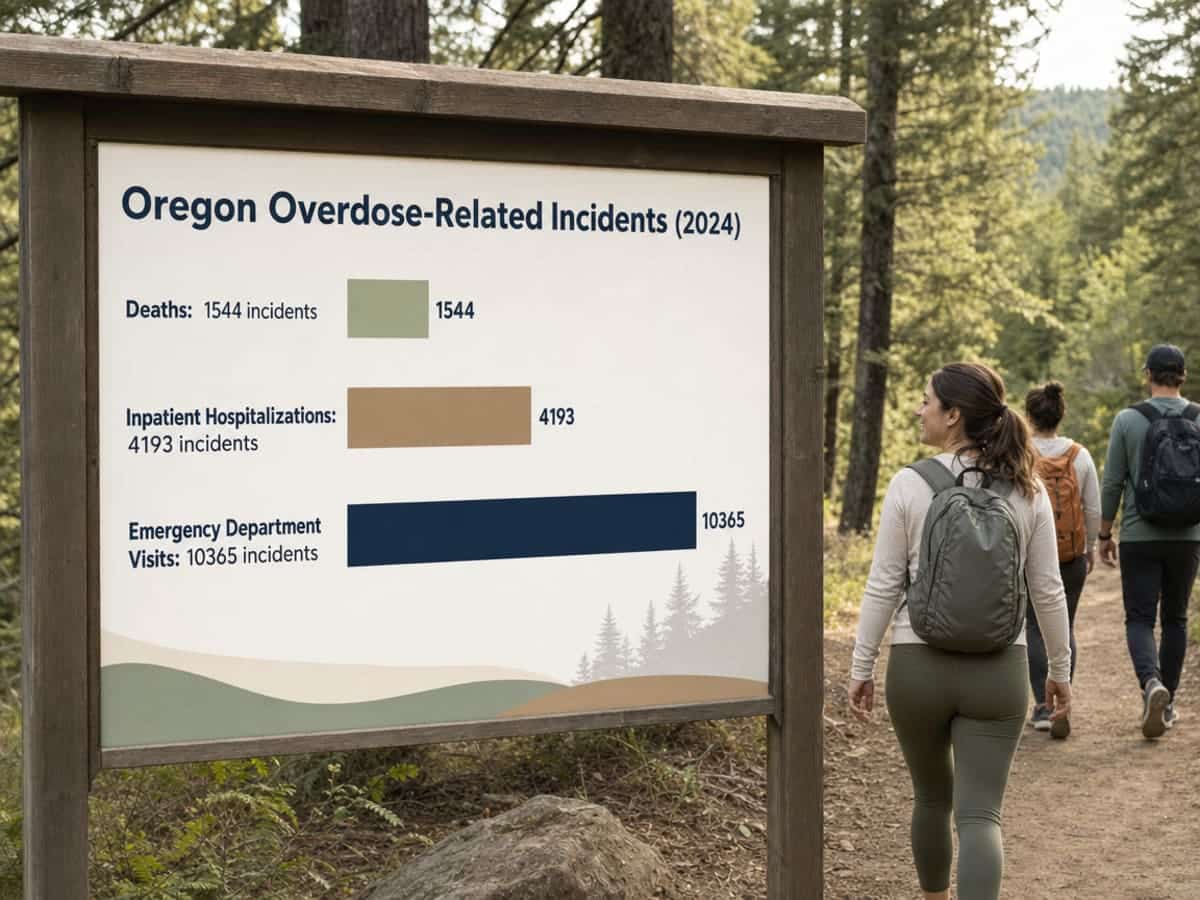
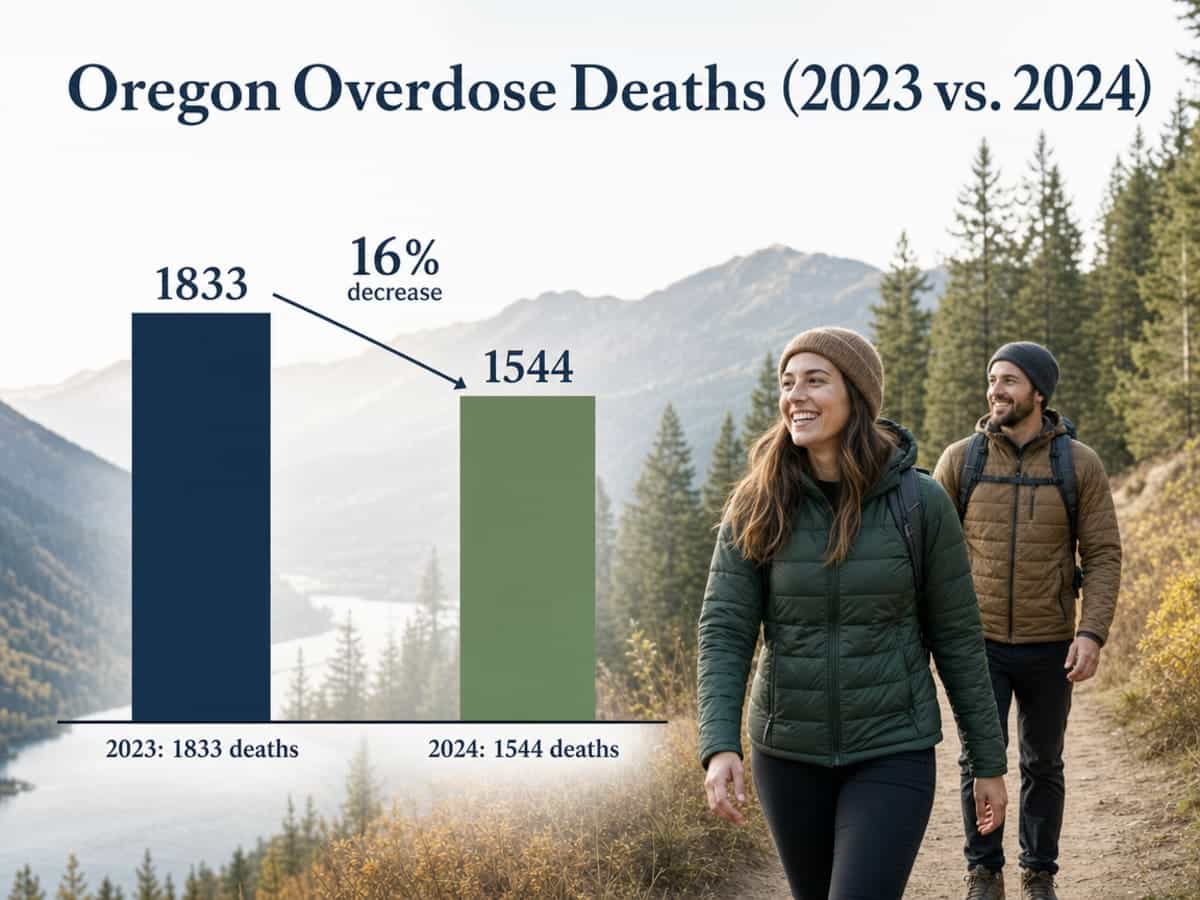
The 2024 statewide numbers tell the story in one picture. Oregon recorded 1,544 overdose deaths that year, 4,193 inpatient hospitalizations, and 10,365 emergency-department visits related to drug overdose — and more than 90% of fatal overdoses involved fentanyl, methamphetamine, or both 4. Look at the shape of that: for every death, roughly seven people landed in a hospital bed and nearly seven more ended up in the ER. Most overdose events are survivable when someone is there.
That’s the whole case for not doing this alone. The question isn’t whether withdrawal is uncomfortable — it is. The question is who is in the room if something goes sideways.
Alcohol and benzos: the quiet-looking ones that can kill you
Oregon’s licensing framework recognizes this, which is why there are specific regulated levels of withdrawal management for exactly these situations, including medically monitored inpatient care 12. That’s not bureaucratic trivia — it’s the state saying out loud that some withdrawals need medical eyes on them.
At Pacific Crest Trail Detox, alcohol and benzodiazepine withdrawal are treated as the high-risk cases they are, with 24/7 monitoring in a house in Milwaukie rather than a hospital ward. You can be scared of what quitting feels like and still safer in a room with people watching your blood pressure than alone with your phone.
What the first 7 days feel like at a non-hospital detox
Day 1: intake, privacy, and the part no one warns you about
The part no one warns you about is how quiet the first few hours are. You pictured fluorescent lights and a clipboard. What you actually walk into is a house in Milwaukie, somebody asks if you want water, and then you sit down with a nurse who wants to know what you’ve been using, how much, and when you last used — not to judge you, but because those answers decide which medications you get tonight.
Intake is honest or it doesn’t work. If you downplay the drinking or leave out the Xanax, the plan built around you is built around a lie, and withdrawal gets worse. Tell the truth once, to the clinical team, and it stays with the clinical team. Federal confidentiality rules around substance-use records are strict for a reason.
You’ll get a bed in a bedroom, not a bay. Your phone situation, visitors, who the staff can and can’t talk to about you — all of that gets set with you, not around you. Expert consensus on young-adult care treats voluntary participation and dignity as foundations, not perks 17. That’s the tone of day one when it’s done right.
Days 2–5: medical withdrawal with someone in the room
This is the stretch you were dreading. It’s also the stretch that goes faster than you expect when you’re not white-knuckling it alone in a bedroom.
What’s happening medically depends on what you were using. If you were drinking heavily or on benzos, staff are checking your blood pressure, pulse, and withdrawal symptoms on a schedule, and giving medication to keep your nervous system from doing anything dangerous. If you were using opioids, you may be started on buprenorphine or offered lofexidine to quiet the worst of the physical symptoms — these are FDA-approved medicines used exactly for this 5. Nausea, chills, restless legs, the feeling that your skin is on wrong — those get treated, not toughed out.
The emotional part is the sneaky one. Around day three a lot of people cry for no clear reason, or get irritable, or feel flat. That’s a brain chemistry event, not a character flaw. Staff have seen it a hundred times. You’ll sleep more than you think. You’ll eat small meals. Someone checks on you overnight. The point is you’re never the only person who knows how you’re doing.
Days 5–10: sleep, food, and deciding what comes next
Something shifts around day five or six. You sleep through a night. You taste your food again. You have a conversation that isn’t about how terrible you feel. Nothing is fixed — but your brain is online enough to think about what’s next, which is exactly when the next-step conversation starts.
Oregon recognizes several levels of withdrawal management, including clinically managed residential withdrawal management and medically monitored inpatient withdrawal management, and the whole system is designed so detox hands off to continuing care rather than ending in a parking lot 12. NIDA says the same thing in plainer language: detox on its own doesn’t do the long work; it’s the step that makes the long work possible 6.
So in those last days, you and the team sketch out the arc. Intake, then medical withdrawal, then stabilization, then step-down — usually a partial hospitalization program (PHP) a few weeks after, intensive outpatient (IOP) once you’re steadier, standard outpatient and alumni support after that. You get to weigh in. That matters more than it sounds.
Why a home-like setting matters at 22
Picture the two versions in your head. One is a hospital ward: a gown, a shared room, a monitor beeping somewhere down the hall, a cafeteria tray, strangers walking past your doorway every few minutes. The other is a bedroom in a house, a kitchen you can wander into for toast at 3 a.m., a living room with a couch and other people who are also 23 and also scared.
Both can be clinically appropriate. But at 22, the setting isn’t just aesthetics — it affects whether you stay. Expert consensus on young-adult care treats voluntary participation and dignity as core principles, not add-ons 17. A room that feels like a room, not a bay, makes voluntary easier. So does being around a few people roughly your age instead of being the youngest person by thirty years. The ASAM/AAAP guideline on stimulant use disorder specifically recommends peer-age groupings for younger patients where possible 8.
That’s what Pacific Crest Trail Detox is built for in Milwaukie — a house, not a hospital, with 24/7 medical staff for the risky parts of withdrawal and a day-to-day feel that doesn’t require you to become somebody else to accept help. You’re still you here. Just not using today.
Medication is medicine, not a replacement habit
What MAT actually does to a brain in withdrawal
Medication-assisted treatment — MAT — sounds clinical, but the actual idea is simple. Your brain got used to a specific chemical. When you stop, the receptors that chemical was hitting start screaming. MAT uses FDA-approved medicines to quiet that screaming so your body isn’t in crisis while you detox.
For opioid withdrawal, the main tools are buprenorphine, methadone, naltrexone, and lofexidine 5. Buprenorphine partially activates the same receptors heroin or fentanyl were hitting, but at a steady, low level — enough to turn down cravings and physical withdrawal without the high. Lofexidine isn’t an opioid at all; it just takes the edge off the physical symptoms, the sweating and the restless legs. Naltrexone works later, after you’re already through the acute part, by blocking opioids from doing anything if you did use.
The National Institute on Drug Abuse is pretty blunt about where these fit: for opioid use disorder, medication should generally be the first line of care, usually paired with counseling 6. Not a last resort. Not something you earn by failing other things first. The first line.
The ‘swapping one drug for another’ myth, answered
You’ve probably heard it — maybe from a family member, maybe from someone at a meeting, maybe from your own head at 3 a.m. Isn’t that just trading one addiction for another?
Short answer: no, and researchers have actually studied why that belief keeps young people out of care. A peer-reviewed study of young adults in opioid treatment found that stigma and ambivalence about medication helped explain why so many don’t engage with it 15. The belief itself is part of what makes people sicker.
Here’s the clinical reality. A steady, prescribed dose of buprenorphine doesn’t get you high and doesn’t shut your life down — it stabilizes the system that was being hammered. A 2024 review of young-adult MOUD care identified developmentally informed medication treatment as one of the most promising strategies for keeping people in care 14. Taking a medicine your doctor prescribed to protect your brain is not the same thing as using. It’s the thing that lets you stop.
If you’re not ready to promise forever
Here’s something nobody says out loud at intake: you don’t have to swear off everything for the rest of your life to walk in the door. That promise is a huge ask at 22. If it’s the price of admission in your head, no wonder you’ve been stalling.
The research on young people and substance use treats this honestly. A peer-reviewed paper on harm reduction for young people who use drugs makes the case that care should be nonjudgmental and aligned with your own goals — and that keeping you alive today creates the chance for different choices tomorrow 16. Expert consensus on young-adult care says the same thing in different words: voluntary participation and continuous engagement, including through setbacks, are the foundation 17.
What that means in practice is this. You can say yes to detox because you’re scared of a seizure, or because you haven’t slept in four days, or because your girlfriend asked you to. You don’t need the perfect reason. You don’t need a five-year plan. You just need today.
School, work, and who has to know
One of the loudest reasons people your age stall on calling anyone is this: you think detox means your boss gets a letter, your professors get a notice, and your parents find out before you’ve figured out what you want to say. That’s not how it works.
Your medical records are protected. The clinical team at a detox facility can’t talk to your school, your employer, or even your family without you signing a release that says exactly who they can talk to and about what. You decide. If you want your mom in the loop but not your dad, that’s a form. If you want nobody told anything, that’s also a form.
For school and work, you have more options than you think. Many jobs have protected medical leave. Portland-area colleges and universities have medical withdrawal and incomplete policies for situations exactly like this — you don’t have to explain the diagnosis to use them. A short, honest conversation with HR or a dean of students, framed as a medical issue, usually goes better than disappearing for a week.
Expert consensus on young-adult care is clear that supporting your education, employment, and housing is part of the treatment, not separate from it 17. The point isn’t to pause your life. It’s to protect the parts of it worth coming back to.
What this might cost and how insurance works
Money is one of the top three reasons people your age put off calling. Let’s take some of the mystery out of it.
Most private insurance plans in Oregon treat substance-use care the same way they treat other medical care — meaning detox, medications, and the step-down programs after can be covered under your behavioral health benefits. Pacific Crest Trail Detox accepts most commercial insurance plans. If you’re still on a parent’s plan at 22 or 24, that’s usually what gets used, and a quick benefits check at intake tells you what your out-of-pocket actually looks like before you commit to anything.
Here’s the honest part about the Oregon Health Plan. OHP does cover detoxification, medication-assisted treatment, counseling, and residential care for people who qualify, and you don’t need a primary-care referral to seek help for alcohol or drug problems 10. That matters because if you have OHP, there are real options in Portland — just not with us. Pacific Crest Trail Detox does not accept OHP. If that’s your coverage, the state treatment-provider directory and your coordinated care organization can point you to a licensed program that does 11.
Either way, call. A benefits conversation is free, and it takes the number out of your head.
For the parent who found this page first
This part is for you. The rest of the page was written for your kid, and you can send it to them later — but right now you need something different.
What backfires: showing up with an ultimatum, bringing in extended family without warning, or framing this as a moral failure. Young adults with stigma and ambivalence about treatment are measurably less likely to engage with care 15. If the first conversation feels like an ambush, you’ll lose the opening.
What helps: involving yourself without taking over. A 2024 systematic review of family interventions for young people found that structured family involvement was associated with reduced behavioral problems and better family functioning 18. Expert consensus on young-adult care says the same — family support works best when it preserves the young person’s autonomy and keeps participation voluntary where possible 17.
Practical things you can do tonight: say you’re scared without saying they’re bad. Offer to sit with them while they make the call. Ask what they want you to know and what they don’t. Pacific Crest Trail Detox in Milwaukie can talk to you about options before your child commits to anything — including how family therapy fits in later.
What comes after the first week
The first week ends and your brain is back online, but you’re not done — you’re just at the actual starting line. This is where a lot of people your age slip, because detox alone doesn’t rewire the patterns that got you here. NIDA is direct about it: medical withdrawal needs to hand off to continuing care, especially for opioid use disorder where medication plus counseling is first-line 6.
At Pacific Crest Trail Detox, step-down usually looks like a partial hospitalization program (PHP) for the first few weeks — structured days, group and individual therapy, medication management if you’re on buprenorphine or naltrexone. Then intensive outpatient (IOP) a few evenings a week once you’re steadier, so school or a job can fit around it. Standard outpatient and alumni check-ins come after. Family therapy is on the menu if you want it 18.
Getting sober young doesn’t mean doing it alone. Pacific Crest Trail Detox is right outside Portland in Milwaukie, and the people who answer the phone have done this with people your age before.
Check if your detox stay is covered today
Find out in minutes if your insurance covers safe, supportive detox for young adults in Portland.
Frequently Asked Questions
Am I too young for detox or rehab at 22?
No. Young adults ages 18–25 are the highest-need age group for substance-use care in Oregon 1. Programs built around your developmental stage — motivational interviewing, peer-age grouping, slower buprenorphine tapers — exist exactly because 22 is not 52 7. Getting help now protects more of your life than waiting a decade will.
How long does medical detox actually take?
Usually about 7 to 10 days of acute medical withdrawal, depending on what you were using and how your body responds. Alcohol and benzodiazepine withdrawal can run longer because they’re medically riskier. Detox is the reset — not the whole plan. NIDA is clear that withdrawal management works best when it hands directly off to continuing counseling and, for opioids, medication 6.
Will my school, job, or family find out I went to detox?
Not unless you say so. Your medical records are protected, and the clinical team can’t talk to a parent, partner, employer, or school without you signing a specific release naming who they can share what with. Expert consensus on young-adult care treats voluntary participation and dignity as foundations, which includes letting you control who knows 17.
Isn’t medication-assisted treatment just swapping one drug for another?
No, and that belief is one of the reasons young adults don’t stay in care 15. Buprenorphine, methadone, naltrexone, and lofexidine are FDA-approved medicines that quiet withdrawal and cravings without producing a high at prescribed doses 5. NIDA calls medication the first line of treatment for opioid use disorder, usually paired with counseling 6. It’s medicine.
Does insurance cover detox in Portland, and what about the Oregon Health Plan?
Most commercial plans cover detox, medications, and step-down care under behavioral health benefits. Pacific Crest Trail Detox accepts most commercial insurance, including a parent’s plan if you’re still on it. OHP does cover detoxification, medication-assisted treatment, counseling, and residential care 10 — but Pacific Crest Trail Detox does not accept OHP. If OHP is yours, ask for a licensed program that does 11.
What should I say to my adult child to get them to consider detox?
Lead with fear for them, not disappointment in them. Stigma and ambivalence measurably reduce young-adult engagement in care 15. Structured family involvement, by contrast, is linked to reduced behavioral problems and better family functioning 18. Offer to sit with them while they call. Ask what they want you to know. Keep it voluntary — that’s what tends to stick 17.
References
- Substance Use Disorder Integration Report. https://www.oregon.gov/oha/HSD/AMH/DataReports/SUD-Integration-Report.pdf
- Youth and Young Adult Substance Use Prevention, Treatment, and Recovery Services in Oregon. https://www.oregon.gov/oha/HSD/BH-Child-Family/Documents/Youth-Young-Adult-SUD-Treatment-Recovery-Report-EN.pdf
- 2025 – Opioids and the Ongoing Drug Overdose Crisis in Oregon. https://www.oregon.gov/oha/PH/PREVENTIONWELLNESS/SUBSTANCEUSE/OPIOIDS/SiteAssets/Lists/feature/EditForm/2025%20Oregon%20Opioid%20Overdose%20Report.pdf
- 2025 Opioids and the Ongoing Drug Overdose Crisis in Oregon: Executive Summary. https://www.oregon.gov/oha/PH/PREVENTIONWELLNESS/SUBSTANCEUSE/OPIOIDS/SiteAssets/Pages/publications/Executive%20Summary.pdf
- Medications for Opioid Use Disorder. https://nida.nih.gov/research-topics/medications-opioid-use-disorder
- Treatment and Recovery. https://nida.nih.gov/publications/drugs-brains-behavior-science-addiction/treatment-recovery
- Clinical Practice Guideline: Assessment and Treatment of Adolescents and Young Adults With Substance Use Disorders and Problematic Substance Use (Excluding Tobacco). https://pubmed.ncbi.nlm.nih.gov/40819708/
- The ASAM/AAAP Clinical Practice Guideline on the Management of Stimulant Use Disorder. https://pmc.ncbi.nlm.nih.gov/articles/PMC11105801/
- Federal Guidelines for Opioid Treatment Programs. https://library.samhsa.gov/sites/default/files/federal-guidelines-opioid-treatment-pep24-02-011.pdf
- Oregon Health Plan (OHP) Behavioral Health Coverage. https://www.oregon.gov/oha/hsd/ohp/pages/behavioral-health.aspx
- Oregon Health Authority: Residential Treatment Facilities. https://www.oregon.gov/oha/hsd/amh-lc/pages/rt.aspx
- Oregon Health Authority: Licensing and Certification. https://www.oregon.gov/oha/bh/providers/pages/licensing-certification.aspx
- Alcohol and Drug Policy Commission – HB 4002 MOUD Report. https://www.oregon.gov/adpc/Documents/HB%204002%20(2024)%20ADPC%20MOUD%20Report%20September%2018%202025.pdf
- Engagement, Initiation, and Retention in Medication Treatment for Opioid Use Disorder Among Young Adults: A Narrative Review of Challenges and Opportunities. https://pmc.ncbi.nlm.nih.gov/articles/PMC11392652/
- Ambivalence and stigma beliefs about medication treatment among young adults in treatment for opioid use disorder. https://pmc.ncbi.nlm.nih.gov/articles/PMC10077517/
- Principles of Harm Reduction for Young People Who Use Drugs. https://pmc.ncbi.nlm.nih.gov/articles/PMC7907587/
- Principles of Care for Young Adults with Substance Use Disorders. https://pmc.ncbi.nlm.nih.gov/articles/PMC7942818/
- Family Intervention Models for Young Adults with Substance Abuse: A Systematic Review. https://pubmed.ncbi.nlm.nih.gov/39564277/