


Key Takeaways
- Portland referrals operate inside a severe capacity gap — Oregon runs 2,357 residential beds and 571 withdrawal-management beds short of modeled need, making partner relationships more valuable than static referral lists 1.
- Vet detox partners on licensure under OAR Ch. 415 Div. 50 and Ch. 309 Div. 18, correct ASAM level (3.2-WM versus 3.7-WM), and readiness for the ASAM 4th Edition deadline of July 1, 2027 9, 10, 11.
- A dependable Portland partner answers live at 2 a.m., screens clinically on the call, starts or coordinates buprenorphine, methadone, or naltrexone, and books PHP or IOP before discharge rather than ending care at the detox door 7, 8.
- Confirm insurance scope during the referral call itself — Oregon reimbursement varies by plan, and some strong partners like Pacific Crest Trail Detox accept commercial coverage but not the Oregon Health Plan 12.
What a reliable detox handoff actually looks like at 2 a.m.
You know the scene. A patient in your ED has stabilized enough to talk about what comes next, the window for a yes is narrow, and the person on the other end of the phone will decide whether the next 48 hours become a treatment admission or another relapse. At that hour, a reliable Portland detox partner is defined by three things: someone picks up, someone clinically screens the patient within the call, and someone commits to a bed and an arrival time before you hang up.
This piece is written for the people making those calls — ED physicians and nurses, hospital case managers, discharge planners, private-practice clinicians, county behavioral health staff, and deflection coordinators across the Portland metro. The question is not whether a facility has a bed tonight. It is whether that facility behaves like a clinical collaborator or a voicemail box.
The Portland capacity reality shaping every referral decision
Statewide and regional bed shortfalls in plain numbers
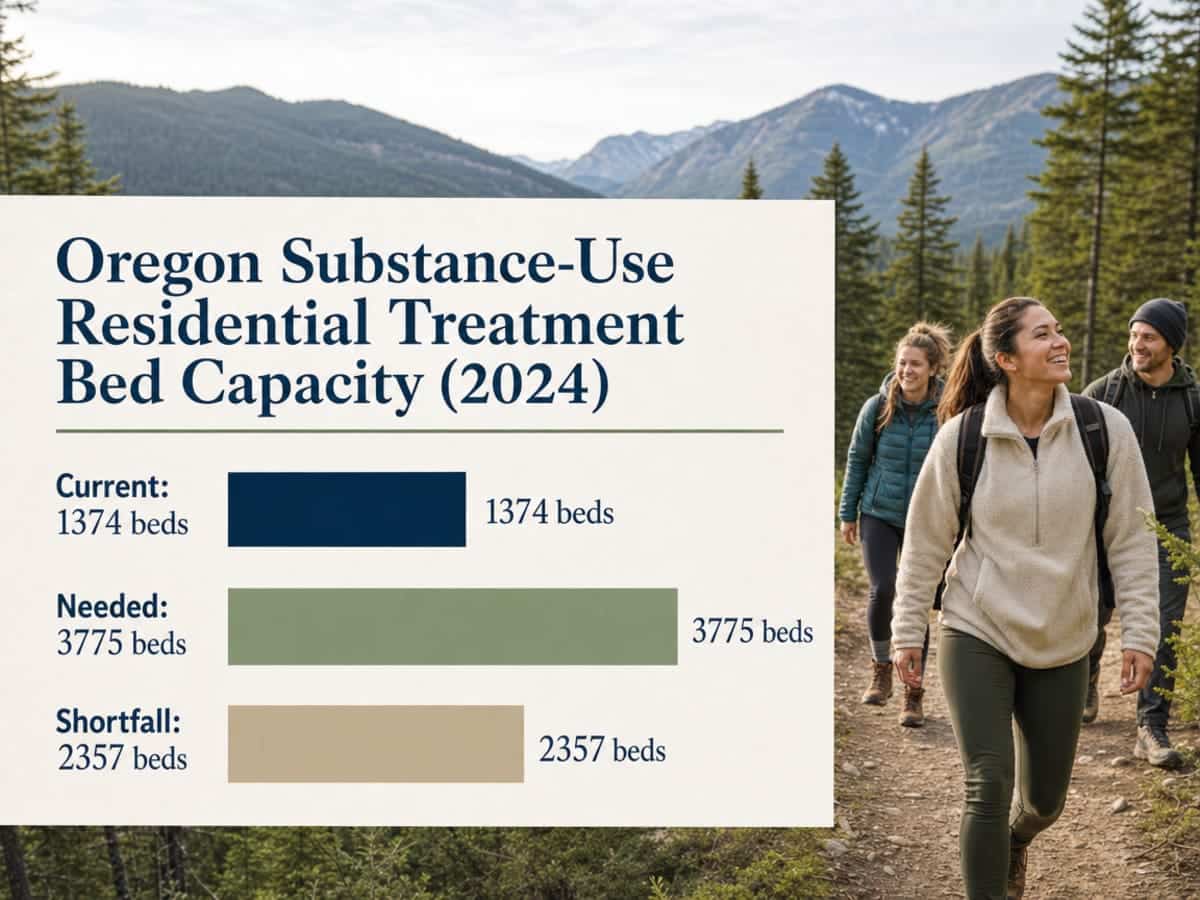
Every referral you make in Portland happens inside a tight market. The Oregon Health Authority’s residential facility study pegged the state at 1,374 substance-use residential treatment beds against a projected need of 3,775 — a shortfall of 2,357 beds. Medically monitored withdrawal management looks similar: 301 beds in operation against an estimated need of 872, leaving 571 beds short 1. Those are not aspirational targets; they are the gap between what Oregon has and what the state’s own planners say the population requires.
Translate that into your workflow and the picture gets uncomfortable. When several beds in the metro are already spoken for, the facility that answers your call at 10 p.m. is often the only facility you have. If that partner cannot clinically screen the patient, confirm placement, and coordinate what happens 72 hours later, the shortage becomes your problem — not theirs. The scarcity is also why referral relationships, not referral lists, carry the weight. A list tells you who exists. A relationship tells you who will actually accept your patient tonight at the appropriate ASAM level, with the right medical oversight for alcohol or benzodiazepine withdrawal, and with a continuing-care plan already queued up.
Read the numbers as a planning constraint, not a crisis headline. They set the baseline for why a dependable Portland detox partner is a clinical asset, not a convenience.
Why demand pressure persists even as overdose deaths fall
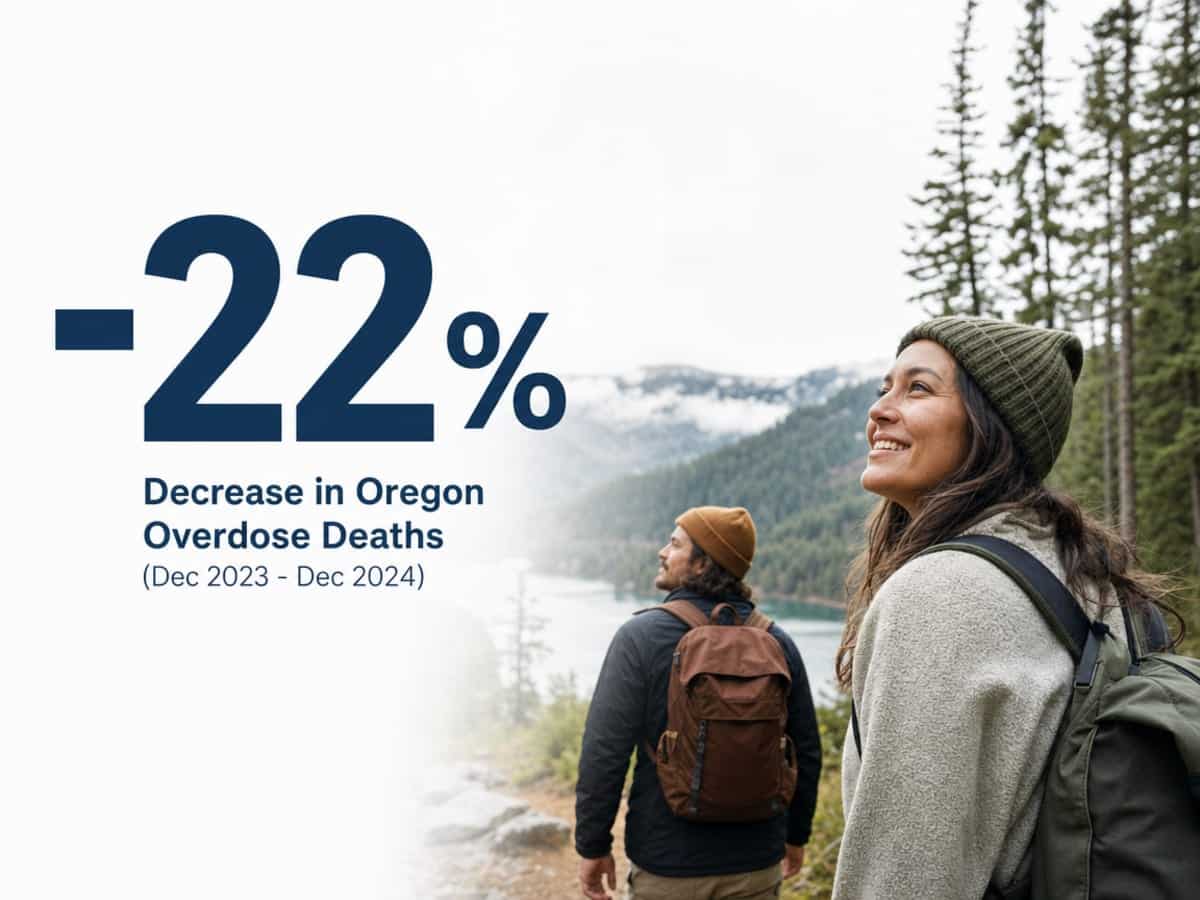
The headline number from last winter was encouraging: Oregon overdose deaths dropped 22% between December 2023 and December 2024, based on provisional CDC data 4. Fewer deaths are what everyone in this work is trying to produce. The mistake would be reading that decline as a signal that referral demand is softening.
It isn’t. The Portland/North Coast region alone was projected to need an additional 1,110 residential beds and 269 additional withdrawal-management beds to meet modeled demand 2. Those are regional projections, not statewide averages diluted across rural counties. Mortality can fall while the pipeline of people who need withdrawal care, medications, and ongoing treatment stays full — or grows, as naloxone saves more people who then show up in your ED needing a next step.
For a discharge planner, that tension has a practical edge. Patients who survive an overdose are often the ones most ready to accept a referral, and the window to place them is short. A partner that can take a warm handoff within the hour, start medications for opioid use disorder (the FDA-approved medications used to treat opioid dependence), and hold the care plan through transitions is doing something the regional supply cannot yet guarantee on its own. Falling deaths and persistent bed demand are both true at the same time.
What to vet in a Portland detox partner before you refer
Licensure and ASAM level: 3.2-WM vs 3.7-WM in practice
Start with the regulatory floor. Oregon licenses withdrawal-management services under Oregon Administrative Rules Chapter 415, Division 50, and substance-use-disorder services under Chapter 309, Division 18 9. Any Portland partner you refer to should be able to tell you — without hunting for the answer — which rule set they operate under and what their current ASAM certification covers.
From there, the practical question is which level of withdrawal management the facility is actually certified to deliver. Oregon recognizes adult clinically managed residential withdrawal management at ASAM Level 3.2-WM and adult medically monitored inpatient withdrawal management at ASAM Level 3.7-WM 10. The distinction matters at the patient level, not the brochure level. A stable alcohol-use patient without significant medical comorbidity, or an opioid-use patient appropriate for buprenorphine induction in a residential setting, often fits 3.2-WM. A patient with a complicated benzodiazepine taper, unstable vitals, cardiac history, or an active co-occurring medical issue needs 3.7-WM or a hospital bed. Referring a 3.7-WM patient to a 3.2-WM program is not a scheduling problem; it is a safety problem.
One more date to keep on your radar: Oregon-certified providers will need to align care with The ASAM Criteria, Fourth Edition, beginning July 1, 2027 11. A partner that is already updating documentation, staffing, and level-of-care descriptions ahead of that deadline is a partner you can trust to keep the clinical fit accurate as criteria evolve.
MOUD access on-site or by direct linkage
Ask the question plainly on the first call: can your patient start or continue medication for opioid use disorder here, and if not, who starts it and when? SAMHSA’s TIP 63 identifies buprenorphine, methadone, and naltrexone as the FDA-approved medications for opioid use disorder, and the protocol notes they reduce illicit opioid use, improve treatment retention, and reduce the risk of overdose death compared with placebo or no medication 7.
That evidence changes what a reasonable referral looks like. A detox partner that offers buprenorphine induction on-site, maintains a prescriber for continuation, and can hand a patient to a methadone clinic or long-acting naltrexone provider without a two-week gap is operating at the standard of care. A partner that discharges opioid-use patients with a tapered dose and a phone number is not — and the patient’s overdose risk in the week after an unmedicated detox is the reason the national clinical guideline warns against withdrawal management alone 8.
You also need to know what the partner cannot do. Medication choice depends on clinical assessment, patient preference, pregnancy status, pain history, and prior response, so no single medication fits everyone 7. A credible Portland partner will say which medications they can start, which they coordinate externally, and how quickly they can bridge the transition. Vague answers are a signal to keep calling.
Warm handoff versus fax-and-hope
The gap between a referral that happens and a referral that connects is the single biggest variable in your workflow. The Oregon Criminal Justice Commission’s analysis of behavioral-health deflection referrals offers a useful benchmark: of 2,080 deflection referrals from September 2024 through August 2025, 85% were received by a provider, and among participants with available data, about 77% were referred to at least one service — commonly outpatient treatment, recovery support, counseling, or detoxification 5. Those numbers come from a specific deflection context, not from hospital ED discharges, but the pattern is instructive. Active, coordinated pathways move patients. Passive ones leak.
The OHSU-PSU best-practices work for the same commission underscores that intensive cross-sector coordination is what makes those connections hold 6. Translated to your referral call, a warm handoff looks like:
- a clinician on the receiving end who can take report in real time,
- confirm clinical fit against ASAM criteria,
- commit to a bed and arrival window,
- coordinate transport if needed,
- and loop back when the patient arrives.
A fax-and-hope referral looks like a form sent into the dark.
When you vet a Portland detox partner, ask how referrals arrive, who answers at 2 a.m., and what the documented step is between acceptance and admission. If the answer is a shared inbox and a callback the next business day, you have your answer.
Continuum of care: detox is a start, not an endpoint
The clinical reason to insist on continuity is straightforward. The national clinical practice guideline for opioid use disorder states that withdrawal management alone is not recommended and that patients should be transitioned to long-term addiction treatment to reduce relapse and overdose risk 8. A detox admission that ends at the facility’s front door, without medication and without a next appointment, resets the risk clock for your patient at the moment they are most vulnerable.
So the question you want answered during vetting is not whether a Portland partner has aftercare — most will say yes — but what they can actually deliver and schedule before discharge. Does the facility operate its own partial hospitalization program, intensive outpatient program, and standard outpatient services, or does it rely on referrals out? Is the first PHP or IOP day booked before the patient leaves detox, with transportation and insurance authorization already handled? Is there alumni programming, individual therapy, group work, and family support that gives the patient a reason to stay engaged past week two?
A partner that treats detox as a discrete event is treating the easier clinical problem. A partner that treats it as day one of a longer plan — and can show you the schedule — is the one worth building a working relationship with.
The Portland detox partner vetting matrix
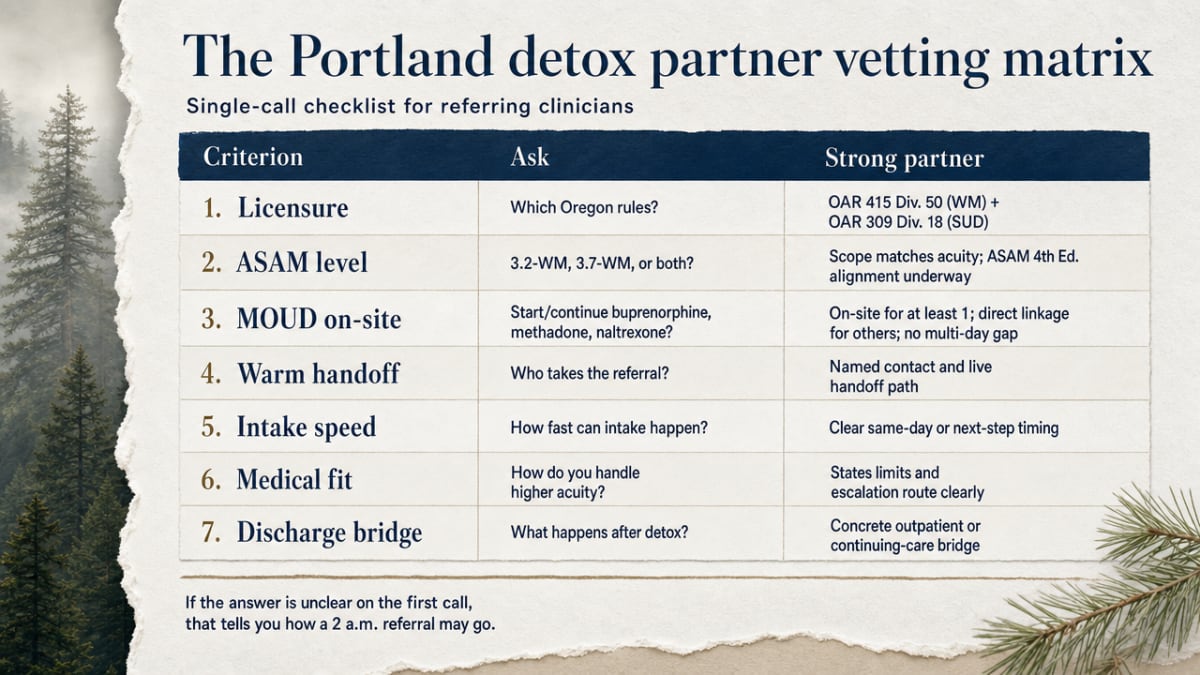
Here is the shortlist you can run through on a single phone call. Each row is a yes/no or a short answer. If a facility cannot give you a clean response on the first try, you have your answer about how a 2 a.m. referral will go.
| Vetting criterion | What to ask | What a strong Portland partner looks like |
|---|---|---|
| Licensure | Which Oregon rules do you operate under? | Current OAR Ch. 415 Div. 50 (WM) and Ch. 309 Div. 18 (SUD) certification, named on request 9 |
| ASAM level | Are you certified for 3.2-WM, 3.7-WM, or both? | Clear scope that matches the patient’s medical acuity, with ASAM 4th Edition alignment underway ahead of July 1, 2027 10, 11 |
| MOUD on-site | Can you start or continue buprenorphine, methadone, or naltrexone? | On-site induction for at least one medication, direct linkage for the others, no multi-day gap 7 |
| Warm handoff | Who takes the referral call and commits to the bed? | Live clinician 24/7, screen on the call, bed and arrival window confirmed before you hang up 6 |
| Continuum | What is scheduled before the patient discharges? | PHP, IOP, outpatient, and alumni programming booked in advance, consistent with guideline direction against detox alone 8 |
| Insurance scope | Which plans do you accept, and what is excluded? | Written list, benefits verified before admission, OHP status stated plainly 12 |
| Response time | How fast from call to accept to admit? | Screening within the call, acceptance same hour, admission within the day when clinically appropriate |
Keep this matrix next to the phone. The partners that answer cleanly on every row are the ones worth building a standing relationship with — the kind where a 2 a.m. call lands with someone who already knows your service and your patient population.
Non-hospital, home-like detox as a clinical placement decision
Setting is a clinical variable, not a marketing adjective. When you place a patient in a non-hospital residential detox, you are making a judgment about medical acuity, monitoring intensity, and what environment will keep that person engaged long enough to transition into continuing care. A home-like program is the right call for patients who meet ASAM 3.2-WM criteria — clinically managed residential withdrawal management — rather than the medically monitored inpatient intensity of 3.7-WM 10. The question is which patient fits where, not which setting sounds nicer.
The patients who do well in a residential, non-hospital setting tend to share a profile: medically stable enough to avoid continuous nursing or cardiac monitoring, without the kind of complicated benzodiazepine or alcohol taper that needs an inpatient hospital, and often more likely to stay through induction when the environment doesn’t feel like another ED bay. Opioid-use patients appropriate for buprenorphine induction frequently sit squarely in this category 7. A patient with unstable vitals, significant cardiac or hepatic disease, seizure history during prior withdrawals, or active co-occurring medical crisis belongs in a 3.7-WM program or a hospital. Mismatching the two directions is where safety problems and against-medical-advice discharges both come from.
Pacific Crest Trail Detox is one example of this model in the Portland metro — a non-hospital residential program in Milwaukie offering medically supervised withdrawal care, medication-assisted treatment (the FDA-approved medications used to treat opioid and alcohol dependence), and a continuum through PHP, IOP, and outpatient. Use the setting as a placement decision, not a default.
Insurance, OHP, and verifying coverage before the handoff
Coverage is where good clinical referrals quietly fall apart. A patient can meet ASAM criteria, agree to admission, and still end up back in your ED 12 hours later because benefits were never verified or prior authorization never cleared. Build the coverage check into the referral call itself, not the morning after.
Two things to confirm every time. First, which plans the facility is in-network with, and whether the patient’s specific plan requires pre-authorization for 3.2-WM or 3.7-WM admission. Oregon’s behavioral-health reimbursement rules vary by service and plan, and eligibility alone does not guarantee authorization, placement, or payment 12. Second, Oregon Health Plan status. Say it plainly on the call: some strong Portland detox partners do not accept OHP. Pacific Crest Trail Detox is one of them — it accepts most commercial insurance but not OHP. For OHP-covered patients, you will need a different partner, and knowing that in advance saves hours.
A dependable partner will verify benefits in real time while you are still on the phone, flag any authorization lift needed, and tell you the self-pay path if coverage will not clear in the admission window.
What’s shifting in Oregon’s system through 2027
A handful of state-level moves over the next two years will quietly change what your referral options look like, and it’s worth knowing where to watch. The headline investment is HB 2059, which appropriated $65 million to expand adult behavioral-health residential capacity — an estimated 196 new beds, with upgrades preserving more than 100 existing beds 15. That money will not land in Portland overnight. Construction, licensing, and staffing timelines mean most of those beds come online gradually, so plan for incremental relief rather than a step change in availability.
Two policy threads sit alongside the capital. HB 2015 is working through Oregon’s regulatory, workforce, and reimbursement barriers to residential treatment, with a final report due in September 2026 14. HB 2235 and the related SUD 1115 demonstration waiver expand the continuum by allowing federal Medicaid funding for some residential services in facilities with more than 16 beds — a change that reshapes what counts as a reimbursable placement for OHP-covered patients 13. And July 1, 2027 is the deadline you already have on your calendar: Oregon-certified providers must align with The ASAM Criteria, Fourth Edition by that date 11. Ask any partner you refer to how they are preparing. The ones already updating documentation and level-of-care descriptions are the ones who will still be dependable in 2027.
Pacific Crest Trail Detox as a referral collaborator
Pacific Crest Trail Detox has been operating in Milwaukie since 2017 as a non-hospital residential detox and recovery program serving the Portland metro. For a referring professional, what matters is not the brochure version but how the facility behaves when your patient needs placement. The program is built around medically supervised withdrawal care, medication-assisted treatment (the FDA-approved medications used to treat opioid and alcohol dependence), and a continuum through partial hospitalization, intensive outpatient, standard outpatient, and alumni support — the kind of continuity the national clinical guideline for opioid use disorder calls for when it warns that withdrawal management alone is not recommended 8.
Treat the relationship like any other clinical partnership. Call before you need a bed, ask the vetting questions in section four, and get specifics on how a 2 a.m. referral is answered, who screens against ASAM criteria, and what continuing care is booked before discharge. Confirm insurance scope plainly: PCTD accepts most commercial plans but not the Oregon Health Plan, so OHP-covered patients need a different partner. For everyone else, the goal is a handoff that holds — one clinician to another, with the next appointment already on the calendar.
Check Your Patient’s Detox Coverage Options Now
Quickly confirm if detox and treatment services are covered for your patient’s next steps.
Frequently Asked Questions
What ASAM level of withdrawal management does Pacific Crest Trail Detox provide?
PCTD operates as a non-hospital residential detox in Milwaukie, aligned with clinically managed residential withdrawal management under Oregon’s recognized ASAM Level 3.2-WM category 10. For patients who need medically monitored inpatient care at 3.7-WM or hospital-level monitoring, place them accordingly. Call the intake line to confirm current scope against your specific patient’s acuity before transport.
Does Pacific Crest Trail Detox offer medications for opioid use disorder on-site?
Yes. PCTD provides medication-assisted treatment, including buprenorphine for appropriate patients, with coordinated linkage for methadone or long-acting naltrexone when those fit the clinical picture better. SAMHSA’s TIP 63 identifies all three medications as FDA-approved and shows they reduce illicit opioid use, improve retention, and lower overdose mortality 7. Confirm the medication plan with intake during your referral call so continuation is scheduled before discharge.
How quickly can my patient be screened, accepted, and admitted after I call?
A live clinician takes the referral call, completes a clinical screen on the phone, and confirms bed availability and arrival window before you hang up. When benefits verify cleanly and the patient meets 3.2-WM criteria, same-day admission is routine. Build the coverage check into the call itself — eligibility doesn’t guarantee authorization under Oregon’s behavioral-health reimbursement rules 12, and resolving that in real time prevents a bounce-back to your ED.
Does Pacific Crest Trail Detox accept the Oregon Health Plan (OHP)?
No. PCTD accepts most commercial insurance plans but does not accept the Oregon Health Plan. For OHP-covered patients, you’ll need a different Portland detox partner — know that before the referral call so you don’t lose the admission window. OHA’s behavioral-health reimbursement rules vary by plan and service 12, so verify benefits with any partner during the call rather than after transport. PCTD will state coverage status plainly.
What continuing care is arranged before my patient discharges from detox?
PCTD books the next level of care before discharge: partial hospitalization, intensive outpatient, or standard outpatient, plus alumni support, individual therapy, and group work. That continuity reflects the national clinical guideline direction that withdrawal management alone is not recommended and patients should transition directly into longer-term treatment to reduce relapse and overdose risk 8. Ask intake to confirm the first scheduled appointment date and medication continuation plan on the call.
When is a non-hospital, home-like detox the right clinical placement?
Choose this setting for medically stable patients who meet ASAM 3.2-WM criteria 10— opioid-use patients appropriate for buprenorphine induction, uncomplicated alcohol withdrawal, and patients more likely to stay engaged outside a hospital environment. Place elsewhere when the picture includes unstable vitals, complicated benzodiazepine tapers, seizure history during prior withdrawals, significant cardiac or hepatic disease, or an active co-occurring medical crisis. The setting is a clinical decision, not a preference.
References
- Oregon Behavioral Health Residential+ Facility Study. https://www.oregon.gov/oha/HSD/AMH/DataReports/Behavioral-Health-Residential-Facility-Study-June-2024.pdf
- Oregon SUD System Assessments and Analyses 2020-25. https://www.oregon.gov/adpc/Committee%20Resources/Summary%20of%20Assessments%20and%20Gaps%20Analyses%202020-25.pdf
- 2025 – Opioids and the Ongoing Drug Overdose Crisis in Oregon. https://www.oregon.gov/oha/PH/PREVENTIONWELLNESS/SUBSTANCEUSE/OPIOIDS/SiteAssets/Lists/feature/EditForm/2025%20Oregon%20Opioid%20Overdose%20Report.pdf
- Oregon overdose deaths are down, CDC data shows. https://www.oregon.gov/oha/erd/pages/oregon-overdose-deaths-are-down-cdc-data-shows.aspx
- Behavioral Health Initiatives Report. https://www.oregon.gov/cjc/CJC%20Document%20Library/2025_CJC_Behavioral_Health_Initiatives_Report.pdf
- Oregon Behavioral Health Deflection Program Best Practices Report. https://www.oregon.gov/cjc/CJC%20Document%20Library/2025%20BHD%20Best%20Practices%20Report.pdf
- TIP 63: Medications for Opioid Use Disorder. https://library.samhsa.gov/sites/default/files/pep21-02-01-002.pdf
- Management of opioid use disorders: a national clinical practice guideline. https://pmc.ncbi.nlm.nih.gov/articles/PMC5837873/
- Residential Treatment Facilities: Licensing and Certification. https://www.oregon.gov/oha/hsd/amh-lc/pages/rt.aspx
- Licensing and Certification: Providers. https://www.oregon.gov/oha/BH/Providers/Pages/Licensing-Certification.aspx
- ASAM Levels of Care for Licensing and Certification: Providers. https://www.oregon.gov/oha/BH/Providers/Pages/ASAM.aspx
- Behavioral Health Services Rules and Guidelines. https://www.oregon.gov/oha/hsd/ohp/pages/policy-bhs.aspx
- HB 2235 Workgroup Final Report: December 2025. https://www.oregon.gov/oha/ERD/SiteAssets/Pages/Government-Relations/OHA%20HB2235%20Report.pdf
- House Bill 2015 Interim Progress Report. https://www.oregon.gov/oha/ERD/SiteAssets/Pages/Government-Relations/HB%202015%20Interim%20Progress%20Report%20September%202025.pdf
- OHA 2025 End-of-Session Legislative Report. https://www.oregon.gov/oha/ERD/Documents/OHA-2025-End-of-Session-Legislative-Report.pdf