
Key Takeaways
- Pacific Crest Trail Detox sits at 13240 SE Rusk Road in Milwaukie, about 25 minutes south of PDX via I-205 and OR-224 in typical traffic.
- Rideshare or taxi from PDX is usually the lowest-friction option for someone in early withdrawal; TriMet’s MAX Orange Line is cheaper but requires a downtown transfer.
- Call admissions first to discuss substance use and timing, verify insurance (OHP is not accepted), and ask your loved one to sign a release at intake so staff can legally update you.
The Call You Just Made Was the Hard Part
Take a breath. If you just hung up from a phone call that confirmed what you already knew — that someone you love needs help right now, and they are nowhere near you — you are already doing the hardest thing. Picking up the phone, saying the words out loud, deciding to act. That part is done.
What comes next is logistics. And logistics, you can handle.
You are probably running on little sleep, holding a phone in one hand and a credit card in the other, trying to book a flight for someone who may not even want to get on it. You might be a spouse, a parent, an adult child, a sibling. You have never researched detox before. You do not know what to pack, who to call, or whether the facility on your screen is a real place with real nurses or just a slick website.
This guide is written for you. It walks you through the 25-minute drive from Portland International Airport to Pacific Crest Trail Detox in Milwaukie, a state-listed detoxification provider at 13240 SE Rusk Road.1 It covers the phone calls to make first, what to pack, what to do if withdrawal starts in the air, and what the first 24 hours actually look like once your person walks through the door.
Flying in for treatment? Pacific Crest Trail Detox is 25 minutes from PDX. Keep reading. You have the next right step covered.
From PDX Gate to Milwaukie Front Door: The 25-Minute Corridor
The Route: I-205 South to OR-224
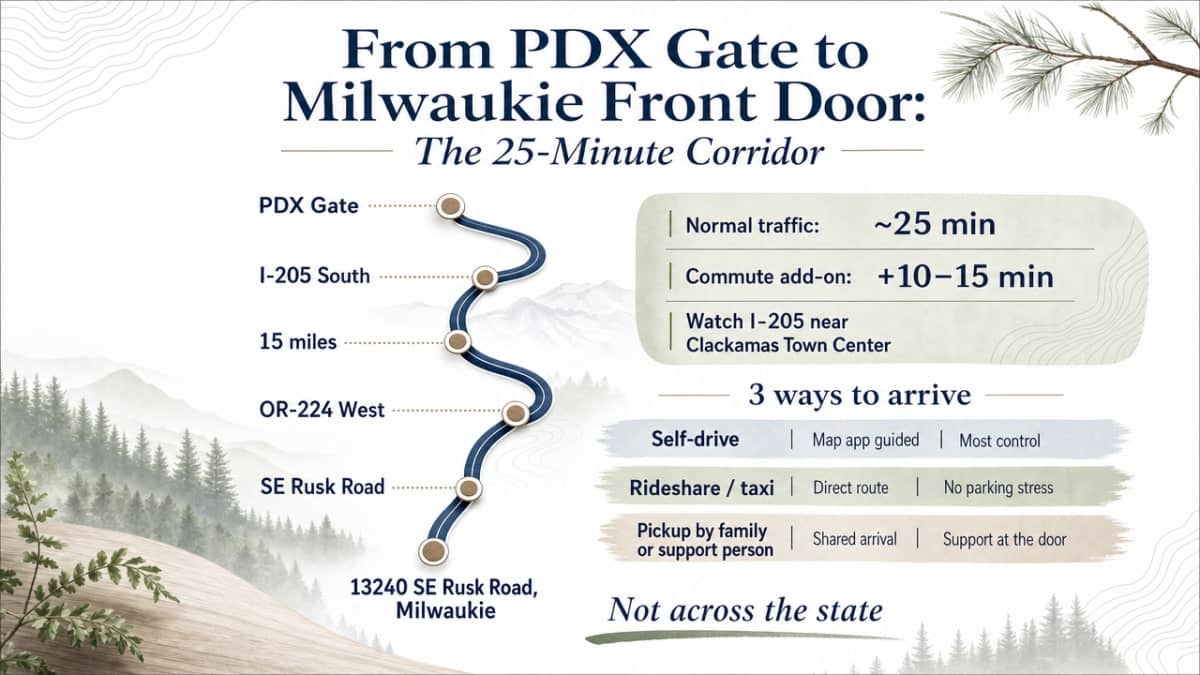
Here is the drive, plainly. From Portland International Airport, you leave the terminal and head south on I-205. You stay on I-205 for about 15 miles, then exit onto OR-224 West toward Milwaukie. From OR-224, it is a short run to SE Rusk Road. Pacific Crest Trail Detox sits at 13240 SE Rusk Road, Milwaukie — the address the Oregon Health Authority lists in its state directory of certified detoxification providers.1
In normal traffic, you are looking at roughly 25 minutes door to door. Add 10 to 15 minutes during the morning or evening Portland commute, especially on the I-205 stretch near Clackamas Town Center.
If you are the one driving, you do not need to memorize exits. Any map app with the Rusk Road address will get you there. What matters is this: you are not driving across the state. You are not threading mountain passes. You are taking one highway south, exiting once, and arriving in a quiet residential pocket of Milwaukie.
Rideshare, Taxi, or TriMet MAX Orange Line
You have three realistic ways to cover the 25-minute corridor without a rental car. Each one trades money for control, or control for money.
- Rideshare — Uber or Lyft — is the simplest. PDX has a designated rideshare pickup zone on the lower roadway. You put in the Milwaukie address, you get in, you arrive. No parking, no return trip, no extra steps. For a loved one who is shaky, nauseous, or quietly panicking, this is usually the least friction.
- A taxi from the official PDX taxi stand works the same way and gives you a receipt on the spot, which some families prefer for expense tracking or reimbursement from an employer EAP.
- TriMet’s MAX Red Line connects to the MAX Orange Line, which runs to Milwaukie. It is the cheapest option by a wide margin. It is also the slowest, requires a transfer in downtown Portland, and asks a person in early withdrawal to sit on a train with strangers and manage their own bag. For most families flying someone in, MAX is a backup plan, not Plan A.
If you can swing it, rideshare or taxi is worth the money. You are buying a quiet car and a direct line to the front door.
Who Picks Them Up: Family, Driver, or Facility Coordination
If you flew in with your loved one, you are the pickup. That is often the calmest version of this — one familiar face, one bag, one car, one stop.
If your loved one is flying alone, you have options. A trusted friend or family member already in the Portland area can meet them at baggage claim. If no one is local, a prepaid rideshare or a car service you book in advance can meet them curbside with a name sign.
Before the flight, call Pacific Crest Trail Detox directly and ask what transport coordination they can help arrange. The admissions team deals with out-of-state arrivals regularly and can walk you through what has worked for other families. A quick call now saves a frantic text thread at 11 p.m. when the plane lands.
Why Oregon, Why Now: Reading the Numbers Without Panic
You do not need a lecture on the overdose crisis right now. You are living inside it. But you deserve to know what the ground actually looks like in the state your loved one is flying into, so you can make calm decisions instead of fear-driven ones.
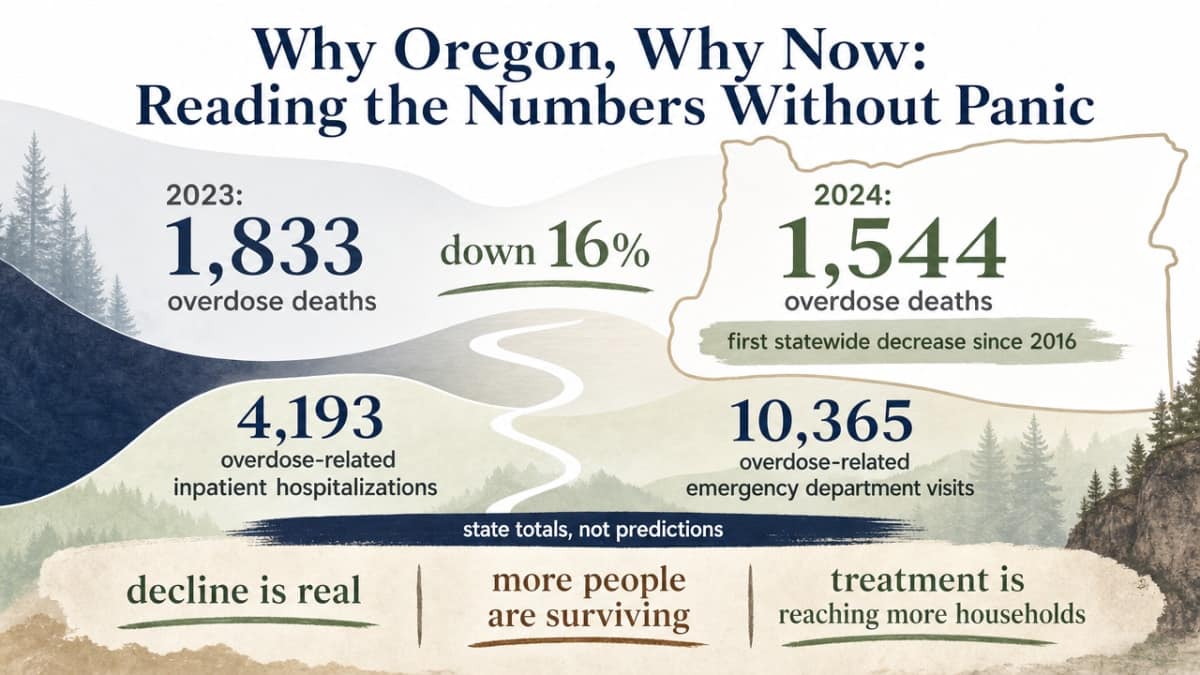
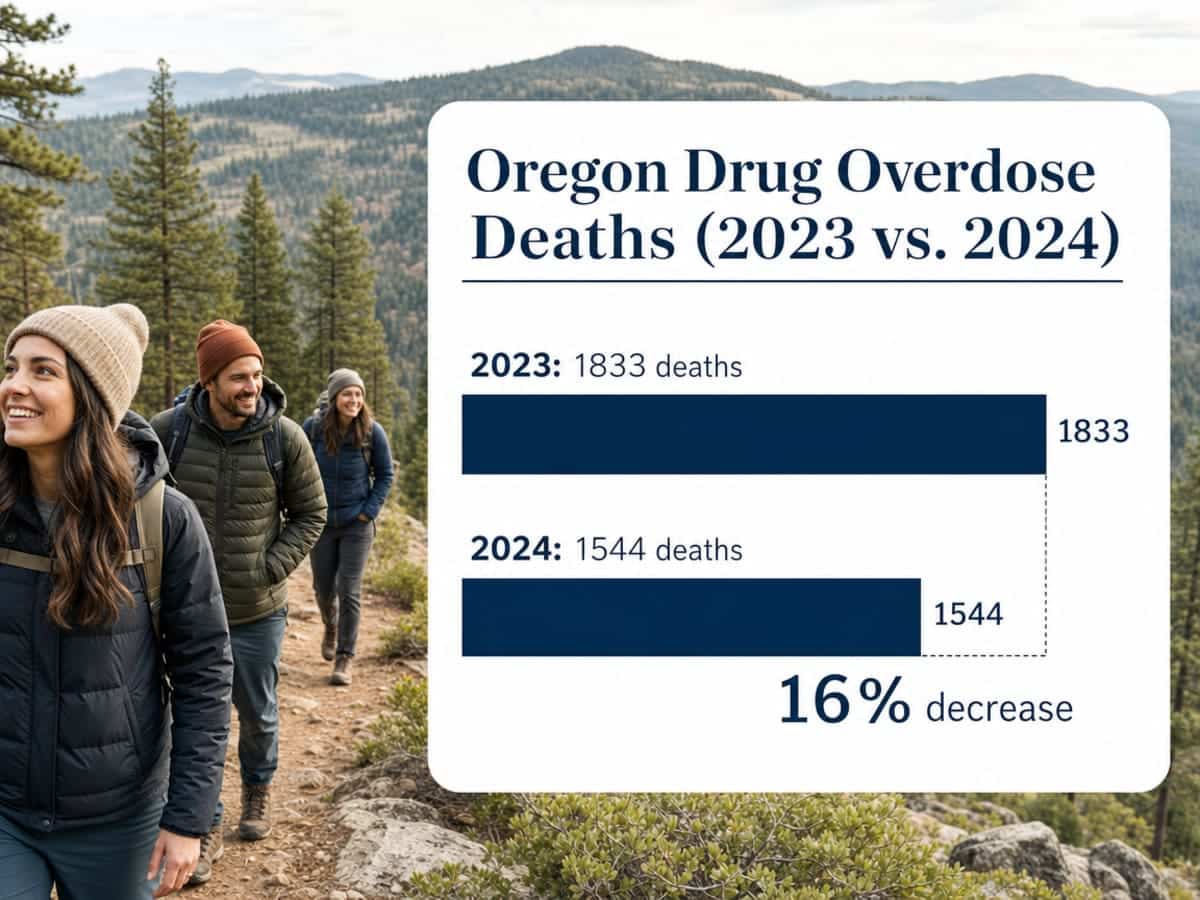
Here is the honest picture. In 2024, Oregon recorded 1,544 drug-overdose deaths, down 16% from 1,833 in 2023 — the first statewide decrease since 2016. The same year, Oregon counted 4,193 overdose-related inpatient hospitalizations and 10,365 overdose-related emergency department visits.3 Those are state totals, not predictions about any one person, and they do not measure what will happen to your loved one in the next 72 hours.
Read that number two ways. First, the decline is real. More people are surviving. Treatment is reaching more households. The call you just made is part of why that line is moving in the right direction. Second, the nonfatal numbers — the hospitalizations, the ER visits — are the quiet part. For every death, many more people landed in a hospital bed and got another chance. The window to act is open, and it is open today.
Booking the Flight: What to Do Before They Leave the House
The Three Phone Calls to Make First
Before you open a flight-search tab, make three calls in this order. The order matters because each call changes what you do next.
- Call Pacific Crest Trail Detox admissions. Tell them what your loved one is using, how much, how often, and when they last used. Share any history of seizures, prior withdrawals, or mental health diagnoses. Admissions will tell you whether a bed is available, what the intake window looks like today, and whether a non-hospital medical detox setting is appropriate for this situation.
- Call your loved one’s insurance company. Have the member ID in front of you. Ask specifically about substance-use benefits, in-network status for Pacific Crest Trail Detox, and whether out-of-state members are covered the same way as Oregon members.
- Call your loved one. Not to convince them again — the convincing is done. Call to confirm the plan: who is flying with them, what time, which airport, what to pack. Keep it short. People in withdrawal cannot absorb long conversations.
Three calls. In that order. Then you book the flight.
Insurance Verification Without the Runaround
Insurance calls are where good plans stall. Here is how to keep yours moving.
Ask the admissions team at Pacific Crest Trail Detox to run a verification of benefits for you. Most facilities do this at no charge and faster than you can on your own, because they call the provider line, not the member line. Share the full name on the policy, date of birth, member ID, and group number.
One important note on Oregon coverage: Pacific Crest Trail Detox does not accept the Oregon Health Plan, even though OHP does cover detoxification and medication-assisted treatment through other providers in the state.9 Most commercial and employer plans are accepted. If your loved one is on OHP, admissions can point you toward in-network options so you do not spend hours on calls that cannot end in a bed.
Get the verification in writing — an email summary works. That document protects you later.
The Pre-Flight Packing List
Pack light. Your loved one is not going on vacation, and they do not need to decide between four pairs of shoes while shaking.
The essentials: a government-issued photo ID, insurance card, a written list of current medications with dosages, and the pill bottles themselves if possible. Comfortable clothes for three to five days — sweatpants, soft T-shirts, socks, a hoodie. Slip-on shoes. A phone and charger. Any eyeglasses, contact case, or CPAP machine they use.
Leave at home: alcohol, any non-prescribed substances, mouthwash with alcohol, aerosols, sharp objects, and large amounts of cash. The facility will inventory personal items at intake.
If they take prescribed medication for a mental health condition, bring it. Do not stop it on the way to the airport. Admissions will coordinate with their clinical team.
The In-Flight Problems Families Actually Ask About
If They Drink or Use Before or During the Flight
This is the question nobody wants to ask out loud, so let’s just say it: your loved one may drink in the airport bar before boarding. They may use in the bathroom. They may order drinks on the plane. If this happens, you have not failed, and the plan has not fallen apart.
People in active addiction do not stop using because a flight is booked. For some, using one more time is the only way they can get on the plane at all. That is a painful thing to sit with, and it is also true.
Here is what to do. Do not confront them in the terminal or mid-flight. Do not try to pour out a drink. Keep the goal in front of you: get them to the car at PDX and into the facility. When you call Pacific Crest Trail Detox admissions before departure, tell them honestly what you expect may happen. The clinical team wants an accurate picture of what is in their system at intake. Honesty now means a safer medical assessment later.
If Alcohol Withdrawal Starts at 30,000 Feet
Alcohol withdrawal is the one you need to take seriously in the air. NIAAA is clear that suddenly stopping alcohol after heavy, prolonged use can cause life-threatening withdrawal, which is why medically managed withdrawal is often needed.8 A long flight with no drinks is, functionally, a sudden stop.
If your loved one has been drinking heavily and daily, do not ask them to white-knuckle a dry flight. Talk with the admissions team before booking about whether a shorter route, a direct flight, or a specific departure window makes sense. In some cases, a clinician may advise that they have a measured drink before the flight to avoid triggering withdrawal in the air. That guidance comes from the medical team, not from you or me.
Signs to watch for in the terminal or on the plane:
- shaking hands
- heavy sweating
- racing heart
- nausea
- rising anxiety
- confusion
If any of these escalate, especially confusion or seizure-like symptoms, flag a flight attendant immediately. This is a medical event, not a behavior problem.
If They Refuse to Get in the Car at PDX
The jet bridge opens, you walk to baggage claim, and your loved one plants their feet. They want to go home. They want a drink. They want to think about it. This happens more often than facilities will tell you, and it does not mean the trip was a mistake.
Stay calm and stay close. Do not argue in the terminal. Ambivalence is part of addiction, not a sign that your person has changed their mind for good. Sit down. Buy a bottle of water. Give them 20 minutes.
Then make one call: Pacific Crest Trail Detox admissions. The team talks people through this exact moment regularly. Sometimes a short phone conversation with a nurse or counselor is what moves a person from the bench to the car. You do not have to be the one who says the right thing. You just have to be the one who dials.
The First 24 Hours at Pacific Crest Trail Detox
Intake, Medical Assessment, and the Home-Like Setting
When your loved one walks through the door at 13240 SE Rusk Road, the first thing they will notice is what the building is not. It is not a hospital. There are no fluorescent corridors, no gurneys parked against the walls, no intercom paging a code. Pacific Crest Trail Detox is a state-listed detoxification provider in a residential-feeling setting in Milwaukie, which is exactly the point.1
Intake usually takes a couple of hours. A nurse will take vitals — blood pressure, heart rate, temperature — and ask about the last time they used, how much, and what else is in their system. A clinician will go through medical history, mental health history, and any medications they take for other conditions. Honest answers here matter more than tidy ones. If they drank in the airport bar, the team needs to know.
Then your person gets a bed, a glass of water, and a chance to sleep. That might be the first real rest they have had in days. You, several time zones or several states away, can finally put the phone down too.
Medication to Ease Withdrawal: What MAT Actually Means
You will hear the phrase medication-assisted treatment, or MAT. In plain language, it means using FDA-approved medication to make withdrawal safer and cravings quieter, so the body and brain can settle. It is not swapping one drug for another. It is standard medical care.
For opioid use disorder, the CDC names three evidence-based medications:
- Buprenorphine — reduces cravings and eases withdrawal symptoms.
- Methadone — reduces cravings and eases withdrawal symptoms.
- Naltrexone — started after a period without opioids, blocks the effect of opioids if they are used again.
The CDC is also explicit that detoxification alone is not recommended for opioid use disorder, because stopping without medication is associated with increased risk of return to use, overdose, and overdose death.4
That is why the medication conversation at PCTD is not an add-on. It is part of how your loved one gets through the first days safely and part of what gives them a real shot at the weeks after.
For alcohol withdrawal, the clinical team uses different medications to prevent seizures and manage the dangerous end of the spectrum NIAAA describes.8 For benzodiazepines, which can be as risky as alcohol to stop abruptly, the team uses a careful tapering approach.
You do not need to memorize the drug names. You just need to know that medication is on the table, that it is evidence-based, and that your person will not be asked to tough out withdrawal with willpower alone.
Detox Is Stage One, Not the Finish Line
Here is the part nobody wants to say out loud when they are booking a flight: detox, on its own, is not a cure. It is the first door, not the last one. NIDA puts it plainly — medically assisted detoxification is only the first stage of treatment and is rarely sufficient by itself for long-term abstinence.7 Without something after it, detox alone generally leads back to use.6
This is not bad news. It is useful news. It changes the question you are asking from “will a week of detox fix this?” to “what comes after the week?” — and that is a question Pacific Crest Trail Detox is built to answer with you.
After the first days of withdrawal management, your loved one steps into a continuum of care. That can mean a partial hospitalization program, where they spend their days in structured treatment and sleep on-site. It can mean an intensive outpatient program, where they live at home or in sober housing and come in several days a week. It can mean standard outpatient counseling, family therapy, and alumni support that reaches months into the future. For opioid use disorder, that path usually includes continued medication — buprenorphine, methadone, or naltrexone — because CDC guidance is clear that medication reduces overdose risk after withdrawal.4
You do not need the whole plan today. You just need to know the plan exists, and that the conversation about week two starts in week one.
What You Can and Cannot Be Told as a Family Member
You just put your person on a plane, or picked them up, or watched them walk into a building 2,000 miles from your kitchen. Now you want updates. That is not nosy. That is love doing its job.
Here is what to expect. Under federal privacy rules, providers may share relevant information with family members when the patient agrees or does not object in the circumstances HIPAA describes. Substance-use treatment programs are also often governed by stricter rules under 42 CFR Part 2, which can require specific written consent before a facility shares anything at all.10
If they refuse to sign, that is painful, and it is also their right. You can still send a letter. You can still be reachable. You can still be ready for the call that eventually comes.
Flying In for Treatment: Your Next Three Phone Calls
You started this guide somewhere between fear and a flight-search tab. You are leaving it with a plan.
Here is where to point your energy next:
- Call Pacific Crest Trail Detox admissions and share what your loved one is using and when they last used.
- Call the insurance carrier, or ask admissions to run the benefits check for you.
- Call your person one more time to confirm the flight, the bag, and who meets them at baggage claim.
Flying in for treatment? Pacific Crest Trail Detox is 25 minutes from PDX, in a home-like Milwaukie setting with medical detox, medication to ease withdrawal, and a path into ongoing care.1 You made the hard call. The next three are smaller. You’ve got this.
Check Your Coverage For Detox Near PDX
Find out if your insurance covers detox just minutes from Portland International Airport.
Frequently Asked Questions
How far is Pacific Crest Trail Detox from Portland International Airport?
Pacific Crest Trail Detox is at 13240 SE Rusk Road in Milwaukie, roughly 25 minutes south of PDX via I-205 and OR-224 in normal traffic.1 Add 10 to 15 minutes during Portland rush hours. Rideshare, taxi, and TriMet’s MAX Orange Line all serve the corridor.
What should my loved one bring with them on the flight?
Keep it to one small bag. Pack a government photo ID, insurance card, a written medication list with the actual pill bottles, three to five days of comfortable clothes, slip-on shoes, phone and charger, and any eyeglasses or CPAP machine. Leave alcohol, non-prescribed substances, and large cash amounts at home.
What happens if my loved one goes into withdrawal during the flight?
Alcohol withdrawal in the air is a medical event, not a behavior issue. NIAAA warns that suddenly stopping heavy alcohol use can be life-threatening.8 Watch for shaking, sweating, racing heart, or confusion. Flag a flight attendant immediately if symptoms escalate. Talk to admissions beforehand about flight timing and clinical guidance.
Will the facility tell me how my loved one is doing after admission?
Only if your loved one agrees. Substance-use programs are often governed by 42 CFR Part 2, which usually requires specific written consent before anything is shared, even confirming admission.10 Ask them to sign a release at intake naming you as an approved contact. Without it, staff legally cannot speak with you.
Does Pacific Crest Trail Detox accept the Oregon Health Plan or out-of-state insurance?
Pacific Crest Trail Detox does not accept the Oregon Health Plan, though OHP does cover detoxification through other in-state providers.9 Most commercial and employer plans are accepted, including out-of-state policies. Call admissions with the member ID and group number — they can verify benefits faster than you can on your own.
Is detox alone enough, or will my loved one need more treatment afterward?
Detox is stage one, not the finish line. NIDA states that medically assisted detoxification is only the first stage of treatment and is rarely sufficient by itself for long-term recovery.7 After withdrawal management, your loved one will step into partial hospitalization, intensive outpatient, counseling, or continued medication to protect what the first days built.
References
- Oregon Substance Use Disorders Services Directory. https://www.oregon.gov/oha/HSD/AMH/publications/provider-directory.pdf
- 2025 – Opioids and the Ongoing Drug Overdose Crisis in Oregon. https://www.oregon.gov/oha/PH/PREVENTIONWELLNESS/SUBSTANCEUSE/OPIOIDS/SiteAssets/Lists/feature/EditForm/2025%20Oregon%20Opioid%20Overdose%20Report.pdf
- Opioids and the Ongoing Drug Overdose Crisis in Oregon. https://www.oregon.gov/oha/PH/PREVENTIONWELLNESS/SUBSTANCEUSE/OPIOIDS/SiteAssets/Lists/feature/EditForm/Executive%20Summary.pdf
- Opioid Use Disorder: Treating | Overdose Prevention. https://www.cdc.gov/overdose-prevention/hcp/clinical-care/opioid-use-disorder-treating.html
- Treatment of Opioid Use Disorder | Overdose Prevention. https://www.cdc.gov/overdose-prevention/treatment/opioid-use-disorder.html
- Treatment and Recovery. https://nida.nih.gov/publications/drugs-brains-behavior-science-addiction/treatment-recovery
- Principles of Drug Addiction Treatment: A Research-Based Guide. https://nida.nih.gov/sites/default/files/podat-3rdEd-508.pdf
- Screen and Assess: Use Quick, Effective Methods. https://www.niaaa.nih.gov/health-professionals-communities/core-resource-on-alcohol/screen-and-assess-use-quick-effective-methods
- Behavioral Health Coverage : Members – Oregon Health Plan. https://www.oregon.gov/oha/ohp/members/pages/behavioral-health.aspx
- HIPAA Privacy Rule and Sharing Information Related to Mental Health. https://www.hhs.gov/sites/default/files/hipaa-privacy-rule-and-sharing-info-related-to-mental-health.pdf