
Key Takeaways
- Driving 175 miles south for medical detox is a deliberate choice, not a failure of Washington care, and preserves voluntary admission while someone is still willing to go.
- Withdrawal care sorts into three levels; ask directly whether a program is licensed at ASAM 3.2-WM or 3.7-WM so you know which rung fits before admission 11.
- Non-hospital medical detox handles serious alcohol, opioid, and benzodiazepine withdrawal with on-site nurses and physician oversight, but a good program will route medically unstable patients to a hospital instead 1.
- Voluntarily traveling to Oregon keeps the decision in your family’s hands, unlike Washington’s secure involuntary pathway under Ricky’s Law, which admitted 198 people in Q2 2025 10.
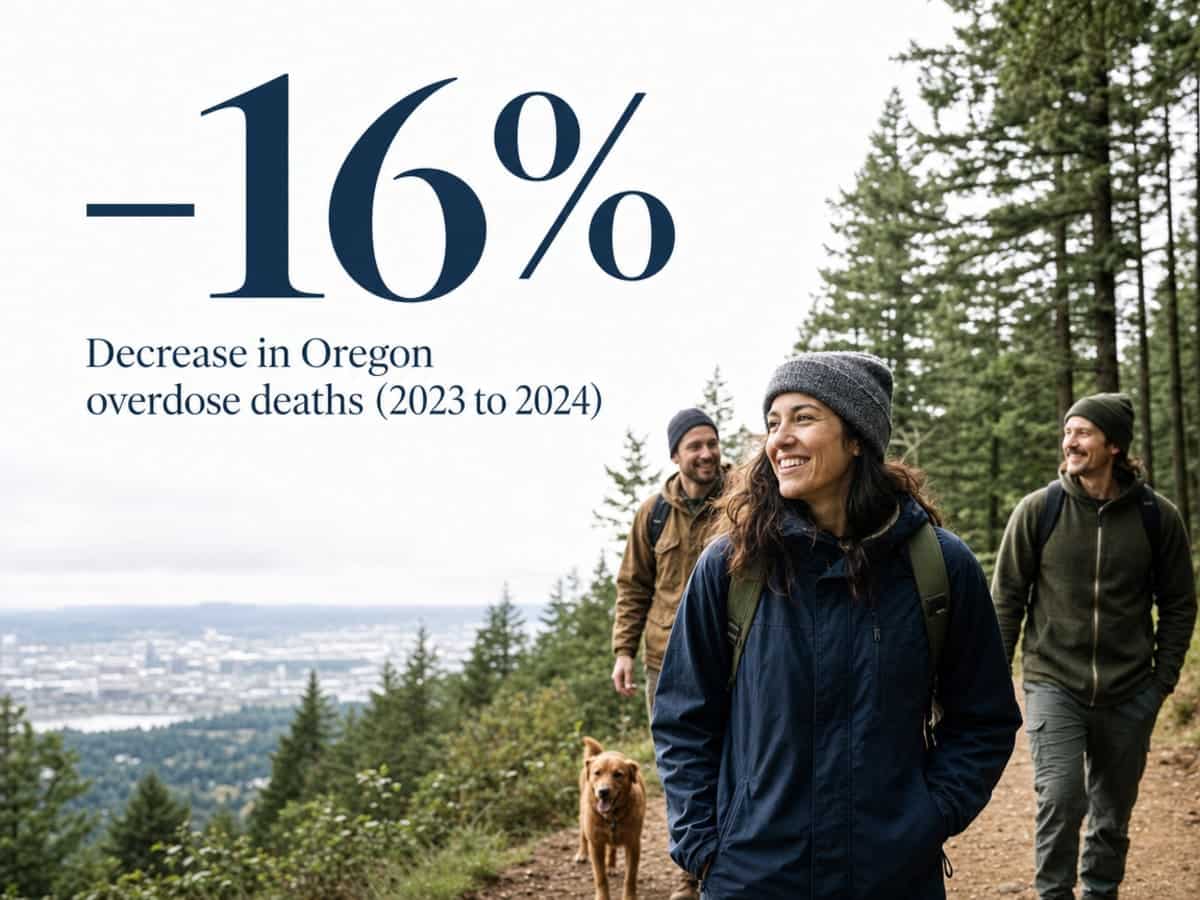
- Portland-area care sits inside a region where overdose deaths dropped 16% in 2024, though over 90% still involved fentanyl or methamphetamine, which is why intake asks about every substance 5.
- On the intake call, disclose every substance, dose, and timing honestly, because concurrent alcohol and opioid withdrawal requires medication choices that account for sedation and breathing risks 2.
- Never let the person in withdrawal drive; pack ID, insurance, and a full medication list, and divert to an ER if symptoms turn dangerous on I-5.
- Continuity after detox matters more than detox itself—mortality is roughly a third as high for people kept on medication treatment, and risk peaks in the first 28 days post-discharge 8, 9.
Why Families Are Driving South When Someone Is in Withdrawal
If you’re reading this at 11 p.m. with a phone in one hand and someone you love shaking on the couch next to you, start here: you are not overreacting, and 175 miles is not too far.
Seattle families have been quietly making the drive to the Portland metro area for medical detox for a while now. Not because Washington has no good care — it does — but because when you start calling around at midnight on a Tuesday, you learn fast that “a bed” and “the right bed” are not the same thing. You want somewhere that will take every substance seriously, give real medicine for withdrawal, keep a nurse in the building, and — this is the part most people don’t think about until later — walk your person into continuing care instead of handing them a cab voucher on day five.
The urgency isn’t hypothetical. In 2024, 56.4% of all fatal overdoses in King County happened inside the city of Seattle itself 6. That is your neighborhood, your bus stop, your kid’s high school parking lot. If you’re searching tonight, you already know the ground is not steady.
Here’s the reframe worth sitting with for a minute. The drive south is not a workaround or a confession that Washington failed you. It’s a decision — the same kind of decision you’d make to drive to Seattle Children’s instead of the nearest ER if your kid needed something specific. You are choosing a setting: a non-hospital, home-like medical detox in Milwaukie that handles the shaky first days with doctors and nurses, uses medication to take the worst edge off, and keeps the same team involved as your person steps down into day treatment and outpatient care.
That continuity is the quiet reason this trip keeps happening. The rest of this guide walks you through what you’re actually choosing between, what to say on the intake call, and how to make the drive itself safely — tonight if you need to.
What You Are Actually Choosing Between
The Three Levels of Withdrawal Care, in Plain English
When you call around, you’re going to hear a lot of words that sound almost the same. “Detox.” “Inpatient.” “Residential.” “Hospital-based.” They are not the same thing, and knowing the difference is the single most useful thing you can learn in the next ten minutes.
Washington’s own Health Care Authority sorts withdrawal care into three broad buckets 1. Think of it as a ladder:
- Rung one — clinically managed residential. This is a home-like setting with trained staff who watch over people through withdrawal. There are fewer medical interventions. It fits someone whose withdrawal is expected to be uncomfortable but not medically dangerous.
- Rung two — medically monitored inpatient. This is still a non-hospital building, but there are nurses on-site around the clock and a physician available 24/7, with medications ready for withdrawal symptoms 1. This is the rung most Seattle families searching tonight actually need. It handles serious alcohol, opioid, and benzodiazepine withdrawal with real medical oversight — without the fluorescent-lit, shared-room feel of an ER.
- Rung three — medically managed hospital care. This is a hospital. It fits people with major medical complications, unstable vitals, serious co-occurring conditions, or seizures that need a crash cart within arm’s reach.
Here is the useful part for a Portland-area search. Oregon licenses adult programs at two of those rungs using the national ASAM shorthand: Level 3.2-WM (clinically managed) and Level 3.7-WM (medically monitored inpatient) 11. When you call a facility in Milwaukie or anywhere else in the Portland metro, you can ask directly: “Are you licensed at 3.2-WM or 3.7-WM?” A straight answer tells you which rung you’re climbing onto before anyone unpacks a bag.
If a program can’t answer that question clearly, keep calling. If they can, write down the answer. You just moved from guessing to knowing — and that is a win worth noting at midnight.
Where a Non-Hospital Medical Detox Fits — and Where It Doesn’t
A non-hospital medical detox is not a watered-down hospital. It’s a different setting designed to do one job well: carry an adult through the dangerous first days of withdrawal with real medicine, real monitoring, and a lot less noise.
At Pacific Crest Trail Detox in Milwaukie, that looks like a house, not a ward. There is a doctor overseeing care, nurses in the building, and medication available to take the edge off alcohol, opioid, or benzodiazepine withdrawal safely. The same team that gets your person through night one also helps plan what comes next — a step-down into day treatment, outpatient groups, and aftercare — so nobody is discharged into a parking lot with a pamphlet.
The right question isn’t “which setting is best?” It’s “which setting fits this person, this week?”
Washington’s Secure Pathway vs. Choosing to Travel
There is one more thing worth saying out loud, because it shapes what “choice” even means.
Washington has a legal pathway called Ricky’s Law that allows involuntary secure withdrawal management for people in immediate danger from substance use. As of June 30, 2025, the state had three facilities providing those secure services, and in the April-to-June 2025 quarter there were 198 admissions. By the time patients were discharged, 43% had converted to voluntary status 10. That pathway exists for a reason, and for some families in crisis, it is the right call — especially if someone is refusing all care and actively in danger.
But secure, involuntary care is a different animal from a voluntary medical detox that you drive to on purpose. Choosing to travel south to a non-hospital program in the Portland metro keeps the decision in your hands, and in your person’s hands. You pick the setting. You tour it on the phone. You schedule the intake. You help pack the bag. Your person walks in instead of being brought in.
Neither path is a failure. But if voluntary is still on the table tonight, voluntary is almost always worth protecting. The 175 miles can be the thing that keeps the choice yours.
What Portland-Area Care Looks Like Right Now
You are not driving toward a miracle. You are driving toward a region that is, finally, moving in the right direction — and that matters when you are trying to picture where your person will spend the next five to seven days.
In 2024, Oregon recorded 1,544 overdose deaths, down from 1,833 the year before — a 16% drop and the first annual decline the state has posted since 2016 5. That number is not a promise that anyone is safe. It is directional. It tells you that Portland-area providers, hospitals, and treatment programs have been pulling in the same direction long enough for the trend line to bend. When you call a Milwaukie detox at 2 a.m., you are calling into a system that has been doing hard work and starting to see results.
Keep the honest part in view, too. More than 90% of Oregon’s fatal overdoses in 2024 involved fentanyl, methamphetamine, or both, and 62.2% involved more than one substance 5. That is exactly why intake calls in the Portland metro ask so many questions about what your person has actually been using — not to judge, but because polysubstance withdrawal needs a different plan than a single substance does.
What does Portland-area care actually look like from the inside right now? At a non-hospital program like Pacific Crest Trail Detox, it looks like a house in Milwaukie with a kitchen and a yard, a doctor overseeing care, nurses on-site, and medication ready for the shaky nights. It looks like the same people who meet your person at the door also sitting in on the conversation about day treatment and outpatient groups, so there is no cliff on day six. And it looks like a program that has been doing this work in the region since 2017, long enough to know what the handoff should feel like.
You are not driving toward perfection. You are driving toward a setting that is set up to catch your person and keep catching them.
The Intake Call: What to Say Before You Pack a Bag
Every Substance on the Table, Including Alcohol and Benzos
When the intake nurse asks what your person has been using, the honest answer is almost never one thing. And this is the part where families sometimes shave the truth — leaving off the nightly wine, the Xanax from a cousin, the Klonopin someone was prescribed three years ago and never stopped. Please don’t. Not because anyone is going to judge you, but because the medical plan depends on knowing.
Alcohol and benzodiazepine withdrawal can be dangerous in ways opioid withdrawal usually is not — seizures, dangerously high blood pressure, in rare cases death. A clinical review of concurrent alcohol and opioid withdrawal makes the point directly: both can be treated at the same time in a monitored inpatient setting, but the medication choices have to account for sedation and breathing risks when more than one substance is in play 2. A program that treats opioid withdrawal in isolation and misses the alcohol use is not giving your person the care they actually need.
So on the call, say it all:
- How much.
- How often.
- When the last drink or last pill or last use was.
- Prescribed medications, including the ones taken differently than prescribed.
- Any history of withdrawal seizures or hospital visits.
The intake nurse is building a monitoring plan from your sentences 3— the more complete your sentences, the safer night one gets.
You just did a hard thing. That counts.
Medications That Take the Edge Off Safely
“Medical detox” is not a slogan. It means there are actual medicines, given by actual clinicians, to make withdrawal survivable and — honestly — a lot less brutal than going it alone on a bathroom floor.
For opioid withdrawal, that often means buprenorphine, which the clinical reference literature identifies as a leading medication for moderate-to-severe cases; methadone is another option, especially when the person has been using longer-acting opioids 3. For alcohol withdrawal, there are medicines to steady blood pressure, calm the nervous system, and prevent seizures. For benzodiazepine withdrawal, the taper has to be slow and careful, and that’s exactly why a monitored setting matters.
Ask the intake nurse plainly: “What medications do you use for the kind of withdrawal my person is facing? Is a doctor the one ordering them? Is a nurse in the building overnight?” At Pacific Crest Trail Detox, the answers are yes and yes — a physician oversees care, nurses are on-site, and medication-assisted treatment is part of the plan rather than something you have to go find later.
One more thing worth asking: what happens if the medicine isn’t enough, or if symptoms get worse than expected? A good program has a clear transfer plan to a hospital 1. That answer is not a red flag. It’s the sign of a program that knows its own edges.
Insurance, Privacy, and the Questions Nobody Tells You to Ask
Insurance questions feel small next to the shaking, but they matter — and most programs will do a benefits check on the phone while you talk, so you don’t have to figure it out alone. Have the member ID card ready, or a photo of it. Ask whether the program is in-network with your plan, what the expected out-of-pocket cost looks like, and whether a prior authorization is needed. A Washington-based commercial plan often covers an in-state Oregon facility; a straight answer takes about ten minutes.
Then ask the questions nobody puts on a checklist. Who can call for updates, and who absolutely cannot? What does the program tell an employer, if anything? If your person’s job involves a license or a security clearance, say so now, not later. Pacific Crest Trail Detox serves professionals, veterans, and LGBTQ+ adults among others, and privacy is handled seriously — but you have to name what you need protected.
And one last question: “What does the handoff into continuing care look like after detox ends?” If the answer is vague, keep calling. If the answer is specific, you found your program.
The 175 Miles: Who Drives, What to Bring, What to Watch For
Here is the practical part. You’ve made the call, you have an admission time, and now you have to actually get there.
Pack light. A photo ID, the insurance card, a current list of every medication and dose (including the ones taken differently than prescribed), a phone charger, a few days of comfortable clothes, slip-on shoes, and toiletries without alcohol in them. Leave the laptop, the edibles, the mouthwash with alcohol, and anything sharp. The intake nurse will go through the bag — that’s standard, not personal.
On the drive itself, keep water and a small snack in the car. Plan one bathroom stop around Centralia or Kelso so nobody has to white-knuckle it. If your person vomits, pulls at the door handle, becomes confused about where they are, has a seizure, or stops being able to answer simple questions, do not keep driving to Milwaukie. Pull off at the nearest exit and call 911. A hospital ER on I-5 is a better outcome than a bad hour in a Prius.
Before you leave the house, call the intake nurse one more time with the honest update: last drink or last use, time of day, how your person is doing right now. That phone call lets the team at Pacific Crest Trail Detox have the right medication ready and a bed made before you pull into the driveway. You just drove 175 miles with someone you love. That is not a small thing — and the hard part is almost over.
Why the Handoff Matters More Than the Detox
Here is the sentence most families don’t hear until it’s too late: finishing detox is the moment the risk goes up, not down. The shakes are gone. The paperwork is signed. Your person feels better than they have in weeks and wants to go home. And the tolerance they used to have is gone, which means the amount they used to use could kill them now.
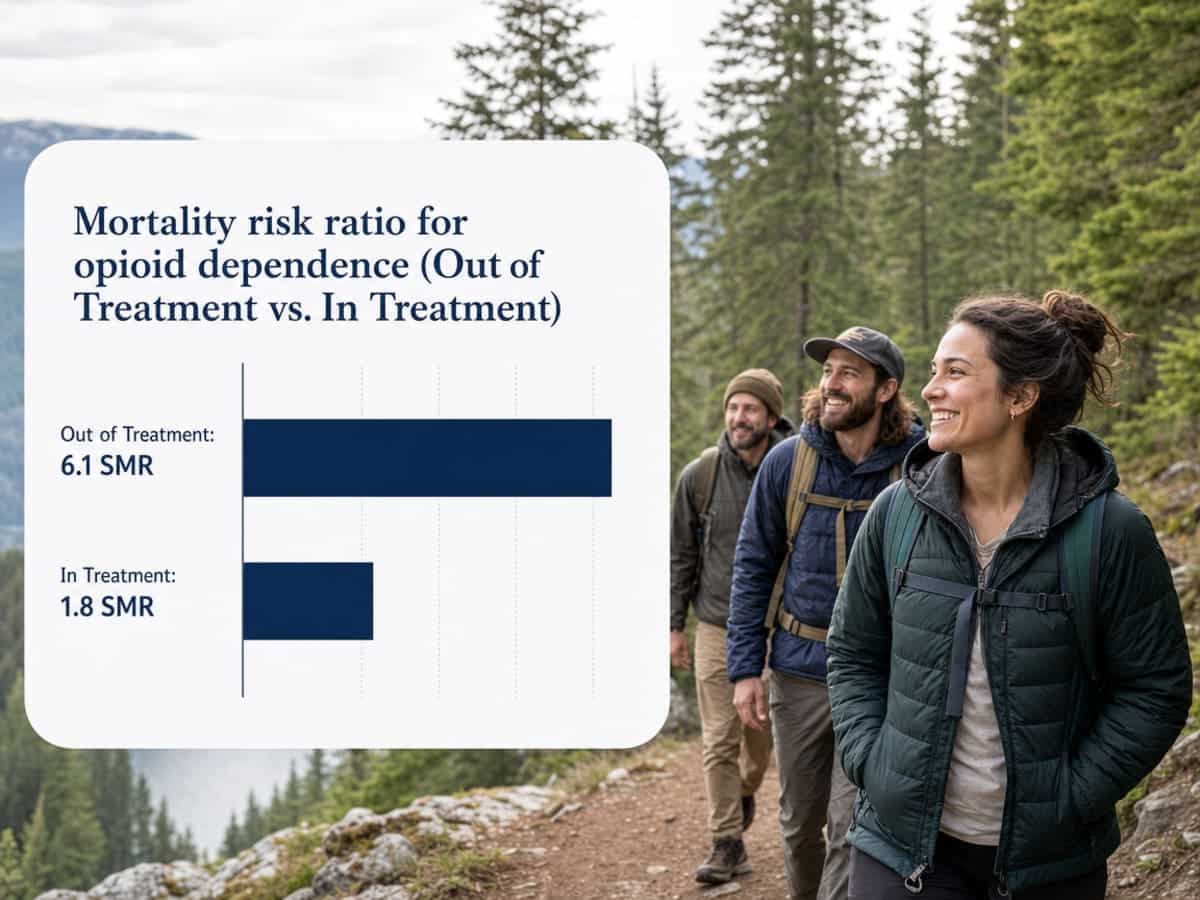
The evidence on this is not subtle. A meta-analysis of 32,322 people with opioid dependence, followed for a median of 2.6 years, recorded 1,031 deaths — and the standardized mortality ratio was 6.1 when people were out of pharmacological treatment versus 1.8 when they were in it 8. Translated into plain terms: being connected to ongoing medication treatment is associated with a death rate roughly a third as high as being disconnected from it. That gap is the entire argument for why the handoff matters more than the detox itself.
This is where the Seattle-to-Milwaukie drive earns its mileage. At Pacific Crest Trail Detox, the same team that gets your person through the first five to seven days also runs the next steps: partial hospitalization, intensive outpatient groups, standard outpatient, and alumni support. Nobody hands you a stack of phone numbers and wishes you luck. The therapist your person met on day three is the therapist in the room on day fifteen. If medication-assisted treatment started during detox, it keeps going without a two-week gap while you hunt for a prescriber.
That continuity is boring to describe and life-saving to experience. When you call around, ask the question flatly: “Does the same program carry my person into the next level of care, or do you discharge to a referral list?” The answer tells you whether you’re buying five days or a real start.
The First 28 Days After You Come Home
The drive back north feels different. Lighter in some ways, heavier in others. Your person is sober, the medication is working, and the house is quiet again. This is also the window where you have to be the most careful.
A record-linkage study of substance-use clients in Texas found that drug-related mortality was highest during the first 28 days after discharge from treatment, with rates particularly elevated after residential and detoxification care among people with prior opioid use 9. That is not a reason to panic. It is a reason to plan.
Here is what a solid first-month plan looks like in practice:
- Naloxone in the house, in the car, and in a bag someone trusted knows about.
- Medication-assisted treatment that started in Milwaukie keeps going without a gap — a prescription in hand before discharge, not a referral to chase.
- A first outpatient appointment on the calendar within days, not weeks.
At Pacific Crest Trail Detox, that continuity is built in: partial hospitalization, intensive outpatient, and standard outpatient groups run under the same roof, and telehealth options can keep a Seattle-based person connected after they’re home.
Tell the people in the house what to watch for — confusion, slurred speech, breathing that slows or stops. Pick up the phone early, not late. Celebrate day seven. Then day fourteen. Each one is a real win.
Making the Call Tonight
If you’ve read this far, you already know what the next step is. Pick up the phone. Have the member ID card nearby, a short list of what your person has been using, and a notebook for the answers.
Ask three things:
- What ASAM level are you licensed at 11.
- What medications do you use for this kind of withdrawal.
- Does the same team carry my person into the next level of care.
Clear answers mean you found the right program. Vague answers mean keep calling.
Seattle families are making the drive to Milwaukie for a reason. Ask Pacific Crest Trail Detox what that reason is, in their own words, tonight. The hardest part is dialing. You can do that.
Check if your coverage supports safer detox now
Find out right away if your insurance covers a supported detox journey south of Seattle.

Frequently Asked Questions
How long is the drive from Seattle to a Portland-area detox, and is it safe to travel during withdrawal?
The drive is roughly 175 miles down I-5 and typically runs about three hours without heavy traffic. It is safe when a sober driver is at the wheel, the person in withdrawal has eaten and hydrated, and the intake nurse knows your approximate arrival time. If symptoms turn serious on the road, pull off and call 911 rather than pushing on.
Will my insurance cover a detox program in Oregon if I live in Washington?
Most commercial Washington plans cover out-of-state medical detox when the program is in-network or when care is medically necessary. Pacific Crest Trail Detox accepts most commercial insurance (OHP is the exception). Call with the member ID ready — the admissions team runs a benefits check on the phone and tells you the expected out-of-pocket cost before you commit. Ask about prior authorization in the same call.
What’s the difference between ASAM Level 3.2-WM and 3.7-WM, and which one do I need?
Oregon licenses adult programs at both levels 11. Level 3.2-WM is clinically managed residential withdrawal — a home-like setting with trained staff and fewer medical interventions. Level 3.7-WM is medically monitored inpatient care with 24/7 nursing and physician availability 1. Serious alcohol, opioid, or benzodiazepine withdrawal usually calls for 3.7-WM. The intake nurse can confirm which level fits after a brief assessment.
Can a Portland-area detox treat both alcohol and opioid withdrawal at the same time?
Yes. Clinical guidance supports treating concurrent alcohol and opioid withdrawal in a monitored inpatient setting, with careful medication choices to balance symptom relief against sedation and breathing risks 2. That is exactly why intake asks about every substance — alcohol, benzodiazepines, opioids, stimulants, prescribed medications. A program that treats one and misses the other is not giving your person the full plan they need.
What happens after detox ends and I drive back to Seattle?
Discharge is a high-risk window — drug-related mortality peaks in the first 28 days after leaving treatment 9. A good plan includes naloxone in the house, medication-assisted treatment continued without a gap, and a first follow-up appointment on the calendar. Pacific Crest Trail Detox keeps the same team involved through partial hospitalization, intensive outpatient, and standard outpatient, with telehealth options to stay connected after you’re home.
How is voluntary travel to Oregon different from Washington’s secure withdrawal pathway under Ricky’s Law?
Ricky’s Law allows involuntary secure withdrawal for people in immediate danger; Washington had three such facilities as of mid-2025, with 198 admissions in Q2 and 43% of discharges voluntary 10. That pathway exists for a reason, but it is legally initiated and locked. Driving south to a voluntary medical detox keeps the choice in your person’s hands — they walk in instead of being brought in.
References
- Adult voluntary withdrawal management fact sheet (2025). https://www.hca.wa.gov/assets/program/fact-sheet-adult-withdrawal-management.pdf
- Concurrent opioid and alcohol withdrawal management. https://pmc.ncbi.nlm.nih.gov/articles/PMC10696169/
- Withdrawal Management. https://www.ncbi.nlm.nih.gov/books/NBK310652/
- Rapid Methadone Induction Pilot Program final report. https://www.hca.wa.gov/assets/program/rapid-methadone-induction-pilot-leg-report-2025.pdf
- 2025 – Opioids and the Ongoing Drug Overdose Crisis in Oregon. https://www.oregon.gov/oha/PH/PREVENTIONWELLNESS/SUBSTANCEUSE/OPIOIDS/SiteAssets/Lists/feature/EditForm/2025%20Oregon%20Opioid%20Overdose%20Report.pdf
- 2024 Overdose Fatality Review Report. https://cdn.kingcounty.gov/-/media/king-county/depts/dph/documents/health-safety/medical-examiner/2024-overdose-fatality-review.pdf?rev=3a6d5dca25dd4633af19cb6db383a050&hash=33AC7686A67B8EBCCBAFA0100235371F1
- Substance Use Disorder Integration Report. https://www.oregon.gov/oha/HSD/AMH/DataReports/SUD-Integration-Report.pdf
- Mortality among individuals accessing pharmacological treatment for opioid dependence: a systematic review and meta-analysis. https://pubmed.ncbi.nlm.nih.gov/25644938/
- Drug-related mortality after discharge from treatment: A record-linkage study of substance abuse clients in Texas, 2006-2012. https://pubmed.ncbi.nlm.nih.gov/31520924/
- Secure Withdrawal Management and Stabilization April to June 2025. https://www.hca.wa.gov/assets/program/rickys-law-annual-report-202507.pdf
- Oregon Health Authority : Licensing and Certification : Providers. https://www.oregon.gov/oha/BH/Providers/Pages/Licensing-Certification.aspx