
Key Takeaways
- Beaverton’s west side is still building out detox capacity through the Washington County CATT project, with withdrawal, sobering, and residential beds phased in across 2025 and 2026 1, 2.
- Alcohol, benzodiazepine, and opioid withdrawal carry real medical risks, so match your situation to the right setting — hospital inpatient, free-standing residential detox, or withdrawal management 14, 15.
- Before admitting anywhere, compare licensing, 24-hour medical monitoring, medication options like buprenorphine or supervised tapers, and whether follow-up appointments and continued care are scheduled before discharge 13, 15, 17.
- Geography matters less than fit — a 20-minute drive to a program with an open bed, continuity into outpatient care, and OHP or commercial coverage that works for you often beats the nearest option 5, 10.
If you’re reading this at 2 a.m., start here
If you’re on this page at 2 a.m., take a breath. You’re already doing something hard. Whether you’re the one shaking, sweating, and watching the clock, or the one sitting next to someone who is, the fact that you’re looking for a detox center in Beaverton tonight means part of you has already decided to stop white-knuckling this alone. That matters.
Here’s what we want you to know up front. Withdrawal from alcohol and benzodiazepines (think Xanax, Klonopin, Ativan) can genuinely be dangerous without medical supervision. Opioid withdrawal is brutal and raises the risk of overdose if you relapse after your tolerance drops 15. These are not reasons to panic. They’re reasons to pick the right place, not just the nearest place.
If you’re past the emergency line but still scared, keep reading. We’ll walk through what safe, medically supervised detox should actually look like, what Beaverton’s west side has available right now, which questions to ask before you admit anywhere, and when a 20-minute drive to a home-like program like Pacific Crest Trail Detox in Milwaukie is worth considering. No jargon. No sales pitch. Just the honest version, written for a person who needs it tonight.
What medically supervised detox should actually include
Detox is not just a place to sweat it out with a nurse checking in. Done right, it’s a structured medical process that keeps you physically safe while your body clears a substance, and it hands you off to whatever comes next with a real plan, not a pamphlet. If a program can’t describe both halves clearly, that’s your signal to keep looking.
Oregon’s own behavioral health reference manual splits detox into two main settings. Hospital inpatient detoxification is 24-hour acute medical care for people with severe medical complications — think unstable vitals, serious heart or liver disease, a history of withdrawal seizures, or a mix of substances that could tip into a medical emergency. Free-standing residential detoxification is 24-hour non-hospital care designed for safe withdrawal and a transition into continuing treatment 14. Both are legitimate. They just answer different questions.
Here’s the plain-language version of what a solid program should offer, no matter which setting you land in:
- A real medical assessment before admission. Someone trained should ask what you’re using, how much, how long, your last dose, your medical history, and your mental health history. If a facility is ready to admit you without any of that, pause.
- 24-hour monitoring by qualified staff. Vitals, withdrawal scoring (clinicians use scales for alcohol and opioids), and the ability to escalate care if things turn.
- Medications when they’re appropriate. For alcohol and benzodiazepine withdrawal, that often means a careful taper to prevent seizures. For opioid withdrawal, that means buprenorphine, methadone, or similar medications offered as part of care, not treated as optional comfort items 15.
- A home-like environment where you can actually rest. Detox is exhausting. A quiet room, decent food, and staff who speak to you like a person — not a chart — are part of the clinical picture, not luxuries.
- A written plan for what comes next. Appointments scheduled, medications continued, a warm handoff to outpatient care, residential treatment, or recovery support before you walk out the door.
One more thing worth naming: respect counts as clinical quality. SAMHSA’s guidance on low-barrier care describes treatment that meets people where they are — flexible admission, no shaming, people with lived recovery experience on the team 20. If you’re being talked down to during an intake call, that tells you something about day three.
Pacific Crest Trail Detox was built around this exact pattern: medical detox in a home-like residential setting, with medication support and a continuum that follows you into outpatient care — a team that includes people who’ve walked this road themselves. You should expect that structure anywhere you consider, not just here.
What Beaverton’s west side actually has right now
The Washington County CATT project, honestly described
You’ve probably read a headline or two about a new treatment center coming to Beaverton. That project is real, and it’s a genuine piece of good news for the west side. It’s also not a magic door you can walk through tonight. You deserve the honest version.
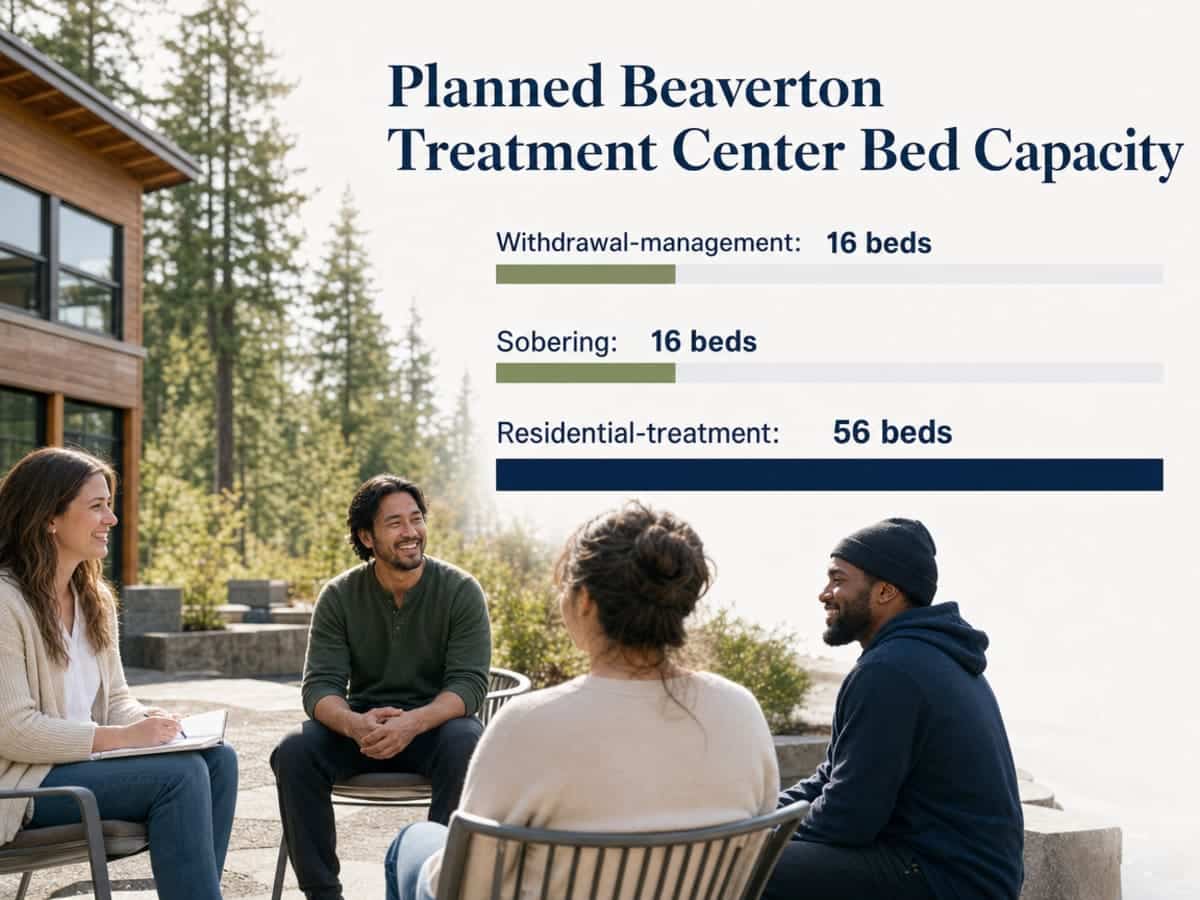
The Washington County Center for Addictions Triage and Treatment (CATT) is being built out in phases using Oregon’s opioid settlement dollars. The Beaverton site is planned to include 16 withdrawal-management beds, 16 sobering beds, and up to 56 residential-treatment beds once fully operational 1. A separate planning presentation describes the same site with 16 withdrawal-management, 16 sobering, and 48 residential-treatment beds 4— the small difference tells you something important: this is a project still coming into focus, not a finished directory.
Earlier settlement documents describe the building being purchased and roughly 86 inpatient beds being planned across sobering, withdrawal management, and residential treatment for Washington County overall 3. The state’s learning-collaborative summary names Beaverton as the location and notes that the county has historically lacked enough sobering, withdrawal, and residential capacity to meet demand — with openings phased across 2025 and into 2026 2.
Here’s what that means for you tonight. Some CATT services may already be seeing patients. Others may not be. Before you count on a bed there, call them directly and ask three questions:
- Is the service you need (sobering, withdrawal management, or residential) actually open?
- Is there a bed available in the next 24 hours?
- And if not, who do they recommend as a backup?
Any good program will answer those questions straight.
CATT is going to help a lot of people. It may or may not be the right answer for you this week.
Hospital detox, residential detox, and withdrawal management in plain language
The words facilities use can blur together when you’re exhausted. Oregon uses three main terms, and knowing which one fits your situation will save you phone calls.
- Hospital inpatient detoxification
- 24-hour acute medical care inside a hospital, designed for people with severe medical complications during withdrawal 14. If you have a history of withdrawal seizures, unstable heart or liver disease, severe dehydration, are pregnant, or are coming off a dangerous mix of substances, this is the setting that can handle a sudden turn. Emergency rooms are the front door here. You don’t need to figure out the paperwork first — go.
- Free-standing residential detoxification
- 24-hour non-hospital care in a licensed residential setting, meant for safe withdrawal and a planned handoff into continuing treatment 14. This is where most people without serious medical complications end up, and it’s the category Pacific Crest Trail Detox falls into. The environment is more like a home than a hospital, with medical staff on hand, medications when they’re appropriate, and real continuing-care planning before you leave.
- Withdrawal management
- The broader Oregon term for the clinical process of helping someone through withdrawal safely. It can happen in a hospital, in a residential detox, or in a dedicated withdrawal-management program like the one being built at CATT. Oregon regulates these programs through specific licensing rules so that “licensed” actually means something — assessment, 24-hour observation, qualified staff, and defined safety standards 12, 13.
If you’re not sure which fits, that’s okay — it’s exactly what an intake call is for. A good program will listen, screen you honestly, and tell you if a hospital is the safer first stop. That’s a sign of a program you can trust, not one to be embarrassed about.
Beaverton geography and the 20-minute question
Beaverton isn’t one place, and you know that. Where you live inside the city shapes which “local” option is actually closest. The city’s own neighborhood map lists areas like Central Beaverton, West Slope, Vose, South Beaverton, Five Oaks/Triple Creek, and West Beaverton among others 5. If you’re in West Slope near Highway 26, downtown Beaverton is one direction and Milwaukie is roughly 20 minutes the other way on a quiet night. If you’re in South Beaverton near Scholls Ferry, the drive east across the metro is often shorter than crossing town during rush hour.
The TV Highway corridor connects downtown Beaverton out through Aloha toward Hillsboro and Forest Grove, and Metro is working on transit improvements along it 19— useful context if you don’t drive, but keep in mind those improvements are planned, not current. For right now, call the facility and ask what rideshare, transit, or family-drop-off options actually work for admission.
Here’s the point worth sitting with: “nearest” is a travel question, not a treatment question. A program 25 minutes away that has a bed tonight, a medical team ready to assess you, and a real plan for next week is closer, in every way that matters, than a program 10 minutes away that puts you on a waitlist. Twenty minutes is a short drive. It can be the difference between waiting and starting.
Why follow-through matters more than the front door
Here’s the hard truth about detox: finishing it is not the same as treating the problem. Detox clears your body. It does not, on its own, change the thing that got you to detox in the first place. The current national guideline on opioid use disorder is unusually blunt about this — patients should not be offered withdrawal management alone, because doing so increases the risk of relapse, serious illness, and death 15. That is not a sales pitch for “more treatment.” That is clinicians saying the quiet part out loud.
The reason is physical. When you detox from opioids, your tolerance drops fast. If you relapse at the dose you used to take, your body can’t handle it anymore. The same logic applies, in different ways, to alcohol and benzodiazepines — the window right after detox is fragile, and what happens in that window matters more than how fancy the admission paperwork looked.
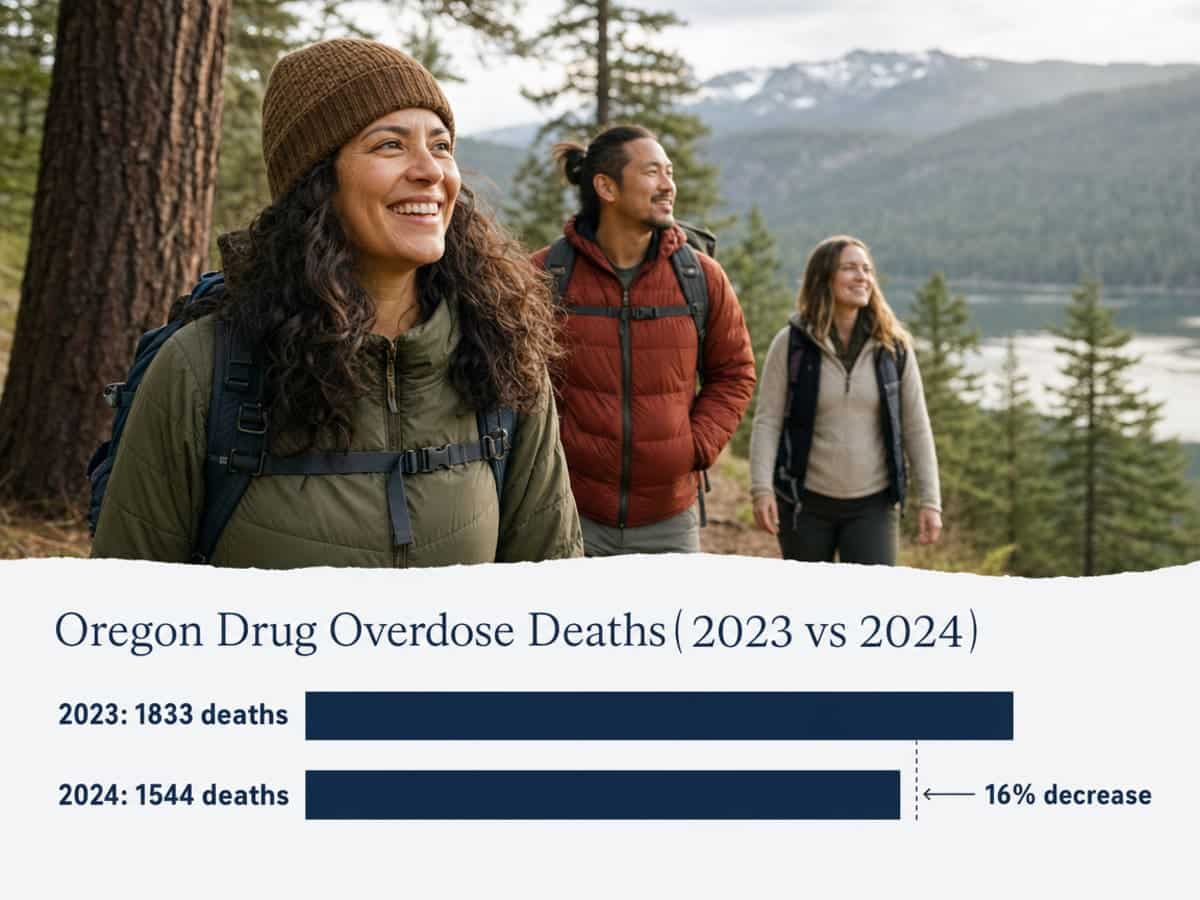
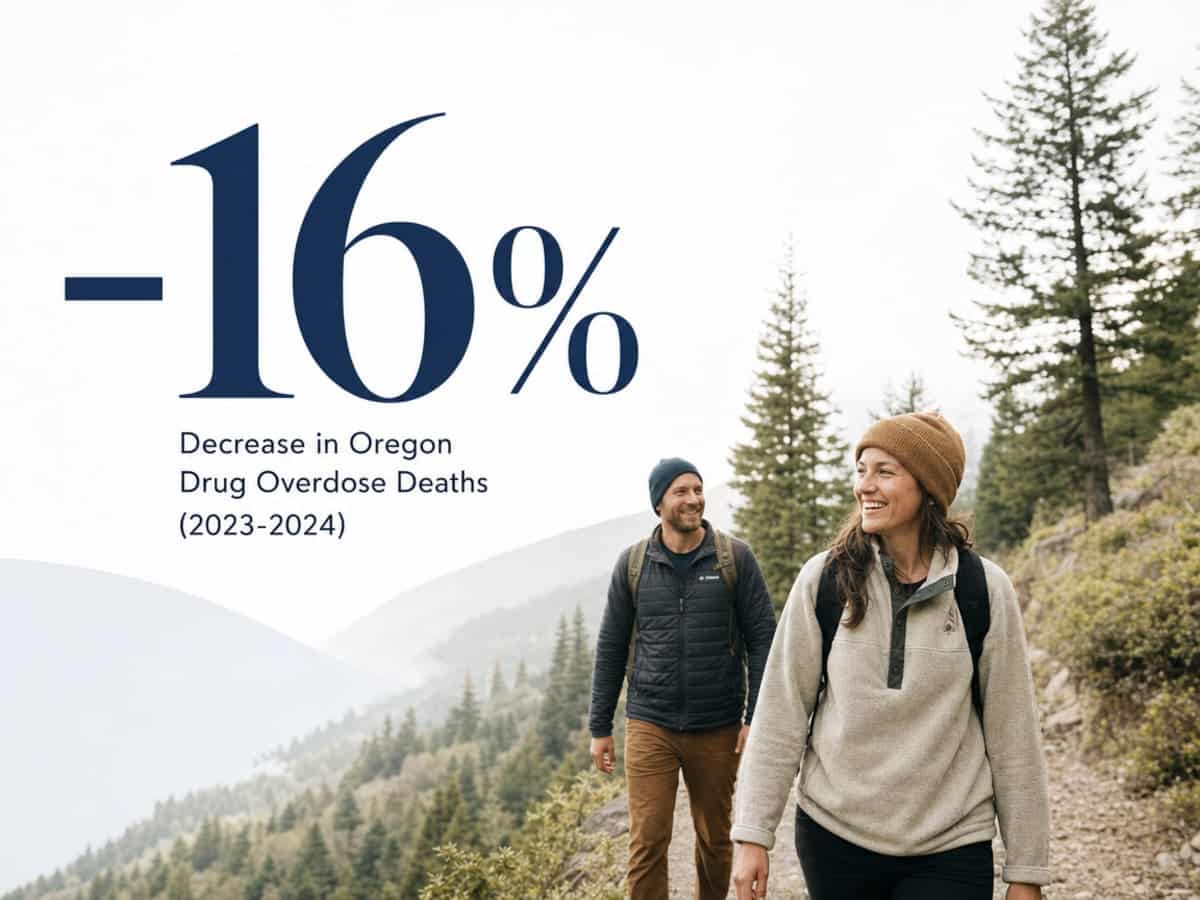
Oregon’s trajectory shows what coordinated care can do when it works. The state recorded 1,544 overdose deaths in 2024, down from 1,833 in 2023 — a 16% decrease 9. That drop didn’t come from detox beds alone. It came from medications continued after discharge, warm handoffs to outpatient teams, peer support, and the slow work of connecting people to the next appointment before they walked out the door.
So when you’re evaluating a detox center, ask about day eight, not just day one. Does the program schedule your follow-up appointments before discharge? Does it continue your medications — buprenorphine, methadone, naltrexone — or hand you a prescription and wish you luck? Does it offer or coordinate outpatient care, intensive outpatient, or residential treatment if that’s what you need next? Research on care transitions shows that pharmacologic and psychosocial support around discharge improves treatment engagement and reduces return trips to the ER 17.
A detox center that treats withdrawal as the end of the story is giving you half the care. Pacific Crest Trail Detox was built around the opposite assumption: medical detox feeds directly into partial hospitalization, intensive outpatient, and alumni support, with the same team helping line up what comes after. That continuity is the point. The front door matters. The back door matters more.
Questions to ask any detox center before you admit
When you call a detox center, you’re probably running on little sleep and a lot of fear. That’s a hard moment to interview anyone. So here’s a short list you can keep next to the phone. You don’t need to ask every question. You need to listen for how they answer — a program that respects you will welcome these questions, not rush past them.
On the medical side:
- Are you licensed by the Oregon Health Authority, and what level of withdrawal management do you provide? 13
- Who does my medical assessment, and when? Is a physician or nurse practitioner on-site or on-call?
- How do you monitor withdrawal — what scales do you use, and how often are vitals checked?
- Given what I’m using and how much, do you think I’m safer here or in a hospital setting? A good program will tell you honestly 14.
On medications:
- Do you offer buprenorphine, methadone, or naltrexone for opioid withdrawal, and will I leave with a continued prescription and a next appointment? Current national guidance is clear that medication plus follow-up is the standard, not an upgrade 15.
- For alcohol or benzodiazepine withdrawal, how do you handle tapering and seizure risk?
On what comes after:
- Who schedules my follow-up care before I’m discharged — outpatient, intensive outpatient, residential, or peer support?
- Do you coordinate transportation, medications, and the first appointment, or is that on me? Research on care transitions shows that this kind of hands-on handoff improves whether people actually make it to the next step 17, 18.
On respect and access:
- What do I need to bring? What if I don’t have an ID or a ride?
- Do you have people on staff who’ve been through recovery themselves?
- How do you handle it if I’ve been in detox before, or if I’m still ambivalent about stopping? SAMHSA’s low-barrier guidance describes this as the baseline, not a bonus 20.
You’re listening for warmth and specifics. Vague answers, pressure to admit immediately without a medical screen, or any hint of shaming are reasons to call the next number on your list.
How insurance works in Oregon, without the runaround
Insurance questions are the ones that make people hang up the phone and give up. Let’s keep it simple.
If you have commercial insurance through an employer or the marketplace, call the member number on the back of your card and ask two things: which substance-use detox and residential programs are in-network nearby, and what your out-of-pocket cost looks like for admission. You can also call a facility’s admissions line directly — a good program will run a benefits check for you, usually the same day, and tell you what they found in plain numbers. Pacific Crest Trail Detox accepts most commercial insurance and will do that verification for you before you commit to anything.
If you have the Oregon Health Plan (OHP), the path is different, and it’s a real path. OHP covers substance-use treatment, including screening, assessment, detoxification, counseling, and medications like methadone, Suboxone, buprenorphine, and Vivitrol 11. You also do not need a referral from a primary care doctor to ask for help with alcohol or drug problems — you can call directly 10. The honest note here: Pacific Crest Trail Detox does not accept OHP. If OHP is your coverage, call your coordinated care organization (the number is on your OHP card) or use Oregon Health Authority’s behavioral-health directory to find an in-network detox or withdrawal-management program 10. That is not a smaller door. It is a different door, and it opens.
If you have no insurance at all, call anyway. Oregon’s licensing page points people toward the state treatment-provider directory and their health plan for in-network options 13, and many programs can help you apply for OHP on the spot. Cost should not be the reason you don’t make the call tonight.
When a short drive to Milwaukie is the better call
Here’s the part nobody wants to say out loud when you’re in crisis: the facility closest to your couch may not be the one that keeps you alive, awake, and connected a month from now. That’s not a knock on Beaverton. It’s just how geography works when a region is still building out its treatment capacity.
If you live in West Slope, Vose, South Beaverton, or anywhere near Highway 217, Pacific Crest Trail Detox in Milwaukie is roughly a 20-minute drive on a quiet night 5. That’s shorter than a lot of grocery runs. And for that drive, here’s what you get:
- Non-hospital medical detox in a licensed residential setting 12, 13
- A home-like environment instead of a clinical hallway
- Medications offered as part of care rather than as an afterthought 15
- A team that includes people who’ve been through recovery themselves 20
The piece that matters most is the back half. PCTD’s medical detox feeds directly into partial hospitalization, intensive outpatient, standard outpatient, and alumni support — the same team helping you line up what comes after before you pack to leave. Research on care transitions is clear that this kind of hands-on handoff is what actually keeps people engaged after discharge 17, 18. A short drive is a small price for continuity you don’t have to rebuild from scratch.
A few honest notes. If you have Oregon Health Plan, PCTD is not your match — call your coordinated care organization and ask for an in-network detox 10. If your withdrawal picture includes seizures, unstable vitals, or a dangerous substance mix, a hospital is the right first stop, not a residential program. And if a Beaverton option opens up tonight that fits your clinical needs and continues your care, take it.
But if you’re weighing “nearest” against “right fit,” give yourself permission to drive. You don’t have to settle for whoever picks up first. Call PCTD, ask the questions from the checklist above, and listen to how the voice on the other end treats you. That call is already a step forward.
Find Out If Your Detox Is Covered Today
Quickly check your coverage so you can focus on a safe start to recovery.
Frequently Asked Questions
Is the Washington County CATT facility in Beaverton open and taking patients right now?
Parts of it may be, and parts of it aren’t. The Beaverton site is being built out in phases using opioid-settlement funds, with planned capacity for withdrawal-management, sobering, and residential-treatment beds 1, 2. Before you count on a bed tonight, call CATT directly and ask whether the specific service you need is open, whether a bed is free in the next 24 hours, and who they recommend as backup if not.
How do I know if I need hospital detox instead of a residential detox program?
Hospital inpatient detox is built for severe medical complications — a history of withdrawal seizures, unstable heart or liver disease, pregnancy, serious dehydration, or a dangerous mix of substances 14. If any of that sounds like you, go to an ER. Free-standing residential detox fits people without those complications who still need 24-hour monitoring and medication support. When in doubt, call a residential program and let their intake team screen you honestly.
Does Oregon Health Plan (OHP) cover detox, and what are my options if I have OHP?
Yes. OHP covers screening, assessment, detoxification, counseling, and medications like methadone, Suboxone, buprenorphine, and Vivitrol, and you don’t need a primary-care referral to ask for help 10, 11. Pacific Crest Trail Detox does not accept OHP, so if that’s your coverage, call the coordinated care organization listed on your OHP card or use Oregon’s behavioral-health directory to find an in-network detox. That path works — it’s just a different door.
Is it worth driving from Beaverton to a detox center in Milwaukie instead of staying local?
Often, yes. From West Slope, Vose, or South Beaverton, Pacific Crest Trail Detox is roughly 20 minutes on a quiet night 5. For that drive, you get non-hospital medical detox in a home-like licensed setting, medications offered as part of care, and a team that lines up partial hospitalization, intensive outpatient, or alumni support before you leave 12, 13, 17. A program with a bed and a real plan beats a closer waitlist.
What questions should I ask a detox center before I agree to admit?
Ask four things. Are you licensed by Oregon Health Authority, and what level of withdrawal management do you provide 13? Who does my medical assessment, and do you offer medications like buprenorphine or careful alcohol and benzo tapers 15? Who schedules my follow-up appointments and continues my medications before I’m discharged 17, 18? And how do you handle people without an ID or ride, or who’ve been in detox before 20? Listen for warmth and specifics.
Is detox alone enough to treat opioid or alcohol use disorder?
No, and it’s important you hear that clearly. The 2024 national opioid use disorder guideline states that patients should not be offered withdrawal management alone, because detox without continued medication and follow-up raises the risk of relapse, serious illness, and overdose death 15. Detox clears your body — it doesn’t treat the underlying disorder. A good detox center hands you directly into outpatient care, medications, or residential treatment so the hardest work doesn’t happen alone.
References
- 2024-2025 Oregon Opioid Settlement Spending Report. https://www.oregon.gov/oha/PH/PREVENTIONWELLNESS/SUBSTANCEUSE/OPIOIDS/Documents/opioid-settlement-spending-report-fy-2024-25.pdf
- Comagine Report – Oregon.gov. https://www.oregon.gov/adpc/Documents/Opioid%20Settlement%20LC%20Summary.%208-15-24.pdf
- 2023 – 2024 Oregon Opioid Settlement Spending Report. https://www.oregon.gov/oha/PH/PREVENTIONWELLNESS/SUBSTANCEUSE/OPIOIDS/Documents/opioid-settlement-spending-report-fy-2023-24.pdf
- LOCAL OPIOID SETTLEMENT. https://www.oregon.gov/adpc/Documents/Presentation%20Slides.%20LOSLC.%203-2026.pdf
- Find My Neighborhood | Beaverton, OR – BeavertonOregon.gov. https://www.beavertonoregon.gov/696/Find-My-Neighborhood
- data tables – washington county. https://www.oregon.gov/oha/PH/BIRTHDEATHCERTIFICATES/SURVEYS/Documents/SHS/2024/Reports/County/Washington%20County%202024.pdf
- Prescribing and Overdose Data for Oregon. https://www.oregon.gov/oha/ph/preventionwellness/substanceuse/opioids/pages/data.aspx
- Provisional Drug Overdose Death Counts. https://www.cdc.gov/nchs/nvss/vsrr/drug-overdose-data.htm
- Substance Use Disorder Integration Report. https://www.oregon.gov/oha/HSD/AMH/DataReports/SUD-Integration-Report.pdf
- Oregon Health Plan (OHP) Behavioral Health Coverage. https://www.oregon.gov/oha/hsd/ohp/pages/behavioral-health.aspx
- Oregon Health Plan Open Card Member Handbook. https://www.oregon.gov/oha/HSD/OHP/Tools/Open-Card-Handbook-EN.pdf
- Division 18 RESIDENTIAL SUBSTANCE USE DISORDERS AND …. https://www.oregon.gov/oha/HSD/Medicaid-Policy/SUDWaiver/309-018-Highlighted-040723.pdf
- Residential Treatment Facilities : Licensing and Certification. https://www.oregon.gov/oha/hsd/amh-lc/pages/rt.aspx
- Reference Manual: Behavioral Health + Addiction. https://www.oregon.gov/oha/HSD/COMPASS/resources/ROADS%20BH%20+%20Addiction%20Reference%20Manual_v1.1.pdf
- Management of opioid use disorder: 2024 update to the national clinical practice guideline. https://pmc.ncbi.nlm.nih.gov/articles/PMC11573384/
- Federal Guidelines for Opioid Treatment Programs. https://library.samhsa.gov/sites/default/files/federal-guidelines-opioid-treatment-pep24-02-011.pdf
- Transitions in care between hospital and community settings for individuals with a substance use disorder: A systematic review. https://pubmed.ncbi.nlm.nih.gov/36634575/
- Care Coordination and Patient Referral Sources. https://integrationacademy.ahrq.gov/products/playbooks/moud-playbook/coordinate-care/care-coordination-and-patient-referral-sources
- Tualatin Valley Highway transit and safety project. https://www.oregonmetro.gov/projects/tualatin-valley-highway-transit-and-safety-project
- Advisory: Low Barrier Models of Care for Substance Use Disorders. https://library.samhsa.gov/sites/default/files/advisory-low-barrier-models-of-care-pep23-02-00-005.pdf