
Key Takeaways
- Oregon regulates two residential withdrawal levels — clinically managed and medically monitored inpatient — and only facilities licensed by the Oregon Health Authority can legally admit people for detox 1, 4.
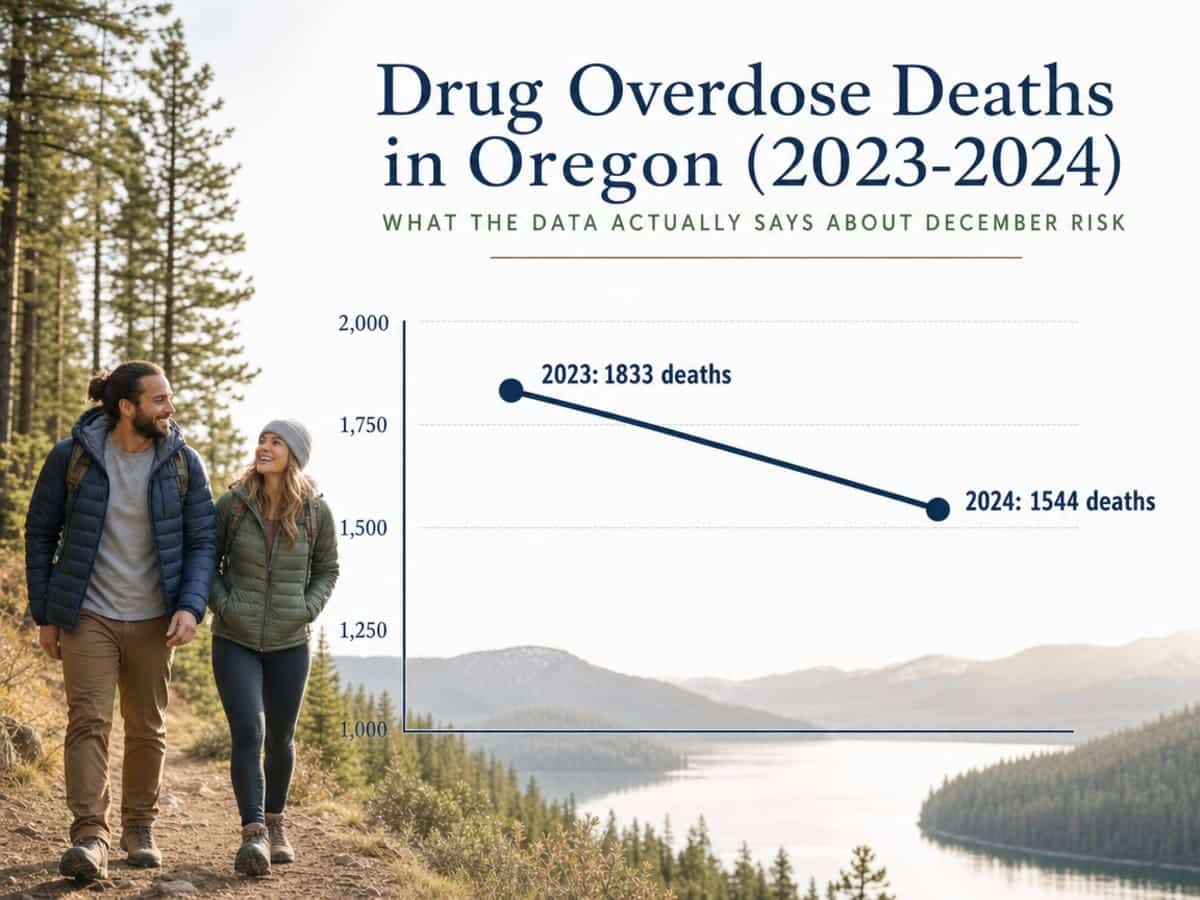
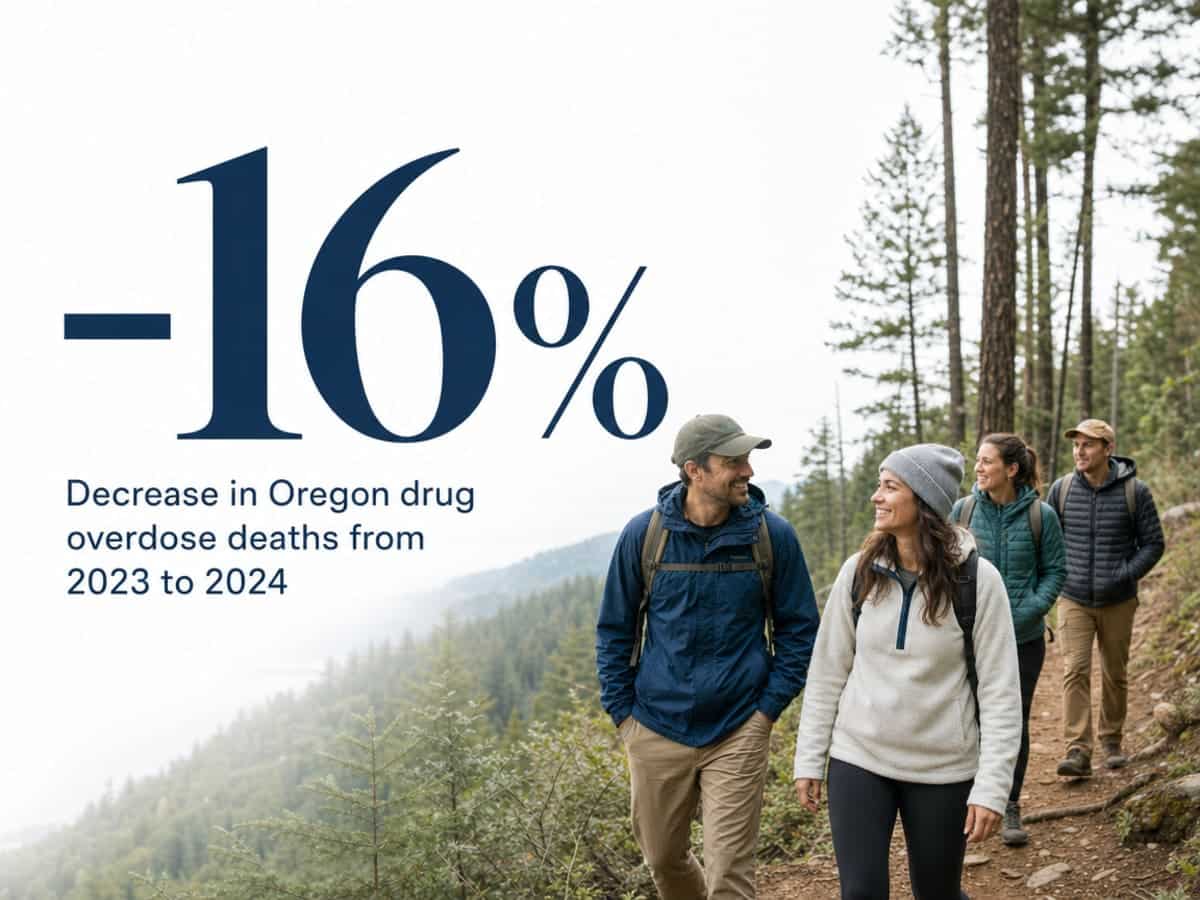
- Oregon recorded 1,544 overdose deaths in 2024, a 16% drop from 2023, but risk stays constant year-round rather than spiking only in December 9, 21.
- Every Oregon county has a Behavioral Health Resource Network offering free screening, peer support, naloxone, and treatment navigation without insurance or referral requirements 11, 12.
- Call 988, the Oregon Alcohol and Substance Helpline at 800-923-4357, or a licensed detox directly this week — OHP members route through BHRNs, commercial insurance opens more facility options 13, 14.
If You’re Reading This at 11 p.m. in December
You already know why you opened this tab. Maybe the bottle in the kitchen is almost empty again. Maybe the pills ran out faster than they should have. Maybe you promised yourself after Thanksgiving that you’d stop before Christmas, and here you are, three weeks later, scrolling through search results with the lights off so no one wakes up.
Take a breath. You’re in the right place.
This guide is for people in Oregon whose drinking or drug use has gotten louder between Thanksgiving and New Year’s — and for the partner, parent, or adult child who’s reading this on someone else’s behalf, hoping to find a door that’s actually open tonight. It’s not a lecture. It’s not a pitch. It’s a plain-language walk through what medical detox in Oregon actually looks like right now, in the middle of the holiday season, when every January-first promise feels both urgent and impossibly far away.
Here’s the part you may not have heard yet: Oregon has a real, licensed network of medical detox, medication support, crisis lines, and continuing care that doesn’t close for the holidays 1, 12. Pacific Crest Trail Detox in Milwaukie is one of those doors, and it’s open through December and into the new year — not because the calendar says so, but because the people who answer the phone understand that a Tuesday in mid-December can be exactly the day someone decides to stop.
You don’t have to earn help by waiting. Keep reading.
Why the Holidays Pull So Hard (And Why the January Bargain Backfires)
The Quiet Escalation Between Thanksgiving and New Year’s
You probably didn’t plan for it to get this loud. One glass at Thanksgiving became three. A pill borrowed from a friend’s cabinet turned into a standing order you’ve been quietly filling. The office party had an open bar, your in-laws stayed four days instead of two, and somewhere between the pie and the parking lot, the thing you were managing started managing you.
This is how holiday use tends to move — not in a dramatic crash, but in small daily permissions. It’s cold. It’s dark by 4:30. The people who usually notice are distracted, and the people who usually distract you are the ones you’re trying to escape. You tell yourself it’s a season, not a pattern. You tell yourself January is only a few weeks away.
Here’s the honest part: the January bargain is a story your using is helping you write. It buys more drinking days, more pills, more silence. It isn’t weakness. It’s the sound of a problem protecting itself. Noticing that out loud is the first thing that breaks the spell.
What the Data Actually Says About December Risk
You’ve probably seen headlines claiming the holidays are the deadliest stretch of the year. The real picture is messier, and in some ways more sobering. CDC-linked analyses of nonfatal overdose surveillance have actually found higher patterns in summer with declines through winter, and older studies on overdose timing are mixed — not the clean December spike people often repeat 21. Even emergency-department data for behavioral-health visits shows a brief dip around late-November and December holiday breaks before bouncing back 20.
That nuance matters, because it changes the argument. The danger of a holiday relapse isn’t that December is uniquely lethal. It’s that the risk is persistent — a steady, year-round weight that doesn’t pause for your family dinner or your resolution.
Oregon’s own numbers make the point. The state recorded 1,544 drug overdose deaths in 2024, down 16% from 1,833 in 2023 9. That drop is real progress. It’s also 1,544 people. Four lives a day, give or take. If you’re using more right now than you were a month ago, waiting for the calendar to flip isn’t a safety plan — it’s a hope dressed up as one. The data doesn’t say December will get you. It says any week can, and this is the week you’re in.
What Medical Detox in Oregon Actually Looks Like
Two Licensed Levels of Withdrawal Care, in Plain English
Oregon regulates two main kinds of residential withdrawal care, and knowing the difference helps you ask the right questions when you call.
The first is what the state calls clinically managed residential withdrawal management. In plain words, it’s a licensed, home-like residential setting with trained staff on-site around the clock, medical oversight, and medications when they’re needed. The second is medically monitored inpatient withdrawal management — a more intensive setting for people whose withdrawal is expected to be medically complex and who need closer nursing and physician involvement 1. Both are tracked by the Oregon Health Authority and are governed by state administrative rules; a facility is not allowed to call itself a residential detox or admit people for withdrawal care unless it’s licensed to do so 2, 4.
Before you say yes to any program — including one a friend recommends — ask one quiet question: Are you licensed by the Oregon Health Authority, and for what level of withdrawal management? A real program will answer in one sentence. Pacific Crest Trail Detox in Milwaukie operates as a licensed non-hospital medical detox, which is why the setting feels like a house with doctors in it rather than a hospital floor with a view 1, 4.
What Withdrawal Feels Like—and What a Medical Team Does About It
If you’ve been using heavily, withdrawal isn’t just willpower weather. It’s your body renegotiating with a chemical it got used to having, and the first 24 to 72 hours are usually the loudest stretch.
With alcohol, you might feel shaky hands, a racing heart, sweating, nausea, trouble sleeping, and a jittery kind of anxiety that doesn’t quite match the room. With opioids like fentanyl, heroin, oxycodone, or hydrocodone, it tends to look like a brutal flu — body aches, chills, cramping, diarrhea, restless legs, and a craving that feels like it’s living in your bones. With benzodiazepines such as Xanax, Klonopin, or Ativan, withdrawal can bring intense anxiety, insomnia, and in some cases seizures.
Here’s what changes when you’re in a licensed medical detox instead of toughing it out at home. A nurse checks your vital signs regularly. A doctor orders medications that take the sharp edge off the worst symptoms — anti-nausea medicine, something to help you actually sleep, blood pressure support, and, when it fits your situation, medication-supported treatment like buprenorphine for opioid withdrawal. You get fluids, food you can keep down, a quiet room, and people who have sat with hundreds of other bodies doing exactly this. The symptoms don’t magically disappear. They become survivable, which is the whole point.
Why Alcohol and Benzodiazepine Withdrawal Can Be Dangerous Alone
This part is worth reading twice, especially if you’ve been drinking daily for months or taking benzodiazepines like Xanax, Klonopin, or Ativan.
Alcohol and benzodiazepines work on the same calming system in your brain. When you stop suddenly after heavy, regular use, that system can swing hard in the opposite direction. For some people, that swing is uncomfortable. For others, it can mean seizures, a severe form of withdrawal called delirium tremens, or dangerously high blood pressure — the kind of medical emergency that doesn’t give you much warning.
Oregon-Specific Ways to Get Help This Week
The Three Numbers to Save in Your Phone Tonight
Before you close this tab, add three numbers to your contacts. Not someday. Tonight. They cost nothing to save and they will matter the next time your hands are shaking too hard to search.
- 988 is Oregon’s crisis line for mental health, substance use, and emotional emergencies. You can call it, text it, or chat with it from the website. The person on the other end can help you find local resources, a crisis-stabilization center, an emergency department, or a mobile crisis team that comes to you 13.
- 800-923-4357 is the Oregon Alcohol and Substance Helpline. It’s the number to call when you want to talk specifically about drinking or drug use and figure out what kind of treatment makes sense for your situation 14.
- 911 is the number if someone has stopped breathing, is having a seizure, or you can’t wake them up. Oregon has Good Samaritan protections for people who call during an overdose. Call anyway.
Save all three. Tell one person in your house where you saved them.
Behavioral Health Resource Networks: A Door in Every County
Here’s something a lot of Oregonians don’t know: every single county in the state has at least one Behavioral Health Resource Network, usually called a BHRN. That’s 36 counties, 36 doors — Multnomah, Washington, Clackamas, Lane, Deschutes, Jackson, all the way out to Harney and Wallowa 12.
A BHRN is a group of local organizations that work together to make it easier to get help without a bunch of hoops. They offer free screening and assessment, peer support from people who’ve been through recovery themselves, harm-reduction supplies like naloxone and fentanyl test strips, low-barrier treatment, and in some cases help with housing 11, 12. You don’t need insurance to walk in. You don’t need a referral. You don’t need to have your story figured out.
If you’re on the Oregon Health Plan, or you have no insurance at all, a BHRN is often the fastest way to get a real human being helping you plan what comes next — including getting you into a medical detox bed. Call 800-923-4357 or 988 and ask them to connect you with the BHRN in your county 14.
Pacific Crest Trail Detox in Milwaukie: A Home-Like Option Open Through the Holidays
If you have commercial insurance — through your job, through a spouse, through the Marketplace — Pacific Crest Trail Detox is one of the doors that stays open through Thanksgiving, through Christmas, through New Year’s. It’s in Milwaukie, just south of Portland, and it has been quietly operating as a licensed non-hospital medical detox since 2017.
In plain words: it’s a house with doctors and nurses in it. Not a hospital floor. Not a fluorescent-lit intake desk with a clipboard and a wait. You sleep in a bedroom, not a hospital room. There’s a kitchen, a living room, trees out the window. A medical team is on-site to help your body come off alcohol, opioids, or benzodiazepines safely, including medication-supported treatment when it fits your situation. If you need help with alcohol, fentanyl, heroin, oxycodone, Xanax, Klonopin, or anything in between, this is the kind of place that was built for the first few days.
And because the days after detox are the part that matters most, PCTD doesn’t send you back to your life with a handshake. It has partial hospitalization, intensive outpatient, standard outpatient, and alumni programs — a continuing-care runway so what you start this week has somewhere to land in February.
PCTD accepts most commercial insurance but does not accept the Oregon Health Plan. If OHP is your coverage, start with 800-923-4357 or your county BHRN 12, 14.
Insurance, Cost, and the Question of Whether You Can Afford to Say Yes
The cost question is almost always the second one people ask, right after “is it safe to stop.” It’s a fair question, and the answer is less scary than you probably think.
If you’re on the Oregon Health Plan, detox is a covered benefit. OHP’s behavioral-health coverage includes detoxification, residential care, medication treatment for opioid and alcohol use disorders, and counseling — and you don’t need a referral from a primary-care doctor to ask for help 7, 8. That means an OHP member can call the Alcohol and Substance Helpline at 800-923-4357 or walk into a county BHRN and start the process the same day, without a gatekeeper visit first 12, 14. Actual bed availability depends on your coordinated care organization and the facility’s current openings, so the sooner you call, the more options you’ll have.
If you have commercial insurance through a job, a spouse, a parent’s plan, or the Marketplace, medical detox is almost always a covered benefit too, usually under the behavioral-health or substance-use side of your plan. Deductibles and copays vary. The intake staff at any licensed Oregon detox — including Pacific Crest Trail Detox — can run your benefits before you commit and tell you in real dollars what you’re looking at. PCTD accepts most commercial plans but does not accept OHP; if OHP is your coverage, the BHRN and helpline route will get you further, faster 12, 14.
If you have no insurance at all, you still have a door. BHRNs are set up specifically for low-barrier access, including people who can’t pay 11, 12. The honest truth about cost: the price of one more month of using — in missed work, damaged relationships, emergency-room visits, legal trouble — almost always outruns the price of getting help this week. Make the call before you talk yourself out of it.
Detox Alone Usually Isn’t Enough—and That’s the Part Nobody Explains
Here is the thing most brochures leave out: finishing detox is not the finish line. It’s the start of the hardest week.
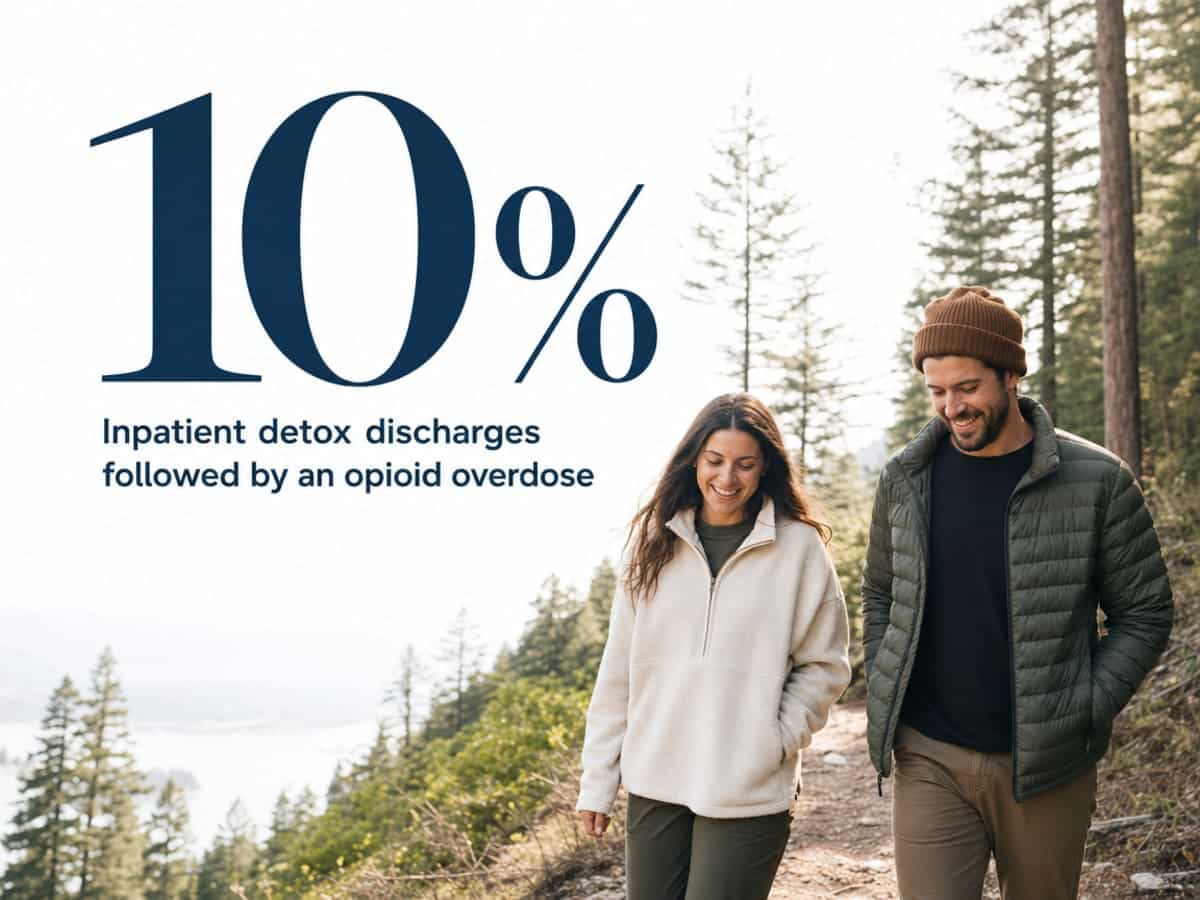
A large cohort study tracked what happened after 81,519 inpatient detoxification discharges and found 7,624 opioid overdoses in the follow-up window — close to one in ten people. The highest overdose rate didn’t happen inside detox. It happened during the transition out, when someone leaves a safe, monitored setting and their tolerance is lower than it used to be 17. That is the stretch nobody warns you about, and it is the single most important reason detox should never stand alone.
The good news is that the same research points at what helps. A Massachusetts study of people who completed medically managed opioid withdrawal found that starting medication for opioid use disorder, moving into residential treatment, or combining the two was linked to lower death rates than no further treatment at all 18. A separate modeling study estimated that starting medication during detox and connecting people to outpatient care could meaningfully reduce fatal overdoses compared with standard care — a system-level nudge that getting the handoff right actually saves lives 19.
So when you ask whether a program is right for you or your person, don’t just ask about the first week. Ask what happens on day eight. Pacific Crest Trail Detox in Milwaukie was built with that handoff in mind — medication support where it fits, and a continuing-care runway of partial hospitalization, intensive outpatient, standard outpatient, and alumni groups so the body you just got back has somewhere steady to land.
Overdose Safety: What You and Your Family Should Have on Hand
If you’ve taken even a short break from using — a week in detox, a few days of trying to quit on your own, a holiday weekend where you cut back — your tolerance drops faster than your brain remembers. Going back to the dose that felt normal in October can be the dose that stops your breathing in December. The CDC specifically names people returning to opioids after a period of reduced use as a group who should have naloxone within reach 16.
So here’s the short list to put in place this week, whether you’re the person using or the person who loves them:
- Naloxone (Narcan) in the house. It’s free at Oregon pharmacies and through county BHRNs, no prescription needed 12. One box in the medicine cabinet, one in a bag, one with a family member who could reach you fast.
- Someone who knows. Tell one person what you’re using and where the naloxone is. Using alone is the single biggest risk factor in a fatal overdose.
- Fentanyl test strips. Available through BHRNs. Pills bought outside a pharmacy are not what the label says anymore.
- A plan for the first week after any break. Lower tolerance plus holiday stress is the combination CDC flags for a reason 15, 16.
None of this means you’re giving up on quitting. It means you’re staying alive long enough to.
If You’re the Family Member Reading This
You’re not overreacting. If you’ve been quietly counting bottles, noticing the pill count drop faster than the prescription allows, or watching your person disappear a little more each weekend, your gut is telling you something true.
Here’s what actually helps right now. Say one honest sentence out loud — “I’m scared, and I love you, and I think you need a doctor this week” — without an ultimatum attached. Keep naloxone in the house and tell them where it is; the CDC specifically recommends giving naloxone to family members of someone whose tolerance may be lower than it used to be 16. Save 988 and the Oregon Alcohol and Substance Helpline at 800-923-4357 in your own phone so you can make the call if their hands are shaking 13, 14. If they’re on the Oregon Health Plan, ask your county’s Behavioral Health Resource Network to help you find a bed 12.
You can’t make them say yes. You can make saying yes easier than saying no.
One Call Today Beats a Thousand Promises for January
You don’t have to feel ready. You don’t have to have the right words. You don’t have to know what you’ll say to your boss on Monday or your family on Christmas. All you have to do is pick up the phone this week instead of next month.
Here is what today can look like. You call 988, or you call the Oregon Alcohol and Substance Helpline at 800-923-4357, and you say the sentence you’ve been rehearsing in your head for weeks 13, 14. If you have commercial insurance, you call Pacific Crest Trail Detox in Milwaukie and ask what a bed looks like this week. If you’re on the Oregon Health Plan, you ask your county’s Behavioral Health Resource Network to help you find one 7, 12. None of those calls commits you to anything. All of them crack a door that’s been closed since Thanksgiving.
The January you’re imagining — the clean one, the one where you wake up on the first with a plan — doesn’t exist yet. This week does. Make the call before you talk yourself out of it. We’ll be here when you do.
Check Detox Coverage Before the Holidays Hit
See if your insurance covers urgent detox support during the holiday season.
Frequently Asked Questions
Can I get into a medical detox in Oregon during the holidays, or do I have to wait until January?
You don’t have to wait. Oregon’s licensed medical detox programs, including Pacific Crest Trail Detox in Milwaukie, admit people through Thanksgiving, Christmas, and New Year’s. Call the facility directly to ask about a bed this week, or dial the Oregon Alcohol and Substance Helpline at 800-923-4357 to get help finding one tonight 14.
Is it safe to stop drinking or using benzodiazepines at home on my own?
For heavy, daily use, no. Alcohol and benzodiazepines like Xanax, Klonopin, and Ativan act on the same calming system in your brain, and stopping cold can trigger seizures, delirium tremens, or dangerous blood pressure spikes. Oregon requires withdrawal management to happen in licensed settings for exactly this reason 1, 4. Please let a medical team taper you safely.
Will insurance or the Oregon Health Plan cover detox?
Yes to both, in most cases. OHP’s behavioral health benefits include detox, residential care, medication treatment, and counseling, with no primary-care referral needed 7, 8. Commercial plans through work, a spouse, or the Marketplace almost always cover medical detox too. Pacific Crest Trail Detox accepts most commercial insurance but does not accept OHP; OHP members should start with 800-923-4357 or a county BHRN 12, 14.
What phone numbers should I call tonight if I’m not sure where to start?
Save three. Dial 988 for a crisis line that handles mental health and substance use by call, text, or chat and can connect you to local resources 13. Dial 800-923-4357 for Oregon’s Alcohol and Substance Helpline, which focuses specifically on treatment navigation 14. Dial 911 if someone has stopped breathing or can’t be woken up. One call is enough to start.
Why is the time right after detox considered so risky, and what should come next?
Your tolerance drops during detox, so returning to a familiar dose can be dangerous. A cohort study of 81,519 inpatient detox discharges found nearly 1 in 10 were followed by an opioid overdose, with the highest rate during the transition out of detox 17. Research shows medication treatment, residential care, or outpatient follow-up afterward lowers mortality 18. Plan day eight before day one.
I’m the family member—what can I actually do to help my person right now?
Say one honest, non-ultimatum sentence out loud. Keep naloxone in the house and tell them where it is; the CDC specifically recommends giving naloxone to family members of people whose tolerance may be lower than it used to be 16. Save 988 and 800-923-4357 in your own phone so you can make the call when their hands won’t 13, 14. You’re not overreacting.
References
- Oregon Health Authority : Licensing and Certification : Providers. https://www.oregon.gov/oha/BH/Providers/Pages/Licensing-Certification.aspx
- Residential Treatment Facilities : Licensing and Certification. https://www.oregon.gov/oha/hsd/amh-lc/pages/rt.aspx
- Oregon Health Authority : ASAM Implementation of the SUD 1115 Waiver. https://www.oregon.gov/oha/HSD/Medicaid-Policy/Pages/ASAM.aspx
- OFFICE OF THE SECRETARY OF STATE. https://www.oregon.gov/oha/HSD/HSDRules/415-012-changes-12012017.pdf
- PERMANENT ADMINISTRATIVE ORDER. https://www.oregon.gov/oha/HSD/HSDRules/415-012-changes-05102018.pdf
- Division 18 RESIDENTIAL SUBSTANCE USE DISORDERS AND …. https://www.oregon.gov/oha/HSD/Medicaid-Policy/SUDWaiver/309-018-Highlighted-040723.pdf
- Oregon Health Plan (OHP) Behavioral Health Coverage. https://www.oregon.gov/oha/hsd/ohp/pages/behavioral-health.aspx
- Substance Use Disorder Integration Report. https://www.oregon.gov/oha/HSD/AMH/DataReports/SUD-Integration-Report.pdf
- 2025 – Opioids and the Ongoing Drug Overdose Crisis in Oregon. https://www.oregon.gov/oha/PH/PREVENTIONWELLNESS/SUBSTANCEUSE/OPIOIDS/SiteAssets/Lists/feature/EditForm/2025%20Oregon%20Opioid%20Overdose%20Report.pdf
- Prescribing and Overdose Data for Oregon. https://www.oregon.gov/oha/ph/preventionwellness/substanceuse/opioids/pages/data.aspx
- BHRN Data Profile. https://www.oregon.gov/oha/HPA/ANALYTICS/Documents/DataProfile_BHRN.pdf
- Behavioral Health Resource Network (BHRN) Program : Providers. https://www.oregon.gov/oha/bh/providers/pages/bhrn-program.aspx
- About 988 : Behavioral Health Division – Oregon.gov. https://www.oregon.gov/oha/hsd/amh/pages/about-988.aspx
- Need Help Now?/¿Necesita Ayuda? : Lifespan. https://www.oregon.gov/oha/bh/lifespan/pages/get-help.aspx
- Guideline Recommendations and Guiding Principles – CDC. https://www.cdc.gov/overdose-prevention/hcp/clinical-guidance/recommendations-and-principles.html
- When to Offer Naloxone to Patients. https://www.cdc.gov/overdose-prevention/media/pdfs/2024/04/Naloxone-Fact-Sheet_Clinician_4_11_2024.pdf
- Opioid overdose and inpatient care for substance use disorder: a retrospective cohort study. https://pmc.ncbi.nlm.nih.gov/articles/PMC7928069/
- Association between mortality rates and medication and residential treatment after medically managed opioid withdrawal. https://pmc.ncbi.nlm.nih.gov/articles/PMC7854020/
- Population-level impact of initiating pharmacotherapy and linking to outpatient care after detoxification. https://pmc.ncbi.nlm.nih.gov/articles/PMC9377514/
- Seasonal Trends in Emergency Department Visits for Mental and Behavioral Health Conditions Among Children and Adolescents — United States, 2018–2023. https://www.cdc.gov/mmwr/volumes/72/wr/mm7238a3.htm
- Differences and similarities between emergency department syndromic surveillance and hospital discharge data for nonfatal drug overdose. https://stacks.cdc.gov/view/cdc/110129/cdc_110129_DS1.pdf