

Key Takeaways
- A kitchen photo isn’t medical care; verify the program is a licensed Oregon withdrawal-management setting before trusting the home-cooked promise 2, 3.
- Oregon requires three daily meals, 30 days of written menus, physician-ordered diets, 24-hour snacks, and safe sanitation — ask any program to confirm all five 1.
- On the first call, ask who cooks, what was served yesterday, how special diets are handled, what’s available at 2 a.m., and the current staff-to-resident ratio.
- Meals comfort, but medication keeps people alive; ask whether the program can start or coordinate buprenorphine, methadone, naltrexone, or alcohol-use medications 4, 6.
- Food supports recovery but can’t replace thiamine, multivitamins, and withdrawal medications — a real home-style detox does both, not one or the other 13, 14.
- A shared table only functions when staffing allows techs to cook, sit, and notice subtle changes like tremors or skipped meals that signal medical trouble 12.
- Detox is not treatment; ask who arranges day eight — the therapist, prescriber, or outpatient program — before admitting your person anywhere 5.
- Oregon caps these residential programs at 16 beds, so ask the actual census and overnight staff count to confirm the home-style model is real 2.
The Midnight Phone Call: Why Food Became Your Filter
It’s late. You’re in the hallway with your phone, so the rest of the house doesn’t hear. You’ve already toured one place that smelled like floor wax and sounded like a hospital, and something in you refused. So now you’re typing something you didn’t expect to type: detox with home cooked meals. Not because meals are the point. Because meals are the one thing you can picture that feels like your person is still a person.
You’re not shallow for searching that way. You’re a parent, a spouse, an adult kid, a best friend, and you are trying to do a very hard thing with almost no sleep. Food is shorthand. If someone takes the time to cook, maybe they take the time to notice. Maybe they’ll notice your mom isn’t eating. Maybe they’ll notice your partner shaking at 3 a.m.
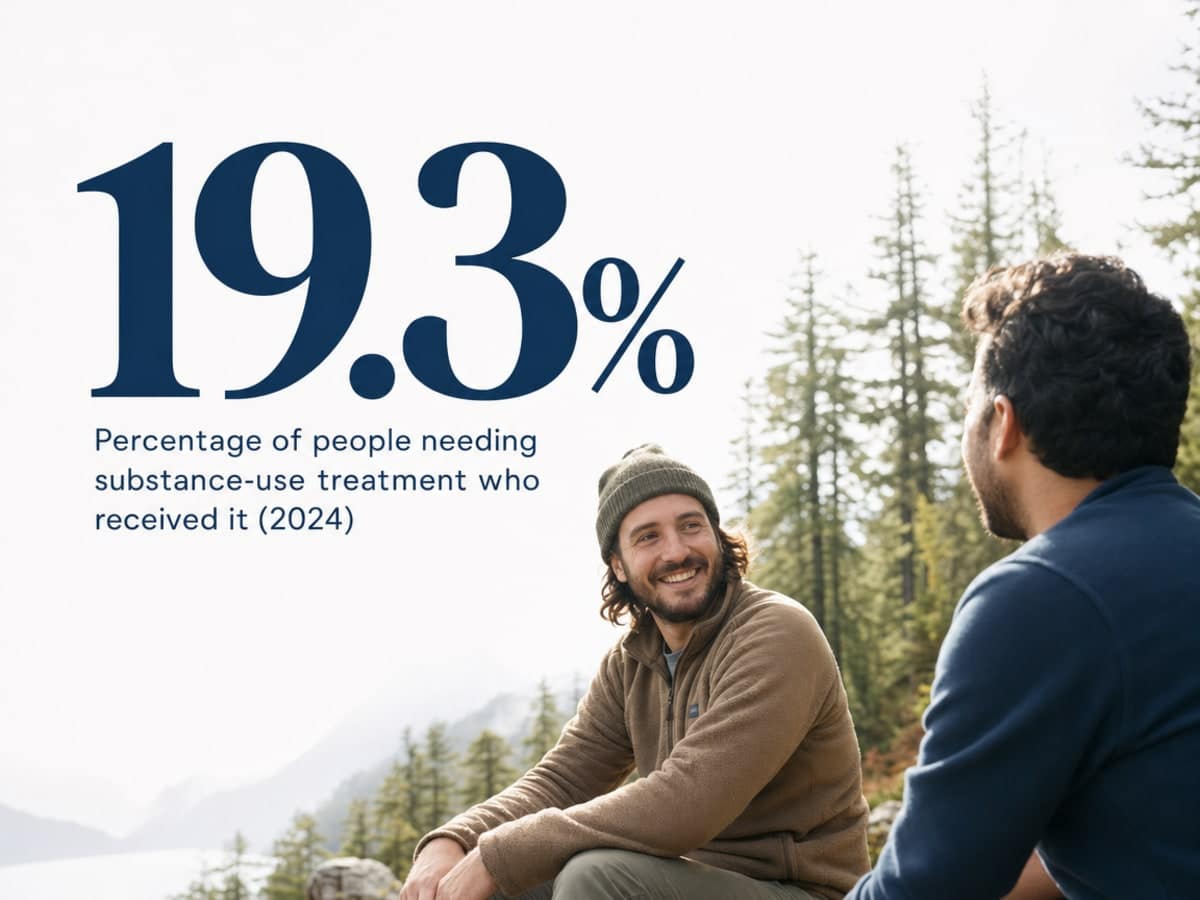
Here’s some context that might help you breathe. In 2024, about 52.6 million people age 12 or older in the United States needed treatment for substance use, and only 19.3% of them actually got it 7. Most families don’t make the call. You are making the call. That already matters.
This guide will show you how to identify a genuine home-style detox from a facility that merely advertises kitchen photos. We’ll provide clear questions to ask during your initial phone calls and explain how food integrates with the essential medical care needed during withdrawal, ensuring both aspects are adequately addressed.
What ‘Home-Cooked’ Is Really Code For
When you type home-cooked meals into a search bar at 1 a.m., you’re asking three questions at once, even if it doesn’t feel that way. You’re asking whether the staff has time. You’re asking whether your person will be treated like a guest or like a case number. And you’re asking whether the place is small enough that someone will actually notice if your son goes quiet at breakfast.
Food is the easiest proxy for all three. A facility that cooks real meals in a real kitchen is almost always a facility where the people on shift aren’t running from room to room with a clipboard. At Pacific Crest Trail Detox, the techs are the cooks. The same person stirring the pot at 5 p.m. is the person who sat with your partner through the shakes at 4 a.m. That’s not an amenity. That’s a staffing choice that shows up on the plate.
Here’s the honest part, though. Cooking does not treat withdrawal. The research on dietary programs in substance-use treatment is modest at best, and no study has shown that any particular meal style independently improves long-term sobriety 10. What good food can do is support a body that has been running on fumes, protect dignity during one of the worst weeks of a person’s life, and signal that the staff has enough breathing room to care. Those are real things. Just don’t let anyone sell you a kitchen photo as a substitute for medical care. The next few sections will show you how to tell the difference.
The Oregon Kitchen Standard, in Plain English
The Five Rules a Licensed Detox Kitchen Must Follow
Here is the part nobody tells you on an admissions call: Oregon already wrote down what a detox kitchen has to do. You don’t have to guess, and you don’t have to take anyone’s word for it. The state’s Chapter 309 rule for behavioral-health residential programs spells out food service in language a tired parent can actually use at the kitchen table 1.
There are five things to listen for. If a program hesitates on any of them, that’s your signal.
Three meals a day, every day. Not two plus a protein bar. Not whatever people grab from the fridge. The rule says at least three meals daily, with enough variety and portion to actually feed a grown person going through withdrawal 1. Ask directly: “What did you serve for breakfast, lunch, and dinner yesterday?” A real kitchen will tell you without pausing.
Written menus, kept on file for at least 30 days. This one sounds boring, and it’s the most telling. Oregon requires programs to record the menus they serve and hold onto them for a month 1. That means a licensed detox can show you, in writing, what your person has been eating. If the answer to “Can I see this week’s menu?” is vague, something is off.
Physician-ordered special diets, honored. If your mom is diabetic, if your partner has celiac, if your son can’t tolerate dairy after years of hard drinking, the rule says the program accommodates diets ordered by a physician 1. Say the specific condition out loud on the call. Listen for whether they ask follow-up questions.
Snacks available 24 hours a day. Withdrawal doesn’t keep business hours. Blood sugar crashes at 2 a.m. Oregon requires food supplies on hand around the clock 1. “Is the kitchen open overnight?” is a fair question. The answer should be yes, with specifics.
Safe temperatures and sanitation. Food held at the right temperature, utensils cleaned properly, storage done to code 1. This isn’t glamorous. It’s the baseline that keeps a sick, immune-compromised person from getting sicker.
Read those five back to any program you’re considering. The ones that live up to the standard will sound relieved you asked.
How to Verify a Program Is Actually Licensed
Marketing can look like medicine. A warm website and a photo of a dining room do not, by themselves, mean a program is a licensed residential withdrawal-management setting. The good news is that Oregon makes verification pretty easy, and you can do it before you make a second call.
Oregon Health Authority licenses and certifies residential substance-use-disorder programs, including those serving up to 16 people that provide detoxification services 2. The state also lists the approved levels of withdrawal management it recognizes, including clinically managed residential withdrawal management and medically monitored inpatient withdrawal management 3. Those categories matter. A sober-living house with a nice kitchen is not the same thing as a licensed detox, and the rules it has to follow are not the same.
Two concrete steps you can take tomorrow morning. First, ask the program directly: “What level of withdrawal management are you licensed for in Oregon, and under what name?” Write the answer down. Second, check that answer against the Oregon Health Authority licensing and certification pages for residential treatment and provider certification 2, 3. Oregon also notes that inspections of licensed residential programs can happen without advance notice 2. That’s the kind of oversight you want sitting behind the home-style feel.
Pacific Crest Trail Detox is a licensed non-hospital medical detox in Milwaukie. You should still ask. Any program worth your trust will walk you through the paperwork without flinching.
Questions to Ask About the Kitchen on Your First Call
You don’t need a clipboard. You need five or six questions you can ask in the time it takes to boil water. Here’s what to listen for when a program picks up.
“Who actually cooks the meals?” If the answer is a food-service vendor who drops off trays, that’s a different model than what you were picturing. At Pacific Crest Trail Detox, the techs on shift cook the meals in the house kitchen. That matters because it means the person feeding your son is also the person watching your son.
“What did you serve yesterday, and what’s on today’s menu?” Oregon requires licensed programs to record menus and keep them on file for at least 30 days 1. A real kitchen can answer this without a pause. A photo-op kitchen will get vague.
“My mom is diabetic. How do you handle that?” Swap in your person’s actual condition — celiac, high blood pressure, a swallowing issue, a religious diet. Physician-ordered special diets are part of the state standard 1. Listen for whether they ask follow-up questions about her care team and medications, or whether they just say “we can do that.”
“What’s available at 2 a.m. if he can’t sleep and his stomach is turning?” Food supplies are required to be on hand around the clock in licensed residential programs 1. The answer should be specific. Crackers, fruit, yogurt, something warm. Not “we figure it out.”
“How many people are in the house right now, and how many staff are on tonight?” You’re not being nosy. You’re measuring whether the kitchen story is plausible. A house of a handful of people with staff on-site can realistically cook and watch at the same time. A larger census with a skeleton crew cannot.
“Can my person eat with everyone else, or is it tray-in-room?” Both have a place during the hardest hours of withdrawal. What you want to hear is that the shared table exists and that someone decides, meal by meal, what your person is up for.
Write the answers down. Six questions, six answers. You’ll know more after this call than most families know after three tours.
Ask About Medication, Not Just Meals
Here’s the harder question, and it’s the one most families don’t know to ask on the first call. What medications can this program start or coordinate while my person is here?
Food comforts. Medication is often what keeps someone alive. The CDC is clear that for opioid use disorder, detoxification without medication treatment is not recommended, because the risk of overdose after a return to use is higher once tolerance drops 4. Three FDA-approved medications exist for opioid use disorder — methadone, buprenorphine, and naltrexone — and they can reduce cravings, ease withdrawal, and help someone stay in treatment longer 6. For alcohol, there are also medications a program can start or arrange. The home-cooked breakfast matters less if nobody at the table asked whether your person should be on one of them.
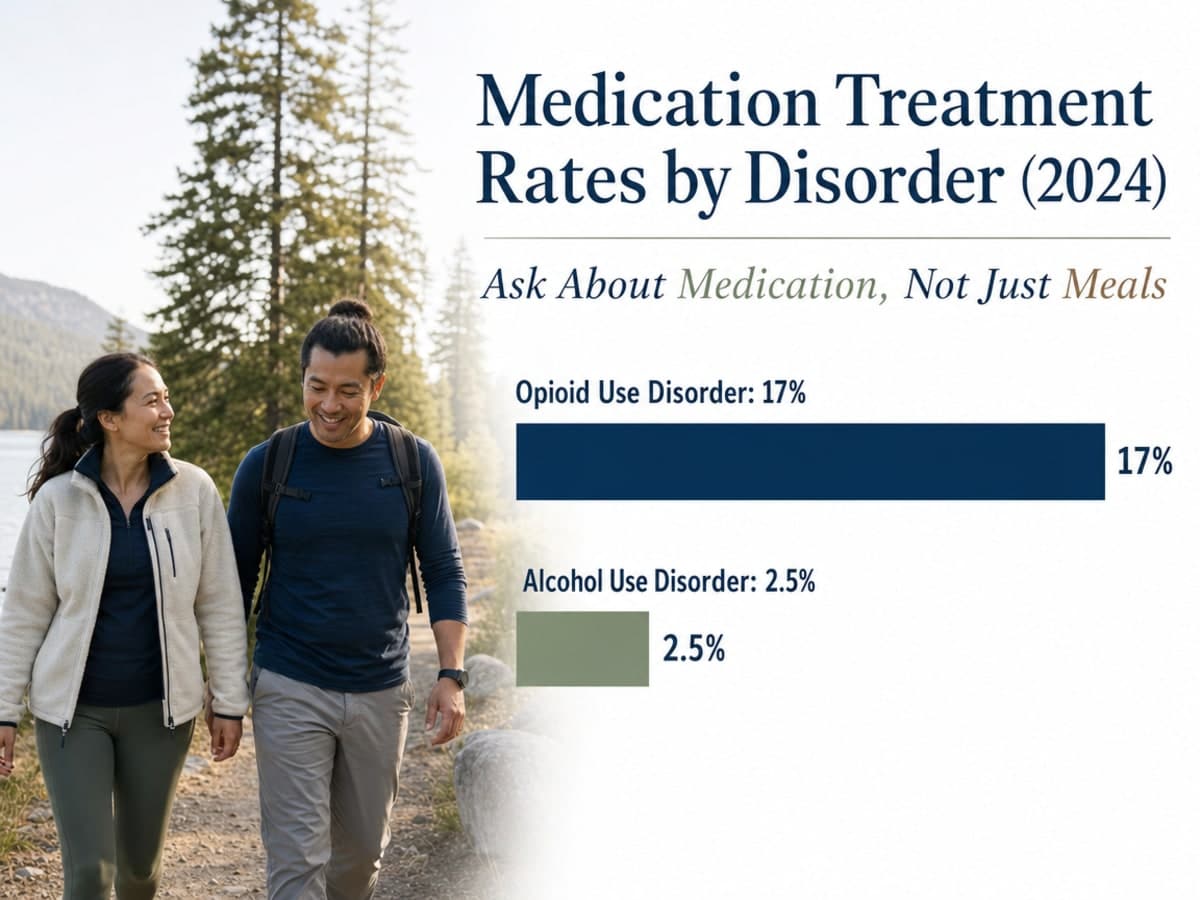
The gap here is bigger than most families realize. In 2024, 17.0% of people with opioid use disorder received medication treatment, and only 2.5% of people with alcohol use disorder received medication for alcohol use disorder 8. That is the national picture of how often this conversation gets skipped. You are the one who can keep it from being skipped for your person.
So when you call, ask it plain. “Can you start buprenorphine or naltrexone here if the doctor recommends it?” “If my mom’s withdrawal from alcohol is severe, how do you handle medication for that?” “If my son needs methadone, who do you coordinate with so he doesn’t lose that bridge when he leaves?” The answers should be concrete. A name of a prescriber. A referral pathway. A plan.
Also ask whether naloxone — the medicine that reverses an opioid overdose — will go home with your person, and whether you’ll be shown how to use it. CDC recommends that education for patients and household members 4. That’s for you too. At Pacific Crest Trail Detox, medication-assisted treatment sits alongside the meals and the shared table, because comfort and medicine are not a choice you have to make.
Why Food Matters Medically During Withdrawal
Let’s talk about what’s actually happening inside your person’s body while they’re sitting at that kitchen table. Years of heavy drinking or drug use quietly strip the body of what it needs. People with alcohol and drug use disorders commonly show up with nutrient deficiencies, poor intake, and the kind of worn-down health that makes recovery harder 12. That’s not a character flaw. It’s biology catching up.
Here’s the twist that surprises most families. Someone can look like they’re eating enough and still be running on empty. A recent review of problematic alcohol use found that nutrient deficiencies stay common even when calorie intake looks fine on paper, partly because alcohol messes with how the body digests, absorbs, and uses what goes in 13. So the question isn’t just whether your mom cleaned her plate. It’s whether someone is paying attention to what her body can actually hold onto.
This is where real meals do real work. Three balanced meals a day, snacks when the stomach can handle them, and someone noticing when she picks at her food two days in a row — that’s supportive care. Nutrition belongs in substance-use treatment, and the strongest reviews call for individualized attention to protein, fiber, vitamins, and minerals rather than one standard tray for everyone 9.
Dignity Signals: What a Real Shared Table Tells You About Staffing
Walk into any detox at dinnertime and you’ll learn more in five minutes than any brochure can tell you. Is there a table? Are people eating together, or are plates being pushed through doorways? Is someone sitting with the person who can’t quite manage the fork yet? That tableau is a staffing report in disguise.
A shared table only works when the ratio works. If the techs on shift have time to plate food, pour coffee, and sit down for ten minutes, they also have time to catch the small things that matter during withdrawal — the second day someone picks at their eggs, the hand tremor that wasn’t there yesterday, the quiet exit halfway through the meal. Those small catches are how a non-hospital detox stays safe. Nutrient deficiencies and poor intake are common in people coming off alcohol and drugs, and screening often depends on simple observation at mealtimes rather than a lab draw 12.
At the Milwaukie house, the techs cook and eat alongside the people they’re caring for. That’s the dignity signal you were looking for when you typed those words into the search bar. Not fancy. Not catered. Just a real kitchen, a real table, and staff who are close enough to notice when your person needs more than a plate.
Detox Is a Beginning: Ask What Happens on Day Eight
Here’s the thing nobody puts on the brochure. Day one through day seven, the kitchen is cooking, the staff is close, your person is sleeping in a real bed. Then day eight comes. If nothing is lined up for day eight, the whole week you just paid for starts to come undone.
NIDA puts it plainly: detoxification is not the same as treatment, and detox alone usually leads back to drug use without a plan for what comes next 5. That’s not a reason to panic. It’s a reason to ask one specific question before you ever send your person through the door. “When this stay ends, what is your plan for the next step, and who sets it up — you, or me?”
Listen for specifics. A warm handoff into partial hospitalization or an intensive outpatient program. A therapist already scheduled. If your person is on buprenorphine, methadone, or naltrexone, a prescriber lined up so the medication doesn’t stop at the curb 6. For opioid use disorder especially, that bridge matters, because tolerance drops fast during the first week off and a return to the old amount can be fatal 5.
At the Milwaukie house, detox flows into partial hospitalization, intensive outpatient, standard outpatient, and alumni support — the point being that day eight is already on the calendar before day one begins. When you call anywhere, ask to see what day eight looks like on paper. If the answer gets vague, keep calling.
A Short Note on Small, 16-Bed Oregon Houses
Quick scope shift here, because this one detail matters more than it sounds. Oregon licenses residential substance-use-disorder programs that serve up to 16 people, and that category includes detox 2. Sixteen is not a marketing number. It’s a ceiling that shapes everything else — how many staff are on at 3 a.m., whether the techs have time to cook, whether someone notices when your person stops eating.
A smaller house isn’t automatically better. But when you’re comparing programs, ask how many beds are in the house and how many people are on shift overnight. In a true 16-or-fewer residential setting, a shared table and techs who cook aren’t a stretch — they’re the whole point of the model. Pacific Crest Trail Detox is built that way, in a real home in Milwaukie. Ask the number. Then ask what dinner was.
What to Do Tomorrow Morning
You’ve been up too long. Here’s what to do when the sun comes up, in order, so you don’t have to think.
Pour the coffee. Open a note on your phone. Pick two or three programs from your tabs. Call the first one.
Ask these, in this order:
- Who cooks the meals, and what did you serve yesterday?
- What level of withdrawal management are you licensed for in Oregon?
- Can you start or coordinate medication for opioid or alcohol use disorder if the doctor recommends it?
- How many people are in the house right now, and how many staff are on tonight?
- What does day eight look like — who sets up the next step?
Write the answers down. If a question gets dodged, that’s an answer too.
Then call the next one. Compare the notes side by side at lunch.
One more thing. You already did the hard part last night by searching. That counts. Real food, cooked daily, in a real home — see the difference at Pacific Crest Trail Detox in Milwaukie.
Check If Your Stay With Real Meals Is Covered
Find out if your insurance covers a detox experience with daily home-cooked meals in a real home setting.
Frequently Asked Questions
Does ‘home-cooked meals’ mean a detox isn’t medical enough to handle serious withdrawal?
Not on its own. A real home-style detox should be a licensed non-hospital medical detox with doctors, nurses, and 24-hour monitoring — the kitchen sits alongside the medical care, not in place of it. Ask directly what level of withdrawal management the program is licensed for in Oregon 3, and ask how they handle alcohol and benzodiazepine withdrawal, which can be life-threatening.
What food-service rules does Oregon actually require a licensed detox to follow?
Oregon’s Chapter 309 rule requires residential behavioral-health programs to serve at least three meals a day with adequate variety and portions, keep written menu records on file for at least 30 days, accommodate physician-ordered special diets, keep food supplies available around the clock, and follow safe food temperatures and sanitation standards 1. You can read those five back to any program during an admissions call.
How do I verify that a detox program is really licensed and not just a sober-living house with a nice kitchen?
Ask the program what level of withdrawal management it’s licensed for in Oregon and under what legal name. Then check that answer against Oregon Health Authority’s licensing and certification pages for residential treatment facilities and provider certification 2, 3. Oregon also notes that inspections of licensed residential programs can happen without advance notice 2, which is the oversight you want behind the home-style feel.
Should I ask about medication like buprenorphine or naltrexone, or is detox enough on its own?
Ask. For opioid use disorder, CDC says detoxification without medication treatment is not recommended because overdose risk goes up when tolerance drops 4. Three FDA-approved medications — methadone, buprenorphine, and naltrexone — can ease withdrawal, reduce cravings, and help your person stay in treatment longer 6. Medications exist for alcohol use disorder too. Ask whether the program can start them, or coordinate with a prescriber who will.
Can home-cooked meals replace vitamins or medical treatment during alcohol withdrawal?
No. Hospital-based reviews of alcohol-withdrawal care describe thiamine, multivitamins, and minerals as part of medical treatment, not something a good breakfast can substitute for 14. Nutrient deficiencies can also stay common even when calorie intake looks fine, because alcohol disrupts how the body absorbs and uses nutrients 13. A home-style detox should do both — feed your person well and give the doctor-ordered vitamins and medications.
What should I ask about day eight, when detox ends?
Ask who sets up the next step and what it looks like on paper. NIDA is clear that detox is not treatment, and detox alone usually leads back to use without a plan for continuing care 5. Listen for a warm handoff into partial hospitalization or intensive outpatient, a therapist already scheduled, and — if medication was started — a prescriber lined up so it doesn’t stop at the curb 6.
References
- Behavioral Health Services – Chapter 309. https://www.oregon.gov/oha/HSD/RAC/309-018.pdf
- Residential Treatment Facilities : Licensing and Certification. https://www.oregon.gov/oha/hsd/amh-lc/pages/rt.aspx
- Oregon Health Authority : Licensing and Certification : Providers. https://www.oregon.gov/oha/bh/providers/pages/licensing-certification.aspx
- Opioid Use Disorder: Treating | Overdose Prevention | CDC. https://www.cdc.gov/overdose-prevention/hcp/clinical-care/opioid-use-disorder-treating.html
- Treatment and Recovery. https://nida.nih.gov/publications/drugs-brains-behavior-science-addiction/treatment-recovery
- Treatment of Substance Use Disorders. https://www.cdc.gov/overdose-prevention/treatment/index.html
- Key Substance Use and Mental Health Indicators in the United States: Results from the 2024 National Survey on Drug Use and Health. https://www.samhsa.gov/data/sites/default/files/reports/rpt56287/2024-nsduh-annual-national-report.pdf
- SAMHSA Releases Annual National Survey on Drug Use and Health. https://www.samhsa.gov/newsroom/press-announcements/20250728/samhsa-releases-annual-national-survey-on-drug-use-and-health
- Malnutrition in Substance Use Disorders: A Critical Issue in …. https://pmc.ncbi.nlm.nih.gov/articles/PMC12027436/
- Efficacy of dietary interventions in individuals with substance use disorders for illicit substances or illicit use of pharmaceutical substances: A systematic review. https://pubmed.ncbi.nlm.nih.gov/33650747/
- DIET AND BODY COMPOSITION OUTCOMES OF AN …. https://pmc.ncbi.nlm.nih.gov/articles/PMC3430793/
- The importance of nutrition in aiding recovery from substance use disorders: A review. https://pubmed.ncbi.nlm.nih.gov/28806640/
- Dietary intake, quality, and assessment tools in individuals with problematic alcohol use: a scoping review and meta-analysis. https://pmc.ncbi.nlm.nih.gov/articles/PMC12873200/
- Systematic review of nutritional interventions for people admitted to hospital for alcohol withdrawal. https://pubmed.ncbi.nlm.nih.gov/31797519/